Writing / interview · 2020 · 中文
He Yining & Nie Xiaoyi: Immersed, and Yet Free何伊宁&聂小依|沉浸其中,同时富于自由
与策展人何伊宁关于「展览」的对谈:从珍奇屋、沙龙到白盒子,疫情中的线上展览,以及在资本与政府之外做点自我组织。
展览,什么是展览?它如何演变?你是不是也曾一脸茫然地立于展厅中央?所以我们看展求什么?它应该带给我们什么?凡是有观展经历的人,一定都遭遇过这一连串问题。
2020的上半年,疫情的严峻之势叫停了全球无数实体展览,同时大家纷纷发展以网络为介的线上展览;下半年事态逐渐缓和,展览如雨后春笋般涌现,似乎要补回因不可抗力而错过的半年档期。不仅如前所列,我们或许正在遭遇更多关于展览的问题......于是,本期「相谈」我们邀请了策展人何伊宁及策展学研究者聂小依,一起面对这些难以解答、并且需要持续解答的问题。一切只是一个开始。
**我们说展览形态的演变,可能从最早的珍奇屋(Cabinet of curiosities or wonder-room),到沙龙展(the Salon,常常指1748至1890年之间巴黎美术学院的正式展览),再到如今的白盒子(white cube),整个历程中展览的功能是否也跟着形态一起发生了演变?
何伊宁:我先从不那么学术的角度来开始今天的谈话。我手头在看一本叫做《帝国之眼》的书,这本书第一章节通过追溯欧洲帝国事业的重要历史转折点,尤其举了瑞典植物学家林奈和他散布在全世界各大洲“学生”的例子,勾勒了一个帝国如何从海洋拓展到大陆,并通过对大陆物种的编码和旅行书写的形式来完成帝国权力话语的建构。西方近代博物馆事业与自然科学的诞生和发展关系紧密,早期西方语境下的珍奇屋正是在这种脉络下发展而来的。从贵族和精英阶级的私人收藏,到沙龙,再到逐步开放给公众的博物馆,我觉得有些东西在变,比如我们身处的时代,以及人们对看展的这种反向渴望;但是有些东西没变,人类对收集、归纳和展示的渴望和欲求是恒久不变的。
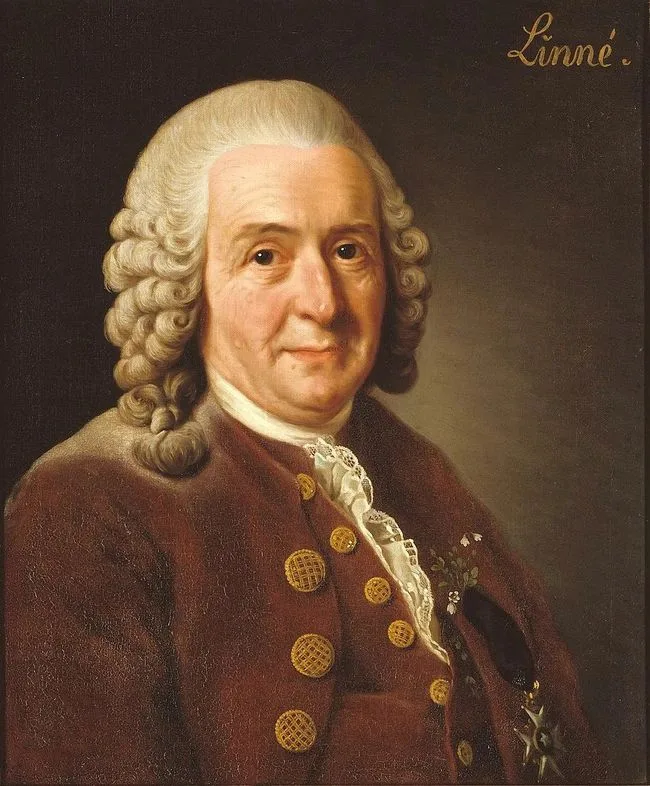
卡尔·冯·林奈(1707-1778)
聂小依:这个提问是把“展览”放在了西方脉络里……像伊宁刚才提到的殖民者带回来的世界珍奇异宝,现在牛津大学的人类学博物馆Pitt Rivers就体现了当时的分类学,而且这些被展示的事物大多被当作“文化”而非“艺术”。与之相对的,沙龙是传统的美术学院所办的展览,它所展览的通常就被认为是“艺术”,进没进沙龙是好艺术和坏艺术的区别,这里面就涉及到我们今天所谓“艺术世界”的生态了,也就是话语权——谁来定义艺术,艺术是什么。而现代艺术很多情况下是对这种话语权和艺术史的反叛,“白盒子”和“现代”连在一起,它强调空间本身的中性和作品的自足,这里的“白”和观念艺术本身的“干净”气质也有关。另外我这几年观察到在很多商业画廊里,墙上只有作品没有标签,想知道信息需要去前台拿一张展览作品的平面分布图,所以有时候画廊这个环境甚至试图在视野中隐藏注解,给潜在客户还原出一个没有干扰的审美体验,这是我觉得商业空间作为“白盒子”的有趣之处。
其实我们今天讨论“展览”和“策展”,大多是顺着Hans Ulrich Obrist在《策展简史》(A Brief History of Curating)里采访的像Harald Szeemann、Pontus Hultén这些策展人的实践,他们大概从60年代开始在欧洲的美术馆做试验性的当代艺术展览,和当代艺术一起反思美术馆的话语权、 反思展览的形式和功能、反思艺术在社会里的位置。80年代之后随着全球双年展的增多,以及当代艺术创作里研究的增强,可以看到策展里有所谓“话语的转向”,展览越来越多地参与到当代思想的生产中,比方说介入到身体、身份、后殖民等等议题中,它的实体空间和作品有时可能还不如展览陈述引起的讨论多。
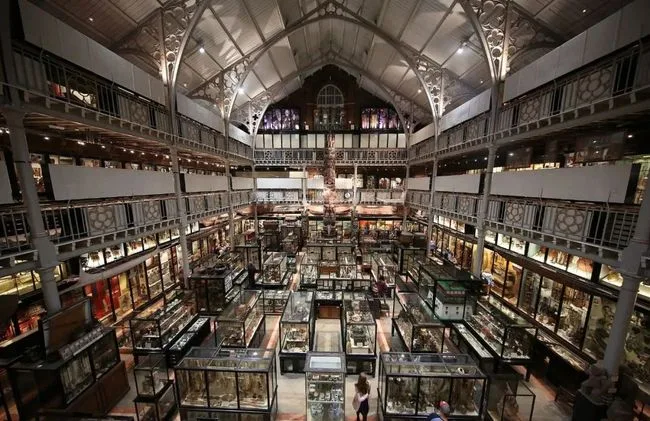
Pitt Rivers博物馆内部,图片来自官方网站
何伊宁:紧接着小依刚刚说的,我的实践主要是围绕摄影艺术,就集中说一下从20世纪70年代摄影的展示如何从白盒子演变为面向公众和街道。
阿尔勒摄影节可以说是摄影史上的一种突破,在这之前,摄影要么是延续沙龙,要么在白盒子空间里,但从阿尔勒摄影节开始,它突然变成了一个大众型的,它可以在城市、教堂,可以在不同的语境下、在不同的展览空间中面向大众。我觉得这是摄影比较有代表性和开创性的一种呈现方式,因为它需要面对的是大众,需要去沟通和交流,把媒介交流的属性发挥到最大。大家一直说我们不可能从当代艺术里把雕塑单独拎出来成为一个门类,但摄影一直就是一个“单独的门类”,这可能是摄影比较具有自身独特性的东西,因为它还是比较容易接近大众,也可以在不同空间很容易地展示。
除此之外,摄影也逐渐被院校接纳为一门学位课程,它原来可能只是在设计、建筑或者纯艺里一个很小的课程,但伴随着阿尔勒摄影节诞生,整个欧洲的学院从70年代树立了很多学位课程。
所以一直到今天阿尔勒的形式还是在被复制,当然它会根据不同的地点或者区域有不同的创新,但是阿尔勒摄影节树立的榜样至今还在全世界各地不断地突破和延续。
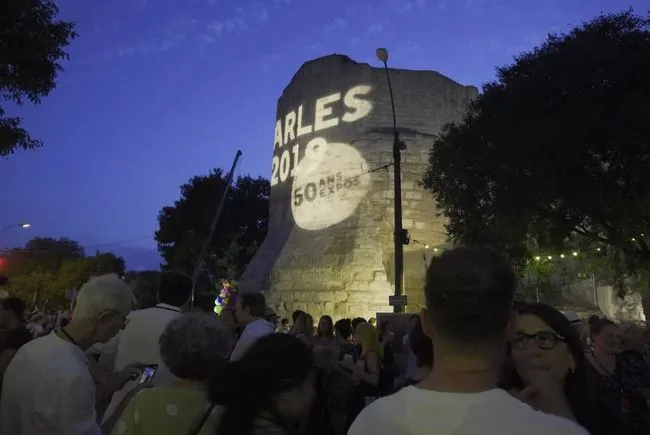
2019阿尔勒摄影节,拍摄/陈海舒
大家一听到这个问题,第一反应就是“这是西方脉络下的思维”,那在这中间的另一个问题就自动显现了,即,我们目前有不以西方脉络去聊“展览”的途径吗?我们可以找到中国自古以来展示艺术或珍奇异宝的自成气候的惯例或经验吗?如果没有,那我们现在在聊的这个“展览”,是不是只能按照西方脉络去聊?
聂小依:我觉得这件事情需要特别微妙的把握。这两年开始,美协和学院都开始提“中国策展学”,但研究是不是可以通过口号就提出来?这个提法是承认了“策展”是一门学科吗?这个学科的基础是什么?“中国策展学”是要发展有中国特色的理论范式吗?还是靠一个一个的案例研究,通过研究和知识的累积做出来?我认为可以提很多问题去检查这个提法。
如果我们从欧洲20世纪中叶之后,策展人试图打破博物馆、美术馆原有的书写历史、保管知识的中性角色这个角度看,就像伊宁刚才提到的阿尔勒摄影节从美术馆走出去一样,那策展史很多时候是一个社会空间和美术馆空间融合的过程,它把展览放到有很多不同力量较劲儿、很“脏”的现场里,策展也变得不仅有关展示,它把人带进来,变成一个讨论、合作的过程,还会有讲座、分享会和工作坊这样的活动。从这个角度看,其实我们有非常多中国的实践可以论述,现在已经有人提到原来园林中的曲水流觞、文人雅集是不是也是一个“展览”;西方有珍奇屋,那乾隆皇帝还有多宝格,我们普通人家里也有博古架。
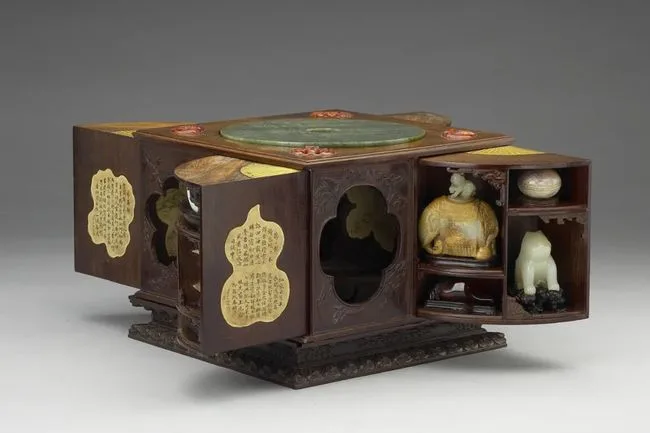
乾隆紫檀多宝格方匣,图片来自台北国立故宫博物院
但是现在“中国策展学”提法很多时候是出于一种西方有、我也要有的态度,更像研究中的套西方理论。社会学家谢宇的一篇文章就提到,为什么“中国社会学本土化”这个提法是一个伪命题,所谓的应用本土化、议题本土化、范式本土化,其实本身对这个学科的建设没有什么助益。[1]他的意见是我们可以引到别的领域来看,做研究和尝试应该从真实的问题和具体的材料开始,而不是先从立场,虽然研究者、实践者本身在这片环境里,一定会有它自己的“风土”慢慢呈现出来。
从你们的视角看,线下这种实体空间的展览,跟其他媒介比如书或者网络等相比,在艺术呈现上有什么无可替代的地方?
何伊宁:我觉得人对于交流,尤其是面对面交流的渴望是无可替代的。这次疫情,我们看到了很多把线下展览转化成网络呈现形式的各种尝试,我个人很喜欢的案例像史莱姆引擎,他们完全建构了这种网络展示的空间,它是一个多维虚拟但同时可以互动的场景。我很喜欢这种创新,但依旧觉得我们还是需要线下交流带来的可能性。
最近我和鲁小本一起给荷兰布雷达摄影节策划的“想像中国”展览,很大的问题是,我们作为策展人只能通过屏幕跟观众进行讨论,这种讨论是失效的。整个展览的语境、观众提到的问题跟我们想去陈述的内容之间,会有一种时空上的断层。无论是这种知识生产,还是对于这种知识生产展示的讨论,我觉得还是在线下进行直接的互动会更有效。
当然我们也可以在家先看文本,再在网上开启讨论,但一个人站在展览空间下去感受空间跟作品之间的关系,人与人之间的交流,这些体验我觉得还是挺无法替代的。你站在某个角度去看一件作品,这种空间感跟视觉上给你带来的身体和心理上的回应,没有办法在虚拟空间中感受到,至少我没有办法。某一天空间还有可能变得很安静,你不需要考虑来往的行人,可以像一个人在家一样去感受。但我在现在这个时间点,还是更渴望去交流,渴望到现场去体验。
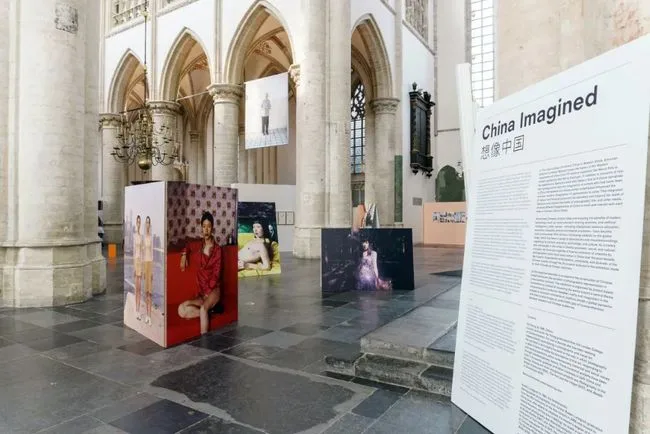
布雷达大教堂,“想象中国”展览现场,拍摄/陈海舒
聂小依:我观点跟伊宁比较类似,展览是一种媒介,但某种程度上这个媒介是在活用其他媒介,不管是有空间设计的展厅、艺术书还是网络,它们都可以成为展览的一部分。但另外更值得我们注意的是,展览是把人、时间和其他不可控的因素引进来了。在一个展览中,观众大多数时候要和展览互动,你永远不可能像自己在家看书那样有主导权;策展人也只能设置一个场景或情景,而不能像写文章那样把话说尽;作品一般也没法像电影一样完全控制人的时间、行动和注意力。所以展览需要作品、观众、策展人给彼此都留下很多空间,它是一种非常不同的“政治”,需要参与的各方(不仅是人)都很“谦逊”,意识到这是一场互动。
我特别喜欢看展的另一个原因是,这个机会是有限的,展览不会永远在那儿等你,永远都要特别珍惜那一次的体验。你沉浸其中,同时富于自由。我说的沉浸不是说戴上VR和耳机的沉浸,这种沉浸是那一刻你的时间和空间就在那儿了,甚至可能展厅里有个人突然在你旁边不太守规矩地跳起舞来了,但也是它的一部分。同时你可以在展场里就发呆,想你的人生或者其他没空去想的事儿。
这些是我眼里展览最有意思的部分,但同时也最脆弱,因为展览可能一个月后就撤了,而且每个人的所得都千差万别,所以尽管展览最后可能会留下一个档案,但档案永远都不可能复刻观展的经验,它怎么转化成为知识、历史、故事、遭遇、感想,留存下来,而不是只对当时去过的人有影响?我觉得这是展览作为媒介挺大的一个焦虑。
何伊宁:另外,无论是美术馆、策展人还是展览制作公司,我觉得大家都没法估计一场展览会给进来看展的观众带来多大的影响。可能我成为策展人,进而在艺术领域内有自己的追求,也是因为看了无数展览,它们对我的作用层叠交织,造就了现在的我,这也是我觉得线下展览非常重要的一部分。
这些独特体验,对个人生命带来影响的层层交叠的经验,我们暂且撇开这些相对感性的说法,而去聊一个非常具体的展览,那这个展览至少要给观者带来哪些东西,才算足够?换个问法其实就是,什么因素可以让你们对一个展览给出“不错”这样的评价?喜欢上它?
何伊宁:我觉得首先是“受众是谁”的问题吧,就是一个场馆的观众群体非常重要。比如说一个机构策展人,ta可能需要考虑自己的场馆以及观众群体,像市立美术馆等等就需要做到让进来的老人小孩都看得懂;那一些比较独立的策展人或者艺术家个人,在不同的场馆想要传达的东西和考虑的群体又会有些不同。
打个比方,我在跟瑞士文化基金会合作的“在群山、丘陵和湖泊之间”展览,三站选在完全不同的场馆,第一个是设计互联,它坐落在深圳南山区的蛇口,一方面是个国际型的设计博物馆,同时对于当地人来说是个文化空间。这个展览空间是开放的,不需要门票,观众下班后可以带着孩子老人一起来参观,可以随意走到晚上9点多,那它其实需要更多转化和尝试,需要更多跟公众连接的可能性。上海站是在现代传播8号桥,它可能是以创意人士为主,北京站是在三影堂摄影艺术中心。
虽然三站展览的内容是一样的,但事实上这些空间面向的观众是有区别的。所以如果想把三站都做好,我是希望能跟团队去设计不同的项目,来满足不同观众群体的需要。虽然也由于各种原因没办法完全实现,但我认为展览的空间、这个场馆的观众群体其实还是非常重要的。作为策展人,这几年我尤其会把自己的研究和观众同时放在第一位,我的作用就是转译、去魅,把一个很高深的别人可能看不懂的东西,变成大家都能够看得懂,至少愿意去了解它的一个平台。
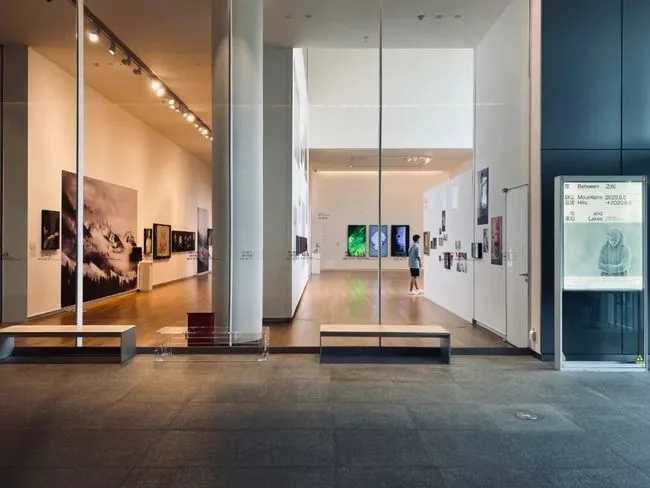
深圳设计互联,“在群山、丘陵与湖泊之间”展览现场,拍摄/何伊宁
那再说作为一名观者,我可能会更喜欢一种愿意生产新知识,愿意沟通对话的姿态,因为我最害怕看到的就是那种团展,永远是一些人的名字,用一个哲学术语把一个概念或者是其他东西融合到一起,然后进行展示。我更愿意看到的是策展人试图去建立一种新的对话的可能性。比方说前几天我在OCAT上海看的新展“空间规训:(后改革开放的)一些房子与(后世博的)一些建筑”展,国庆前展厅里人非常少,但事实上无论策展人的思路还是他想传达的东西,都非常明确,能够给人启发,对我个人而言是尤其愿意把时间花在这样的展览上面的,就是我只有一天时间,只够看一个展,但同期上海有100个展,那我会选择我觉得他的姿态是很诚恳的那个。这在每个人那里又不太一样,刚刚小依也明确提到观众对艺术的追求,可能对我来说就不一定要获得对艺术的追求,而更多是我跟这个世界连接,我想看到一些新的可能性,这就是我去看展览的初衷和冲动。
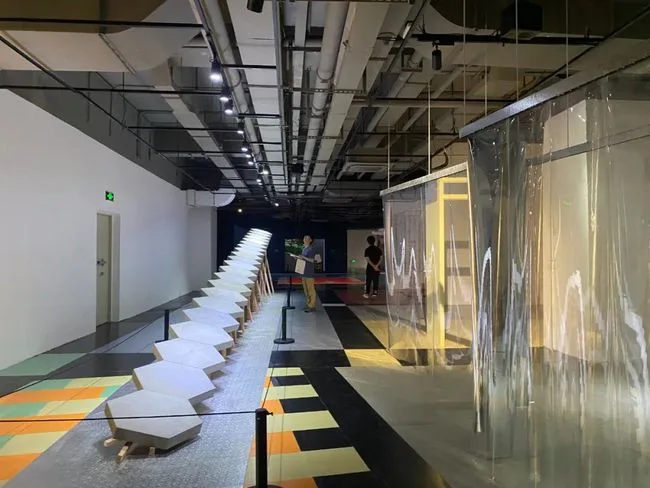
OCAT上海馆,“空间规训”展览现场,拍摄/何伊宁
聂小依:刚才伊宁提到的观众特别重要。从一开始我们说到展览和艺术书的不同,其中一点就是展览会占据很多人的时间和精力,它是一个资源密集型的活动。我们在学策展的时候,一开始总会问why here why now,为什么它要在此时此刻发生?它一定要有必要性,然后将密集的资源“效益最大化”。但我现在倒很喜欢一些小型展览,更有趣、更自我,考量没那么多,就是喜欢,做了才知道为什么。
这中间有一个很大的区别是,一个展览的策划者可能是机构里的策展人,也可能是以展览的形式作表达的艺术家、作家,这中间其实是一个光谱。每次展览的发生其实就要找到一个好的平衡点,尤其是在自我表达和观众的期待之间。即便是同一个空间,它在不同时期的观众也不同,打个比方UCCA2008年时面向的观众和2019年的观众,在数量和对展览的期待方面都很不同。所以这个空间到底想做成什么样,最后其实是有选择的,大家不一定都想做大机构,因为如果有了更多观众,或者要为一段“历史”负责的话,机构的责任会很大,可能办了这个展览就会抬升作品的历史地位和艺术价值,市场价值也就增加了,中间就涉及到利益兑换。
所以像英国的Tate就会相对保守,许多时候几乎在等所有的价值讨论、历史书写都结束之后,最后一步用收藏去肯定。但中国的一些美术馆可能定位更灵活自由,会主动把商业和艺术展览放在一起,避免自己落入到历史书写者这个充满包袱的位置,要不然它施展不开拳脚。有时候人们也可能只是想做一个小型的同道会。于吉在上海做的上午艺术空间就非常有趣,对我来说它是中国现在比较少的艺术家持续做出来的空间,在做实验性的表达,可能不够成熟,但给艺术家更多试错和获得反馈的机会。这些非常吸引我,有在“玩”的感觉。
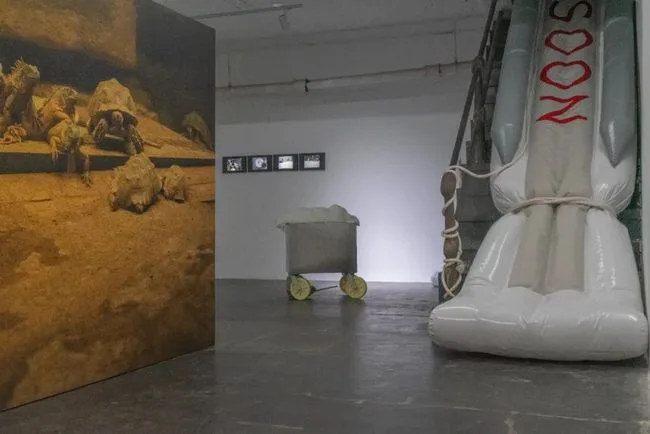
上海上午艺术空间,“流连忘返搁浅在岸”展览现场
我们可以暂且非常不成熟地给展览分个类吗?
何伊宁:我想到一个角度,我记得无论是在科技展,还是历史自然博物馆、城市博物馆,总之去过的大部分这种类型的大型场馆,它都在叙事。博物馆也好,梳理形式的美术馆也好,欧洲也好中国也好,会有按时间段去梳理某一国家或地区艺术史这种类型的展览,告诉观众一段历史的故事或者人类发展的历史,它以一种叙事的方式演进,跟观众沟通,这其实需要一个展呈团队,需要大量讨论,还需要展呈设计师、建筑师来介入。
小依你有没有觉得在当代艺术里,很少有人在谈展览叙述这件事情?可能会有一个宣言之类的,但是当代艺术里的形式跟我刚刚说的可能会不一样,当代艺术其实是一个很轻型的,甚至可能不需要策展人,艺术家自己就可以完成,所以我觉得这两者之间可能会是两种不同样貌的展览,但是如果再分析下去是很难的,挺矛盾的。
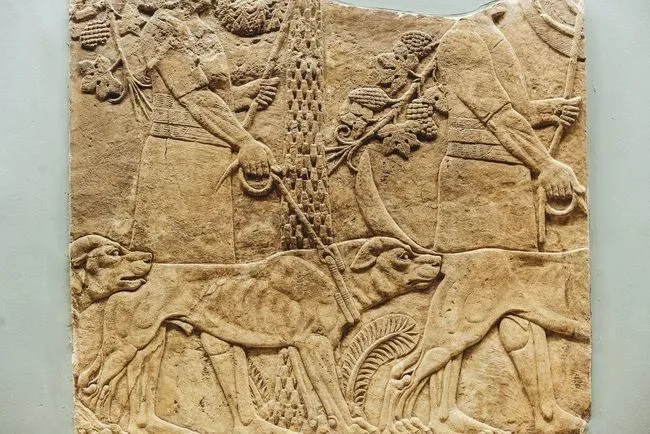
大英博物馆,拍摄/Tom Jamieson
聂小依:我借着伊宁刚才提的,“当代艺术做历史叙事”,这是矛盾的。黄专老师去世的时候,巫鸿老师给他编的纪念文集就叫《当代何以成史》,我觉得这个题目特别好。说到这儿,新的美术馆的建立在很大程度上是在反思美术史的书写。2000年Tate Modern开馆,它的常设展一个非常大的策展思路的更新,就是不再按照地区和美术史的时间段落去划分,而是按照主题。这样打破以国别和时间为组织的展览,其实是承认了艺术家在创作时有更大的自由,艺术家是可以和其他时间段、其他地区的艺术创作有联系和共鸣的。
但回到中国,我们的(现)当代艺术一开始就面临着中西之别和书写自我历史的焦虑。在我们的国家级博物馆呈现里,以朝代为线索的到清代大概也就结束了,再就是像故宫书画展可以看到古代的书画等等,但在现当代艺术这方面,中国是没有一个以实物作品来呈现的常设展的,很多时候我们都只能读书本里零零散散的叙述,再去网上看看图片。
北京的民生美术馆刚开的“绵延:变动中的中国艺术”是很难得的常设展,它的措辞很谨慎,说这个展览会不断变化。我看到这个展览的时候心里触动很多。我刚上大学那会儿开始对当代艺术感兴趣,但非常迷茫,不知道应该去哪里能对它有一个系统性的了解,历史、理论、创作方式我都不知道啊,但就是很着迷。我还记得在今日美术馆看到王广义的“自在之物”回顾展,在一个巨大展厅的四周砌满了装着稻糠的麻袋,一直堆到天花板,人站在屋子的中央就变得很矮小。那个时刻我就觉得,屋子里谷物的气味、脚底下的麸皮都让我离“政治波普”的话语很远,但离作品很近。我是充满困惑地但真实地和这个作品碰上了。那个时候798有非常多像伊宁说的那样的展览,有一个形而上的词汇,有一个艺术家或者很多艺术家的作品,但是前言里没有什么背景知识铺垫,展览可能也没考虑能让我这样的观众明白。而且,更大的一个问题是也没人告诉你什么是好的艺术,或者我和这样的艺术的关系是什么。
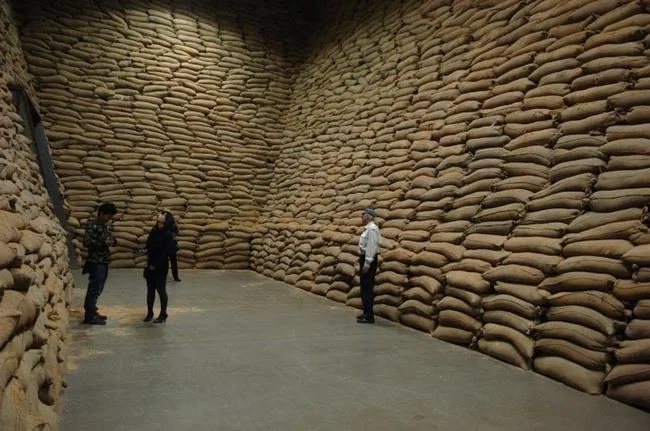
今日美术馆,王广义“自在之物”展览现场,2012
我们的历史叙事是缺失的,判断标准也没有几个人去尝试说,这是一种双重的缺失。所以我觉得现在如果一个展览真的能有所建树,其实是需要对这个学科和领域有责任感的,知道自己在处理什么问题。即便展览在表面上可能没有直接提出这个问题,但在做的过程中是带着这样的问题、也知道自己在和业内哪些人对话的。
刚才提到一个好的展览的标准是什么,对我来说它应该是有很多层次、能够接纳各种不同受众的,比如说观众可能不是艺术行业里的,可能就是一个喜欢看展览的学生、职员、工人,那ta也能相对容易、非常清晰地找到一条进入的路径,即便现在不完全懂,但可以看到往哪儿走的方向;但如果有更多知识储备,还能发现有其他更深的路,可以去和展览进行对话。这其实就要求展览有非常多层次,让观众不会一开始就认为它是一个非常排外的、只对艺术工作者或者知识工作者开放的展览。这和艺术家的实践、学术研究类似,需要既实在又有穿透性,深入浅出、触类旁通。我自己如果有机会做展览,会这样自我要求。
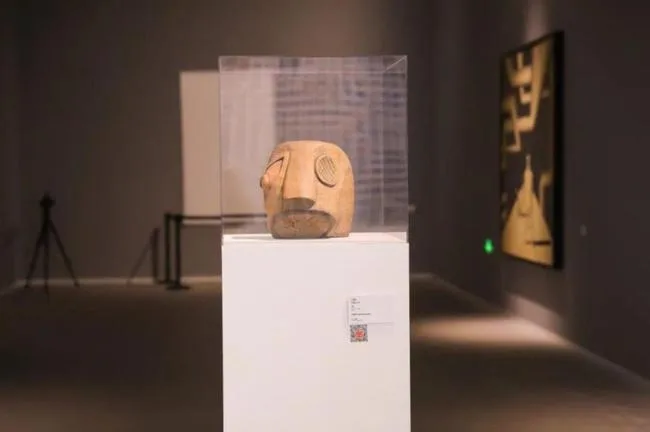
北京民生现代美术馆,“绵延:变动中的中国艺术”展览现场
何伊宁:其实这对机构的要求非常高。比方说,Tate会要求展览陈述一定是某一个年龄的小孩都可以看得懂的,那对机构工作人员的要求、对策展的要求自然而然会提高,策展人可能需要同时面对专业从业者或者正在学习这些的年轻人,还得面对还在乱涂乱画的三四岁小孩,如何让他们同样可以看到一个展览、有所连接,这对机构而言是一个非常大的挑战,对整个行业的要求都很高。这很难,但是是好的方向。
回到说在中国看展,很多机构都开始做配合展览的教育项目,但我觉得还是有很多东西可以直接在展览中呈现,而不一定是要去配合展览做项目,这是未来的一个发展方向,也应该是去思考的一个方向,因为如果我们期待中国未来的大众审美有所提升,其实是需要花更多时间给孩子一个平台,小孩子在接受这方面的能力是很强的,孩子理解抽象的能力,甚至比大人还有更多的空间和联结。所以我个人也是,作为一个独立策展人,我这方面肯定是有非常大的缺失,但是是不是大家可以在这上面花更多时间,无论是博物馆机构或者说空间也好,大家应该往前一起去想的一个事情。
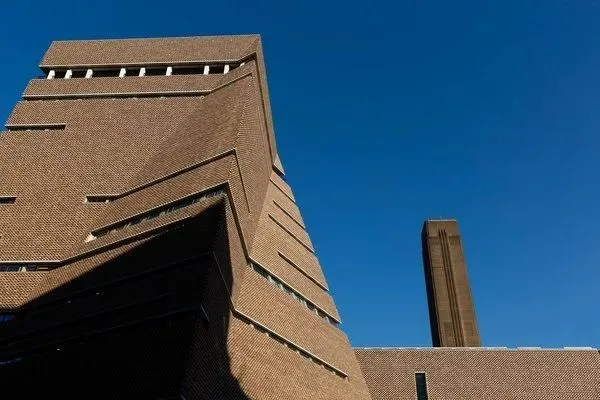
Tate Modern,图片来自官方网站
聂小依:这里让我想起来,刚才不是在问展览可以分成什么类别吗?在我的观察里,其实现在很多展览生产是从受众倒推回来的,有很多展览PR公司做定向售票和内容生产,会有很多儿童展、母婴展、科技展、小红书展。我觉得中国特别有意思的地方是我们和市场联系很紧,实践的反应特别迅速,很多时候是为了实在的市场需求做场展览出来,先瞄准细分市场,再回推到内容。所以我们在问展览如何去划分的时候,很多时候其实也在看这个展览是为什么而来?
另外一个就是政府系统的展览,现在需要做文化旅游,博物馆需要展览来呈现叙述;商业地产也经常纳入美术馆来吸引目标消费者。所以要看展览背后谁在出资,或者是这个展览在哪个生态里。
对,巫鸿在《美术史十议》里提到过美国20世纪下半叶很多美术馆博物馆由大财团接手,可能换到现在的中国就是各种地产还有金融巨头,艺术领域内大量资本的进入,包括刚才小依提到的先瞄准市场再回推内容,那么资本大量进入、市场导向型的展览,会影响展览的内容质量吗?
何伊宁:我反而觉得商业展的质量真不一定比学术性展览质量差,如果商业资本可以雇佣到最好的团队,一定程度上是能够提升展览的,甚至可以做出一个在制作和内容上都非常高水准的展览。中国现在发生的巨大变化就是,很多曾经是学术型的策展人,比如院系内或美术馆的,都开始转向做商业,只是没那么彻底,但两者间的关系会越来越紧密,因为没有钱做展览,效果真的很难达到理想的状态,它一定需要足够的资本进入,那做的内容质量可能反而会提高。所以学术型的和商业之间的关系是很矛盾的,也是当下特别值得我们去讨论的一个事实。
聂小依:我觉得不存在完全中立的展览。在原则上和市场绝缘的美术馆也仍然受制于它所在的机制里文化和资金政策的引导,很大程度上它要去顾及身份或者阶级的政治。从这个角度来看,我反而觉得很多商业画廊做的展览非常前沿。商业画廊和私人基金会都是私域中的实践,游戏规则非常灵活,有各自不同的收益考量方式,它们支持的艺术实践可以领先于机构和学界的判断。因为他们所处的是更小的生态,只要足够相信自己的眼光、找到存活的方式,就可以实现自己对于艺术的视野和理解。
乐观地看,今天中国所谓这种蓬勃的针对大众的商业展,最后我觉得其实慢慢会分化,会各自寻找特定的受众。可能现在展览之间还太相似,或者瞄准的受众都是很大的门类,是为了孩子的教育或者看大师的作品,但如果说有超越现状的想象中的展览,私人的实践是更有能力实现这种想象的方式。现在中国很多当代艺术的美术馆都是私人资助的,可能我们目前看到的转变是从慈善到商业的一个过渡。那如果在这种市场下,是不是可以期待定位相对小众的展览?我们其实有非常许多审美、知识、趣味方面都更成熟的观众,他们也需要好的文化和艺术,“乐队的夏天”的成功其实就是个好例子。
那么如何让持续性的展览文化,在一座城市扎根?比如反观假杂志所在的城市宁波,虽然城市一直都算相对富有,但撇去政府主导的市级美术馆博物馆,几乎没有像样的展览。再一看,就会发现中国大部分好展览几乎全扎在北上广深,就更别说更多中部、西部的城市了。展览在地域上的严重失衡,该怎么去推进?
何伊宁:对,我无数次出差跟司机聊天,师傅就会问你去那里做什么。你会发现,对于大多数生活在中国、每天都有日常路线的人而言,时间很重要,大家的时间可能都聚集在工作和家庭。但比方说一二线的城市开始出现有闲阶级,他们不需要用所有的时间去参与生产,而可以挤出时间去做休闲的事情,可能就不想上KTV,而可以把时间拿去提高自己的品味,或者其他说法。总之我觉得肯定需要城市达到了一定的经济状态,它就会出现,但这需要时间。
但同时也需要大家的观念转变。比方说乌鲁木齐有高台当代艺术中心,成都有千高原、木格堂,我所知道的合肥有可以画廊,我相信他们的创始人一定不是凭空造出来一个空间,他们一定知道身边有这样一个群体,再慢慢成立自己的空间,还是需要通过一个个闪光的喜欢艺术的人,慢慢把这个东西打开,不是好像它突然丢下来,开一个大空间,就一定能成功。
其他大的美术馆就不说了,那种以收藏或展示为主的当代艺术机构基本上是没有的,因为经济确实没有达到那个层级,比方说我们要在天津开一个巨大的艺术中心,如果没有足够的观众来持续反馈从而盈利,我觉得也是是很难的事情,所以只能是自下而上去进行一种实验,这过程我不知道小依怎么看。
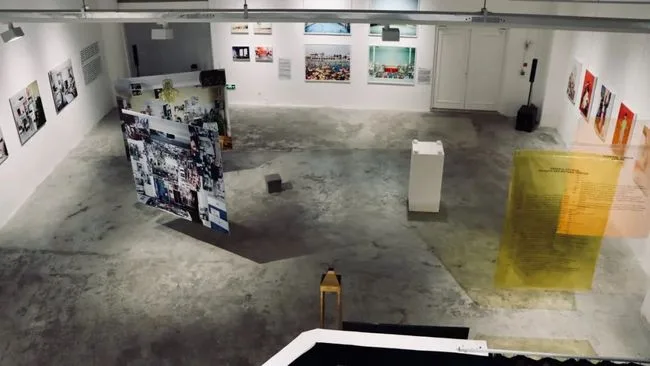
高台当代艺术中心,“脱缰世界2020”展览现场
聂小依:伊宁提到的两种思路,一种是我更倾向的自我组织,它需要先有一个社群。其实展览的要求没那么多,你自己在客厅里或者找个教室做一个展览也是展览。所以持续性的展览实践更多需要的,是先有这么一帮艺术的同好,那展览作为艺术的活动就会自然发生,就像摇滚乐在中国的发生一样,它肯定是这个城市当中的少数人的爱好,但是几个人凑到一起之后就会想做些什么事。社群的建立就像投一个石子到湖水里,有声响,水波也会慢慢荡出去,影响到别人。有一个投石者出现,说不定附近一个踌躇茫然的人的眼睛就亮起来了。
另外一个方面是刚才提到的经济发展。在欧洲,很多公立文化机构的预算主要靠国家拨款,比如英国的Arts Council England有专门拨款,推动伦敦之外的当代艺术的推广或者增加小镇上的博物馆馆藏,在国家和政策层面去考虑地域之间的资源均衡。而美国更多是靠私人资金,住在迈阿密的富人可能在全球买作品,但收藏都运回本地、建立一个当地的基金会,也会推动当地的艺术发展。但在中国,我们的生态很灵活,都是等人和人互相碰到,中间的契机可能是有一位开明的政府领导、企业建了一个美术馆、策展人收到了橄榄枝等等。但是这方面的实践能不能可持续,还是得回到社群这个问题上,即便有资本和政府支持,最后还是要靠中间真正做事的、对艺术有热情的人,是不是真能构建出一个健康的生态。构建生态其实是最费心、费时、挑战想象力的,因为要把不一定会碰到彼此的人们聚拢在一起,做件事。
我觉得对爱好者来说,与其幻想一个现在还没有出现的系统,不管是靠国家的钱,还是靠私人的钱,还不如大家做点自我组织比较实在,慢慢地可以明白自己的志向、找到同道者。
反思时刻
小依:回看整理后的访谈,发现自己思考与中国有关的问题时参照仍然基本是欧美,虽然开始去了解东南亚和南美的实践,但是真的要这样迅速问答里才知道知道自己思考时调动的资源究竟来自于哪儿啊!
但,还是感谢伊宁和小依的积极讨论!
Machine translation (AI) of the Chinese original, not yet reviewed by the author. Please cite the original.
Exhibitions – what is an exhibition? How has it evolved? Have you ever stood in the middle of a gallery looking completely lost? So what are we after when we go to see a show? What should it give us? Anyone who has ever been to an exhibition will have run into this string of questions.
In the first half of 2020, the severity of the pandemic brought countless physical exhibitions around the world to a halt, while everyone rushed to develop online exhibitions using the internet as their medium. In the second half of the year, as things gradually eased, exhibitions sprang up like mushrooms after rain, as if trying to make up for the half-year of programming lost to force majeure. Beyond the questions listed above, we may be facing even more questions about exhibitions… So for this instalment of our “Conversations” column, we invited the curator He Yining and the curatorial studies researcher Nie Xiaoyi to take on questions that are hard to answer and need to be answered again and again. This is only a beginning.
When we talk about how the exhibition has evolved in form – perhaps from the earliest cabinet of curiosities (or wonder-room), to the Salon (usually referring to the official exhibitions of the Paris Académie des Beaux-Arts between 1748 and 1890), to today’s white cube – has the function of the exhibition also changed along with its form over this whole history?
He Yining: Let me start today’s conversation from a less academic angle. I’m reading a book called Imperial Eyes. Its first chapter traces key historical turning points in the European imperial project, taking as a particular example the Swedish botanist Linnaeus and his “students” scattered across every continent. It sketches how an empire expanded from the seas into the continental interiors, and how it built up the discourse of imperial power through classifying continental species and through travel writing. The modern Western museum is closely tied to the birth and development of the natural sciences, and the early cabinet of curiosities in the Western context grew out of exactly this lineage. From the private collections of aristocrats and elites, to the Salon, to museums gradually opened up to the public, I think some things have changed – the era we live in, for instance, and people’s kind of inverted craving to go and see exhibitions. But some things haven’t: the human desire and appetite to collect, classify and display is constant.
Carl Linnaeus (1707–1778)
Nie Xiaoyi: This question places the “exhibition” within a Western lineage… Take the treasures and curiosities from around the world that colonisers brought back, which Yining just mentioned: today Oxford University’s anthropology museum, the Pitt Rivers, still embodies the taxonomy of that time, and most of the things it displays are treated as “culture” rather than “art”. The Salon, by contrast, was the exhibition held by the traditional academy of fine arts, and what it showed was generally considered “art”; whether or not you got into the Salon marked the difference between good art and bad art. This brings in the ecology of what we now call the “art world” – that is, the power of discourse: who gets to define art, and what art is. Modern art was in many cases a rebellion against this discursive power and against art history. The “white cube” is bound up with the “modern”: it stresses the neutrality of the space itself and the self-sufficiency of the work, and the “white” here also relates to the “clean” temperament of conceptual art. Another thing I’ve noticed over the past few years is that in many commercial galleries there are only works on the walls and no labels. If you want information you have to go to the front desk for a floor plan of the works on show. So sometimes the gallery environment even tries to hide annotation from view, recreating for potential clients an aesthetic experience free from interference. That’s what I find interesting about the commercial space as a “white cube”.
In fact, when we talk about “exhibitions” and “curating” today, we mostly follow the practices of curators such as Harald Szeemann and Pontus Hultén, whom Hans Ulrich Obrist interviewed in A Brief History of Curating. From around the 1960s, they made experimental contemporary art exhibitions in European museums, and together with contemporary art they questioned the museum’s discursive power, the form and function of the exhibition, and art’s place in society. After the 1980s, with the growth of biennials worldwide and the increasing role of research in contemporary art-making, you can see a so-called “discursive turn” in curating. Exhibitions have taken more and more part in the production of contemporary thought, engaging for example with issues of the body, identity and postcolonialism, and sometimes their physical spaces and works generate less discussion than their exhibition statements.
Inside the Pitt Rivers Museum; image from the museum’s official website
He Yining: Following on from what Xiaoyi just said – my practice centres on photography, so let me focus on how, from the 1970s, the display of photography moved from the white cube out towards the public and the street.
The Rencontres d’Arles photography festival could be called a breakthrough in the history of photography. Before it, photography either carried on the Salon tradition or was shown in white-cube spaces. But from Arles onwards it suddenly became something for the general public: it could be in the city, in churches, in different contexts and different exhibition spaces, facing a broad audience. I think this is a rather representative and pioneering way of presenting photography, because it has to face the public, it has to communicate and exchange, making the most of the medium’s communicative nature. People always say we can’t single out sculpture from contemporary art as a category of its own, but photography has always been a “separate category”. That may be something quite distinctive to photography, because it is still relatively accessible to the public and can easily be shown in different spaces.
Beyond that, photography was gradually accepted by art schools as a degree subject. It had perhaps been just a small course within design, architecture or fine art, but alongside the birth of the Arles festival, art schools across Europe set up many degree programmes from the 1970s.
So even today the Arles format is still being copied. Of course, it gets reinvented in different places and regions, but the model Arles set up is still being broken open and carried on all over the world.
Rencontres d’Arles 2019; photo: Chen Haishu
As soon as people hear this question, their first reaction is “this is thinking within a Western lineage”. So another question automatically appears: do we currently have a way of talking about “exhibitions” that doesn’t go through the Western lineage? Can we find self-sustaining conventions or experiences in China, going back to ancient times, of displaying art or treasures and curiosities? If not, can the “exhibition” we’re talking about now only be discussed along Western lines?
Nie Xiaoyi: I think this needs very subtle handling. In the past couple of years, the Artists Association and the academies have started talking about “Chinese curatorial studies”. But can research be put forward through a slogan? Does this formulation acknowledge “curating” as a discipline? What is the foundation of that discipline? Is “Chinese curatorial studies” meant to develop a theoretical paradigm with Chinese characteristics? Or is it to be built up case study by case study, through the accumulation of research and knowledge? I think there are many questions one could ask to test this formulation.
If we look at it from the angle of European curators after the mid-twentieth century trying to break the museum’s established neutral role of writing history and safeguarding knowledge – just like the Arles festival Yining mentioned stepping out of the museum – then the history of curating is often a process of merging social space with museum space. It puts the exhibition into a “dirty” site where many different forces are wrestling with each other, and curating becomes not just about display: it brings people in and becomes a process of discussion and collaboration, with talks, sharing sessions and workshops too. Seen this way, we actually have a great many Chinese practices to discuss. Some people have already asked whether the “floating wine cups on a winding stream” in classical gardens, or the elegant gatherings of the literati, might also count as “exhibitions”. The West had cabinets of curiosities; the Qianlong Emperor had his curio boxes, and ordinary households have their curio shelves.
Qianlong-period zitan curio box, image from the National Palace Museum, Taipei
But the talk of “Chinese curatorial studies” now often comes from an attitude of “if the West has it, we must have it too” – more like forcing Western theory onto research. The sociologist Yu Xie wrote an article arguing that “the indigenisation of Chinese sociology” is a false proposition: so-called indigenisation of application, of topics or of paradigms actually does nothing for building the discipline.[1] His view is something we can bring into other fields: research and experiment should start from real problems and concrete material, not from a position – though because researchers and practitioners are themselves in this environment, its own “local flavour” will inevitably emerge bit by bit.
From your perspective, compared with other media such as books or the internet, what is irreplaceable about the offline exhibition in a physical space when it comes to presenting art?
He Yining: I think the human desire for communication, especially face-to-face communication, is irreplaceable. During the pandemic we saw many attempts to turn offline exhibitions into online presentations. One case I personally love is Slime Engine: they built an entirely online exhibition space, a multidimensional virtual yet interactive setting. I really like that kind of innovation, but I still feel we need the possibilities that offline exchange brings.
The exhibition “China Imagined” that Ruben Lundgren and I recently curated for BredaPhoto in the Netherlands had a big problem: as curators we could only discuss things with the audience through a screen, and that kind of discussion doesn’t work. There’s a gap in time and space between the whole context of the exhibition, the questions the audience raised and what we wanted to say. Whether it’s the knowledge production itself or the discussion around how that knowledge production is displayed, I think direct interaction offline is still more effective.
Of course we can read texts at home first and then start a discussion online, but standing in an exhibition space yourself and feeling the relationship between the space and the works, the exchange between people – I still find those experiences pretty irreplaceable. When you stand at a certain angle to look at a work, the physical and psychological response that the sense of space and the visual experience give you can’t be felt in a virtual space – at least not by me. Some day a space might become very quiet, so you don’t have to think about people walking past and can take it in as if you were alone at home. But at this point in time, I still long more for exchange, to be there and experience it in person.
Grote Kerk, Breda: installation view of “China Imagined”; photo: Chen Haishu
Nie Xiaoyi: My view is quite similar to Yining’s. The exhibition is a medium, but in a sense it’s a medium that makes live use of other media – whether a gallery with spatial design, an art book or the internet, they can all become part of an exhibition. But what deserves more attention is that the exhibition brings in people, time and other uncontrollable factors. In an exhibition, the audience mostly has to interact with the show; you can never be in charge the way you are when you read a book at home. The curator can only set up a scene or situation and can’t say everything, as you can in an essay. And the works generally can’t fully control people’s time, movement and attention the way a film does. So an exhibition needs the works, the audience and the curator to leave each other a lot of room. It’s a very different kind of “politics”, and it needs all the participants (not only people) to be quite “humble”, aware that this is an interaction.
Another reason I love going to exhibitions is that the chance is limited: an exhibition won’t be there waiting for you forever, so you should always treasure that one experience. You are immersed, and yet free. By immersion I don’t mean the kind where you put on VR goggles and headphones. It’s that in that moment your time and space are simply there – someone in the gallery might suddenly start dancing next to you, not quite following the rules, and that’s part of it too. At the same time you can just zone out in the gallery, thinking about your life or other things you haven’t had time to think about.
To me these are the most interesting parts of an exhibition, but also the most fragile, because the show might come down a month later, and what each person takes away differs enormously. So even though an exhibition may leave an archive behind, an archive can never reproduce the experience of visiting it. How does it turn into knowledge, history, stories, encounters, reflections, and survive, rather than only affecting the people who happened to be there at the time? I think that’s a big anxiety for the exhibition as a medium.
He Yining: Also, whether it’s museums, curators or exhibition production companies, I don’t think anyone can predict how much impact an exhibition will have on the people who come to see it. Maybe the reason I became a curator and have my own ambitions in the art field is that I’ve seen countless exhibitions. Their effects on me have layered and interwoven to make me who I am now. That’s another reason I think offline exhibitions matter so much.
Let’s set aside for the moment these relatively emotional accounts – the unique experiences, the layered experiences that shape a person’s life – and talk about a very concrete exhibition. What must an exhibition give its viewers, at minimum, for it to be enough? To put it another way: what makes you say an exhibition is “pretty good”? What makes you fall for it?
He Yining: I think first there’s the question of “who is the audience” – a venue’s audience is really important. An institutional curator, for example, may need to think about their own venue and its audience; a municipal museum needs to make sure the old people and children who come in can all understand it. Independent curators or individual artists, meanwhile, want to convey different things and have different audiences in mind in different venues.
For example, the exhibition I made with Pro Helvetia, the Swiss Arts Council, “Between Mountains, Hills and Lakes”, had three stops in completely different venues. The first was Design Society, in Shekou in Shenzhen’s Nanshan District. On the one hand it’s an international design museum; on the other it’s a cultural space for local people. That exhibition space was open and free, and people could come after work with their kids and elderly parents and wander around until after 9 p.m. So it needed more translation and experimentation, more ways of connecting with the public. The Shanghai stop was at Modern Media’s space at Bridge 8, where the audience is probably mostly creative professionals, and the Beijing stop was at Three Shadows Photography Art Centre.
Although the content was the same at all three stops, these spaces actually face different audiences. So if I wanted to do all three well, I hoped to design different programmes with the team to meet the needs of different audiences. For various reasons that couldn’t be fully realised, but I still think the exhibition space and the venue’s audience are really important. As a curator, in the past few years in particular I’ve put my own research and the audience first at the same time. My role is to translate and demystify – to turn something very abstruse that others might not understand into a platform that everyone can understand, or at least wants to find out about.
Design Society, Shenzhen: installation view of “Between Mountains, Hills and Lakes”; photo: He Yining
As a viewer, on the other hand, I probably prefer an attitude that is willing to produce new knowledge and open to communication and dialogue. What I dread most is the kind of group show that is always a roster of the same names, with some philosophical term used to fuse a concept or whatever else together, and then put on display. I’d much rather see a curator trying to build the possibility of a new dialogue. For example, a few days ago I saw the new exhibition at OCAT Shanghai, “Space Discipline: Some Buildings (after Reform and Opening Up) and Some Architecture (after the Expo in Shanghai)”. Before the National Day holiday there were very few people in the galleries, but both the curator’s thinking and what he wanted to convey were very clear and genuinely inspiring. Personally, those are exactly the exhibitions I most want to spend my time on. If I have just one day, enough for one show, and there are a hundred shows on in Shanghai at the same time, I’ll pick the one whose attitude I feel is sincere. This differs from person to person. Xiaoyi just talked explicitly about the audience’s pursuit of art; for me, it isn’t necessarily about pursuing art so much as connecting with the world. I want to see some new possibilities – that is my original reason and impulse for going to exhibitions.
OCAT Shanghai: installation view of “Space Discipline”; photo: He Yining
Nie Xiaoyi: The audience Yining just mentioned is especially important. When we talked at the start about how an exhibition differs from an art book, one point was that an exhibition takes up a lot of people’s time and energy – it’s a resource-intensive activity. When we study curating, the first thing we’re always asked is “why here, why now?” Why does it have to happen at this moment, in this place? It has to be necessary, and then it has to “maximise the returns” on all those concentrated resources. But these days I’ve actually come to love some small exhibitions. They’re more fun, more personal, less weighed down by considerations – you do it simply because you like it, and only find out why once it’s done.
A big difference here is that the person organising an exhibition might be a curator in an institution, or might be an artist or writer who uses the exhibition as a form of expression – it’s really a spectrum. Every time an exhibition happens it has to find a good balance, especially between self-expression and the audience’s expectations. Even the same space has different audiences at different times. UCCA’s audience in 2008 and its audience in 2019, for example, were very different, both in numbers and in what they expected from an exhibition. So what a space ultimately wants to become is a matter of choice, and not everyone wants to be a big institution. With a bigger audience, or with responsibility for a stretch of “history”, an institution carries a great deal of responsibility: putting on a particular show may raise a work’s art-historical standing and artistic value, and its market value goes up too, so there’s an exchange of interests involved.
That’s why an institution like Tate in the UK is relatively conservative. Much of the time it more or less waits until all the debates about value and all the history-writing are over, and then, as the last step, confirms things by collecting. Some museums in China, though, may position themselves more flexibly and freely, and will actively put commercial and art exhibitions side by side, so as not to fall into the baggage-laden role of history-writer – otherwise they’d have no room to manoeuvre. And sometimes people just want to run a small gathering of kindred spirits. Yu Ji’s Shangwu Art Space (上午艺术空间) in Shanghai is really interesting. For me, it’s one of the few spaces in China today that an artist has kept going, and it makes experimental work. It may not be very polished, but it gives artists more chances to try things, get them wrong and get feedback. I find all that very attractive – it feels like they’re “playing”.
Shangwu Art Space, Shanghai: installation view of “Lingering, Stranded on the Shore” (《流连忘返搁浅在岸》)
Can we try, however crudely, to sort exhibitions into types?
He Yining: One angle occurs to me. I remember that whether it was a science and technology exhibition, a natural history museum or a city museum – most of the large venues of that kind I’ve been to – they are all telling a story. Museums, and art museums that work by surveying and arranging, in Europe or in China alike, have exhibitions that trace the art history of a country or region period by period, telling visitors the story of a stretch of history or of human development. They unfold as a narrative and communicate with the audience that way. That actually requires an exhibition team, a lot of discussion, and the involvement of exhibition designers and architects.
Xiaoyi, don’t you feel that in contemporary art very few people talk about exhibition narrative? There might be a manifesto or something like that, but the forms of contemporary art may be different from what I just described. Contemporary art is actually very lightweight; it may not even need a curator – the artist can do it alone. So I think these may be two very different kinds of exhibition. But if you analyse it further it gets very difficult, quite contradictory.
The British Museum; photo: Tom Jamieson
Nie Xiaoyi: To pick up on what Yining just said – “contemporary art doing historical narrative” is a contradiction. When Huang Zhuan died, the memorial volume Wu Hung edited for him was called How Does the Contemporary Become History? (《当代何以成史》). I think that’s a brilliant title. And on that point, the founding of new museums has to a large extent been a rethinking of how art history is written. When Tate Modern opened in 2000, one very big curatorial update in its permanent collection displays was that they were no longer divided by region and art-historical period, but by theme. Breaking with exhibitions organised by nation and chronology in this way actually acknowledges that artists have greater freedom when they make work, and that they can connect and resonate with art made in other periods and other places.
But back in China, our (modern and) contemporary art faced from the very start the divide between China and the West, and the anxiety of writing its own history. In the displays of our national museums, the dynasty-by-dynasty narrative more or less ends with the Qing. Then there are things like the Palace Museum’s painting and calligraphy exhibitions, where you can see ancient painting and calligraphy. But when it comes to modern and contemporary art, China has no permanent display presenting actual works. Much of the time all we can do is read scattered accounts in books and then look up pictures online.
“Duration: Chinese Art in Transformation”, which has just opened at the Minsheng Art Museum in Beijing, is a rare permanent display. Its wording is very careful: it says the exhibition will keep changing. Seeing it moved me a great deal. When I’d just started university I became interested in contemporary art, but I felt completely lost. I didn’t know where to go to get a systematic understanding of it – history, theory, ways of making, I knew none of it – but I was fascinated. I still remember seeing Wang Guangyi’s retrospective “Thing-in-Itself” at Today Art Museum. All around a huge gallery, sacks filled with rice husks were stacked right up to the ceiling, and standing in the middle of the room you felt very small. At that moment I felt that the smell of grain in the room and the bran under my feet took me a long way from the discourse of “Political Pop”, but brought me very close to the work. Full of confusion, but for real, I had run into this work. Back then 798 had lots of exhibitions like the ones Yining described: a metaphysical keyword, the work of one artist or of many, but no background knowledge laid out in the introduction, and the show probably hadn’t considered whether a viewer like me could understand it. And an even bigger problem was that nobody told you what good art was, or what your relationship with this kind of art might be.
Today Art Museum: installation view of Wang Guangyi’s “Thing-in-Itself”, 2012
Our historical narrative is missing, and hardly anyone tries to articulate criteria of judgement either – it’s a double absence. So I think that if an exhibition today really wants to achieve something, it needs a sense of responsibility towards the discipline and the field, and it needs to know what problems it’s dealing with. Even if the exhibition doesn’t pose those problems directly on the surface, it carries them through the process of making it, and it knows who in the field it’s in dialogue with.
As for what makes a good exhibition, which we touched on earlier: for me it should have many layers and be able to take in all kinds of audiences. A visitor might not work in the art world at all – just a student, an office worker or a factory worker who likes going to exhibitions – and they should still be able to find a way in fairly easily and very clearly. Even if they don’t fully understand it yet, they can see which direction to head in. But if you bring more knowledge with you, you can find other, deeper paths and enter into dialogue with the exhibition. This really demands that an exhibition has a great many layers, so that the audience doesn’t decide from the outset that it’s very exclusive, open only to art workers or knowledge workers. It’s similar to artistic practice and academic research: it needs to be both solid and penetrating, to explain deep things in simple terms, and to open onto other things by analogy. If I get the chance to make exhibitions, that’s what I’ll ask of myself.
Beijing Minsheng Art Museum: installation view of “Duration: Chinese Art in Transformation”
He Yining: That actually asks a great deal of institutions. Tate, for instance, requires exhibition texts to be understandable by children of a certain age. Naturally that raises the bar for institutional staff and for curating. A curator may have to face professionals, or young people studying the field, and at the same time three- and four-year-olds who are still scribbling everywhere – how do you let all of them see an exhibition and connect with it? That’s a huge challenge for an institution, and it asks a lot of the whole industry. It’s hard, but it’s the right direction.
Coming back to seeing exhibitions in China: many institutions have started running education programmes alongside their exhibitions. But I think a lot of things could be presented directly in the exhibition itself, rather than necessarily through a programme attached to it. That’s one direction for the future, and one we should be thinking about. If we hope that public taste in China will improve in the future, we actually need to spend more time giving children a platform. Children are very good at taking this in – their capacity to understand abstraction has even more room and more connections than adults’. So personally, too – as an independent curator I definitely fall far short in this respect – but maybe everyone could spend more time on it. Whether museums, institutions or spaces, it’s something we should all think about together, going forward.
Tate Modern; image from the official website
Nie Xiaoyi: This reminds me – weren’t we just asking what types exhibitions can be divided into? From what I’ve observed, a lot of exhibition production today actually works backwards from the audience. There are many exhibition PR companies doing targeted ticketing and content production, so you get lots of children’s exhibitions, mother-and-baby exhibitions, tech exhibitions and “Xiaohongshu exhibitions” – shows made to be photographed and posted on the lifestyle app Xiaohongshu. What I find especially interesting about China is how closely we’re tied to the market, and how quickly practice responds. Very often an exhibition is made to meet a real market demand: first you target a niche, then you work back to the content. So when we ask how to classify exhibitions, a lot of the time we’re really looking at what an exhibition is there for.
Then there are exhibitions within the government system. Cultural tourism is a priority now, and museums need exhibitions to present their narratives; commercial real estate also often brings in art museums to attract target consumers. So you need to look at who is funding an exhibition, or which ecosystem it sits in.
Right – in Ten Discussions on Art History (《美术史十议》), Wu Hung mentions that in the second half of the twentieth century many American art museums and museums were taken over by big corporate money. In today’s China that might mean all sorts of real-estate and financial giants. With a large influx of capital into the art field – including what Xiaoyi just described, targeting the market first and working back to the content – will capital-heavy, market-driven exhibitions affect the quality of their content?
He Yining: Actually, I don’t think commercial exhibitions are necessarily of lower quality than academic ones. If commercial capital can hire the best team, it can raise the level of an exhibition to some extent, and even produce a show of a very high standard in both production and content. A huge change happening in China now is that many curators who used to be academic – in university departments or museums – have started moving into commercial work, just not completely. But the relationship between the two will get closer and closer, because without money it’s really hard to make an exhibition turn out as well as you’d like. It needs enough capital coming in, and then the quality of the content may actually improve. So the relationship between the academic and the commercial is very contradictory, and it’s a reality especially worth discussing right now.
Nie Xiaoyi: I don’t think there’s any such thing as a completely neutral exhibition. Even museums that are in principle insulated from the market are still subject to the cultural and funding policies of the system they sit in, and to a large extent they have to take the politics of identity or class into account. From that angle, I actually think many exhibitions put on by commercial galleries are very cutting-edge. Commercial galleries and private foundations are both practices in the private sphere. Their rules of the game are very flexible and they each have their own ways of calculating returns, so the art they support can be ahead of the judgement of institutions and academia. Because they operate in a smaller ecosystem, as long as they trust their own eye enough and find a way to survive, they can realise their own vision and understanding of art.
Looking at it optimistically, I think today’s so-called booming commercial exhibitions aimed at the mass public in China will gradually diversify, each seeking out its own particular audience. Perhaps at the moment the exhibitions are still too alike, or all target very broad categories – children’s education, or seeing works by the masters. But if there are imagined exhibitions that go beyond the status quo, private practice is better placed to realise them. Many contemporary art museums in China are privately funded now; maybe the shift we’re seeing is a transition from philanthropy to business. In a market like that, could we hope for exhibitions with a relatively niche positioning? We actually have a great many viewers whose taste, knowledge and interests are more mature, and they need good culture and art too. The success of The Big Band (《乐队的夏天》), the TV talent show for indie bands, is a good example.
So how can a sustained exhibition culture take root in a city? Take Ningbo, where Jiazazhi is based: the city has always been relatively wealthy, but leaving aside the government-run municipal art museums and museums, there are hardly any decent exhibitions. Look further and you find that most of China’s good exhibitions are clustered in Beijing, Shanghai, Guangzhou and Shenzhen – to say nothing of the many cities in central and western China. How can this severe geographical imbalance be addressed?
He Yining: Yes – countless times on work trips I’ve chatted with drivers, and they ask what you’re going there for. You realise that for most people living in China, with their fixed daily routes, time is precious; most of it goes on work and family. But in first- and second-tier cities, say, a leisure class has started to appear – people who don’t need to spend all their time on production and can carve out time for leisure. Maybe they don’t want to go to KTV, and can spend that time improving their taste, or however you want to put it. In short, I think once a city reaches a certain economic level this will appear, but it takes time.
At the same time it needs a change in people’s thinking. For example, there’s Gaotai Contemporary Art Centre in Urumqi, A Thousand Plateaus Art Space and Mugetang (木格堂) in Chengdu, and, as far as I know, KeYi Gallery in Hefei. I’m sure their founders didn’t conjure a space out of thin air. They must have known there was a community around them like this, and then slowly set up their spaces. It still depends on individual people who love art and shine, slowly opening things up. It’s not as if something suddenly drops out of the sky – open a big space and it’s bound to succeed.
Leaving aside the other big museums, contemporary art institutions focused on collecting or display basically don’t exist there, because the economy really hasn’t reached that level. If we were to open a huge art centre in Tianjin, say, without enough audience to give continuous feedback and turn a profit, I think it would be very hard. So it can only be a bottom-up experiment. I don’t know what Xiaoyi thinks about that process.
Gaotai Contemporary Art Centre: installation view of “Runaway World 2020” (《脱缰世界2020》)
Nie Xiaoyi: Of the two approaches Yining mentioned, the one I lean towards is self-organisation, which needs a community first. Exhibitions don’t actually require that much – an exhibition you make in your own living room, or in a classroom you’ve borrowed, is still an exhibition. So what sustained exhibition practice needs more than anything is first a group of people who love art; then exhibitions, as an art activity, will happen naturally. It’s like how rock music happened in China: it was certainly a hobby of a minority in any given city, but once a few people got together they wanted to do something. Building a community is like tossing a stone into a lake – it makes a sound, and the ripples slowly spread out and reach others. When a stone-tosser appears, perhaps someone nearby who was hesitant and lost will suddenly light up.
The other side is the economic development we mentioned. In Europe, the budgets of many public cultural institutions rely mainly on state funding. In the UK, for example, Arts Council England has dedicated funding to promote contemporary art outside London or to add to the collections of small-town museums, considering the balance of resources between regions at the level of the state and policy. The US relies more on private money: a rich person living in Miami might buy works from all over the world, but ship the collection back home and set up a local foundation, which also drives local art. In China, our ecosystem is very flexible – everything waits for people to bump into each other, and the opportunity might be an open-minded government official, a company building a museum, a curator being offered an olive branch, and so on. But whether this kind of practice can be sustained still comes back to the question of community. Even with support from capital and government, in the end it depends on whether the people actually doing the work in between, the people with a passion for art, can really build a healthy ecosystem. Building an ecosystem is the most painstaking, time-consuming thing, and the thing that most tests the imagination, because you have to bring together people who might never otherwise meet, to do something together.
I think for enthusiasts, rather than fantasising about a system that doesn’t exist yet – whether it runs on state money or private money – it’s more realistic for everyone to do some self-organising. Bit by bit you come to understand your own aspirations and find fellow travellers.
A moment of reflection
Xiaoyi: Looking back over the edited interview, I realise that when I think about questions to do with China, my points of reference are still basically Europe and America. I’ve started to learn about practices in Southeast Asia and South America, but it really takes a rapid-fire Q&A like this to show you where the resources you draw on when you think actually come from!
But still – thank you to Yining and Xiaoyi for such a lively discussion!