Talk · 2024 · 中文
Case Studies and Historical Consciousness in Curatorial Practice策展实践中的个案研究与历史意识
A conversation closing Su Wei’s exhibitions on Zhao Dajun and Wang Guangyi, on the challenges of case-study research and exhibition-making in relation to art-historical narratives.
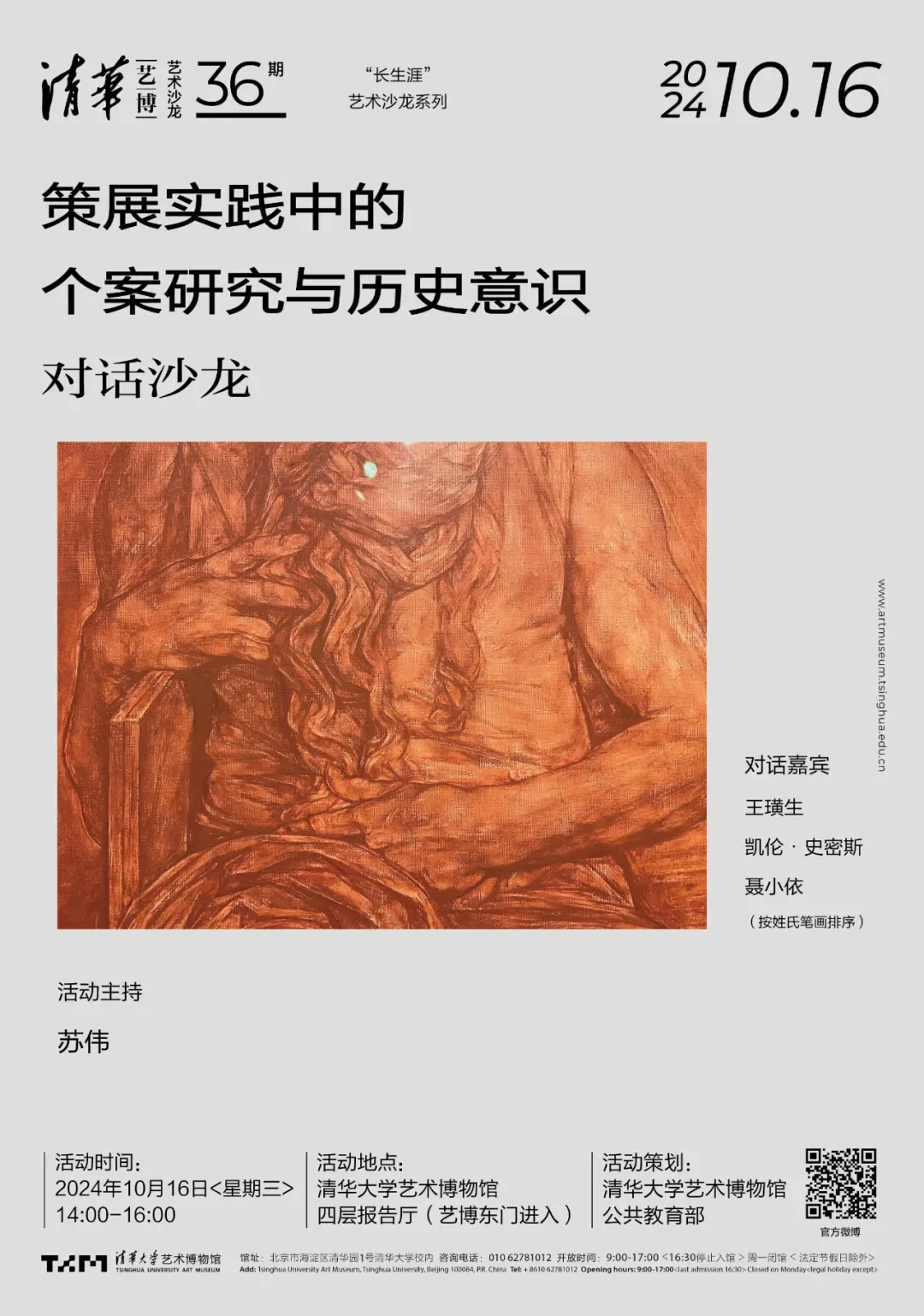
Poster design: Yang Hui. Courtesy of Tsinghua University Art Museum
“几何:赵大钧绘画实践的基本线索”展、“回到何地:1993年之后王广义的创作草稿”展正在本馆四层展出。
“几何”和“回到何地”两个展览以不同的策展语言呈现了两个在中国现当代艺术史上具有独特意义的个体的生涯片段。两个展览都以策展人所提出的“1949后”这一文化情境为底色,呈现了创作个体与时代精神、艺术框架的流变之间的碰撞。创作个案的研究与展览实践,一方面要求深入挖掘艺术家工作中或显或隐的创作线索,描述、重塑这些线索之间的有机关联或者断裂,这样也可以避免以纪念碑式的作品为核心进行形式化的铺叙;另一方面,在研究过程中,反复辨认艺术家的创作与流行的/微弱的艺术话语和文化政治议题的对话也是必需的,这是策展人提取艺术家主体状态的路径,以保证不陷入到仅仅围绕艺术家个人生活进行的神话叙事里。最终,呈现艺术家个案的策展语言是在如实陈述艺术家工作的同时,提出与今天的情境或者历史叙事相关的问题,打开新的问题域或者重启一些未竟的讨论。
在我们今天的文化情境中,创作个案的研究和讨论面临的挑战是什么?它如何既与现有的艺术史叙述发生联系,又以鲜明的姿态和具有深度的视野超越现存的、包括艺术史在内的文化话语?实际上,这种研究和策展工作所立足的土地和思想基础,其与历史研究、文化研究以及作为一种实践的艺术史写作的交叠之处,在今天并未得到充分的厘清。作为此次学术沙龙的终章,我们以“回到何地”和“几何”展的策展方法和叙事策略为出发点,就上述问题展开讨论。
对话嘉宾 Speakers:王璜生(广州美术学院美术馆总馆长)、凯伦·史密斯(独立策展人)、聂小依(写作者、ArtReview 中文版资深编辑) 主持 Moderator:苏伟,“几何:赵大钧绘画实践的基本线索”与“回到何地:1993年之后王广义的创作草稿”策展人
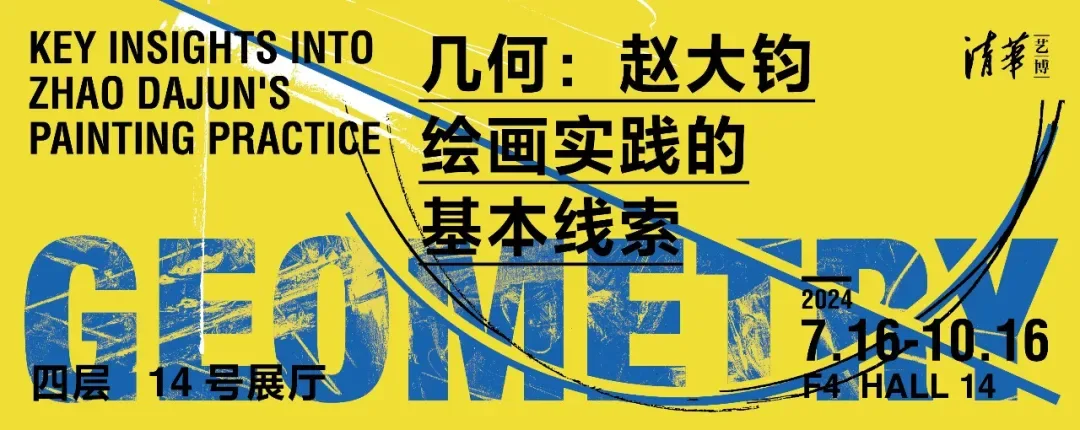
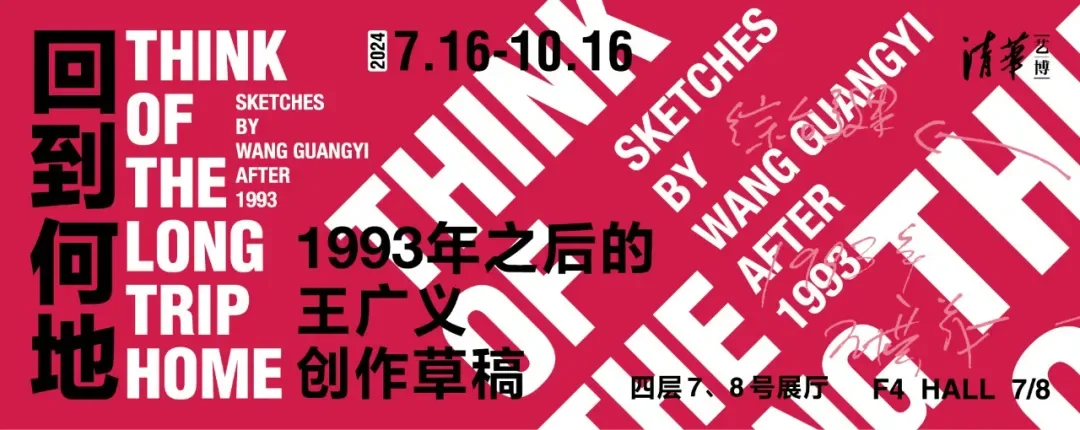
Exhibition posters: Geometry: Basic Clues in Zhao Dajun’s Painting Practice; Back to Where: Wang Guangyi’s Drafts after 1993 (Tsinghua University Art Museum, 16 July – 16 October 2024)
Machine translation (AI) of the Chinese original, not yet reviewed by the author. Please cite the original.
Poster design: Yang Hui. Courtesy of Tsinghua University Art Museum
The exhibitions “Geometry: Basic Clues in Zhao Dajun’s Painting Practice” and “Back to Where: Wang Guangyi’s Drafts after 1993” are currently on view on the fourth floor of the museum.
Using different curatorial languages, “Geometry” and “Back to Where” present episodes from the careers of two individuals of distinctive significance in the history of modern and contemporary Chinese art. Both exhibitions take as their backdrop the cultural situation the curator calls “post-1949”, and show how individual artists collided with the spirit of their times and with shifting artistic frameworks. Researching and exhibiting individual cases demands, on the one hand, digging deep into the creative threads – explicit or hidden – that run through an artist’s work, and describing and reshaping the organic connections or ruptures between them. This also helps avoid a formulaic narrative built around monumental works. On the other hand, the research process requires repeatedly identifying the dialogue between the artist’s work and the art discourses – prevailing or faint – and cultural-political issues of the day. This is how a curator draws out the artist’s subjective state, and it keeps the account from sliding into a mythologising narrative centred solely on the artist’s personal life. Ultimately, the curatorial language used to present an individual artist should state the artist’s work truthfully while raising questions relevant to today’s situation or to historical narratives, opening up new fields of questions or reopening unfinished discussions.
In our cultural situation today, what challenges face the research and discussion of individual cases? How can such work connect with existing art-historical narratives while, with a clear stance and a deep perspective, going beyond existing cultural discourses, art history included? In fact, the ground and intellectual foundations on which this kind of research and curatorial work stands, and where it overlaps with historical research, cultural studies and the writing of art history as a practice, have not been adequately clarified. As the final chapter of this academic salon, we take the curatorial methods and narrative strategies of “Back to Where” and “Geometry” as a starting point for discussing these questions.
Speakers: Wang Huangsheng (Director of the Guangzhou Academy of Fine Arts Art Museum), Karen Smith (independent curator), Nie Xiaoyi (writer; senior editor, ArtReview China) Moderator: Su Wei, curator of “Geometry: Basic Clues in Zhao Dajun’s Painting Practice” and “Back to Where: Wang Guangyi’s Drafts after 1993”
Exhibition posters: Geometry: Basic Clues in Zhao Dajun’s Painting Practice; Back to Where: Wang Guangyi’s Drafts after 1993 (Tsinghua University Art Museum, 16 July – 16 October 2024)