Writing / criticism · 2020 · 中文
‘There Will Be Two Sets of Wedding Photos and One of Them Must Be Shamate’: On Li Yifan’s We Were Smart两套婚纱照,必须要有一个杀马特的造型
关于李一凡的纪录片《杀马特,我爱你》:它看似回答「为什么要杀马特」,实则在讲「我们是谁」——90后留守儿童到农民工的群像与他们被污名化后的躲避。
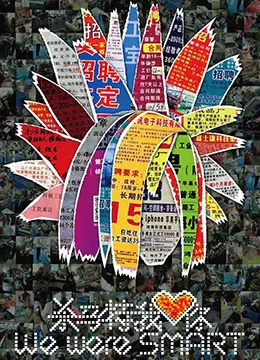
很久没看到像李一凡导演的纪录片《杀马特,我爱你》(香港中文大学文化和宗教研究系组织的线上放映)这么清晰呈现一个个鲜活生命的作品了。像导演所说的,这并不是一个对中国杀马特的总体研究,而是由不多的杀马特(他们采访到了67位)来讲述ta们所经历的90后从留守儿童到成为农民工的个人历史。李一凡在朋友满宇的介绍下认识了“杀马特”家族的创始人罗福兴、又请罗福兴介绍了曾有过杀马特经历的青年人,请他们在镜头前讲述自己的经历。
这个纪录片由不同的杀马特的自述组成,有非常多的征集的手机素材(三个竖屏拼成横屏的版式很像前一阵子快手素材剪辑出来的抗疫纪录片),但核心逻辑很清晰:看起来是回答“为什么要杀马特”,实则在讲述“我们是谁”。这些个体组成的群像,讲述了不同段落的生活——在工厂的加班,在城市中的挫折,寻找自我和自我组织,与其他杀马特的友谊,所受的歧视,13年时主流文化对杀马特的污名和现在的生活。但其实不需要太多时间,观众就会意识到杀马特的分类和视觉创造并不是本片重点,重要的是成为杀马特的需求来自他们所处的生产关系中的位置,这群早早出来打工、生活极度贫乏的年轻人,他们想要逃离的是被老板克扣工资、被流水线异化、在城市里总被骗钱、不被家长理解的那个绝望的自己,他们想要成为一个有个性、有认同、有朋友、被关注的快乐的自己。为了让自己有动力活下去,他们选择了成为杀马特,选择用杀马特作为人群中看见彼此的标记,找到对方、找到朋友和恋人、找到让自己温暖的地方。
采访里有一个人说,工厂是一条通道,杀马特是另一条上升的通道。你可以成为杀马特家族中的“贵族”,虽然那是虚幻的,但快乐是真实的。“工厂里的职位就算空了,也是留给大学生研究生的,并不是说留给你们这种从农村出来的,所以我们不如干脆选择另外一条通道。但我觉得这是快乐的东西。人,这快乐的话,我觉得是一样的。”
李一凡分享的自己在创作中视角的转变对于研究者、创作者很有启发,他的预设是杀马特是类似朋克的文化反抗(和刘伟伟的采访里他谈得更详细),在驴唇不对马嘴地和罗福兴交流了很久之后、在搬去东莞石排镇住了一阵子之后,他发现杀马特根本不是自己想象的那样。如果一开始是视觉文化的预设,后面其实是转到了社会政治经济学,把研究对象从视觉形象的文化分析转向了对人的理解,认识杀马特到底是“谁”,是什么样的人、怎样生活着。他也提到这个过程里很重要的是双方可以理解彼此的话语,能用对方的语言沟通。我也蛮佩服他没有面对在跨越阶层、文化、种族的研究里常会出现的自我怀疑。在伦敦常常看到自由主义话语特别是因为black lives matter的波及下,主流对“文化挪用”和“为庶民代言”(can the subaltern speak)的自我审查,其实遏制了人们去表达对与自己不同的人的理解、去想象人和人之间丰富多样的关系。
但现实里,主流与杀马特、非主流之间的关系常常是侧目、排斥甚至是绞杀,像中世纪对女巫的围猎。去年李一凡在广东时代美术馆有个展,邀请了罗福兴和他的一个朋友去广州。但是这两位不坐高铁、非要坐顺风车,到了广州也不坐地铁,就要坐土摩托去美术馆。并不是生活习惯,或者是“习俗”或“文化”,而是因为每次坐高铁和过有安检的地铁,他们都很有可能会被盘问,久而久之,他们便绕开了这些选项,选择那些不让自己受辱的空间。其实被污名化之后,杀马特一直在躲。片子里介绍了杀马特从2006/07年到2012年的蓬勃,到2013年突然被主流发现后,杀马特的QQ群、QQ空间、开的游戏房间都被谩骂充斥,走在街上也会被打。他们删掉了照片、不再玩游戏。“我们只是想要一个自己的空间”,不,不行的。
片子里我印象最深的一段话来自一位去学了美容的姑娘,她现在头发乌黑、妆容温柔,很难想象她曾经的样子。她动情地说自己结婚的时候,一定要再扮成杀马特:“两套婚纱照,必须要有一个杀马特的造型,就是我小女孩的样子,要珍藏起来回忆很多年。”
Machine translation (AI) of the Chinese original, not yet reviewed by the author. Please cite the original.
It’s been a long time since I saw a work that presents so many vivid individual lives as clearly as Li Yifan’s documentary We Were Smart (screened online by the Department of Cultural and Religious Studies at the Chinese University of Hong Kong). As the director says, it isn’t an overall study of China’s shamate – a flamboyant youth subculture of spiky, dyed hair and heavy make-up, its name a transliteration of the English word “smart”. Instead, a limited number of shamate (the team interviewed 67 of them) tell the personal histories they lived through as members of the post-1990 generation, from “left-behind children”, raised in the countryside while their parents worked in the cities, to migrant workers themselves. Through his friend Man Yu, Li Yifan met Luo Fuxing, founder of the shamate “family”, and then asked Luo to introduce him to young people who had once been shamate, inviting them to talk about their experiences on camera.
The documentary is made up of different shamate telling their own stories, with a great deal of crowdsourced mobile-phone footage (the format of three vertical frames side by side making up a horizontal screen is very like the pandemic documentary edited together from Kuaishou clips a while ago). But its core logic is very clear: it appears to answer the question “why become shamate?”, but it is really telling us “who we are”. This group portrait of individuals covers different stretches of life – overtime in the factories, setbacks in the city, searching for oneself and organising oneself, friendships with other shamate, the discrimination they suffered, the stigma heaped on them by mainstream culture in 2013, and their lives now. It doesn’t take long, though, for the audience to realise that the categories and visual inventions of shamate are not the film’s focus. What matters is that the need to become shamate came from their position in the relations of production. These young people went out to work early and lived in extreme deprivation. What they wanted to escape was that desperate self – the one whose wages were docked by the boss, who was alienated by the assembly line, who was always being cheated out of money in the city and never understood by their parents. They wanted to become a happy self, with personality, identity and friends, a self that got noticed. To give themselves the will to keep living, they chose to become shamate, and chose shamate as a sign by which to spot one another in a crowd – to find each other, to find friends and lovers, to find somewhere that kept them warm.
One interviewee said that the factory is one path, and shamate is another path upwards. You could become an “aristocrat” in a shamate family; that may be illusory, but the happiness is real. “Even if there’s a vacancy in the factory, it’s kept for university graduates and postgraduates, not for people like you who came from the countryside. So we might as well just take a different path. But I think this is something happy. People – when it comes to happiness, I think it’s all the same.”
The shift in perspective Li Yifan described in making the film is very illuminating for researchers and artists. His assumption had been that shamate was a form of cultural resistance, something like punk (he talks about this in more detail in an interview with Liu Weiwei). After a long stretch of talking at cross purposes with Luo Fuxing, and after moving to Shipai Town in Dongguan for a while, he found that shamate wasn’t what he’d imagined at all. If he began from the assumptions of visual culture, he then turned towards social and political economy, moving his subject from a cultural analysis of visual images to an understanding of people – finding out who shamate actually are, what kind of people they are and how they live. He also said that what mattered most in this process was that both sides could understand each other’s language, that he could communicate in theirs. I rather admire the fact that he didn’t run into the self-doubt that so often comes up in research across class, culture and race. In London I often see how liberal discourse, especially in the wake of Black Lives Matter, leads the mainstream into a self-censorship over “cultural appropriation” and “speaking for the subaltern” (can the subaltern speak), which in fact stops people from expressing an understanding of those different from themselves, and from imagining the rich variety of relationships between people.
In reality, though, the mainstream’s attitude towards shamate and other “non-mainstream” youth is often sidelong glances, exclusion, even strangling – like the witch hunts of the Middle Ages. Last year Li Yifan had a solo exhibition at the Times Museum in Guangzhou, and he invited Luo Fuxing and a friend of his to Guangzhou. But the two of them wouldn’t take the high-speed train; they insisted on a ride-share. And once in Guangzhou they wouldn’t take the metro either, but went to the museum by motorbike taxi. This wasn’t a matter of habit, or of “custom” or “culture”. It was because every time they took the high-speed train or went through the security checks in the metro, there was a good chance they’d be questioned. Over time they simply avoided these options, choosing spaces where they wouldn’t be humiliated. In fact, ever since they were stigmatised, shamate have been hiding. The film describes how shamate flourished from 2006/07 to 2012, and then, when the mainstream suddenly discovered them in 2013, their QQ groups, their QQ Zone pages and the game rooms they ran were flooded with abuse, and they could be beaten up in the street. They deleted their photos and stopped playing games. “We just wanted a space of our own.” No – that wasn’t allowed.
The words from the film that stayed with me most came from a young woman who went on to train as a beautician. Now her hair is jet black and her make-up soft; it’s hard to imagine how she used to look. She said, with deep feeling, that when she gets married she will dress up as shamate again: “There’ll be two sets of wedding photos, and one of them must be in shamate style – that’s me as a little girl. I’ll treasure it and look back on it for years.”