Writing / feature · 2025 · 中文
Jiang Zhi: An Artist's "Offence" and Response to His Times蒋志,蒋哥,蒋叔:一个艺术家的"冒犯"与时代回应
人物专题:以谢子龙影像艺术馆"蒋志:人群中的人"和12号空间的个人项目为线索,写蒋志对时代浮沉与普罗大众的兴味和警惕。
两面
Janus
✦
❝
他既不是社会行动者,也不是纯形式主义者。他像是始终游离在中心之外的‘人群中的人’。
❞
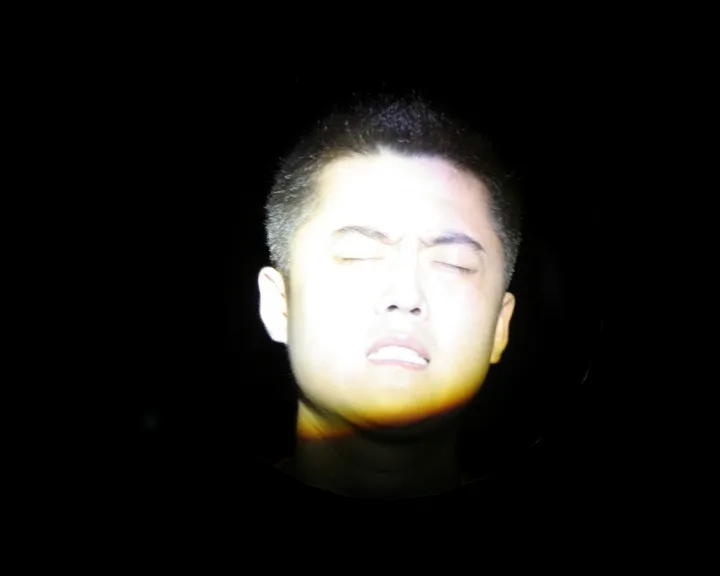
《照耀我》(静帧)
2006年,单屏录像,彩色,有声,33分26秒
图片鸣谢艺术家
储云是蒋志的多年好友,也是今年三月在长沙谢子龙影像艺术馆开幕的“蒋志:人群中的人”的策展人之一。他说,蒋志已经做了30多场个展,他们得想,这次如何能做得不一样。同期,北京的12号空间也展出了蒋志的个人项目 “蒋哥,现在的时候最好尽量拍白人的”。在这两个展览里,“情书”系列(2010—2014)——那些和蒋志的名字似乎绑定在一起的、燃烧着的鲜花的图像——没有出现,蒋志也不再是个私人关系里的深情者。我倒是读出了艺术家对时代浮沉的兴味,对普罗大众的好奇与警惕,几根反骨,适量狡黠。
摸索着走出黑暗甬道,惊觉自己乍现于开阔、空荡的无光展厅,四周悄然无声,只有脚步声回响在混凝土的墙面。我仰起头——在那里,一束巨大的白光照亮了一个人的面孔,它在人的面孔上颤动着。夜色中,人的脸孔并不因为黑暗隐匿,反而因为光束太过明亮而在镜头中消失,ta们的神情变换,仿佛在挣扎着,想保有面具的稳定性。ta们睫毛忽闪、瞳孔收缩,试图无视镜头的逼视,却又不得不扮演那不惊、不怒、不痛的自己。
这是蒋志“人群中的人”的第一件作品,《照耀我》(2006,最初曾被命名为《要有光》),也是一种“冒犯”的开场。作品名直接引自《圣经·创世纪》:“神说:要有光,就有了光。”在神话的叙述中,光意味着世界的初始秩序、温暖与希望,是将混沌拨开之后的第一缕明亮。但蒋志所投射的这束光却让人不安,它不是神迹,而是人造的的真实、暴力和炽热。
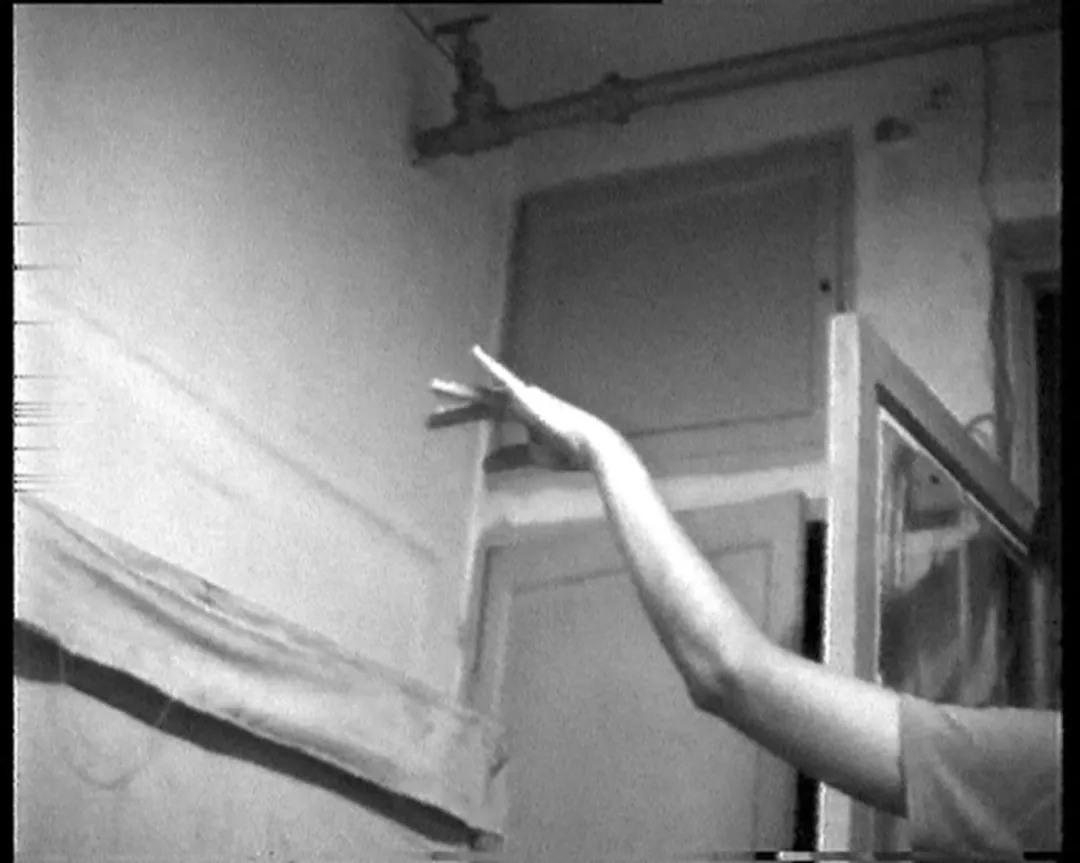
《飞吧,飞吧》(静帧)
1997年,录像,黑白,有声,5分15秒
图片鸣谢艺术家
《照耀我》在几重意义上预告着这个展览。这一展览先在从媒介上做出了选择。展览舍弃了摄影、装置、写作、绘画,选入的十件作品均为影像。而更根本上的区别在于,这些影像一反蒋志作品常常被解读出的抒情与诗意,转而揭示了其中冷峻甚至带有攻击性的目光。以“人群中的人”为题的展览,首件作品就已显示他对人的凝视中并不带有怜悯,而更像是一次关于“作为人”本身的质询。被聚光灯照着的,不仅是面孔,还有个体在巨变社会中的挣扎、想要掩饰又无处遁形的局促。站在这作品前,我想起在阿那亚艺术中心的个展“生活”(2024)里,蒋志展出的多是捕捉日常细节与私人感知的影像文本。譬如《飞吧,飞吧》(1997)里那如天使的翅膀般轻柔扇动的女性手臂——那些作品更加柔软、诗意、贴身。在接连而至的壁龛与内室中,我相信了蒋志身上还流动着我以为已经变作化石的、观念艺术里的丰沛情感。
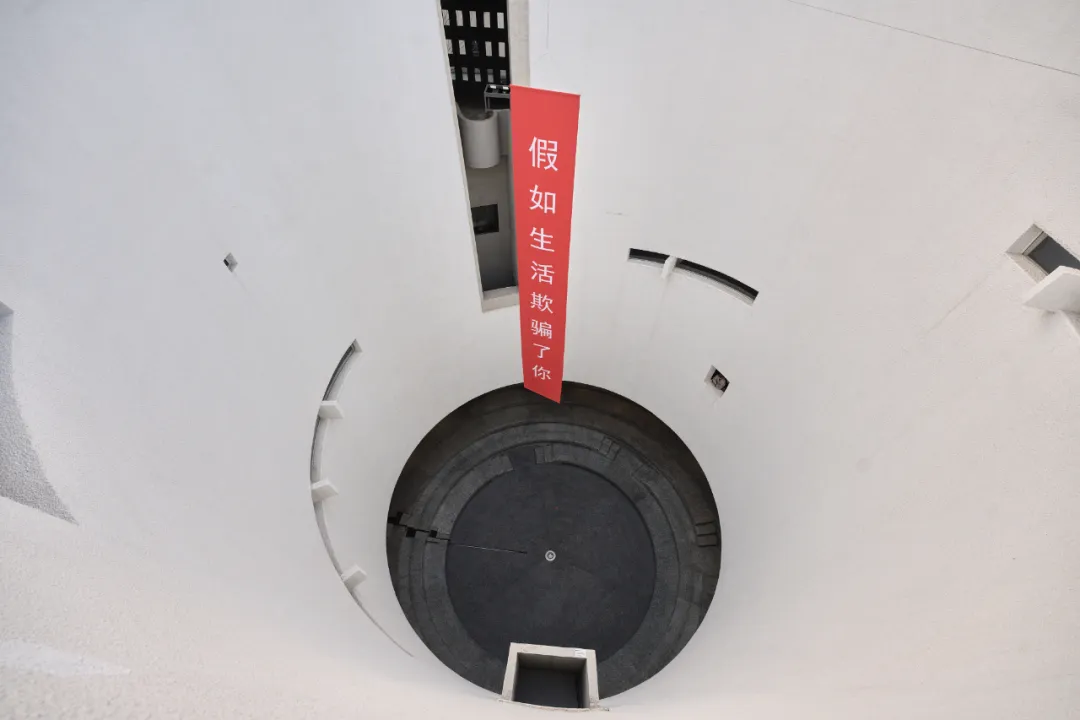
“蒋志:生活”展览现场,2024年,阿那亚艺术中心,秦皇岛
摄影:在野照物所
后期:孙诗
图片鸣谢艺术家及阿那亚艺术中心
差点又被艺术家骗了。
看完阿那亚的展览不久,蒋志给我发了一个PDF文件,内容是他延期至2025年才展出的 “蒋哥,现在的时候最好尽量拍白人的”。在2022年新冠大流行之中,俄乌战争也爆发了,宅在家里的蒋志观察到淘宝上特别的视频定制服务:非洲黑人小伙子、扮作兔女郎的乌克兰美女,大声模仿中文的语音、声调,送出祝福。后来我采访蒋志时,他说在看到这个视频时,他意识到这种现象一旦出圈、在社会中被讨论,离消失便不远了。他决定开始围绕这个现象做些什么。但促使他开始创作的最重要原因并非是这一现象的生命时间,而是他想挑战人们对这一现象的初始反应,即不假思索的“心酸”和“错愕”。在项目的第一阶段里,蒋志把自己作为订购视频的普通客户,套用其他客户的祝福送给自己。所以我们看到了视频中,表演者拿着的小黑板上写着“祝蒋志哥哥爱人节快乐”“祝蒋志姐姐生日快乐,泡800个男人生500个光头强”等等。后来,蒋志为表演者拟定了同一句话,一句听起来是从他们自身出发的表达:“我们都是你的礼物。”还有一个阶段,蒋志不按常理出牌,给出的要求是不具任何意义的涂鸦、字符,也有一些期盼俄乌战争结束、世界和平的话,但这些慢慢地都被淘宝客服拒绝了。他顺应淘宝客服的要求,给出了更有“诗意”的文案:“我只想让你愉悦/短暂/唱着歌/说/短暂。”
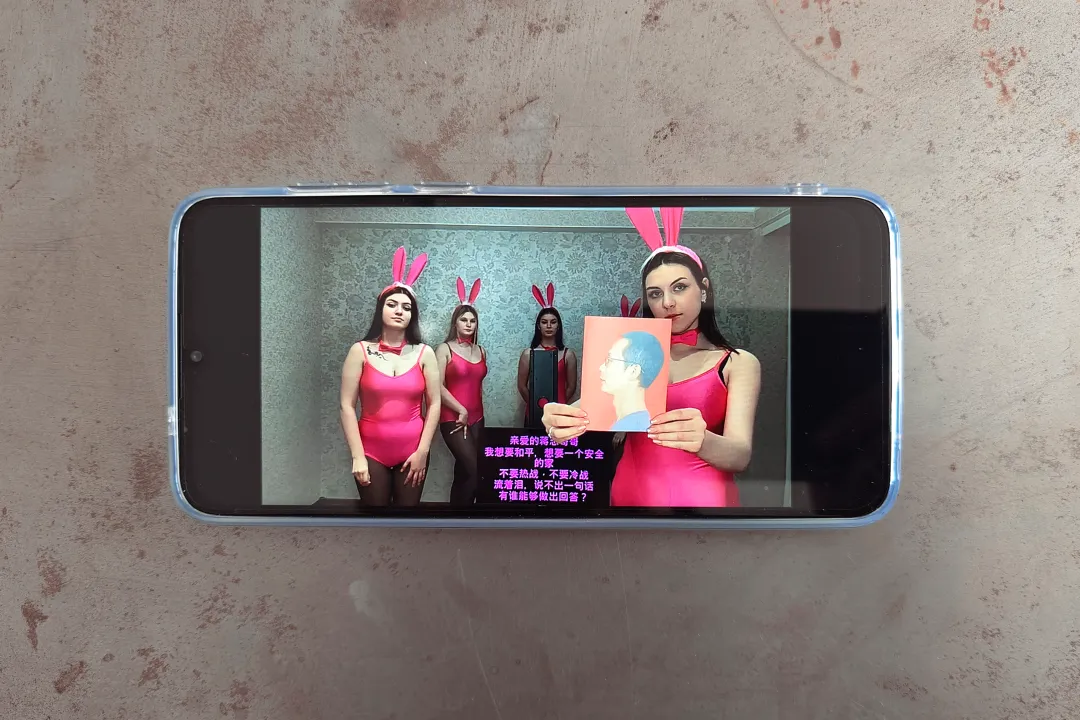
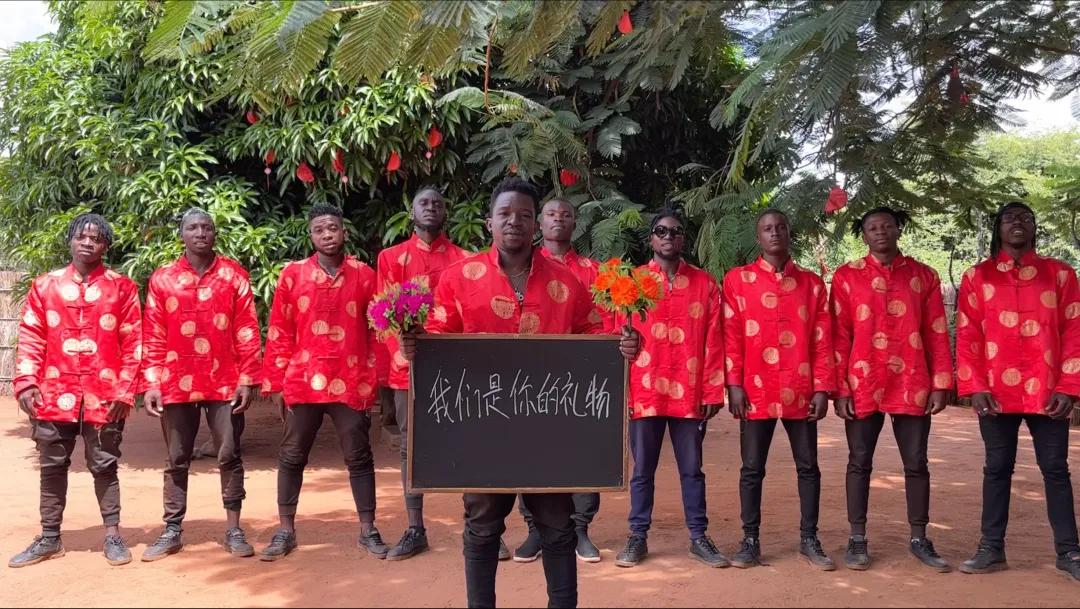
上图:“蒋哥,现在的时候最好尽量拍白人的”展览现场
2025年,12号空间,北京
图片鸣谢艺术家及12号空间
下图:《我们都是你的礼物(过年大红)》(静帧)
2022年,单频录像,彩色,有声,32秒
图片鸣谢艺术家及谢子龙影像艺术馆
如今,这种服务已经从大众视野里消失了,或许是因为官方也意识到这种“服务”可能引发的舆论风波。但舆论其实并非最重要的因素,蒋志在和客服小哥聊天时发现,其实大约在2015年,这一服务便已经出现了。2017年时,BBC中文记者赵雅珊曾在《解惑:非洲小孩为中国买家举牌争议何在?》中报道,这种服务曾经被淘宝强制下架过。只不过,它显然在之后又寻求时机出现了。据蒋志与客服的沟通所言,从2022年3月开始,来自上海的订单猛增,或许是因为人们被强制要求待在家中时,许多情绪的表达涌向了这里。俄乌战争在2022年2月的同期爆发,带来了更多政治变动因素。当乌克兰女性无法表演时,俄罗斯表演者出现了,而乌克兰女性重新回到这个交易场后,俄罗斯队因为没有订单被随即解散。
我不认同这一“服务形式”本身。最初看到蒋志的这个项目时,我的反应是,值得吗?这类淘宝定制视频的存在,原本便透露出中国社交平台中长期存在的对异族他者的轻慢、猎奇和结构性歧视:黑人被简化为能跳舞的“葫芦娃”,乌克兰女性的情色表演与战乱图景被双重编码,他们都成了商品的构件、祝福的媒介。而蒋志进入其中,成为客户。他复制他人操作、下单,为“演员”说出祝福、诗句或者无言之词下达指令;他不试图纠正,而是以另一种方式逼近荒谬的内核。他并没有让观众“更了解”或“更同情”这些表演者,反而进一步利用、逼迫这一剥削机制本身,直到借淘宝客服之口,道出这一机制的边界。
对我来说,这作品其实和社会介入的关系不大,更像是蒋志捕捉材料方式的拓展——从拿起画笔到拿起录像机,再到去淘宝下单。蒋志仍然是一个工作室艺术家。他仍然在他的安全区内,以自身意志试探材料的边界。或者,按他自己的话说:“我们一直都是一个人在玩游戏,无论你和多少人在一起。”(蔡影茜、蒋志《给蒋志的问题》,2012)他在下单的过程中或多或少扭转了常规操作,给服务过程带来了颇多尴尬,但这一机制之中的商品机制、人和人的关系,其实并未有实质性的改变。
这一项目也在“人群中的人”中显露了踪迹,但被大刀阔斧地删减了。在策展人之一丁丁所做的展厅设计里,《照耀我》被高悬于半空,光的暴力、人的苦难皆被放大,透露出祭坛画般的崇高。而这一巨大屏幕的背面是《0.7%的盐》(2009)。在近九分钟的视频里,明星阿娇从面无表情到开始垂泪痛哭。屏幕正反面的形式在展览中又出现了一次。策展小组挑选了《谢幕》(2009)和《我们都是你的礼物(过年大红)》(2022)两个极具表演性的作品。一个穿着旗袍的女人从红色帷幕中反复走出,向舞台四周的观众鞠躬致谢;这让屏幕背面载歌载舞的非洲小伙没有太突兀——在这个语境里,中非两地的人民都会表演。原本的种族歧视在这里被消弭了大半,反而变成了更普世的际遇。我对这一策展编辑策略拍手称赞,不得不说,我甚至能体会到蒋志对普通人的悲悯了。
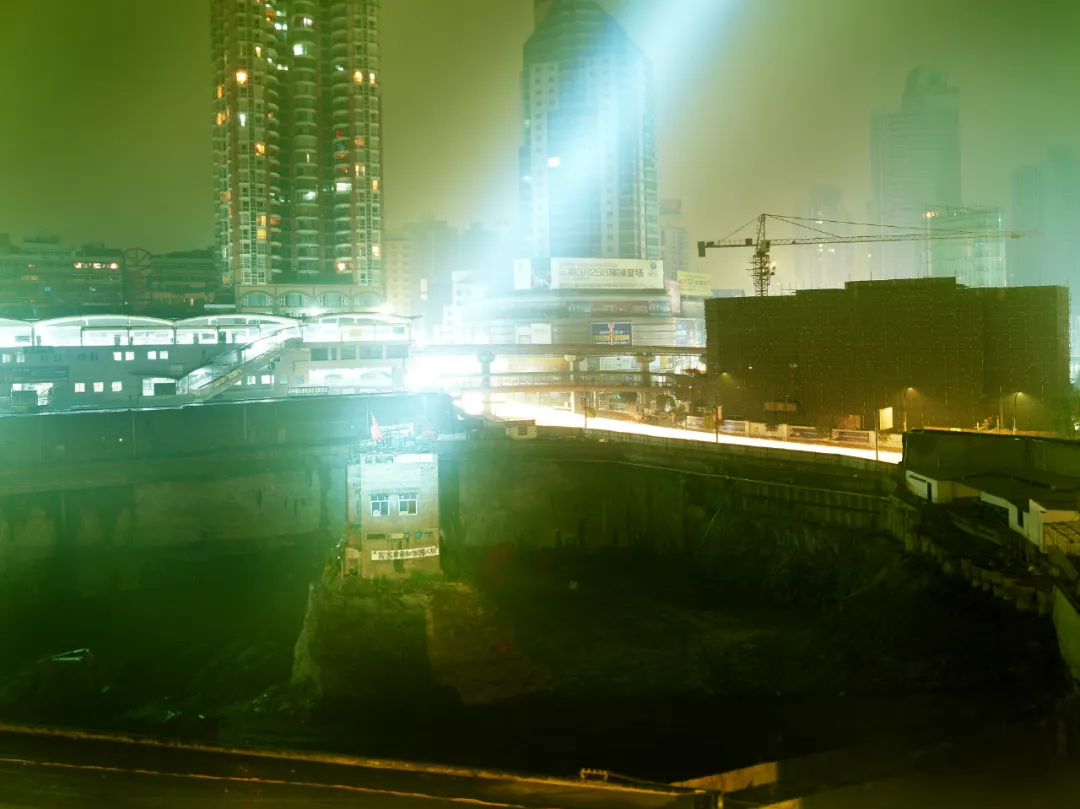
《事情一旦发生就会变成钉子》
2007年,彩色打印,150 × 200厘米
图片鸣谢艺术家
此时冒出一个问题,为何蒋志在创作中会体现出如此矛盾的两面——抒情和冒犯?他作品中的“政治性”是什么?为何我会在看他作品的过程中如此犹豫?或许我们可以看看《照耀我》同期的一件摄影作品《事情一旦发生就会变成钉子》(2007)。当年《物权法》在人大通过,重庆杨家坪有一个强硬的钉子户拒绝拆迁,周围的地基都被挖去时,只有一栋房子孤零零地立在洼地中央。蒋志租了聚光灯,架在钉子户旁边的楼上,等夜里保安睡觉后,拍下了这张照片。光在这里照亮的并非某种正义或希望,而是一种极端的孤立。这既不是纪实摄影的角度,也不是社会运动的记录,而是将这一栋房子凝固在神迹般的光明之中——而黑暗,又隐喻着什么?
正是在这样张扬的目光中,我们或许可逐步厘清他创作中的“政治性”。蒋志并不关心政治的具体运作,也不关心政策与规制对现实的细节如何织网。在《照耀我》和《事情一旦发生就会变成钉子》里,暴力的光可以穿透人的脸孔,也可以给人尊严。其政治性是一种通过观念与视觉策略达成的间接强调和提问,是一种对存在本身的质询与悬置——人如何“被看见”?看见是否意味着理解?蒋志“冒犯”策略有两个维度,一个是显性的,通过结构和光的刺痛暴露观看伦理;另一个是隐性的,通过冷静地悬置情感,拒绝替观众言说痛苦,也拒绝安慰。这两种路径最终都指向一个核心问题:艺术如何处理“人”?或者说,它是否正诚实地揭示出——艺术与人之间,从来不是对等的关系?当“人”进入作品,既可能被仰视、也可能被消费,还可能成为协作的对象。而艺术家作为“人”,却总是缺席在自己的作品中。艺术家掌握着规则,如同造光者。问题是:他是否意识到,自己拥有特权?
在“蒋哥,现在的时候最好尽量拍白人的”中,这些问题进一步逼迫我们去辨析哪些是艺术,哪些只是对现实的复现。当然,这些问题也和这个时代的观看政治有关。40年前、30年前、20年前,艺术家是前卫派、实验者,它超越大众、引领思考,不被观众理解是对破格而出的嘉奖。而今,越来越多大众走入美术馆和展览馆,更多样的观众开始发声,我作为一个从业者开始思考自己对艺术家的盲从和溺爱。如果一件作品让人极度不适,它会被投诉,会在社交媒体上被批评。我身边的一位朋友、年轻艺术家小刘说,有一些艺术家,不知道为什么一些10年前可以开的玩笑,现在不能讲了,一些20年前会被叫好的作品,现在开始被抵制了。在看到“蒋哥,现在的时候最好尽量拍白人的”这个标题之后,小刘想说的是,“蒋叔,时代变了”。
这个时代正在酝酿着新艺术,其中包含的是有关理解、关爱、协作、照护和互助的政治,而非早年的攻击性与酷感的政治美学。这种转变不是简单的去除锋芒,而是一种更为复杂的伦理调适与审美重构:它不再以“震撼人心”为唯一合法性,也不再将不适视为一种强迫观众“看见真相”的捷径。我们面对的不再是“艺术家制造冒犯”或“观众拒绝思考”的二元对立,而是更模糊的边界地带——我们究竟希望艺术如何说话?又允许它以多大的尺度说?
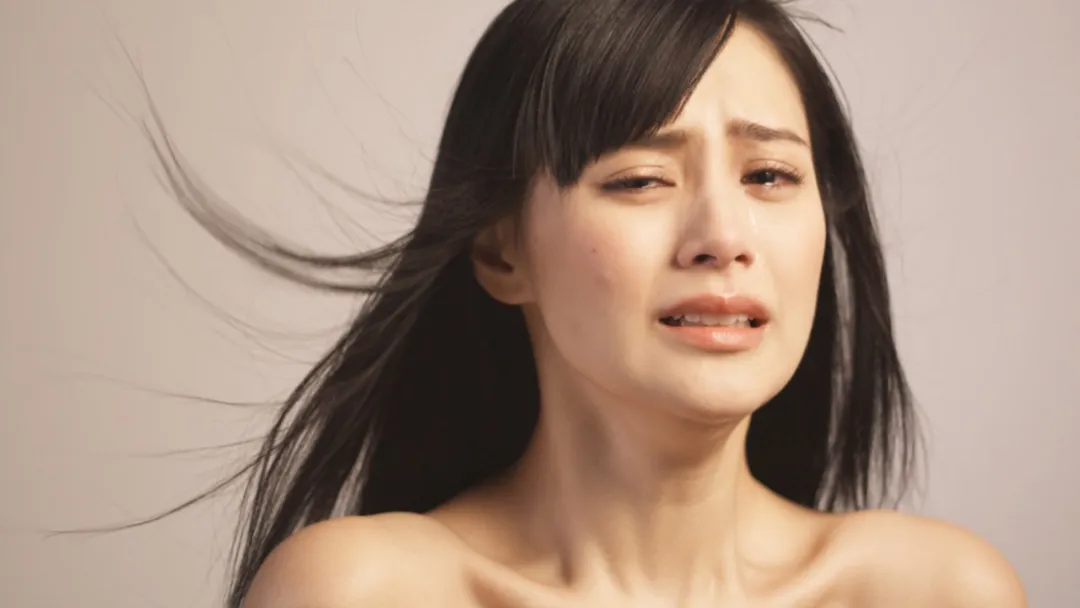
《0.7%的盐》(静帧)
2009年,单频录像,彩色,无声,8分43秒
出演:钟欣桐
图片鸣谢艺术家
或许,真正关键的从来不是尺度,而是我们此刻需要什么样的观看方式。早在2009年和2010年,蒋志举办“表态——一个蒋志的展览”,《0.7%的盐》即诞生于此。他关心的不是表态本身,而是那些被设定好的“感觉机器”——我们在毫无意识中迅速做出的情感判断与舆论选择,那些“大而坚固的预设”(蒋志语)。《0.7%的盐》正是一个典型案例,它回应了陈冠希裸照事件中大众对女性、对阿娇的集体围攻,尤其是:一个女性,应该在何时哭泣?在看《0.7%的盐》时,我虽然意识到这是一场表演,但还是不由自主地与阿娇共情。她从面无表情到垂泪痛哭,直视镜头的眼神仿佛在反问我们——女人的眼泪为何必须被众人观看?“美人垂泪”是一个如此典型的、男性凝视下的审美图像。然而这一次的哭泣,并非由公众的期待主导,而是阿娇自身的回应。她接受了合作请求,也做出了对“何时哭泣”的决定。在我看来,这种主动性让这件作品比“蒋哥,现在的时候最好尽量拍白人的”更具复杂性与尊重。幸好她被那样郑重地悬置于半空,而不是被放置在脚边的监视器里。这种仪式性的呈现,为观众制造了距离,也给予了尊严。我也想到蒋志另一件有关女性形象的作品《娇羞的,太娇羞的!》(2009)。他邀请了95位志愿者在镜头前摆出“娇羞”的姿态,试图指出“娇羞”在当时如何变得过时。但作为女性,我比谁都清楚,这些“娇羞”不过是策略与处境的产物,并非全然的迎合。我不需要长时间凝视影像,只要回想起自己的经验,就能体会这些身体姿态中所隐藏的不安与警觉。
蒋志的作品经常处于这种张力之中。他并不试图提供解方,也不指望作品在任何伦理意义上“被接纳”——因为挑战本身就是目的。他处理人的方式近似临床实验,有时是冷静的观察者,有时是诱导者,从不扮演照护者。这也是他作品经常引起观众两极反应的原因:你会被他作品中那种冷冽的判断力所吸引,但也容易在其中感受到情感与伦理的真空。展览的另一位策展人张寺旸说,她每天起床想到要面对蒋志的作品,都要做很多心理建设。而正是这种距离感,让我认为蒋志最好的作品,是那些给他人留下空间的时刻。比如纪录片《空笼》(2002)中,那位蓬头垢面的小女孩,在“时间就是金钱”的深圳街头随意穿行着,她未被规训,也无意被理解,顽强而不可被驯服。
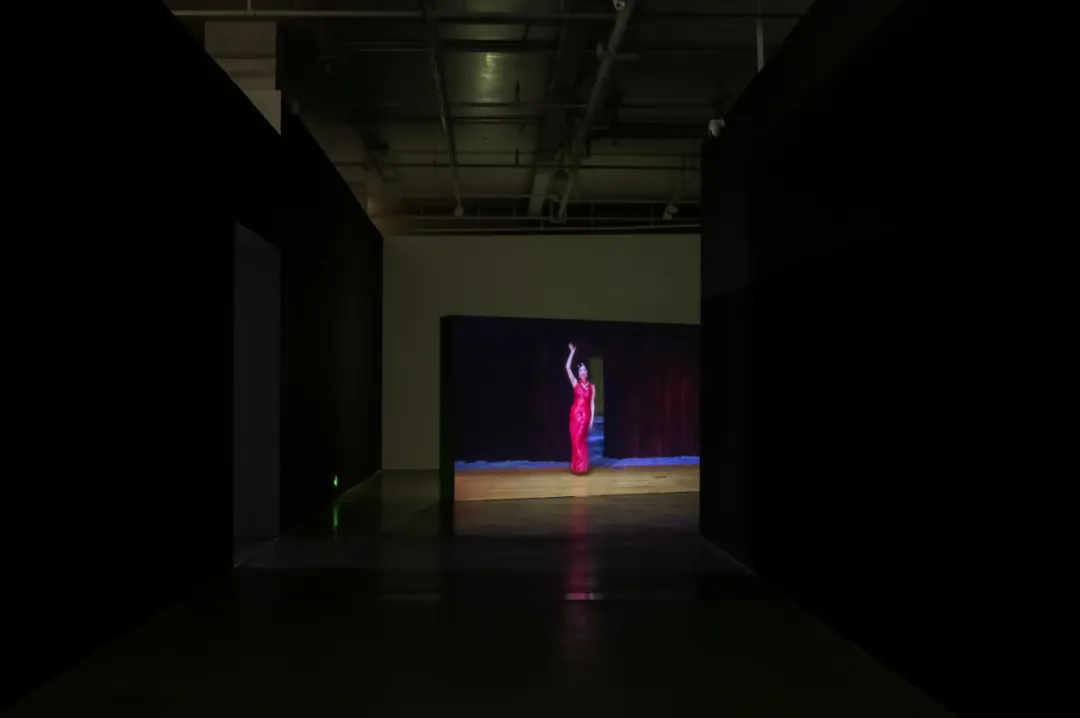
“蒋志:人群中的人”展览现场,2025年,谢子龙影像艺术馆,长沙
摄影:彭思宇
图片鸣谢艺术家及谢子龙影像艺术馆
我们在蒋志的影像里反复撞见“人”这个词,但那个“人”并不温柔,也不必然值得同情,而是作为一个问题存在。有趣的是,蒋志似乎从不惧怕自己的“中间状态”。他既不是社会行动者,也不是纯形式主义者。他像是始终游离在中心之外的“人群中的人”——既不属于系统,也不依附群众;既想观察人,又不完全是其中一员。他作品里的很多“冒犯”其实是来源于对自身位置的不安,以及对身份不断剥离的实验。
✦ 撰文|聂小依
聂小依是一位写作者,也是《歧路批评》的编辑之一。
Machine translation (AI) of the Chinese original, not yet reviewed by the author. Please cite the original.
Two Faces
Janus
✦
❝
He is neither a social activist nor a pure formalist. He seems forever to drift outside the centre, a ‘man in the crowd’.
❞
Shine on Me (still)
2006, single-channel video, colour, sound, 33 min 26 sec
Courtesy the artist
Chu Yun is an old friend of Jiang Zhi’s, and one of the curators of “Jiang Zhi: The Man in the Crowd”, which opened this March at the Xie Zilong Photography Museum in Changsha. Jiang Zhi, he told me, has already had more than thirty solo shows, so they had to think about how to make this one different. At the same time, Space 12 in Beijing was showing a solo project by Jiang Zhi, “Brother Jiang, It’s Better to Film with White People These Days”. Neither exhibition included the Love Letters series (2010–2014) – those images of burning flowers that seem welded to Jiang Zhi’s name – and Jiang Zhi is no longer the devoted lover of intimate relationships. What I read instead was the artist’s relish for the ups and downs of the times, his curiosity about and wariness of ordinary people, a few rebellious bones and a measured dose of cunning.
Groping my way out of a dark corridor, I found myself suddenly standing in an open, empty, unlit gallery. It was utterly silent, except for my footsteps echoing off the concrete walls. I looked up – and there, a huge beam of white light was lighting up a person’s face, quivering across it. At night, these faces are not hidden by the darkness; instead they vanish on camera because the beam is too bright. Their expressions shift, as if they are struggling to keep their masks steady. Their eyelashes flicker, their pupils contract; they try to ignore the camera’s glare, yet they have to play a version of themselves that is unstartled, unangry, unpained.
This is the first work in Jiang Zhi’s “The Man in the Crowd”, Shine on Me (2006, originally titled Let There Be Light), and it opens the show with a kind of ‘offence’. That original title comes straight from Genesis: ‘And God said, Let there be light: and there was light.’ In the myth, light stands for the world’s first order, for warmth and hope – the first glimmer of brightness after chaos is parted. But the beam Jiang Zhi projects is unsettling. It is no miracle; it is man-made truth, violence and heat.
Fly, Fly (still)
1997, video, black and white, sound, 5 min 15 sec
Courtesy the artist
Shine on Me foreshadows the exhibition in several ways. First, the show makes a choice about medium. It leaves out photography, installation, writing and painting: all ten works selected are moving images. More fundamentally, these videos go against the lyricism and poetry that people usually read into Jiang Zhi’s work, and reveal instead a cold, even aggressive gaze. In an exhibition titled “The Man in the Crowd”, the very first work already shows that his gaze on people carries no pity; it is more like an interrogation of what it means to be human at all. What the spotlight picks out is not just faces but the struggles of individuals in a rapidly changing society – an awkwardness that wants to hide yet has nowhere to go. Standing in front of it, I thought of Jiang Zhi’s solo show “Life” (2024) at Aranya Art Center, which mostly featured video and text works capturing everyday details and private perceptions. In Fly, Fly (1997), for instance, a woman’s arms flap gently like an angel’s wings – those works were softer, more poetic, closer to the skin. Moving through one alcove and inner room after another, I came to believe that the rich emotion of conceptual art, which I had thought long fossilised, still flowed through Jiang Zhi.
Installation view, “Jiang Zhi: Life”, 2024, Aranya Art Center, Qinhuangdao
Photo: Zaiye Studio (在野照物所)
Post-production: Sun Shi
Courtesy the artist and Aranya Art Center
I was almost fooled by the artist again.
Not long after I saw the Aranya show, Jiang Zhi sent me a PDF about “Brother Jiang, It’s Better to Film with White People These Days”, a project whose showing had been postponed until 2025. In 2022, in the middle of the Covid pandemic, the Russia–Ukraine war also broke out. Stuck at home, Jiang Zhi noticed a peculiar custom-video service on Taobao, China’s biggest online marketplace: young Black African men, or beautiful Ukrainian women dressed as Playboy bunnies, loudly imitating Chinese sounds and tones to deliver personalised greetings. When I later interviewed him, he said that when he saw these videos he realised that once the phenomenon broke out of its niche and began to be discussed in society at large, it would not be long before it disappeared. He decided to start doing something around it. But the most important reason he started making the work was not the phenomenon’s short lifespan; he wanted to challenge people’s first reaction to it, an unthinking ‘how sad’ or ‘how shocking’. In the first stage of the project, Jiang Zhi acted as an ordinary customer ordering videos, copying other customers’ greetings and sending them to himself. So in the videos we see performers holding little blackboards that read ‘Happy Lovers’ Day, big brother Jiang Zhi’ or ‘Happy birthday, big sister Jiang Zhi, may you pull 800 men and have 500 Logger Vicks’ (the bald lumberjack from a children’s cartoon), and so on. Later, Jiang Zhi gave all the performers the same line, one that sounded as if it came from themselves: ‘We are all your gifts.’ In another stage he refused to play by the rules, asking for meaningless scribbles and strings of characters, and some messages hoping for an end to the Russia–Ukraine war and for world peace – but these were gradually rejected by the Taobao customer service staff. Going along with their requests, he supplied more ‘poetic’ copy: ‘I only want you to be happy / brief / singing / say / brief.’
Above: installation view, “Brother Jiang, It’s Better to Film with White People These Days”
2025, Space 12, Beijing
Courtesy the artist and Space 12
Below: We Are All Your Gifts (New Year Red) (still)
2022, single-channel video, colour, sound, 32 sec
Courtesy the artist and Xie Zilong Photography Museum
Today the service has vanished from public view, perhaps because the authorities also realised the storm of public opinion this kind of ‘service’ might stir up. But public opinion was not really the main factor. Chatting with the customer service guy, Jiang Zhi learned that the service had in fact first appeared around 2015. In 2017, the BBC Chinese reporter Zhao Yashan reported, in ‘Explainer: What Is the Controversy over African Children Holding Up Signs for Chinese Buyers?’, that Taobao had once forcibly taken the service down. Evidently, it later found an opportunity to reappear. According to what the customer service staff told Jiang Zhi, orders from Shanghai shot up from March 2022, perhaps because, when people were forced to stay at home, a lot of emotional expression poured into this channel. The Russia–Ukraine war, which broke out at the same time in February 2022, added more political variables. When the Ukrainian women could not perform, Russian performers appeared; and once the Ukrainian women returned to the marketplace, the Russian team was promptly disbanded for lack of orders.
I do not approve of this ‘form of service’ itself. When I first saw Jiang Zhi’s project, my reaction was: is it worth it? The very existence of these custom Taobao videos reveals the long-standing contempt, exoticising curiosity and structural discrimination towards ethnic others on Chinese social platforms. Black people are reduced to dancing ‘Calabash Brothers’ (after the cartoon heroes), while the Ukrainian women’s erotic performances are doubly encoded with images of war. All of them become components of a commodity, vehicles for greetings. And Jiang Zhi steps inside as a customer. He copies other people’s orders, places his own, and instructs the ‘actors’ to deliver greetings, lines of poetry or wordless words. He doesn’t try to correct anything; he approaches the absurd core of the thing in another way. He does not make the audience ‘understand’ or ‘sympathise with’ these performers more. On the contrary, he further exploits and presses on the exploitative mechanism itself, until the Taobao customer service staff are made to spell out its limits.
To me, the work actually has little to do with social engagement. It is more an extension of the way Jiang Zhi gathers his material – from picking up a brush, to picking up a video camera, to placing an order on Taobao. Jiang Zhi is still a studio artist. He is still inside his comfort zone, testing the limits of his material by his own will. Or, in his own words: ‘We are always playing the game alone, no matter how many people we are with.’ (Nikita Yingqian Cai and Jiang Zhi, Questions for Jiang Zhi, 2012.) In placing his orders he more or less subverted the usual procedure and caused a good deal of awkwardness in the service, but the commodity mechanism and the relations between people within it did not substantially change.
The project also left traces in “The Man in the Crowd”, but it was drastically cut down. In the exhibition design by Ding Ding, another of the curators, Shine on Me hangs high in mid-air, magnifying the violence of the light and the suffering of the people, with an altarpiece-like sublimity. On the back of this huge screen is 0.7% Salt (2009). Over nearly nine minutes, the celebrity Ah Jiao (Gillian Chung) goes from expressionless to tearful sobbing. The front-and-back screen format appears once more in the show. The curatorial team chose two highly performative works, Curtain Call (2009) and We Are All Your Gifts (New Year Red) (2022). A woman in a qipao steps out again and again from a red curtain, bowing her thanks to an audience around the stage; this makes the singing and dancing African young men on the back of the screen less jarring – in this context, people in both China and Africa perform. The original racial discrimination is largely dissolved here, and becomes instead a more universal condition. I applaud this curatorial editing strategy; I must admit I could even sense Jiang Zhi’s compassion for ordinary people.
Things Would Turn into Nails Once They Happened
2007, colour print, 150 × 200 cm
Courtesy the artist
A question pops up here. Why does Jiang Zhi’s work show two such contradictory faces – lyricism and offence? What is the ‘political’ in his work? And why do I hesitate so much as I look at it? Perhaps we can look at a photograph from the same period as Shine on Me: Things Would Turn into Nails Once They Happened (2007). That year, the Property Law was passed by the National People’s Congress, and in Yangjiaping, Chongqing, a stubborn ‘nail household’ – the Chinese term for residents who refuse to make way for demolition – held out. All the ground around it had been dug away, leaving one house standing alone in the middle of a pit. Jiang Zhi hired spotlights, set them up on a building next to the nail house, waited until the security guards went to sleep, and took this photograph. What the light illuminates here is not some kind of justice or hope, but an extreme isolation. This is neither the angle of documentary photography nor the record of a social movement; it freezes the house in a miraculous light – and the darkness, what does that stand for?
It is in this bold gaze that we might gradually work out the ‘political’ in his work. Jiang Zhi is not concerned with how politics concretely operates, nor with how policies and regulations weave their net over the details of reality. In Shine on Me and Things Would Turn into Nails Once They Happened, violent light can pierce people’s faces, and it can also give them dignity. His politics is an indirect emphasis and questioning achieved through conceptual and visual strategies, an interrogation and suspension of existence itself – how are people ‘seen’? Does seeing mean understanding? Jiang Zhi’s strategy of ‘offence’ has two dimensions. One is explicit: it exposes the ethics of looking through structure and the sting of light. The other is implicit: by coolly suspending emotion, it refuses to voice pain on the audience’s behalf, and refuses to console. Both paths lead in the end to a core question: how does art deal with ‘people’? Or: is it honestly revealing that art and people have never been on equal terms? When ‘people’ enter a work, they may be looked up to, they may be consumed, or they may become partners in collaboration. Yet the artist, as a ‘person’, is always absent from his own work. The artist holds the rules, like a maker of light. The question is: is he aware that he holds a privilege?
In “Brother Jiang, It’s Better to Film with White People These Days”, these questions push us further to sort out what is art and what is merely a reproduction of reality. Of course, they also have to do with the politics of looking in our time. Forty, thirty, twenty years ago, the artist was an avant-gardist, an experimenter, rising above the masses and leading their thinking; being misunderstood by the audience was a reward for breaking the mould. Now more and more of the public walk into museums and exhibition halls, more diverse audiences are finding their voices, and I, as a professional, have started to question my own blind loyalty to, and indulgence of, artists. If a work makes people deeply uncomfortable, it gets complaints and is criticised on social media. A friend of mine, the young artist Xiao Liu, said that some artists don’t understand why jokes that could be made ten years ago can no longer be told, or why works that would have been cheered twenty years ago are now being boycotted. On seeing the title “Brother Jiang, It’s Better to Film with White People These Days”, what Xiao Liu wanted to say was: ‘Uncle Jiang, times have changed.’
This era is brewing a new art, one that carries a politics of understanding, kindness, collaboration, care and mutual aid, rather than the aggressive, cool political aesthetics of earlier years. This shift is not simply a blunting of edges but a more complex ethical adjustment and aesthetic reconstruction. It no longer takes ‘shocking the soul’ as its only legitimacy, nor does it treat discomfort as a shortcut for forcing viewers to ‘see the truth’. What we face is no longer a binary of ‘the artist offends’ versus ‘the audience refuses to think’, but a hazier borderland – how exactly do we want art to speak? And how far do we allow it to go?
0.7% Salt (still)
2009, single-channel video, colour, silent, 8 min 43 sec
Featuring: Gillian Chung
Courtesy the artist
Perhaps what really matters has never been how far art goes, but what way of looking we need right now. Back in 2009 and 2010, Jiang Zhi held the exhibitions “ATTITUDE: An Exhibition by Jiang Zhi”, and 0.7% Salt was born there. What concerned him was not taking a stance as such, but those preset ‘feeling machines’ – the emotional judgements and choices of opinion we make rapidly and unconsciously, those ‘big, solid presuppositions’ (in Jiang Zhi’s words). 0.7% Salt is a textbook case. It responded to the public’s collective attack on women, and on Ah Jiao in particular, during the Edison Chen photo scandal, when intimate photos of several female stars were leaked online. Above all it asked: when should a woman cry? Watching 0.7% Salt, I knew it was a performance, yet I couldn’t help empathising with Ah Jiao. She moves from blankness to tearful sobbing, and her eyes, looking straight into the camera, seem to turn the question back on us – why must a woman’s tears be watched by everyone? ‘The beauty in tears’ is such a typical image of aesthetics under the male gaze. But this time the crying was not driven by public expectation; it was Ah Jiao’s own response. She accepted the invitation to collaborate, and she also made her own decision about ‘when to cry’. To my mind, this agency makes the work more complex and more respectful than “Brother Jiang, It’s Better to Film with White People These Days”. Thank goodness she was hung so solemnly in mid-air, rather than placed on a monitor at our feet. This ritual presentation creates distance for the viewer, and grants her dignity. I also thought of another of Jiang Zhi’s works about images of women, Shy, Too Shy! (2009). He invited ninety-five volunteers to strike ‘shy’ poses in front of the camera, trying to show how ‘shyness’ had become outdated. But as a woman, I know better than anyone that such ‘shyness’ is simply a product of strategy and circumstance, not pure people-pleasing. I don’t need to stare at the images for long; I only have to recall my own experience to feel the unease and alertness hidden in these bodily postures.
Jiang Zhi’s work often sits in this kind of tension. He doesn’t try to offer solutions, nor does he expect his work to be ‘accepted’ in any ethical sense – because the challenge itself is the point. The way he treats people is close to a clinical experiment: sometimes he is a cool observer, sometimes an instigator, never a carer. This is also why his work often provokes polarised reactions. You are drawn in by the icy judgement in it, but you can also easily sense an emotional and ethical vacuum. Zhang Siyang, another of the exhibition’s curators, said that every morning when she woke up and thought about facing Jiang Zhi’s work, she had to do a lot of mental preparation. And it is precisely this sense of distance that makes me think Jiang Zhi’s best works are the moments that leave room for others. Like the dishevelled little girl in the documentary Empty Cage (2002), wandering freely through the streets of Shenzhen – a city whose motto was ‘time is money’ – undisciplined, with no wish to be understood, tenacious and untameable.
Installation view, “Jiang Zhi: The Man in the Crowd”, 2025, Xie Zilong Photography Museum, Changsha
Photo: Peng Siyu
Courtesy the artist and Xie Zilong Photography Museum
We keep running into the word ‘person’ in Jiang Zhi’s videos, but that ‘person’ is not gentle, nor necessarily deserving of sympathy; it exists as a question. Interestingly, Jiang Zhi never seems afraid of his own ‘in-between state’. He is neither a social activist nor a pure formalist. He seems forever to drift outside the centre, a ‘man in the crowd’ – belonging neither to the system nor to the masses; wanting to observe people, yet not entirely one of them. Much of the ‘offence’ in his work actually comes from unease about his own position, and from an ongoing experiment in stripping away identity.
✦ Text | Nie Xiaoyi
Nie Xiaoyi is a writer and one of the editors of Qilu Criticism.