Curatorial · 2026 · 中文 / English
Zheng Que: Factory Girl郑确:厂妹
Zheng Que’s first institutional solo exhibition, turning Factory Girl – her time as a temporary worker in a Christmas-goods export factory in Pan’an – into one ‘vessel-like affective installation’.
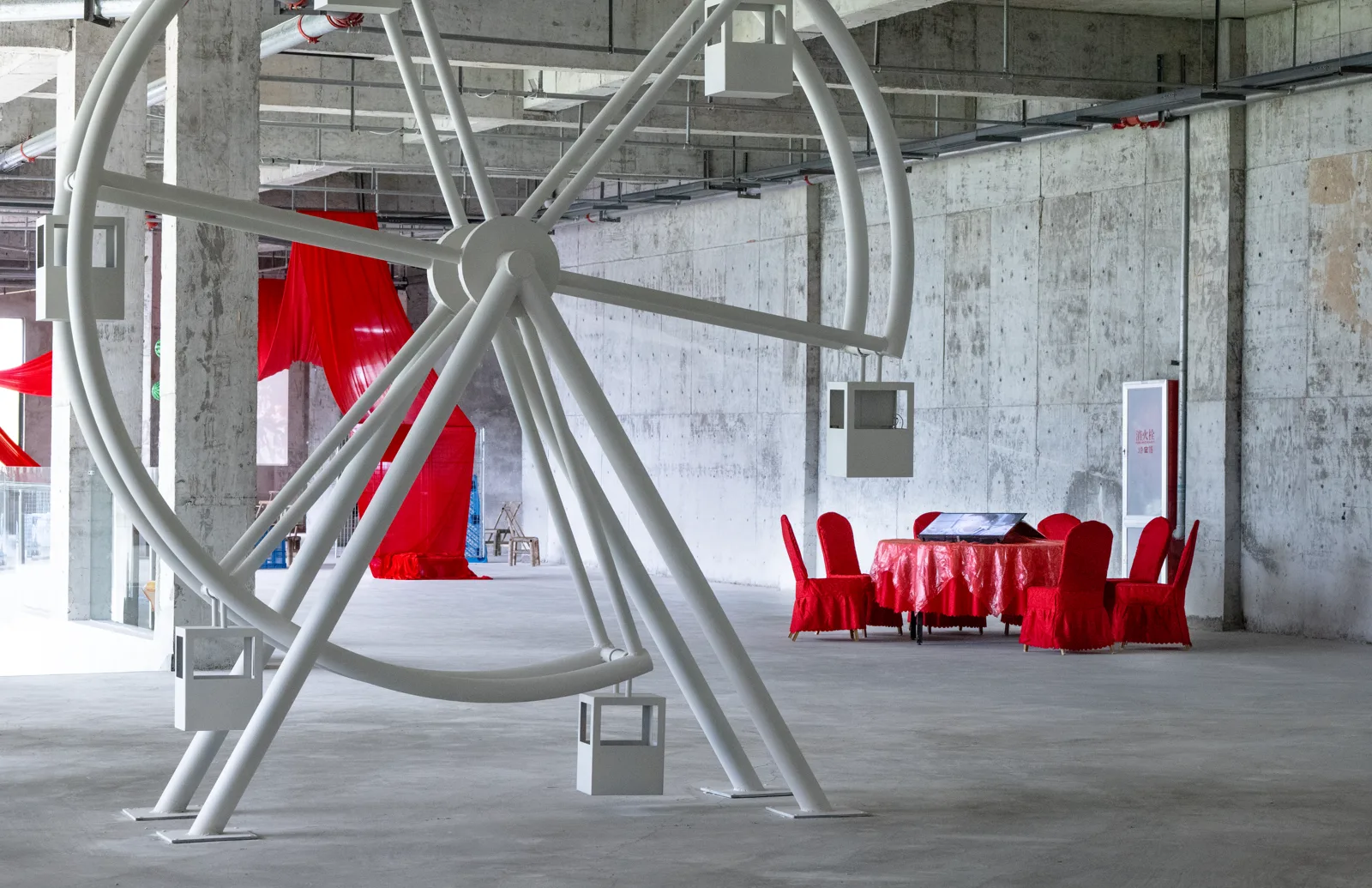
Installation view, ‘Zheng Que: Factory Girl’, Art Museum of Pond Loach, Qingyuan, Zhejiang, 2026. Photo: Luo Shunqi, Han Qian and Cao Danyang
Zheng Que: Factory Girl is the first institutional solo exhibition of Zheng Que, centred on Factory Girl, the second part of her long-term project, the ‘Laogai Trilogy’. I curated it for the Art Museum of Pond Loach in Qingyuan, Zhejiang. The text below is the curatorial statement I wrote for it.
Zheng Que has gone back again and again to a Christmas-product export factory in Pan’an County, Jinhua, Zhejiang Province, taking work there as a temporary labourer, sharing the work and the life of her workmates. The ongoing Factory Girl project grew out of that. She has said it plainly: the door to the ‘Western contemporary art market’ would not open to her, so she went another way, through the making and moving of Chinese small commodities, and let the fruits of her labour arrive in the West without her. That was the intention she carried in. The living of it changed her. What she had imagined about ‘the West’, about institutions, about all those spaces outside herself, and what she had feared about them, gave way — to the motions of the work, to the ground she was standing on, to the ordinary daily traffic between people. Her materials and her judgements stopped coming from a script written in advance. Her understanding of her own making began to be taken over by what her body had lived.
At the invitation of the Art Museum of Pond Loach, Zheng Que turns Factory Girl into a work in space for the first time. Working with the museum’s structure, she presents a ‘vessel-like affective installation’ — the artist’s term — made new for this site: images of labour, a dining table, bolts of cloth, machines, mountains, rivers, a Ferris wheel, everything drawn from the Pan’an factory and from life in the county town, reorganised through installation, video and other media into one whole space. They do not line up one to one against single themes: labour here, life there, imagination somewhere else. They pull on one another while you walk. On the screen and off it, inside the galleries and outside them, a Christmas tree skirt is a product waiting for export and it is also the cloth spread out to eat watermelon on in the workshop. The sound of the machines and the movement of the river are there at the same time. The Ferris wheel on the hilltop returns and returns as the high place of the county town, and it joins labour, the natural world and play together.
Relation is one of the words this project is built out of. In it Zheng Que feels her way through, and thinks again about, the relation between labour and life, between one person and another, between each particular motion of the hand and the structures you can neither touch nor see, and between making art and every other kind of work. What is shown here is not a set of materials about a factory. It is how production and living run through each other in one place, among one set of people. In a factory rooted in Pan’an, the labour relation does not stop when the shift stops: your colleague is your neighbour, your relative, your friend, the parent of your child’s classmate. ‘Worker’ is not the only name a person carries, and it is not a fixed one; the names change with the situation — working, eating, resting, playing. Life is not what is left over after the work. The pressure and the joy, the producing and the caring, the quarrel and the closeness can all come up out of the same set of relations.
Zheng Que began the long-term project ‘Laogai Trilogy’ in 2022. The first part was Foot Massage; since 2023 she has been developing the second, Factory Girl. Trained in the sculpture department, she takes herself for the material being sculpted, the object being ‘reformed’. She takes labour as a way of remaking artistic production, and ‘artist’ as an ‘identity in transit’, trying to write the experience of productive labour over the experience of making art — answering, in this way, the distance opening up between contemporary art and daily life, and the suspended condition of work that floats above living.
The word changmei, factory girl, first belonged to the young women working in the factories of the Pearl River Delta during the reform era of the 1980s and 1990s. As China became the world's factory, she came to be told in more than one way: taking hold of her own fate, enduring exploitation, joining with others, leaving the factory for good. Laogai points to ‘reform through labour’, the penal system that ran for decades after 1949. Zheng Que was born in 1995. She begins from the distance between herself and those historical scenes, takes the words up again at their literal meaning, and makes new experiments out of them, in order to face the problem in front of her now: the art system she is standing in. And in this project laogai has become a prophecy still fulfilling itself. The old word has led her to a new site, here, now, still opening. But reform arrives at no finished result. It goes on calibrating how she looks, how she judges, how she makes, inside the labour and inside the life.
Factory Girl began as one artist’s escape into another system of production. In its unfolding in a county-town factory, and in its showing at the Art Museum of Pond Loach, it becomes a journey through labour that refuses to be summed up.
Factory Girl is both the title of the exhibition and of the second work of the ‘Laogai Trilogy’. The exhibition consists of one installation; its elements are not individual works.
Installation views
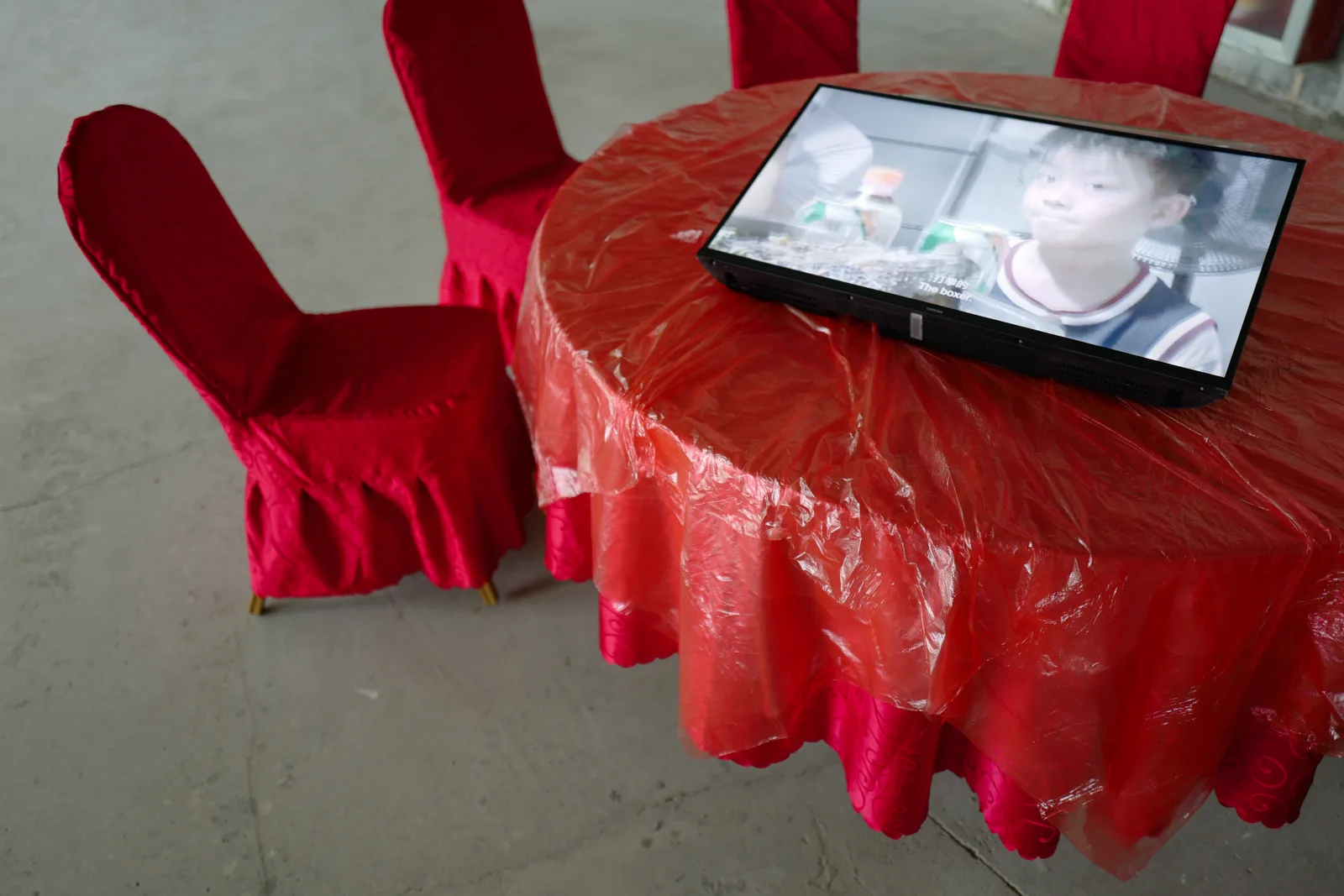
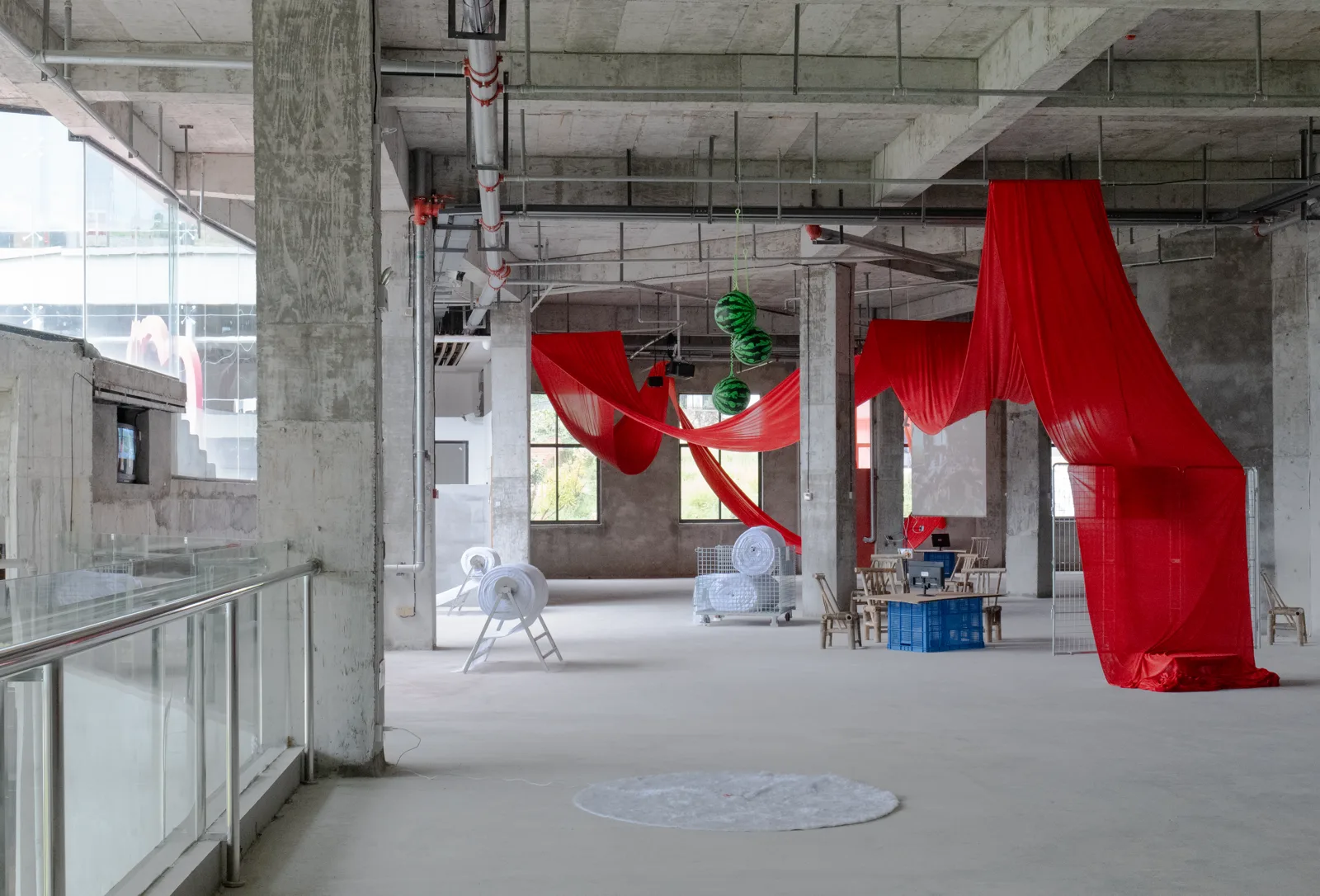
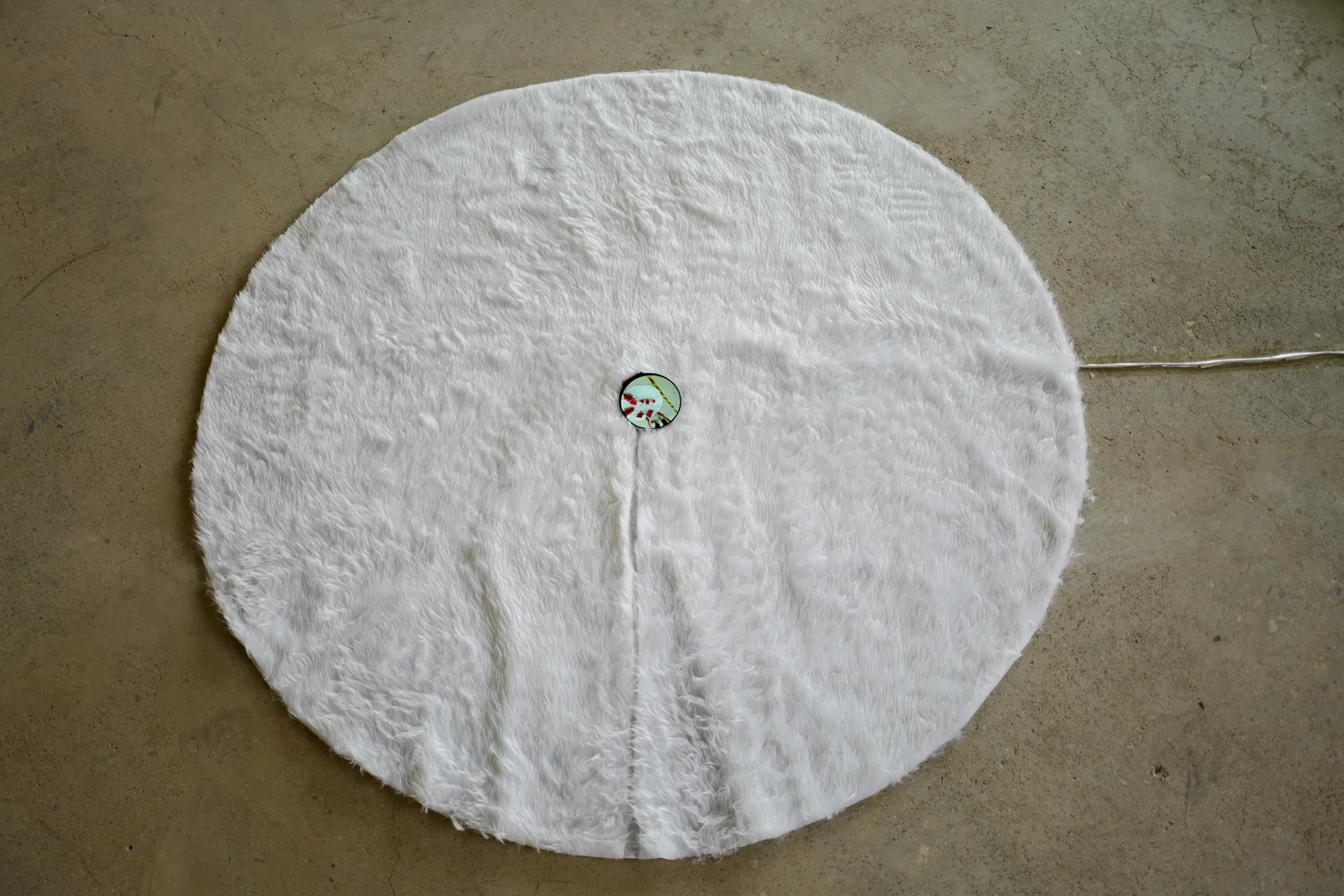
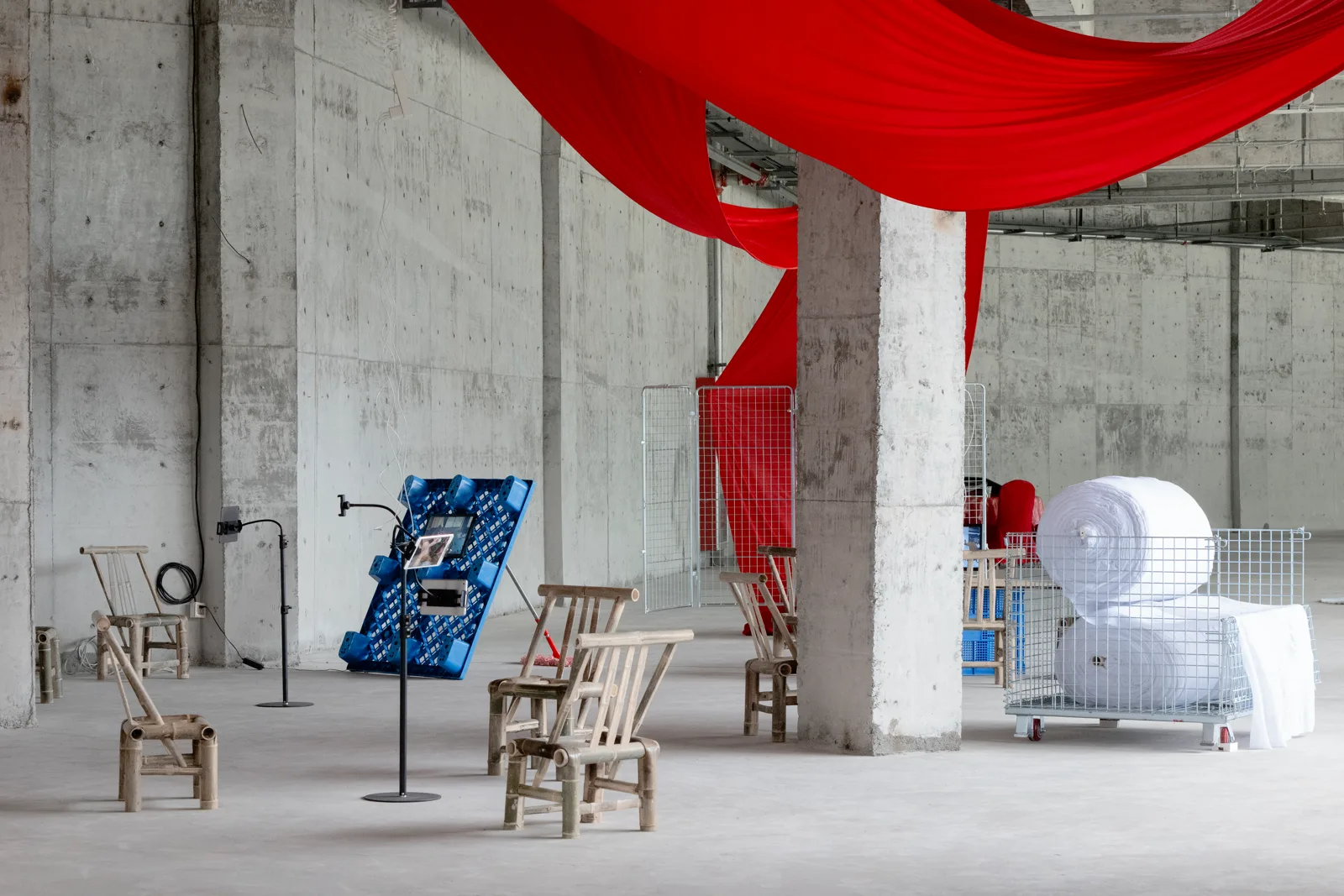
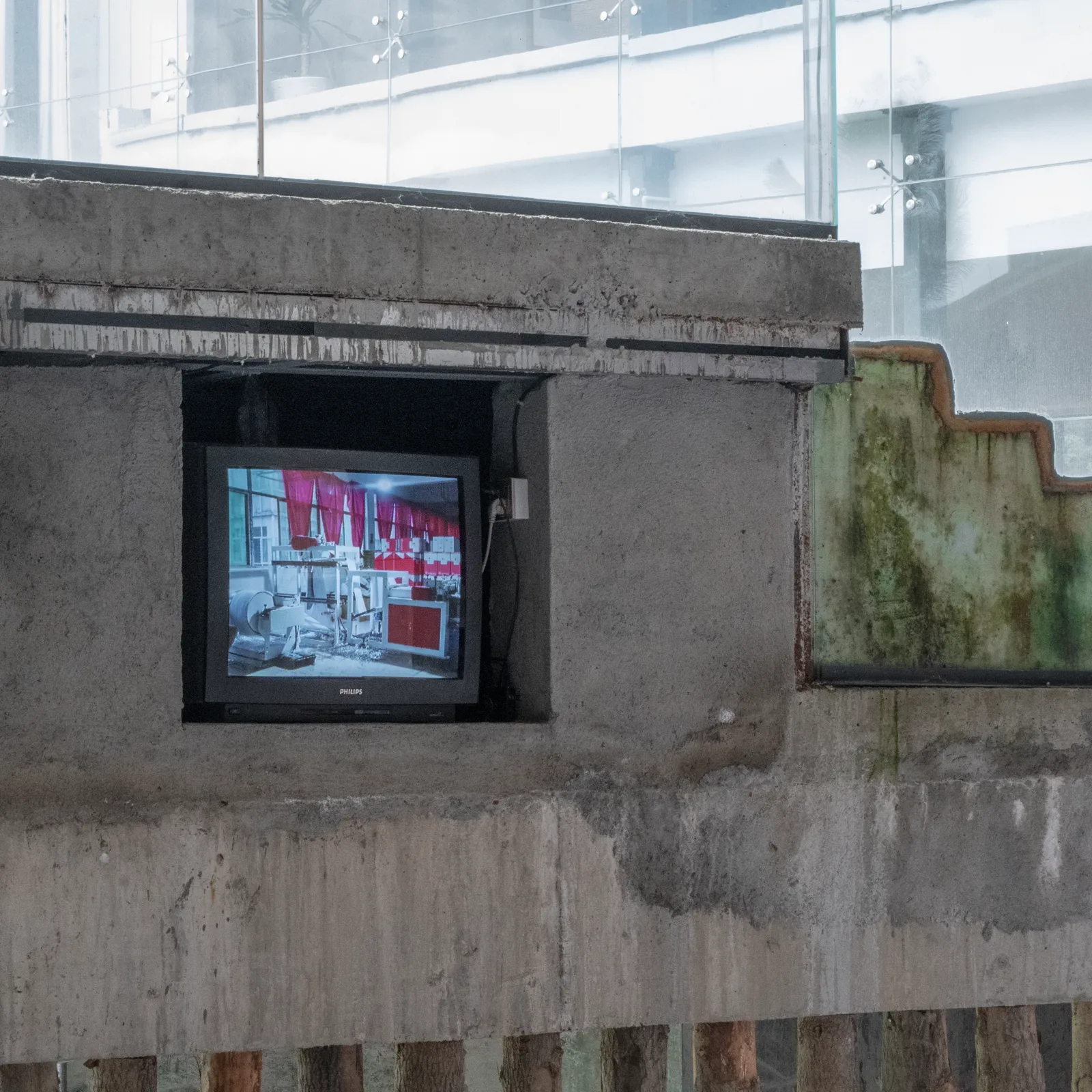
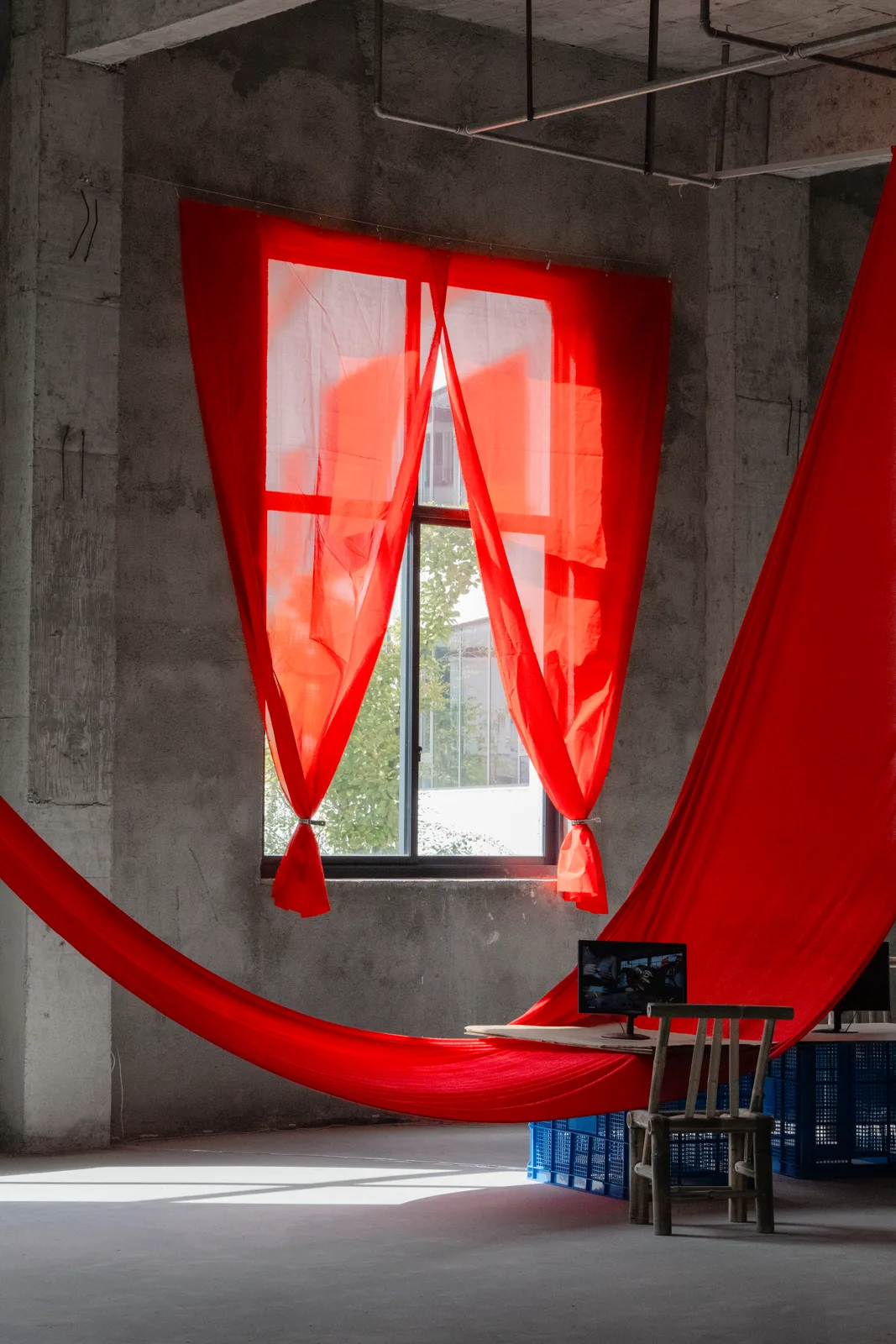
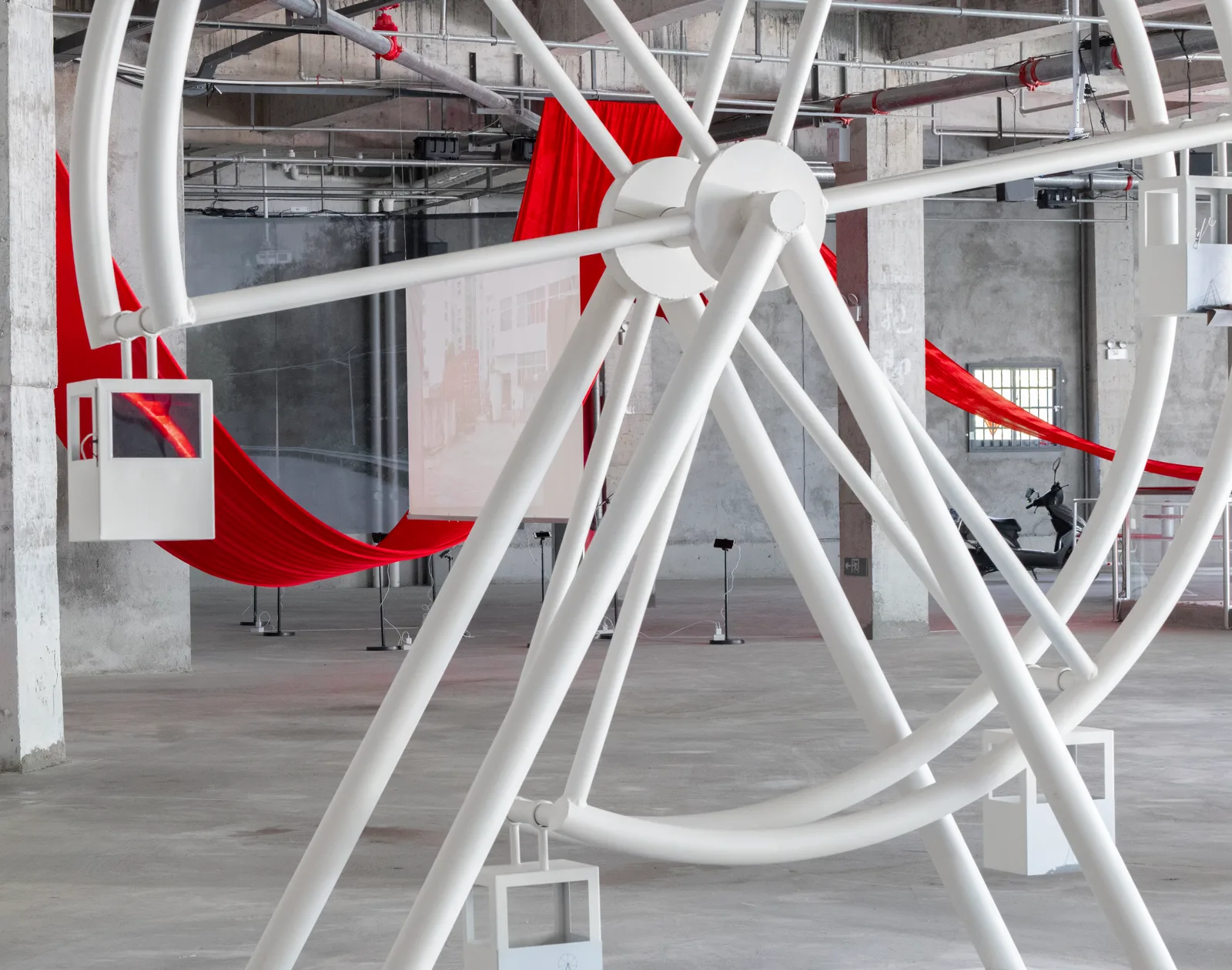
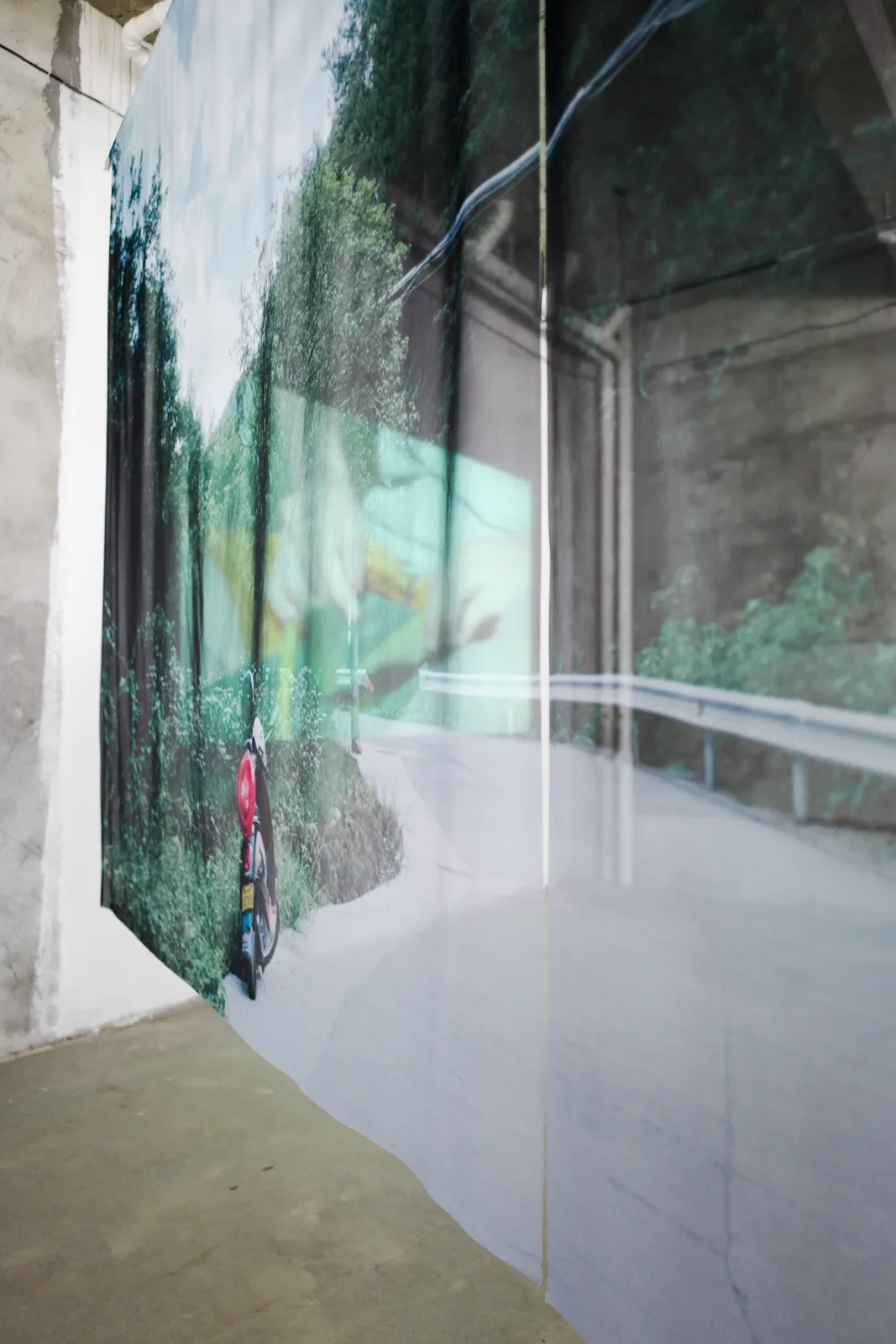
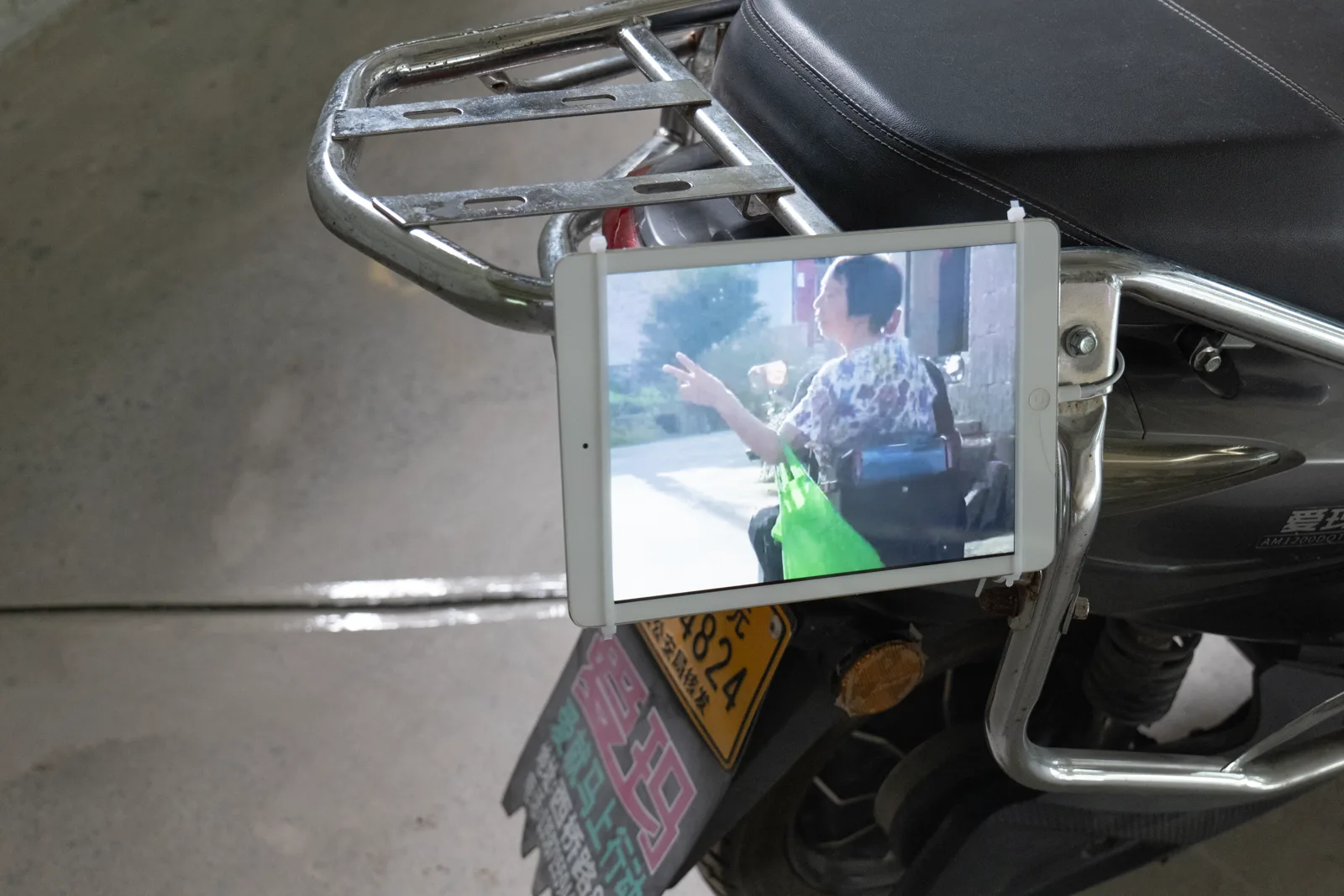
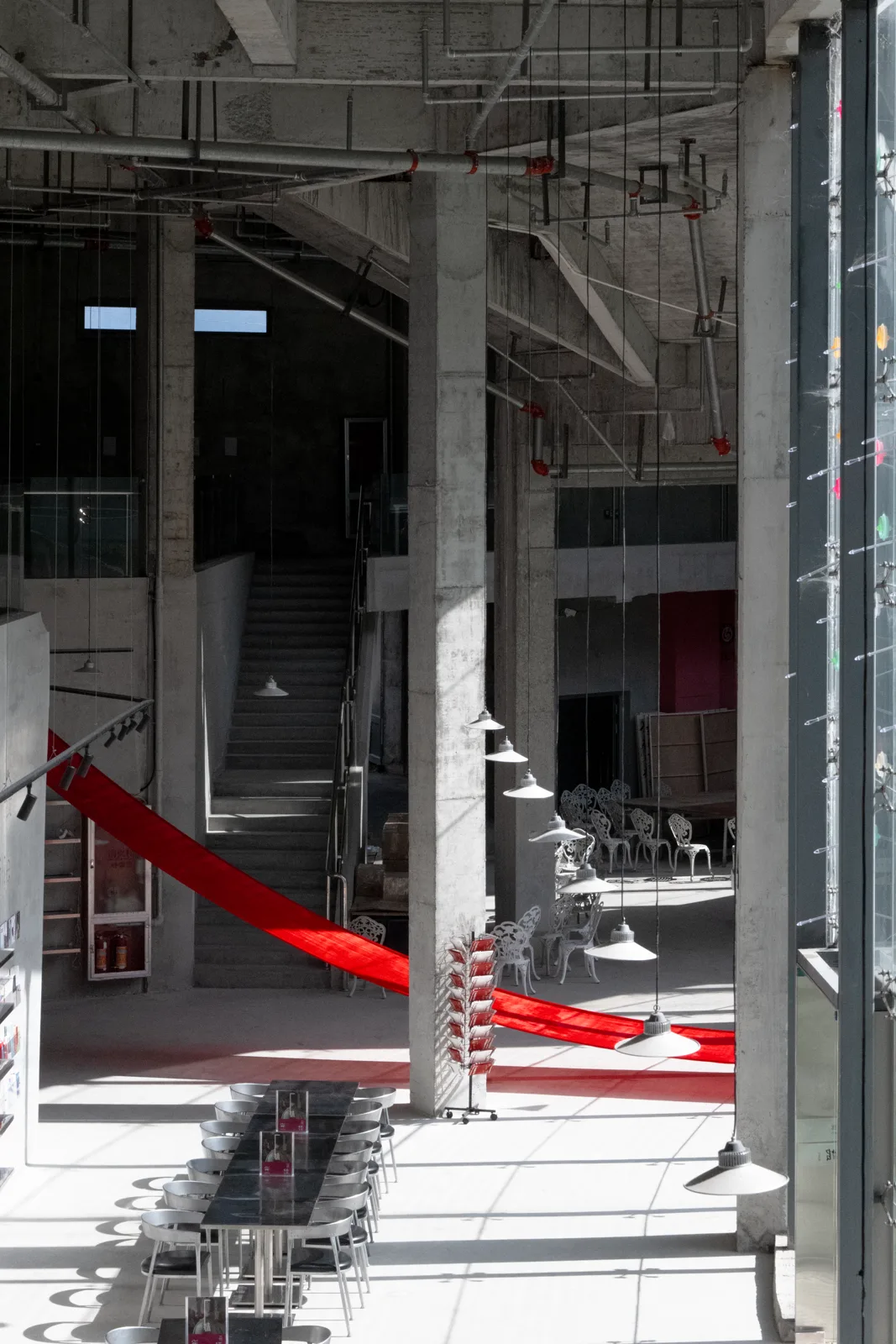
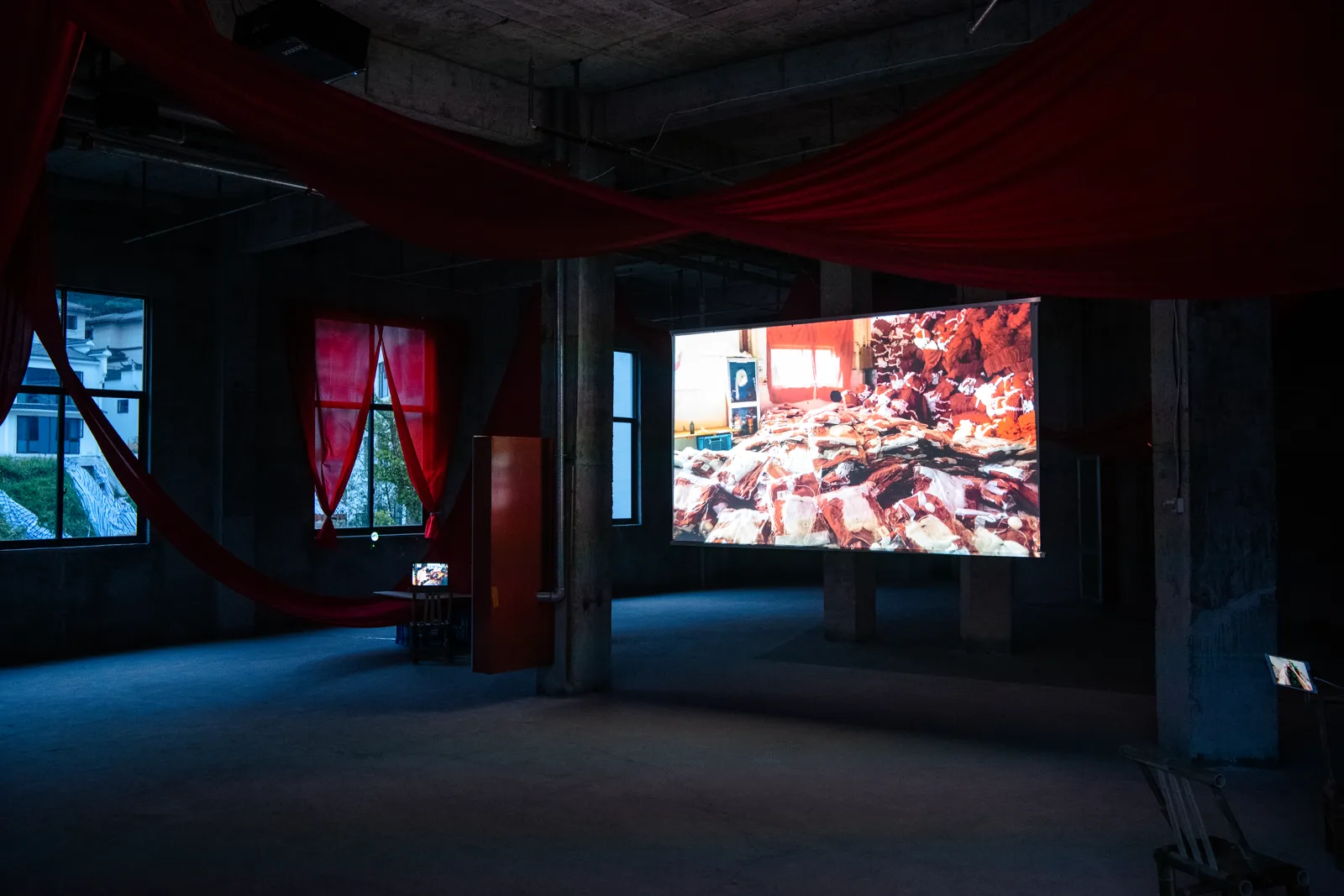
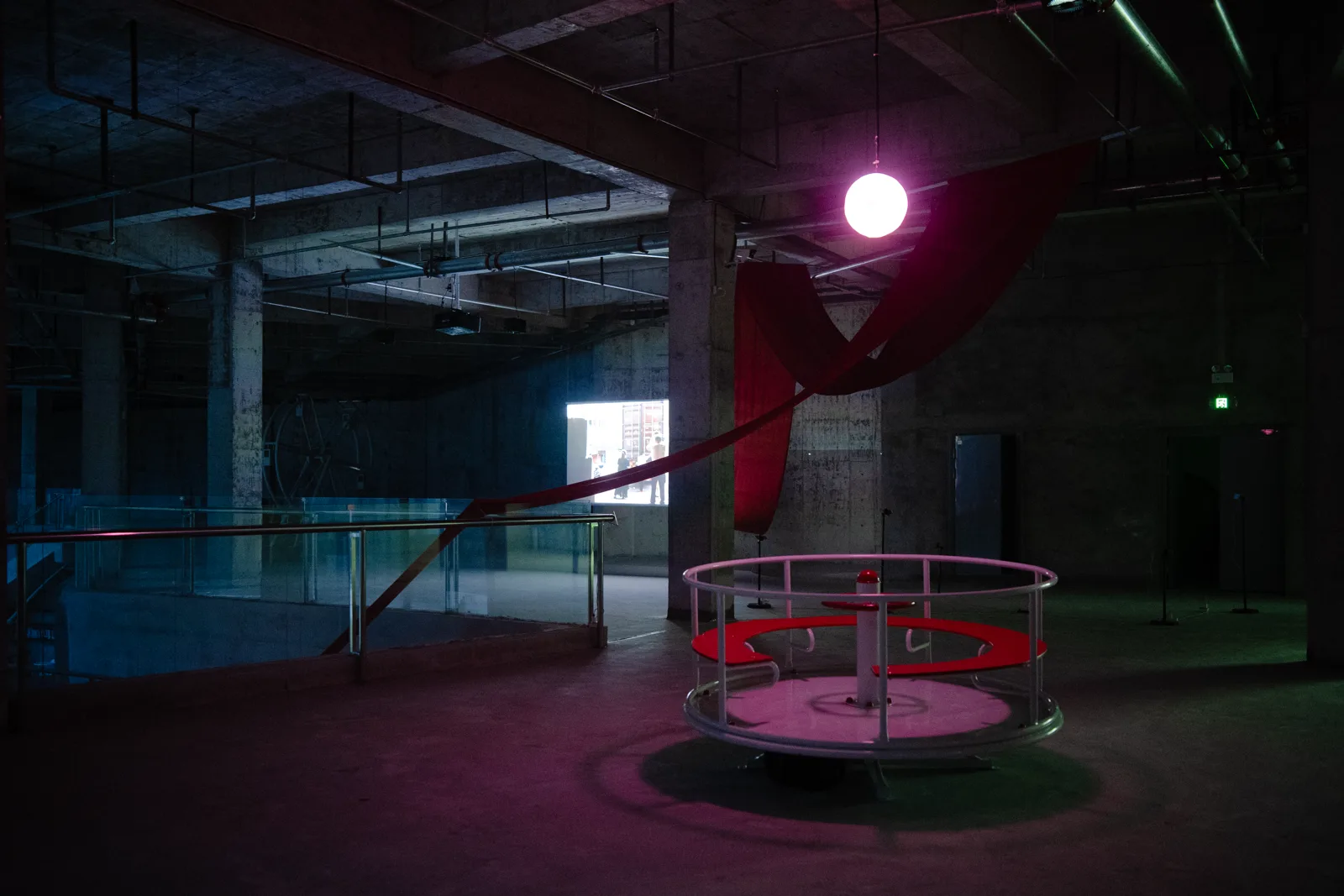
All installation photos: Luo Shunqi, Han Qian and Cao Danyang. Courtesy the artist and the Art Museum of Pond Loach
From the work
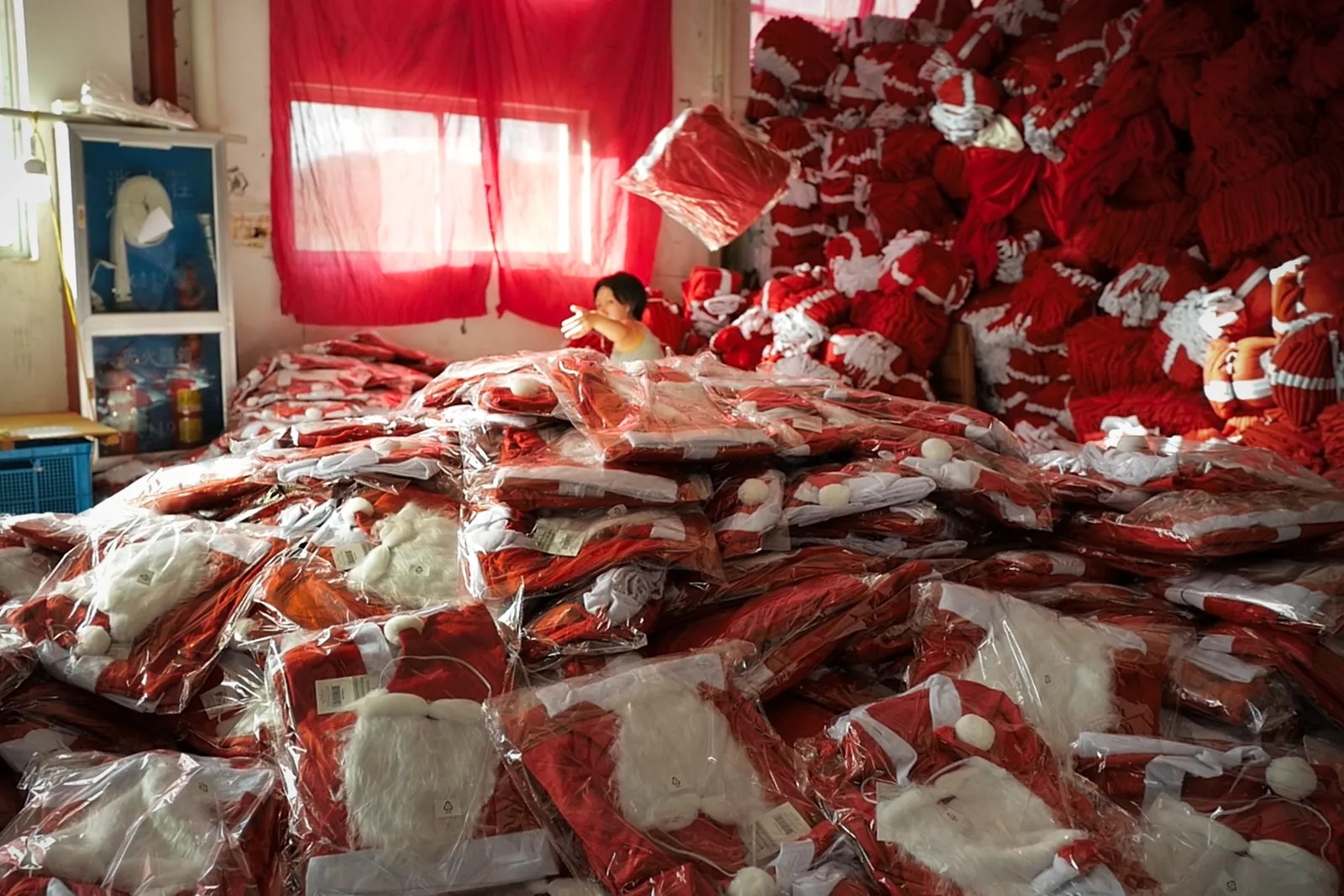
Zheng Que attaching labels to Christmas apparel, Pan’an, Zhejiang 郑确为圣诞服饰贴标签,浙江磐安 · Factory Girl (still), 2023–ongoing
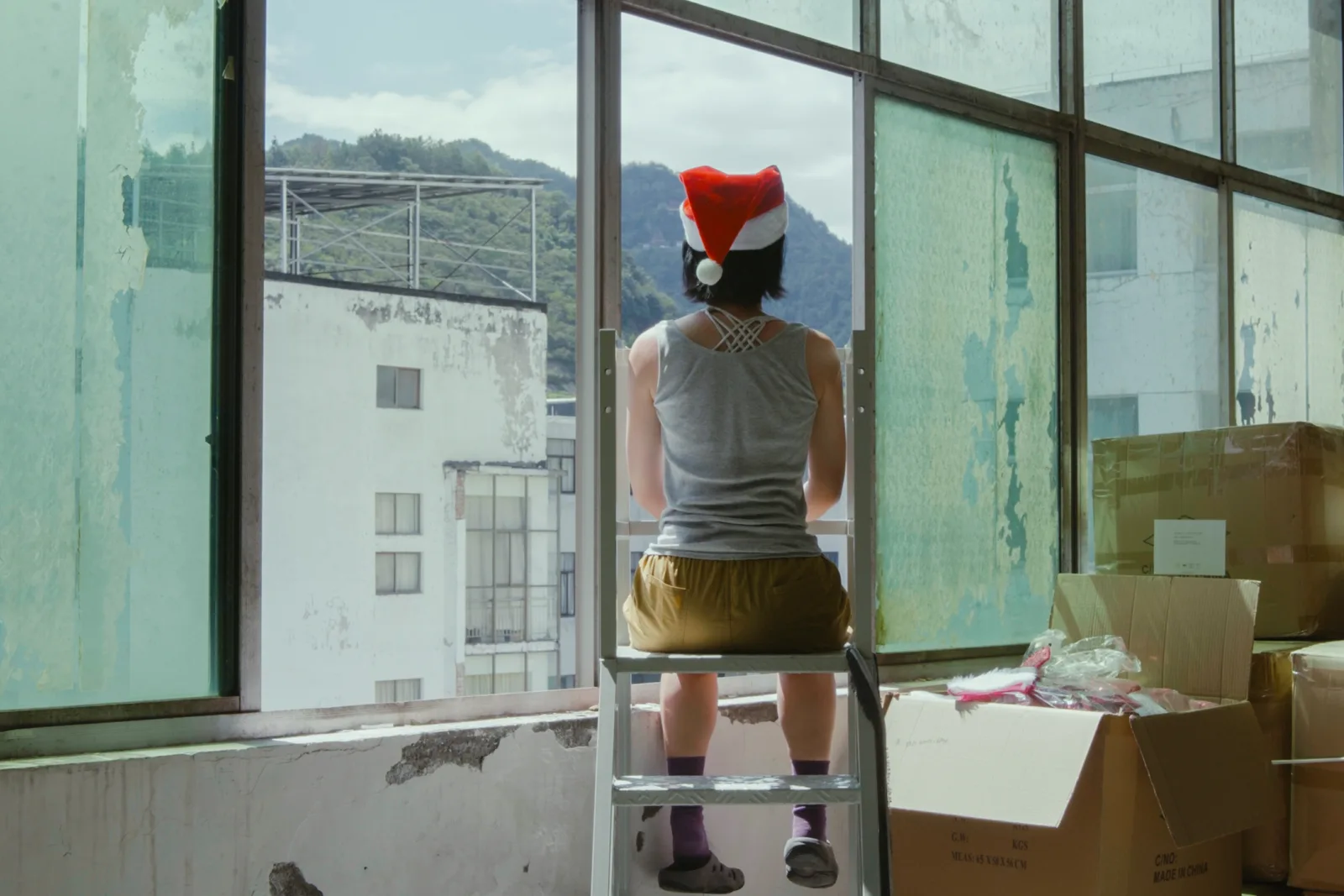
A body wearing a Santa hat looking out of a factory window, Pan’an 佩戴圣诞帽的身体看向工厂窗外,浙江磐安 · Factory Girl (still), 2023–ongoing
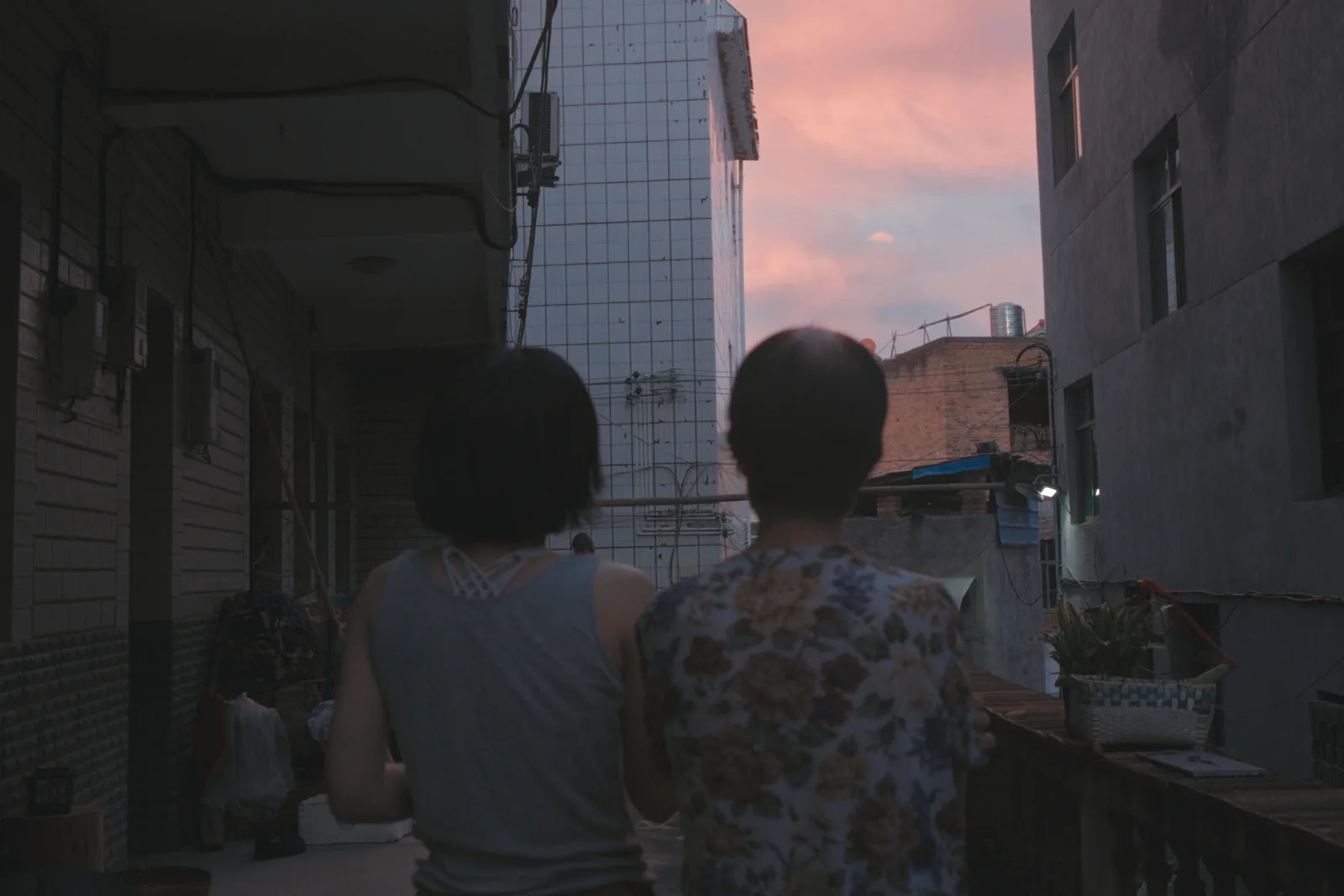
After dinner, Pan’an 吃过晚饭后,浙江磐安 · Factory Girl (still), 2023–ongoing
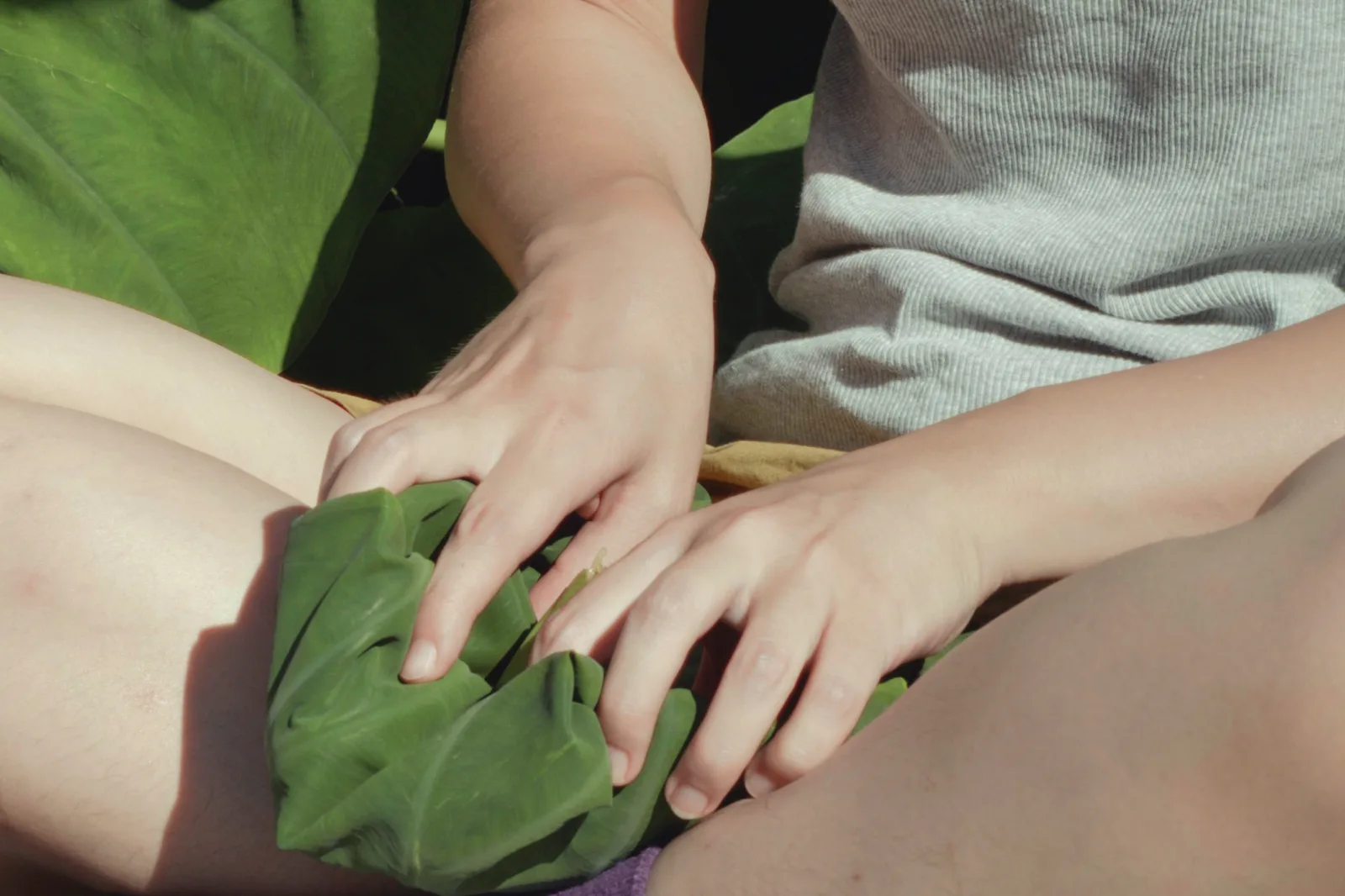
Packing a leaf, Pan’an 打包一片叶子,浙江磐安 · Factory Girl (still), 2023–ongoing
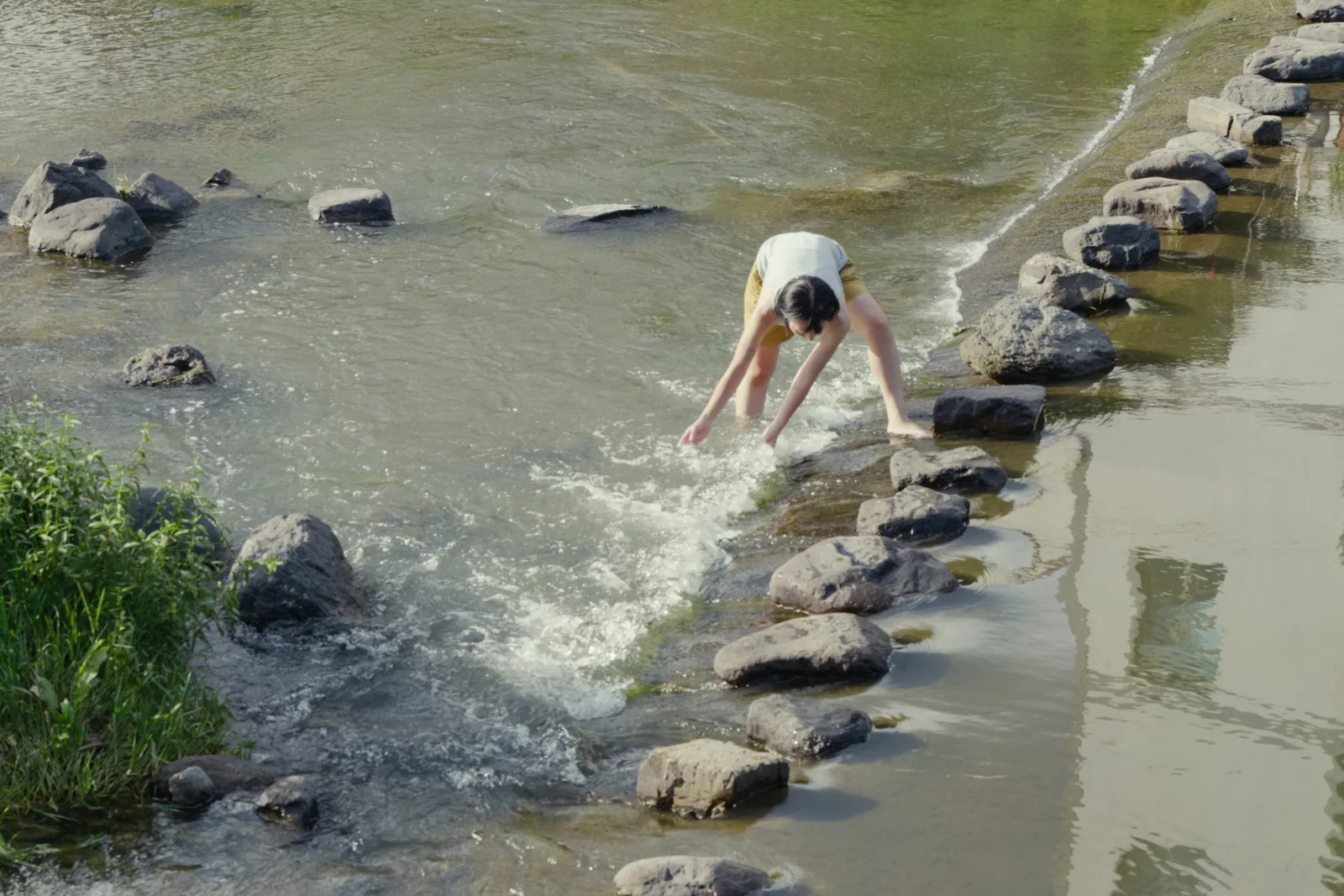
Zheng Que collecting water from a river, Pan’an 郑确在河流中取水,浙江磐安 · Factory Girl (still), 2023–ongoing
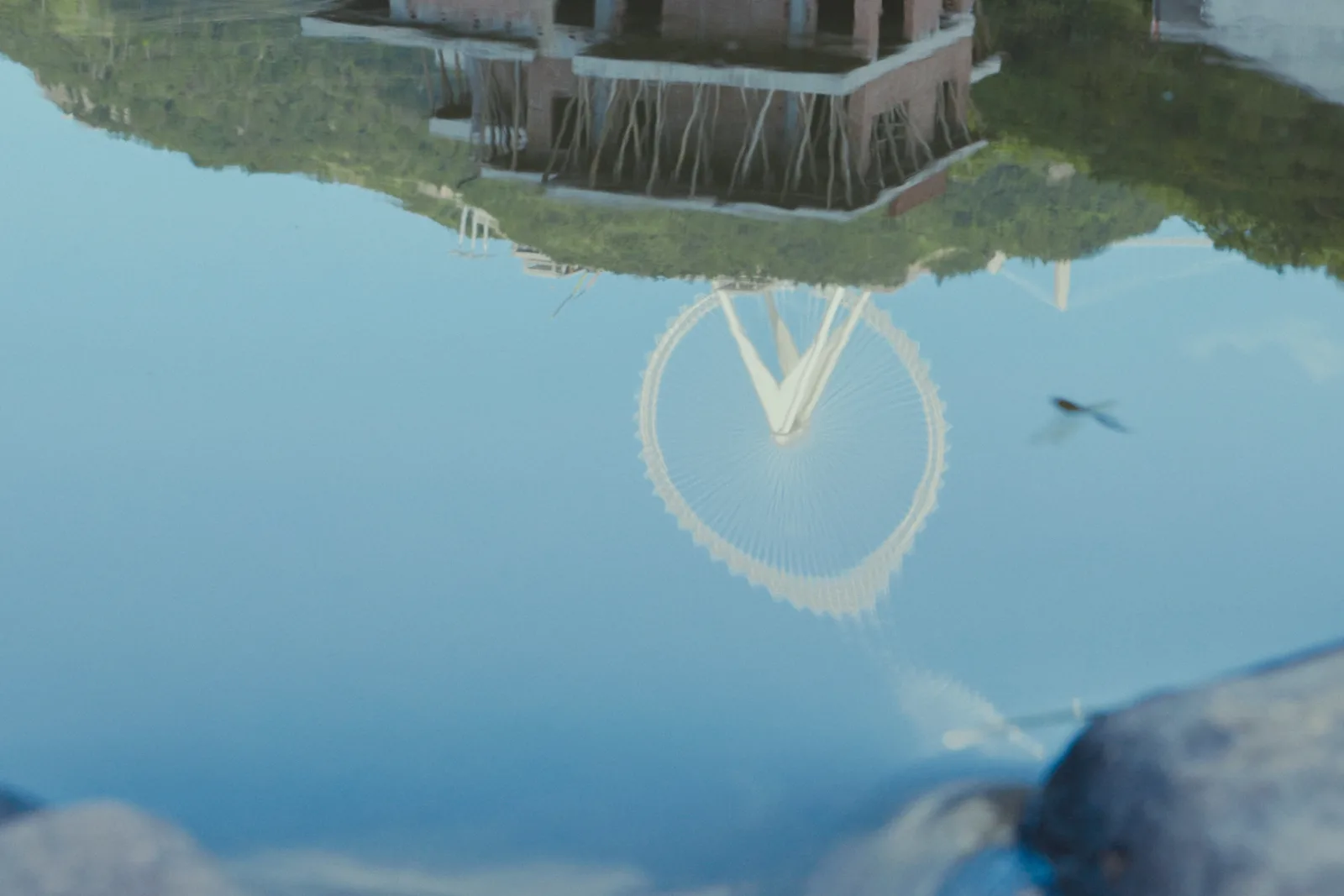
Reflection of a Ferris wheel in the river, Pan’an 河水中的摩天轮倒影,浙江磐安 · Factory Girl (still), 2023–ongoing
All images © Zheng Que, courtesy the artist and the Art Museum of Pond Loach
郑确:厂妹
泥鳅美术馆呈现郑确的首次机构个展,聚焦其长期项目“劳改三部曲”中的第二部——《厂妹》。下面是我为展览写的文字。
持续进行的《厂妹》项目,生发于郑确多次前往浙江省金华市磐安县的圣诞产品外贸工厂,以“临时工”身份与工友同劳同活的经历。郑确曾坦言,因难以进入“西方当代艺术市场”,她转而借助中国小商品的生产与流通路径,让劳动成果以另一种方式抵达西方。但是,这一初衷在具体经历中被深刻改变:对“西方”、机构等外部空间的想象与焦虑,逐渐让位于劳动动作、地方环境和日常交往。材料与判断不再来自预设的剧本,她对创作的理解也开始被这些具身经验所“接管”。
受泥鳅美术馆的邀请,郑确首次将《厂妹》转化为空间作品形态。她将结合美术馆的结构,呈现为这一场域全新创作的“器皿式情愫装置”(艺术家语):将劳动影像、餐桌、布匹、机器、山峦、河流、摩天轮等来自磐安工厂与县城生活的内容,以装置和录像等媒介重新组织为一个整体空间。它们并不分别对应“劳动”“生活”或“想象”等单一主题,而是在观众的行走中彼此牵连。在屏幕内外、展厅内外,一块树裙既是等待出口的产品,也可以成为在车间里吃西瓜时铺开的桌面;机器的声音与河水的流动同时存在;山顶摩天轮则作为县城中反复出现的高处坐标,连接劳动、自然与玩耍。
“关系”是《厂妹》的核心词汇之一,郑确在项目中体会、反思劳动与生活之间的关系,人与人之间的关系,每一个具体动作与摸不着、看不见的结构之间的关系,以及艺术创作与其他劳动之间的关系。展览所呈现的并非一组关于工厂的材料,而是生产与生活如何在同一地方、同一批人之间彼此贯通。对在这家扎根于磐安的工厂工作的人们而言,劳动关系并不会在下班时停止:同事也是邻居、亲友和孩子同学的家长,“工人”并不是一个人唯一或固定的身份,角色随着工作、吃饭、休闲和娱乐等具体情境不断转换。生活并不是工作的剩余;压力与快乐、生产与照料、争吵与亲密,可能来自同一套关系。
郑确自2022年开启了长期项目“劳改三部曲”。第一部为《足疗》,2023年至今,郑确发展了第二部《厂妹》。受训于雕塑系,郑确将自己视为被雕塑的材料、被“改造”的对象。她将“劳动”视作改造艺术生产的方式,将“艺术家”视作“中转身份”,试图用劳动生产经验覆盖艺术生产经验,以此回应当代艺术与日常生活之间逐渐拉开的距离,以及作品与生活的悬浮状态。
“厂妹”一词最早指20世纪80、90年代改革开放时期珠三角工厂中的年轻务工女性,随着中国成为“世界工厂”,她也在不同叙事中掌握命运、忍受剥削、彼此连接、走出工厂。“劳改”则指向建国后长达数十年的“劳动改造”刑事司法制度。郑确出生于1995年。她从与历史现场之间存在的距离出发,重新取用这些词汇的字面意义、创造新的实验,面对她当下的问题:她所处的艺术系统。而“劳改”一词在项目中也成为一则仍在发生的自我实现的预言:旧词汇将郑确引向此时此刻、正在展开的新现场,但“改造”并不指向一个已经完成的结果,而是在劳动与生活中持续校准她的观看、判断与创作方式。
《厂妹》始于一个艺术家向其他生产系统的出逃,但它在县城工厂的展开、在泥鳅美术馆的展出,呈现出一场拒绝被归纳的、有关劳动的旅程。
Opening and credits
The exhibition opened on 22 August 2026 with an artist-led tour and a panel discussion on the museum lawn with Zheng Que, Nie Xiaoyi and Wang Hongzhe 王洪哲 (Associate Professor, Peking University).
- Artist: Zheng Que 郑确
- Curator: Nie Xiaoyi 聂小依
- Producer: Hu Dingyu 胡丁予
- Video collaborator: Luo Shunqi 罗舜琦
- Designer: Lu Jiawei
- Exhibition technician: Liu Bishu
- Local support: Li Yucong
- Supported by De Ying Foundation; special support from 张曦允 & Doriano Navarra, Artfuel; special thanks to 磐安佳琦工艺礼品厂
Related
- Zheng Que: ‘Foot Massage’ and ‘Factory Girl’ – my interview with Zheng Que on the ‘Laogai Trilogy’, LEAP FW2024