Writing / criticism · 2018 · 中文
Rupture and Rejoining: On Wang Mengfan's The Divine Sewing Machine断裂与重衔——评王梦凡《神圣缝纫机》
《神圣缝纫机》舞蹈剧场
导演:王梦凡
编剧:陈丹路
小孩子是不会想一刻钟、一小时之后的事情的,他们笑得嗓子裂了、耍到浑身没劲,就随时随地躺下,睡过去。
而大人们,聪明的人,会想到自己要活很久,想到下一顿饭、明天的工作、月末的账单。所以,我们习惯了把力量留给后面的时间。
孩子们不太考虑明天。
这是13个孩子们出演的《神圣缝纫机》和其改编自的《等待戈多》最相似之处,虽然《神圣缝纫机》在2017年宣传时说剧作的出发点是反思“朗读腔”,但剧作自身呈现的却更加深广——这世界的无常与非理性。《神圣缝纫机》的流畅、诗意、游戏,和《等待戈多》中的残败、重复、无助,其实是一回事——不如说,当孩子们长大,就会开始等待。
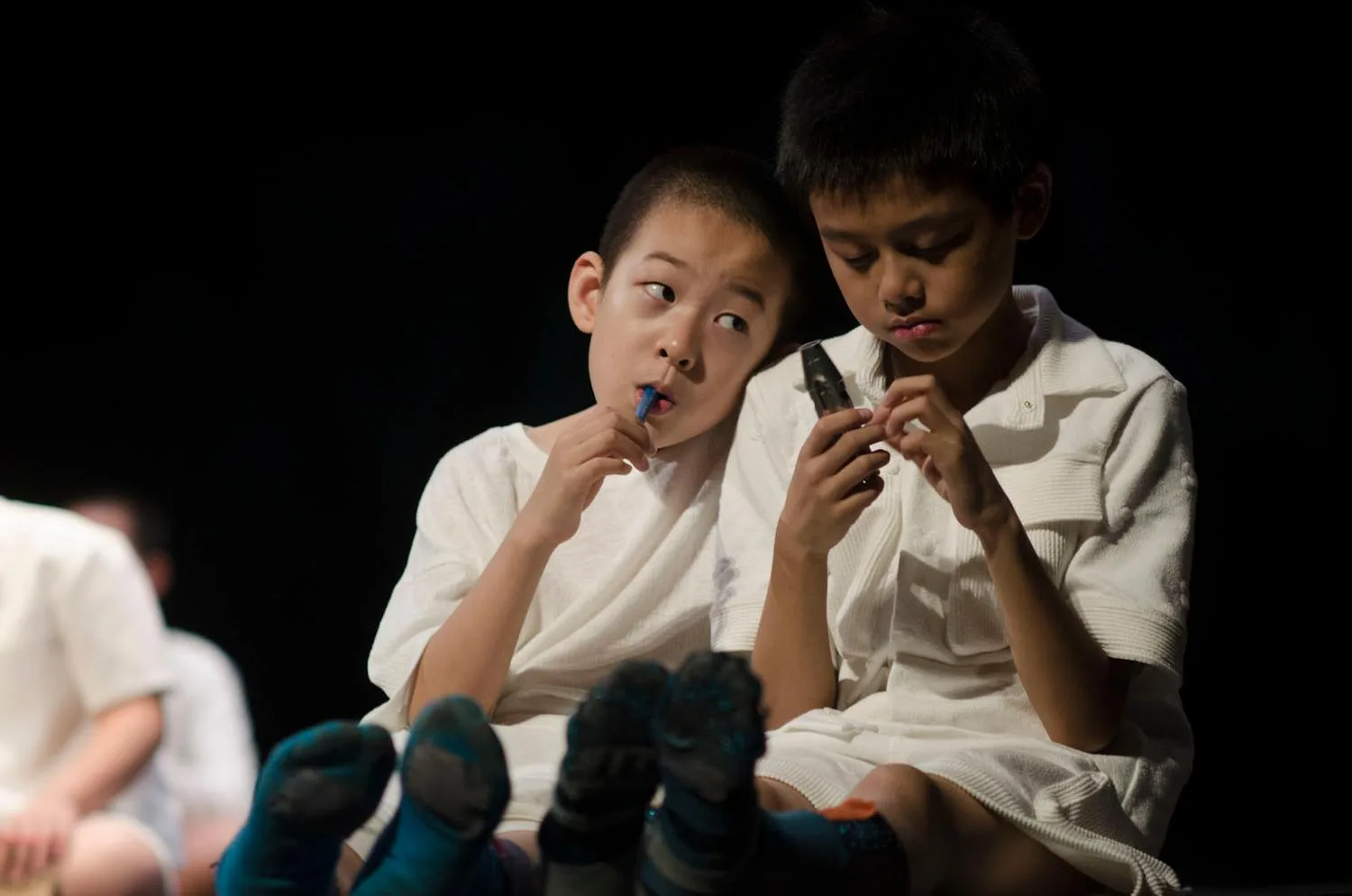
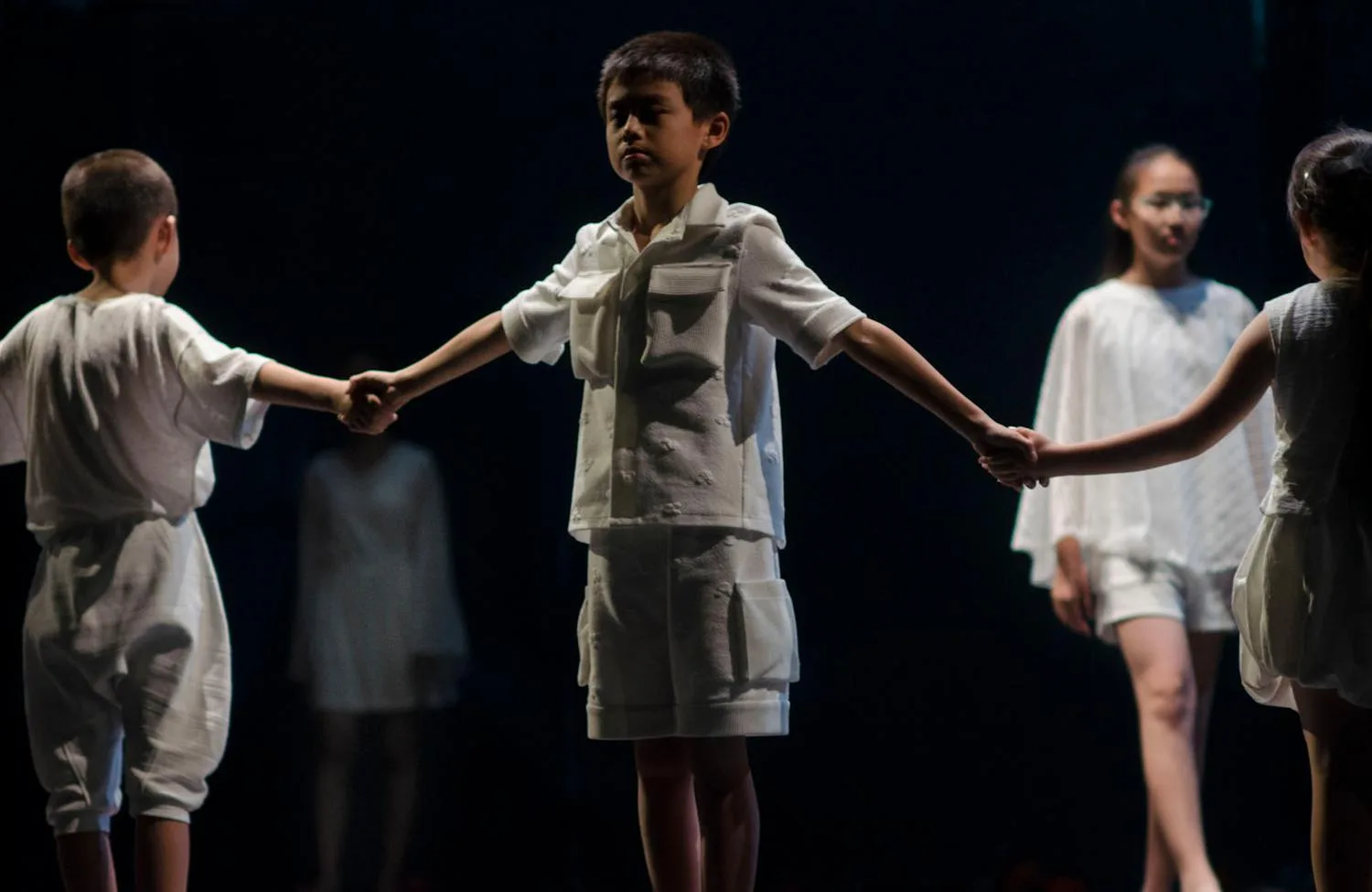
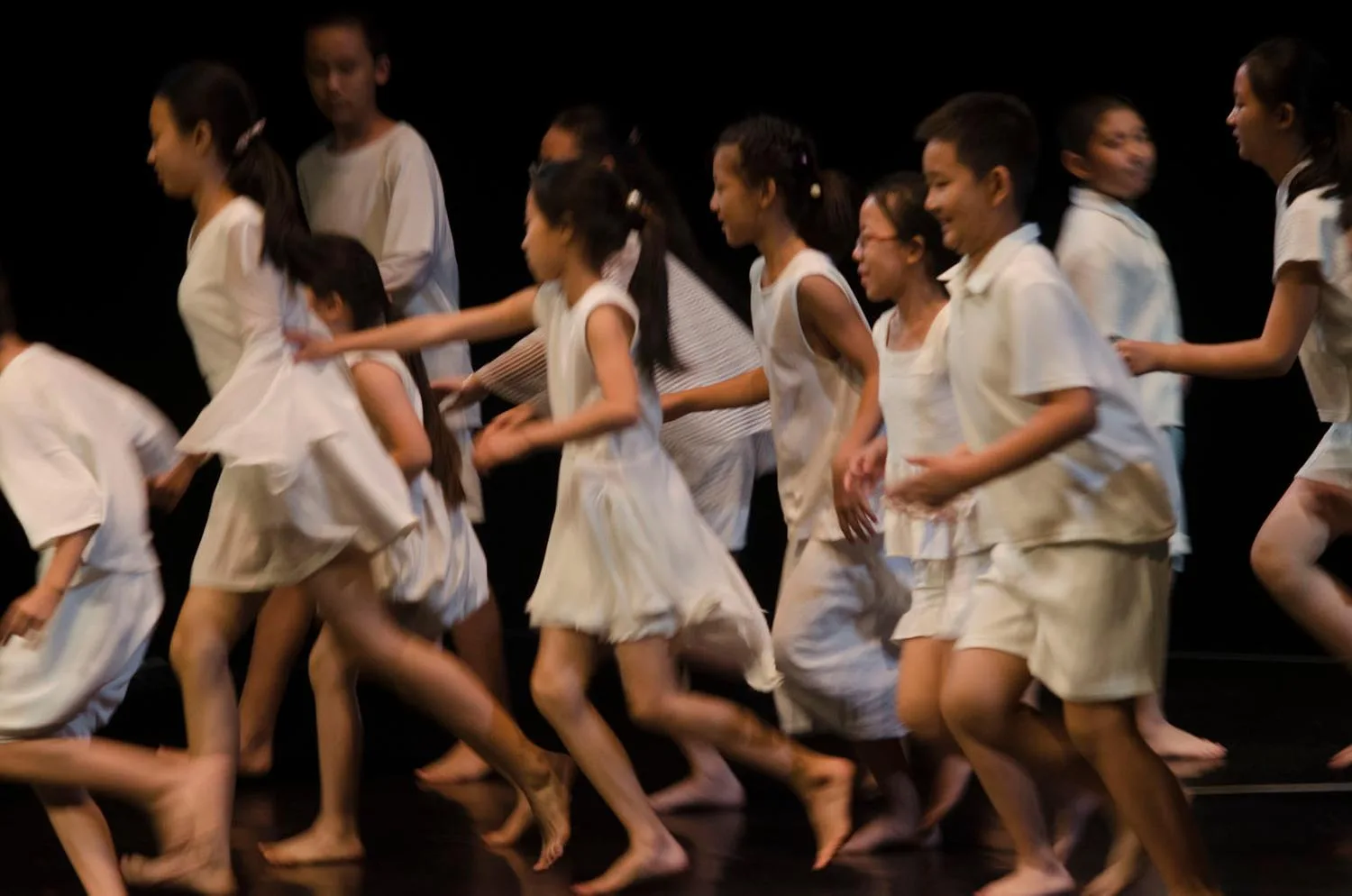
13个孩子穿着松弛的白衣,脚蹬可爱的袜子,他们缓慢地走上舞台,他们讲故事,他们游戏,他们手拉手,他们折飞机,他们敲击乐器,他们背诵数字——这些经过剪辑最终整理进入剧作的片段,显然不是讲述一个有头有尾的故事,也并非营造一个架构迥异的世界。《神圣缝纫机》呈现出的是一种意义的断裂,这体现在形式上,即语言和段落,上一句和下一句,舞台的左上角和中心,都存在着巨大的跳跃,但因为是孩子们,孩子们自身对此刻此地此景的投入,他们不问因果,不问字面意义,即可呼喊和奔跑,以身以神,舞之蹈之。但这些并非经过专业表演和舞蹈训练的孩子们是如何克服这些断裂的呢?或者说,如果他们跨越的如此轻松,似乎一切都是连贯的,那么他们是依照着什么滑行呢,仿佛拥有着一种彻底的自由?
《等待戈多》呈现的两天里,Vladimir和Estragon守着还有一片叶子的树,一遍遍问戈多何时来,一遍遍自我安慰戈多会来,他们遭遇地主、随从和牧童,但人们都自有一套逻辑,问与答之间水泼铁板,毫无干系。戈多,就像我们生活里的下一顿饭、明天的工作、月末的账单,在我们脑海中存在着,循着理性,依据逻辑。但在剧场里,期待之事迟迟不来,对话只是为了打发时间,两人无处可逃,死也死不掉,互相厌恶又发现只有对方,只能枯坐树下、继续说话。如果语言最终离开了功能,又何必是连续的?
或许这是何以许多观众在聆听《神圣缝纫机》里孩子们此起彼伏说出的词句后,认为这是诗歌。如果说时间流逝、世事无常是中性的,贝克特将《等待戈多》放置在荒凉无聊的冬日,编剧陈丹路在改写时则把孩子们推向了充满惊奇的春天,推向了反反复复的赞颂,引出自然而然的笑声和玩耍后的疲惫。而这春天和欢庆,只能属于无忧无虑的孩子,没有被明天绑架的孩子。孩子们的自由在于此刻的无聊透顶,那就快点做好玩的事情吧,把这一秒度过。而蒙太奇般拼接起的片段们共同唤起了观众的共同经验,我们其实都曾置身在意义的断裂中,并且像这些孩子们一样,并不觉得慌张。孩子们或许被赋予了许多期待,就像戈多一样,但那是在未来。在孩子的世界,一切才是去功能化的,这和审美相通,但更近乎游戏。因此在陈丹路的剧本里,我们看到了许多语言游戏,孩子们也游戏其中。
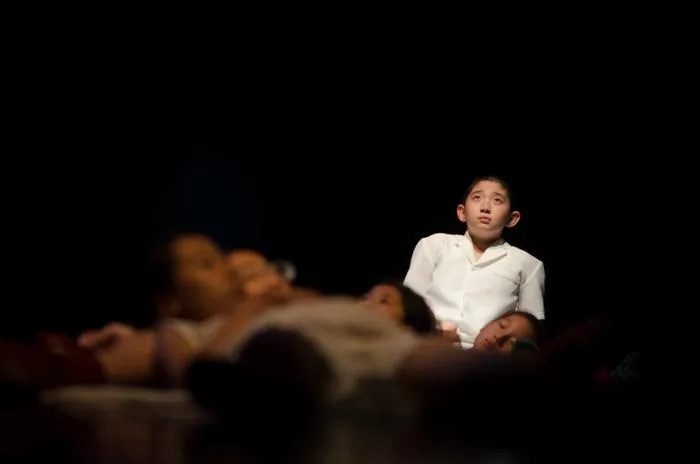
时间流逝,孩子们会长大,要去“弄懂”这世界,make sense of the world。剧中一幕,孩子们枕着彼此的腿,只有一个男孩坐着,慢慢地讲,一颗星星落入凡间,被一对农夫收养,在年轻时爱上一个姑娘,他从村庄消失,归来时一身伤痕。当时,灯光黯淡,孩子们似乎睡熟了。安静的孩子,忧伤的童话,童稚的声音,这一切都指向一种连贯——或许孩子们都晓得自己的童年正在倒计时,节拍器滴滴哒哒,沙锤沙沙作响,正是时间的声音。但他们还无法搞懂这个世界,在开始忧虑明天之前,他们正与未被逻辑切割的时间相处,站在无垠无际的现在,要一起搞出点什么,填补这无聊。比如,说点好玩的,“it is wonderful”。
“今天这个黄昏十分nice
忘不了而且没完
刚开始并且更糟
比在剧场里还
比在动物园更
那个什么
更nice
更wonderful
best good
这些美丽的东西
夜晚永远不降临
这些美丽 这些东西
我是
幸运儿
我是luckier
超级的
幸运
有幸
luckier-er
帮帮我
我不想坐
我不想站
并且
时间已经停止
今天什么东西都是漆黑一团
除了天空
它白白
它拜拜
它👋(演员们伸出手)
它闪耀着霞光
它闪耀着并瞎逛
霞光也在瞎逛
它更白了
白到无法拜拜
无法👋(演员们再次伸出手)
它休息
可是
一样
可是
就这样”
——节选自《神圣缝纫机》剧本,作者:陈丹路
Machine translation (AI) of the Chinese original, not yet reviewed by the author. Please cite the original.
The Divine Sewing Machine, dance theatre
Director: Wang Mengfan
Writer: Chen Danlu
Small children don’t think about what will happen in a quarter of an hour or an hour’s time. When they have laughed themselves hoarse and played until they have no strength left, they lie down wherever they are and fall asleep.
Adults, on the other hand – clever people – know they have a long life ahead of them. They think about the next meal, tomorrow’s work, the bills at the end of the month. So we are used to saving our strength for later.
Children don’t really think about tomorrow.
This is what The Divine Sewing Machine, performed by thirteen children, most shares with Waiting for Godot, the play it adapts. When it was publicised in 2017, The Divine Sewing Machine said its starting point was a reflection on the stilted “recitation voice” children are taught to use; but what the piece itself presents is deeper and broader – the impermanence and irrationality of the world. The fluency, poetry and playfulness of The Divine Sewing Machine and the decay, repetition and helplessness of Waiting for Godot are in fact the same thing. Or rather: once the children grow up, they will begin to wait.
Thirteen children in loose white clothes and cute socks walk slowly onto the stage. They tell stories, they play games, they hold hands, they fold paper planes, they strike instruments, they recite numbers. These fragments, edited and finally assembled into the piece, clearly aren’t telling a story with a beginning and an end, nor building a world with a radically different structure. What The Divine Sewing Machine presents is a rupture of meaning. This shows in its form: between one phrase and the next, one section and the next, the upper left corner of the stage and its centre, there are huge leaps. But because they are children – because of the children’s own absorption in this moment, this place, this scene – they don’t ask about cause and effect or literal meaning; they can simply shout and run, with body and spirit, dancing away. Yet how do these children, who have no professional acting or dance training, get across these ruptures? Or, if they cross them so easily that everything seems continuous, what are they gliding along, as if they possessed a complete freedom?
Over the two days that Waiting for Godot shows us, Vladimir and Estragon keep watch by a tree with a single leaf left on it, asking again and again when Godot will come, reassuring themselves again and again that he will. They encounter a landowner, his servant and a boy who minds the goats, but everyone has their own logic; question and answer slide off one another like water poured on hot iron, with no connection at all. Godot is like the next meal, tomorrow’s work, the bills at the end of the month in our own lives: he exists in our heads, following reason, obeying logic. But in the theatre, the thing anticipated never comes, conversation only passes the time, and the two men have nowhere to escape to. They can’t even manage to die. They loathe each other yet find they have only each other, and can only sit under the tree and carry on talking. If language has finally left its function behind, why should it be continuous?
Perhaps this is why many audience members, after hearing the words the children call out one after another in The Divine Sewing Machine, felt that it was poetry. If the passing of time and the impermanence of things are neutral, Beckett placed Waiting for Godot in a bleak and tedious winter, whereas the writer Chen Danlu, in rewriting it, pushes the children into a spring full of wonder, into repeated praise, drawing out spontaneous laughter and the tiredness that comes after play. And this spring, this celebration, can only belong to carefree children, children not yet held hostage by tomorrow. The children’s freedom lies in this moment being utterly boring – so let’s quickly do something fun and get through this second. And the fragments, spliced together like a montage, jointly summon up an experience shared by the audience: we have all found ourselves in a rupture of meaning, and, like these children, didn’t feel panicked. Many hopes may be pinned on children, as they are on Godot, but those lie in the future. It is only in the children’s world that everything is stripped of function – which is akin to the aesthetic, but closer to play. That is why, in Chen Danlu’s script, we see so many language games, and the children play inside them too.
Time passes, and the children will grow up and have to “figure out” the world – make sense of the world. In one scene the children rest their heads on one another’s legs, and only one boy sits up, telling a story slowly: a star falls to earth and is adopted by a farming couple; when he is young he falls in love with a girl; he disappears from the village and returns covered in scars. The lights are dim, and the children seem fast asleep. Quiet children, a sad fairy tale, a childlike voice – all of it points towards a kind of continuity. Perhaps the children all know that their childhood is counting down; the metronome ticking away and the shakers rustling are the very sound of time. But they can’t yet figure out the world. Before they start worrying about tomorrow, they are living with a time not yet cut up by logic, standing in a boundless present, wanting to make something happen together to fill up the boredom. For instance, saying something fun: “it is wonderful”.
“This evening is really nice
unforgettable and never-ending
just beginning and even worse
more than in the theatre
more than at the zoo
that whatsit
more nice
more wonderful
best good
these beautiful things
night never falls
these beautiful, these things
I am
the lucky one
I am luckier
super
lucky
fortunate
luckier-er
help me
I don’t want to sit
I don’t want to stand
and
time has already stopped
today everything is pitch black
except the sky
it’s white-white
it’s bye-bye
it’s 👋 (the performers hold out their hands)
it shines with the glow of sunset
it shines and wanders aimlessly
the glow is wandering too
it grows whiter
so white it can’t say bye-bye
can’t 👋 (the performers hold out their hands again)
it rests
but
the same
but
that’s it”
– Excerpt from the script of The Divine Sewing Machine, by Chen Danlu