Writing / interview · 2023 · 中文
Interview with Su Wei: Critical Vandalism对话苏伟:正直的流氓性
采访策展人苏伟:机构应该是一个让人进进出出、自我教育的平台;谈寻找同路人与保持创作的独立。

距离感Sense of Distance✦
❝机构本应该是个让你进进出出的地方,一个自我教育的、实现你思考的平台,一条连接多样性的通道。
❞艺术和文化实践者常常被卷入所在时代和地域的论争之中。寻找同路人、保持自己创作的独立与清朗,都是重要的挑战。艺术实践者如何找到自己的道路?这一点,学校无法教授。ArtReview中文版采访了策展人和研究者苏伟,他提出了“正直的流氓性”这一行动策略:只忠于真实的思考和客观的艺术实践,在其他事情上,做个流氓,别用自己的时间、青春和信仰为别人的价值判断买单。
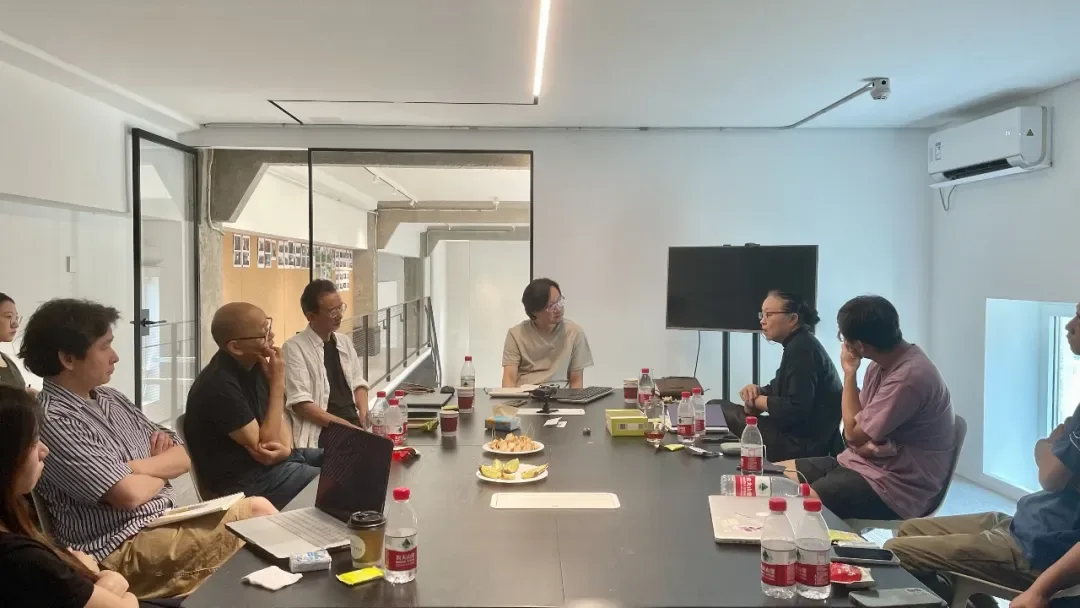
unpick offic组织的“艺术实践的现实问题”系列讨论(一)现场,2023年,北京
图片鸣谢苏伟
在许多时候,苏伟更像是一个提问者。他2005年进入当代艺术领域工作,曾担任中间美术馆高级策展人,现任清华大学艺术博物馆研究员,也独立发起研究和策展项目。他擅长细致勘察一手历史材料,展览中常常出现未曾被广泛了解的艺术家的名字,却并不试图为某个年代提供宣称更接近真实的叙述或者论断。乍看起来,苏伟的工作并不和艺术家的自我学习和替代性教育直接相关。但他的工作像是一份给同路人的提醒,当然也是对他自己挣扎之事的解答——如何不被时代的主流判断裹挟,如何能拨云见日、找到自己真正想问的问题,如何让他者如其所是地进入视野,如何寻找真正的朋友,如何葆有勇气。
在这些意义上,苏伟之前与学者戴锦华合作、重新考察中国20世纪90年代艺术界的展览“想象·主流价值”(2018),耙梳20世纪中期政治任务挂帅时期艺术创作中集体与私人情感的展览“动情:1949后变局中的情感与艺术观念”(2019),以及2022年成立的unpick office,都像是他在分享自己思考时的镜子、困惑时的抓手、校准自身工作的参照。这些参照带来了陌异、具体又深植于情境的他者——人们在理解这些他者的同时,也会慢慢重新理解自己所相信、困扰、批判的事物。从20世纪到现在,与中国社会政治现实深刻相连的艺术界从不缺乏具有紧迫性的方向和议题,立场之争也常常深入到了艺术家个体的创作路径之中。近一点看,对缺乏长期稳定支持的当代艺术领域而言,“替代性”也总是常态。如何在强势的判断和论述中,在种种阵营和社群中,找到自己的工作方向和生存方式?这篇采访围绕这一事关创作的伦理问题展开。
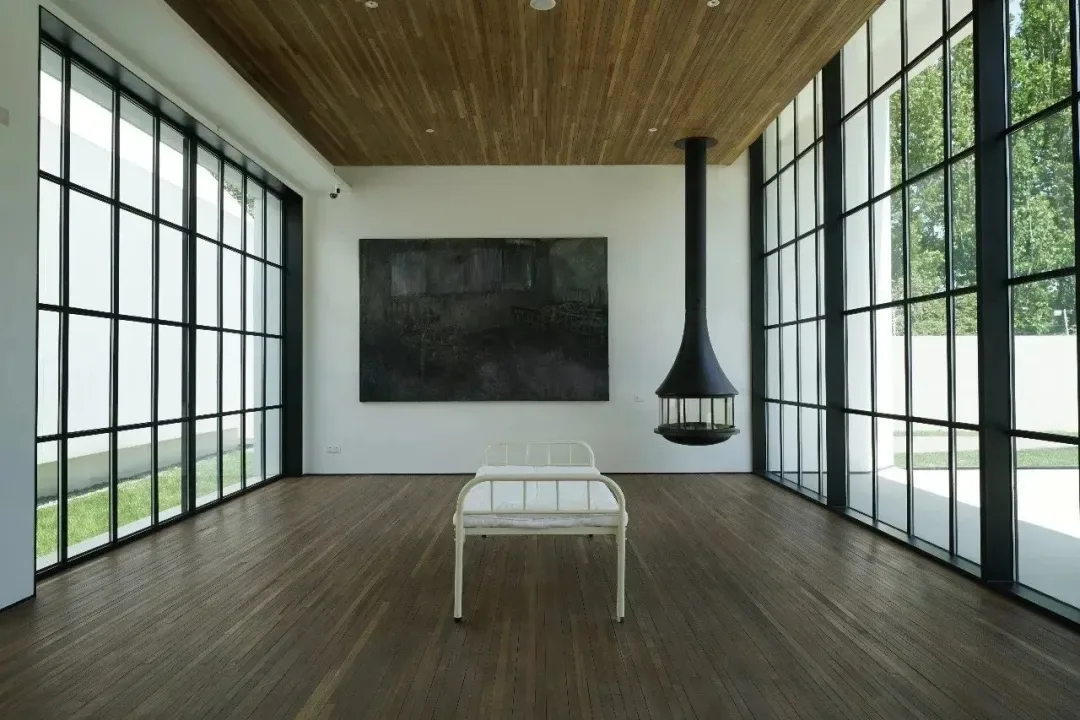
“幕间:四个案例”,“赵银鸥:2023.5.1-6.4”展览现场,北京松美术馆,图片由松美术馆提供
聂小依:你自己的艺术教育是因何契机开始的?或许策展人、研究者、写作者一直都需要不断阅读,甚至发展自己的长期研究方向。但你接触到的艺术家会如何面对接触新知、展开讨论的需要?在主流美术学院之外,你看到过什么样的替代性的艺术教育实践?
苏伟:我是从2004年起开始接触当代艺术的,从翻译、写作开始,慢慢找到适合自己的方式。我的专业是德语文学,博士毕业后我做了个决定,就是不进入学院体制,想乱闯闯看,和自己在一起工作。我记得之前咱们说起过一个经历,去年我给纽约艺术学院策展系的学生讲了一次课,当我问到她们毕业后的计划时,几乎都回答是想去到艺术机构工作。从学院到机构的无缝衔接,是这个时代给予的默认路径。但我总觉得,不在艺术这个复杂的泥潭里自己过一遭,不参与到街头、巷尾,不忘掉无论是英美学院还是更腐朽的中国艺术学院的教条——尽管这都可能非常幼稚,甚至可能不会带来什么有益的经验,也不一定培养什么好的立场和问题感——就进到机构开始所谓的“生产”,是不是挺难接触也无法表述出真实?当我今天看到大量的艺术机构,包括我现在所在的大学博物馆,其实采取的都是公司化或者官僚化的管理,而这仍让刚刚毕业的年轻人向往,这有点让人不安。机构本应该是个让你进进出出的地方,一个自我教育的、实现你思考的平台,一条连接多样性的通道。太着急地进入机构,可能遭受的不仅仅是视权力如命者的管制,同时也有可能把自己绑缚在种种关于艺术实践的教条里。
我的工作经历大概是由这些组成:围绕问题的大量阅读和思考,与合作者的交流,面对自己边界时做出的有效或者无效的尝试,一些失败的感受,不停地看。但这些,说多了也没什么意思。
如果一定要说到自我教育这个话题,我不知道把这个问题连接到主体性问题上合不合适。我必须说,我现在很讨厌“主体性”这个说法。以前我讲这个,其实是在将性格和某种重新叙述我所看到的一切的强烈愿望,寄托在这个概念身上。但实际上,这个概念与竞争有关,当然也就与权力、封闭性紧密相连。在我所做的关于中国作为当代情境的“1949后”的研究里,我越来越意识到这不是一个主体性研究,尽管我将研究者的自喻、语气、身体投入以及研究者审视自身所处的文化关联视为必要的前提。这个研究中没有太多与已经有的历史书写竞争叙述权的心态,或者费劲地想要进入到哪个序列里。正因为这段历史到今天一直都由国家主义意识形态及其所培养的、作为文化官僚的艺术家掌控,它本就显现出强烈的凭空创造和封闭的特征:这是一个过于“主体化”的历史。我想做的,恰恰是尝试揭示其无意识的、受到压抑的层面,分析诸多关于艺术的观念在这一历史中落地即转身、两头不到岸的情境。我想这是一个关于伦理的事情,是对坚固之物和暴力的全面溶解,也让他者不必进入自我的内部逻辑即可显现。90年代时,中国文化界曾热烈谈论过“文化主体性”。如果中国有一个内部逻辑,无论我们今天的研究有多么眼光犀利、多么有经验和手段挖掘这些内部逻辑,也无论这其中的个体(包括我们自己)如何实践出让这一内部逻辑充满张力的方法,我觉得这个内部逻辑都是必须被打破的:用它自身的逻辑拆解它,放在世界的多样性中,在陌异的领域中被重新提问。这可能就是一个从他者的角度去思考作为当代情境的“1949后”的方法。比起主体性,他者问题远远更重要。自我教育没有什么形态可言,一旦出现形态反倒应该有点警惕。形态这个东西和立场、权力、价值感、惯例、意识形态、规则分不开,这些东西是我们的日常,但如果我现在还和这些事情纠结,我会觉得我的自我教育有点失败。
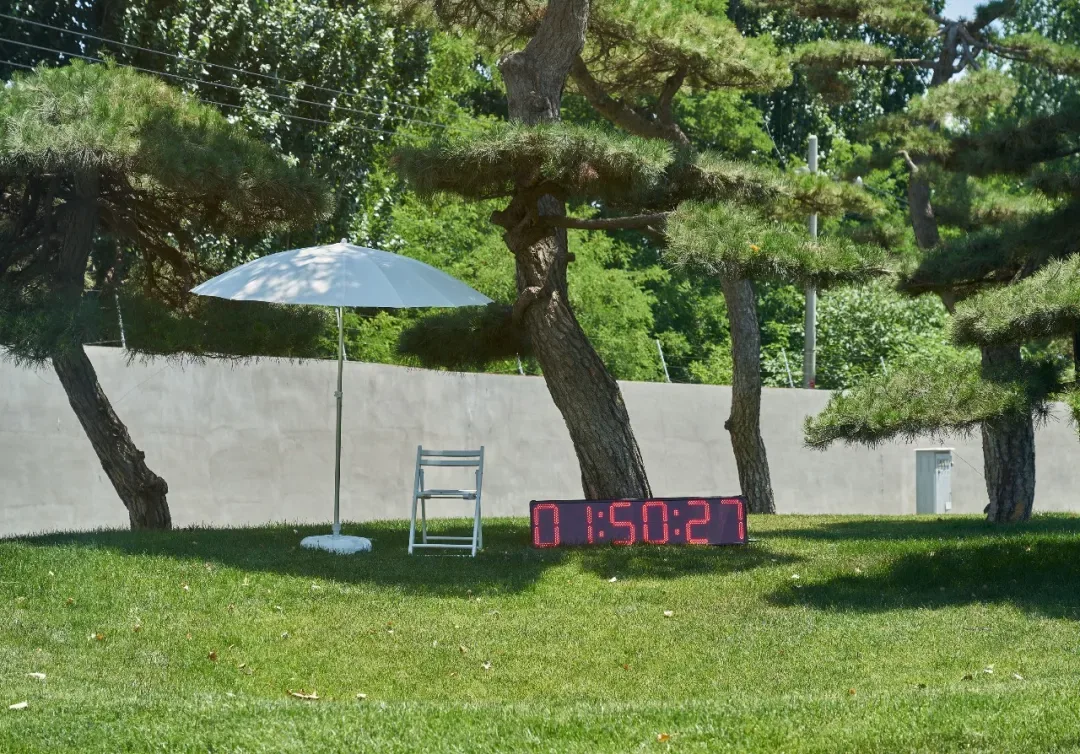
“阎实:原地生存”展览现场,2023年,松美术馆,北京
来自“幕间:四个案例”策展项目
图片鸣谢松美术馆
聂:从“我”到“他者”,这是几年中你在创作和研究上看重之事的一个剧烈转变。这个“我”再往前追溯,我记得你在大概十年前曾经提到,你希望在不同的时空中发现和建立一种“共同体”。你说,“这个‘共同体’不是纲领和意图明确的‘艺术群体’,不是隔绝于其它领域的小圈子,不是权力实施的地点:它看不到摸不着,却是推动这一行业继续存在和发挥影响的主动力。”而在“动情”里你非常关注的是在一种集体主义的创作和情绪模式中,像沈从文这样的艺术家面临的微妙境地。寻找共同体和主动边缘化其实都是和主流保持距离,也相对自主地把握自己研究和工作方向。你在研究中国20世纪艺术的过程里,是不是看到了很多不同的、自主的选择,在这其中,“共同体”是什么角色?
苏:“动情:1949后变局中的情感和艺术观念”这个展览其实有一个部分是在讲“同路人”与“独行者”的问题。我觉得这个问题在今天也有意义。在展览里,“情感”被理解为“1949后”沟通公与私、个体与集体、政治与艺术的通道。但很显然,这个通道只在某些宽松的政治时刻,比如60年代初有效,在更多时候其实呈现为一种困境。困境就是限度——展览中更多地在讨论“1949后”的“新人”如何面对这个限度去工作和表达(比如你提到的展览中的沈从文,其实还有大量这样的艺术实践者;当然展览中那些由于特殊的美术体制和美术内部的斗争而被边缘化的人占比更大,这个在展览的文献部分有所涉及),而不是去重新阐释这个基本困境以配合今天已延伸到学术生产领域的再政治化要求,更不是发明什么解决办法来指导今天仍处于类似困境中的中国艺术实践。“同路人”和“独行者”的矛盾(而非辩证)也是这个基本困境的形式之一,至少在我从业的感受来说,这个矛盾时时存在,是需要去正视和思考的。
你讲的“共同体”是一个特别好的问题。对于前辈艺术家来说,“共同体”有着非常积极的意义,无论是在“’85新潮”还是时刻充满紧迫感的90年代,它的确促成了中国当代艺术向前跨越。不过在我从业的这个时间段,我似乎没有感受到这种艺术世界中非常珍贵的共在形式。给我留下记忆的,是我自己经历过的很小范围的相处和共同工作。我既有对伪共同体的怀疑,我指的是基于身份、趣味、偶然的观念一致性、种种制造出的艺术意识形态等形成的共同体,或者说共同体本身变成了幻觉;同时,我也有愿望去尝试开创重新叙述我们自身及其历史的方法。另外,我也经常会想“朋友”和“敌人”的问题,提醒自己不要过度情感化地或者过度政治化地去处理这个问题。
聂:之前我们聊到了你觉得“共同体”和“社群”之间有差别,可以请你展开说说吗?艺术实践不是空中楼阁,它需要一系列基础设施,其中包括人际网络、实体空间、即时反馈、经济支持等等。我观察到,社群相对于艺术市场和美术馆,成为了一些艺术实践诞生的环境。你怎么看待艺术实践和社群之间的关系?
苏:“社群”是去年卡塞尔文献展中很重要的词汇。我觉得ruangrupa的设想并不差,但可能这个颇具野心的设想超出了展览和艺术所能承载的范围。我们怎么可能在一个展览或者一个为期数月的项目中,让这个世界中这么多异质的、很多甚至是互为矛盾的社群实践一起出现呢?对展览的反犹指控,我觉得反而是在提醒,展览可以做的是什么;反过来说,社群实践出现在展览中,需要更细致的考量和精确的方法。
而在热潮之中,我也想提醒我们应当警惕社群中的“温情主义”,正如我们常常警惕“暴力”“专制”一样。在缺乏反思和经验的情况下,过度协商的、过度情感化的、生活化的共处,也许带来的是某种对在艺术行业内积累的情绪的发泄,但表达为社群“实践”的行为。而在这其中,温情带来的问题,一方面是行动的失焦,甚至导致对行动不由自主的背叛。我觉得还是得洗脱身上的软弱,该点名的时候别犹豫。另一方面是掩饰自身巨大的认知局限、将某些价值绝对化。以某种体会、认同他者的“信仰”的名义为高墙而拒斥更广泛的他者,为了打造“信仰”的内在一致性而揉捏出一套意识形态和话术,在一派温情脉脉的讨论氛围中嘲讽、贬损他者,这种情况时有发生。温情背后是无知,是针对他者的暴力,这是一种更坏的东西并且最具欺骗性,里面都是20世纪那些必须被放弃之物的回声。而最终,这些温情会让处于通常时空之外的社群所独具的张力,落不到该在的地方。社群实践的政治性很“实”,涉及到非常多的对话和相处。提出观点和交流的能力、对自我边界的反思能力和抑制自我的表演性变得很重要。这种情况下,我觉得真诚地围绕观点进行争鸣,围绕激进主义展开更多反思性的实践应该是最核心的事务。
我认为社群是让人完善自我的手段之一。关键的可能是要先摸索自己的生活实践方式,而不是首先将自身全部投入到社群之中。“我”可以自己成为一个独立的“社群”,或者说,“我”可以成为一个“社群”的起点。我很难相信无法处理好自己生活的人,可以做出好的社群实践。我的这些想法在我们的语境里有针对性,但也比较粗糙,我相信深耕在社群实践中的人早就做过更深入的思考。
聂:你在去年成立了unpick office。在介绍中,unpick office是一个“以疏离、蓄意阻碍和延迟遗忘为前提的长期艺术项目。” 为什么要在2022年成立unpick office,以及为什么要采取一种你称为“内部爆破”的工作方式?它对应了目前你认为艺术现场需要的何种工作?
苏:unpick office是我2022年发起的一个项目。对我个人来说,它是应对那段荒唐的时间里的消耗、蓄积体力的一个方式。正好当时有个爱好艺术的好朋友张向东提供了一点资金,我觉得可以用来做些事情,就启动了。太多矫情的话可能也就不用多说了,每个人都经历了那些东西。总的来说发起这个事情更多地来自于身体本能,也希望在一个人生节点上保持工作动力,认识自己的诉求和经常不得不发生的分裂。
unpick强调的是从一团纷乱中辨析、抽离出线索和问题。虽然有un-这个前缀,但最初的设想不是从否定什么开始的,而是希望能在语境里实践的同时,保持超越语境的动作。一开始启动时,我发起了系列讨论“艺术实践的现实问题”,邀请包括艺术在内的不同文化领域的实践者,一起分享关于基本意识、基础设施、实践的问题感和现实感等等问题的经验。这些当然是普遍性的问题,但的确在中国过去十年的文化和艺术世界中再次变成了关键:一方面,从现实到艺术的进路要么被再次简单化或者模式化,要么变成了缺乏分析和思想质地的东西;同时,我觉得需要重新去理解一直回荡在中国文艺领域里的、既是历史负担但同时也是某种变革的立足点的问题,比如讨论中我们就提到的“人文主义”这个话题。它的语言方式和适配性都变得不那么理所当然,而这个问题在80年代中期就已经被当作“清理对象”。
回头看一年过去unpick office做的事情,我觉得很重要的一点是我称之为的一种叫critical vandalism(“正直的流氓性”)的东西。我越来越觉得,除了在过去的实践中积累下的、变得明确但又挑战极大的“思维方向”,我自己并没有那么多的选择权。从呼吸的每一口空气,到展览实践的发生,到职业身份,到你提起过的友谊问题,我觉得都很难标榜那种白领式的独立或者自我强大。换句话说,当我们把“为了自己选择的权利”作为自己生活实践和艺术实践的出发点时,事情就出问题了,要么变成了自我催眠,要么就是今天无处不在的表演。这个时候,寻找自身的真实位置对我而言是个挑战。Critical vandalism可能是这样一种东西:无论是关于机构、话语、身份、创作还是日常,既然很多选择权都不真实,就不要从依附/突破这个视角去看事情,这样也就避免在价值或者权力塑造的层面去实践。除了相信并服务于艺术的客观性,其它责任及其边界是次生的,而且是可以从叙述层面被改变的。最终,还是要回到那个老问题,就是彻底清理任何的价值判断和拒绝做出基于价值判断的选择,从这里开始,找到一个新的起点。这不是什么很新的意识,也似乎能让人联想到以前人们常提起的“寄生”或者“游牧”的概念。其实我很讨厌这两个概念,我的感觉它们更像是行业动物提出的、自我合法化的东西。比起这两个概念,critical vandalism也许离行业性和专业性都更远一点,更“清醒”一点吧,也可以说成是一种正直的流氓性:你所做的一切不过是为思想的真实和艺术实践的客观性服务的。
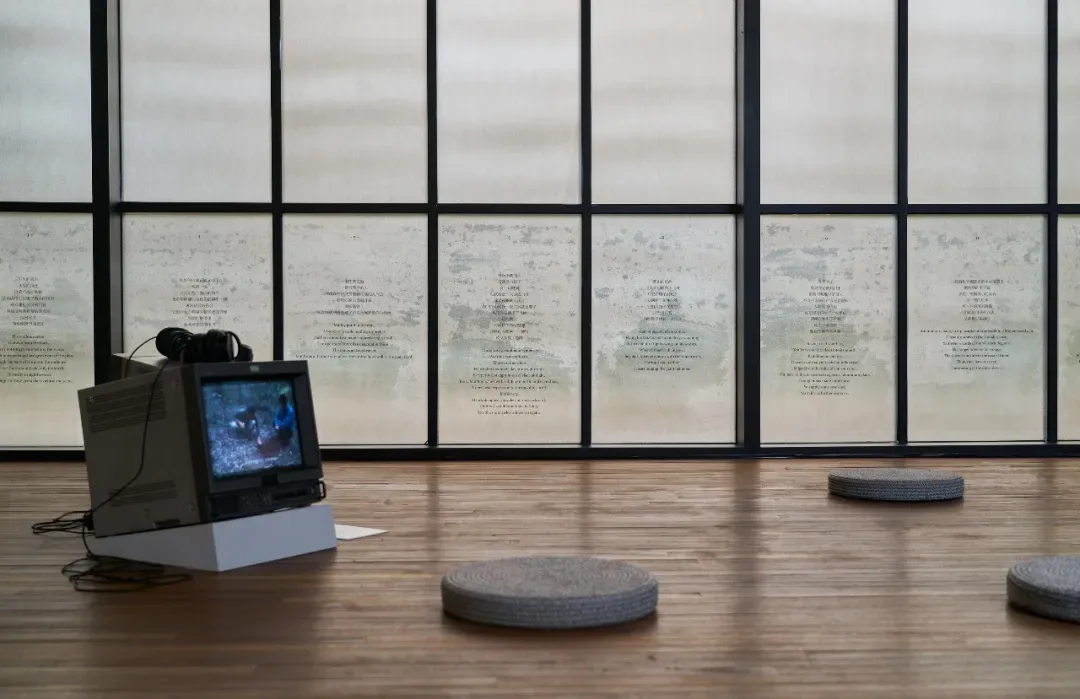
“阎洲:紧急之诗”展览现场,2023年,松美术馆,北京
来自“幕间:四个案例”策展项目
图片鸣谢松美术馆
聂:其实中国的当代艺术实践里,从80年代的“人文主义”到90年代的“文化主体性”和对市场的迎接与拒绝,从强调自己不依附于公权力的独立与地下状态再到对西方策展和收藏权力、美术馆机制的批判等等,都是一直存在的命题和话语。其中有些成为了习惯性的说法,甚至被不同世代的艺术工作者拿过来当作具有正当性的工作方向。我想你说的“清算”是一种对自己和自己的工作更负责任、更符合伦理的理解和重新选择。你之前经常说,比起选择谁去做朋友,更要慎重地选择敌人。但是从几年前对主体性的看重到这次采访中你对主体性的审慎,其实critical vandalism想要破坏的对象、所选择的敌人恰恰是被许多来自外界的话语和叙述交织出的“我”—— 那个最具有欺骗性的主体性?
在你组织的第一次“艺术实践的现实问题”讨论会举行之后,unpick office发布了一系列关键词,其中一个是“你、我、ta的关系”。我很好奇这个词语是在什么意义上展开的。因为流动性极高的当代艺术领域许多时候是靠着人际网络抱团取暖、流通经验来做成事情,友谊常常因为要“实干”而变得复杂。但在直指核心创作的层面上,艺术家、写作者、策展人最基本的实践往往需要借助自己最信任的几位同侪的目光来校准。彼此之间的信任和和诚恳的提问有一个前提,就是长期积累的相互理解。你最近策划的一系列“幕间”展览被描述为“半开放的对话”,你也说自己这次策展更像和艺术家彼此对话、互相激发。在和艺术家的交流中,许多人都说学校毕业之后,很少再有密集、诚实的有关作品的交谈。但这种不面向宣传、不带来直接利益的对话,因为私下而更安全,批评也更容易展开,也允许犯错。这样的对话在你接触到的几位艺术家的工作中是什么样的位置?会涉及到共同学习和自我教育的面向吗?
苏:我想借“幕间:四个案例”这个项目来谈谈友谊的问题,以及它和你提到的同侪之间的差异。在此次项目中,我“要求”“邀请”四位艺术家赵银鸥、阎实、韩磊和阎洲,以创造性反思的方式,回顾式地呈现他们围绕某一问题进行的创作实践。我最初担心过,“反思”可能是一个不必要的负担,甚至是一个表演的产物,在很多情况下,它也未必是艺术家实践的起点。但当我们为交流首先创造出一个有触觉的真空时,这个关于反思的工作就自然而然地发生了。在“要求”反思与“邀请”反思之间,是一个复杂的情感地带,而友谊在这里是一个决定性的前提。友谊让这种“要求”反思、“邀请”反思变成了一场激发,让彼此状态归零、重新开始。也就是说,友谊将我们各自推回到某个起点上,反思成为了友谊的一部分。
❝
我觉得从这个角度来说,你被感知为全然的陌异,变成了一个最好的交流发生时的前提而非拒斥(我相信,真诚和强力的工作一定不会竖起一座关闭的大门)。❞
其实,我们几个人几乎没有谈起过关于艺术的认识问题或者任何涉及到“应该如何”“去到哪里”的问题。关于艺术的全称判断很少出现在交流里,而后者很可能成为权力观念的落脚点。我们关于艺术的任何交流都是极度碎片化的,不深入的,几乎没有什么可以分享的故事(这个互相体会的过程其实是无法文本化的,而且很敏感,容易被任何一点的表演性所破坏)。也恰恰是这样,经验和实践的巨大差异在这里就不体现为任何形式的困境。我觉得从这个角度来说,你被感知为全然的陌异,变成了一个最好的交流发生时的前提而非拒斥(我相信,真诚和强力的工作一定不会竖起一座关闭的大门)。而亲缘性——在艺术行业里,这可能是同侪或者以某种形式的合作为前提的关系——其实对于艺术实践来讲是个很大的负担。
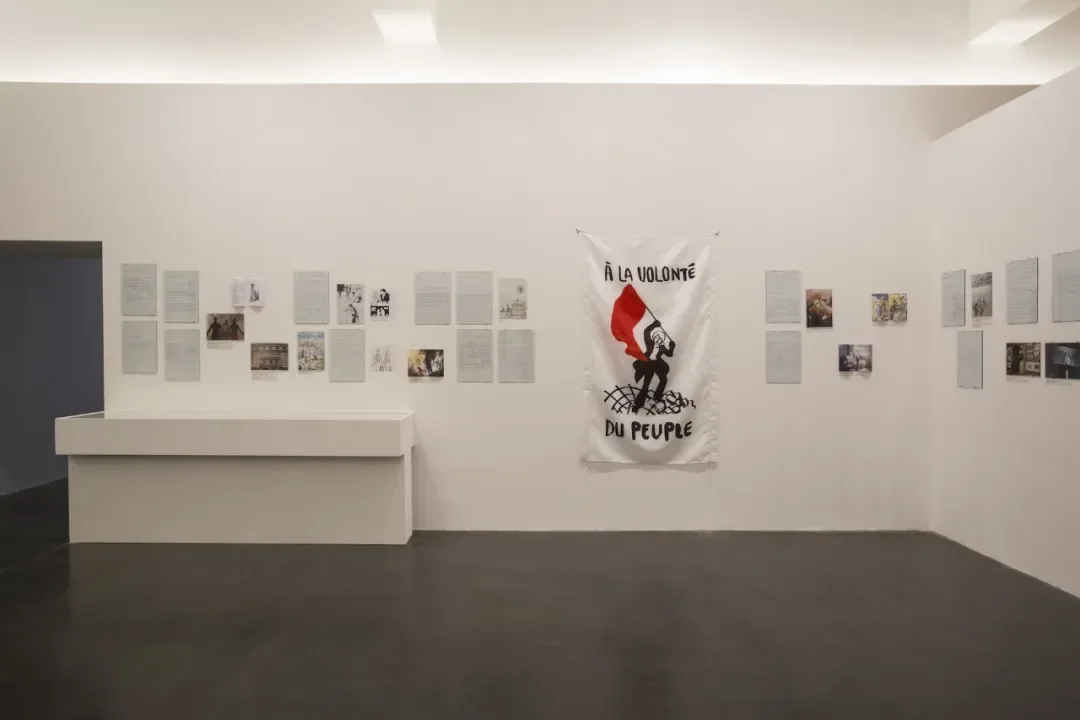
“想象·主流价值”展览现场,2018年,中间美术馆,北京
另外我觉得,相遇的起点真的很重要。其实在中国当代艺术的情境里,出现过一些去情感化的、以无意义生产为前提的团体实践,某种意义上,它们是反人文主义式的实践。很重要的是这样的团体是如何开始的,一方面是它们是否保有那种纯粹出于直觉的叛逆,对于任何“集体”“使命”的叛逆;另一方面,每个个体是不是处于或者尽力维持一种接近零的状态,这往往决定了这个团体的生命力。而另一方面,相遇即合作是我觉得最难把握的,它的确可能生产出“事件”“观念”“方向”“结构”;但在现实中,在缺乏淬炼的合作或者以达成某个目标为主要导向的合作里,观念的交流往往并不会引向深入的工作,而更可能带出那些我们熟悉的以权力、情感交换为基础的日常。
我想没什么必要将艺术行业里的那些关系都内化到自己身上,因为我想所有的“关系”都是可以被替代和转化的。我这么讲不是故意的修辞,也不是将“关系”污名化为党派。在发起“艺术实践的现实问题”这个系列讨论时,我关注的是那些在“1949后”情境中具有普遍意义的基本问题,它们在今天这样一个被历史的回声和巨大的不安感笼罩的时刻,呈现出什么面貌。相对于可以被替代和转化的“关系”,基本问题是一个更可依靠的支点(当然对于缺乏实践经验的人来说也是最大的认知阻碍)。至少在“1949后”这个情境里,基本问题都是非常具体的,与我们的生活实践和艺术实践密切相关。基本问题是历史主义不能够完全涵纳的,也不是像“关系”那样可以完全被职业的丛林和临时性覆盖。也就是说,基本问题其实是在基本与具体之间的张力空间中存在的,在这样的空间里,讨论——比如你说的关于你、我、ta的讨论——才是有意义的。这个空间不是哲学的空间,是围绕他者、围绕去除边界生成的创造性空间;是在可见性、可分享性和可流通性的最远处展开的空间,也是一个关于此地与超越的空间。**其实在这个空间里,“距离感”才是真实、有意义的,它不会像“关系”一样,生产很多交流的负担。或者说,基本问题连接的,是一个关于“创造”的伦理问题。
Machine translation (AI) of the Chinese original, not yet reviewed by the author. Please cite the original.
Sense of Distance✦
❝An institution should be a place you move in and out of: a platform for educating yourself and realising your thinking, a channel that connects you to diversity.
❞Artists and cultural practitioners are often drawn into the debates of their time and place. Finding fellow travellers, and keeping one’s work independent and clear-headed, are both serious challenges. How does an art practitioner find their own path? That is something no school can teach. ArtReview China spoke to the curator and researcher Su Wei, who proposes a strategy of action he calls “critical vandalism” – in Chinese, literally “upright roguishness”: be loyal only to genuine thinking and to the objectivity of artistic practice, and in everything else be a rogue. Don’t pay for other people’s value judgements with your own time, youth and convictions.
The first session of the discussion series “Real Problems of Artistic Practice”, organised by unpick office, Beijing, 2023
Image courtesy Su Wei
A lot of the time, Su Wei seems more like someone who asks questions. He started working in contemporary art in 2005, was formerly senior curator at the Inside-Out Art Museum, is now a researcher at the Tsinghua University Art Museum, and also initiates his own research and curatorial projects. He is good at meticulous work with primary historical material, and his exhibitions often bring in the names of artists who are not widely known – yet he never tries to offer an account or a verdict on a given period that claims to be closer to the truth. At first glance, Su Wei’s work isn’t directly related to artists’ self-learning or to alternative education. But his work reads like a reminder to fellow travellers, and of course also like his own answer to the things he struggles with: how not to be swept along by the mainstream judgements of the day; how to clear the clouds and find the questions you really want to ask; how to let others enter your field of vision as they are; how to find true friends; how to keep your courage.
In these senses, his projects – the exhibition “The Lonely Spirit” (《想象·主流价值》, literally “Imagining Mainstream Values”, 2018), made with the scholar Dai Jinhua, which re-examined the Chinese art world of the 1990s; the exhibition “Community of Feeling: Emotional Patterns in Art in Post-1949 China” (《动情:1949后变局中的情感与艺术观念》, 2019), which combed through collective and private feeling in art made in the mid-twentieth century, when political tasks were in command; and unpick office, founded in 2022 – all seem to serve as a mirror when he shares his thinking, something to hold on to when he is confused, and a reference point for calibrating his own work. These reference points bring in others who are strange, specific and deeply rooted in their situations – and as people come to understand these others, they slowly come to understand anew the things they themselves believe in, are troubled by and criticise. From the twentieth century until now, an art world so deeply tied to China’s social and political realities has never lacked urgent directions and issues, and battles over positions have often reached right into individual artists’ creative paths. Closer to the present, for a contemporary art field that lacks long-term, stable support, being “alternative” has always been the norm. Amid forceful judgements and discourses, amid all the camps and communities, how do you find your own direction of work and your own way of surviving? This interview revolves around that ethical question about making art.
“Intermission: Four Cases”, installation view of “Zhao Yinou: 2023.5.1–6.4”, Song Art Museum, Beijing. Image courtesy Song Art Museum
Nie Xiaoyi: What set your own art education in motion? Perhaps curators, researchers and writers always need to keep reading, and even to develop long-term lines of research. But how do the artists you come into contact with deal with the need to encounter new knowledge and open up discussion? Outside the mainstream art academies, what kinds of alternative art education have you seen?
Su Wei: I started engaging with contemporary art in 2004, beginning with translation and writing, and slowly found a way of working that suited me. I studied German literature, and after finishing my PhD I made a decision not to enter the academic system – I wanted to knock about a bit and see, and to work on my own terms. I remember we talked about something that happened before: last year I gave a class to curatorial students at an art school in New York, and when I asked about their plans after graduating, almost all of them said they wanted to work at an art institution. Moving seamlessly from the academy to the institution is the default path this era offers. But I always feel that if you haven’t been through the complicated swamp of art yourself, haven’t taken part in the streets and alleyways, haven’t forgotten the dogmas of the academy – whether Anglo-American ones or the even more decrepit Chinese art academies – even though all this may be very naive, may not bring any useful experience, and won’t necessarily cultivate a good position or a sense of the problem – if you go straight into an institution and begin so-called “production”, isn’t it hard to touch the real, let alone put it into words? When I look today at huge numbers of art institutions, including the university museum where I now work, most are actually run in a corporate or bureaucratic way, and yet young people fresh out of school still long for them. That is a little unsettling. An institution should be a place you move in and out of: a platform for educating yourself and realising your thinking, a channel that connects you to diversity. Rushing into an institution too early may mean suffering not only the control of people who treat power as their life, but also binding yourself up in all sorts of dogmas about artistic practice.
My working life has roughly been made of these things: a great deal of reading and thinking around questions, exchanges with collaborators, effective or ineffective attempts when facing my own limits, some feelings of failure, and looking, constantly. But there isn’t much point in going on about all that.
If we have to talk about self-education, I don’t know whether it’s appropriate to connect it to the question of subjectivity. I must say I now really dislike the term “subjectivity”. When I used to talk about it, I was actually pinning my temperament, and a strong desire to re-narrate everything I saw, onto that concept. But in fact the concept has to do with competition, and so of course is closely bound up with power and closure. In my research on “post-1949” as China’s contemporary situation, I have become more and more aware that this is not a study of subjectivity – even though I regard the researcher’s self-metaphors, tone and bodily investment, and the researcher’s examination of the cultural ties they themselves are caught in, as necessary preconditions. In this research there isn’t much of a mindset of competing with existing historiography for the right to narrate, or of straining to get into some lineage. Precisely because this history has always, up to today, been controlled by statist ideology and by the artists it trained as cultural bureaucrats, it already shows strong features of being conjured out of nothing and closed in on itself: it is an overly “subjectivised” history. What I want to do is precisely to try to reveal its unconscious, repressed layers, and to analyse situations in which many ideas about art, once they landed in this history, immediately turned round and ended up reaching neither shore. I think this is a matter of ethics: a complete dissolving of solid things and of violence, which also lets the other appear without having to enter the internal logic of the self. In the 1990s, Chinese cultural circles talked fervently about “cultural subjectivity”. If China has an internal logic, then however sharp-eyed our research today, however experienced and well equipped to dig out that internal logic, and however the individuals within it (ourselves included) practise ways of filling it with tension, I think that internal logic has to be broken: dismantled by its own logic, placed within the world’s diversity, and questioned anew in unfamiliar territory. This may be a way of thinking about “post-1949” as a contemporary situation from the standpoint of the other. Compared with subjectivity, the question of the other is far more important. Self-education has no form to speak of; if a form appears, that is a reason to be a bit wary. Form is inseparable from position, power, a sense of value, convention, ideology and rules. These things are our everyday life, but if I were still tangled up in them now, I would feel my self-education had somewhat failed.
Installation view of “Yan Shi: Surviving in Place”, 2023, Song Art Museum, Beijing
From the curatorial project “Intermission: Four Cases”
Image courtesy Song Art Museum
Nie: From “I” to “the other” – that is a dramatic shift, over a few years, in what you value in your work and research. Tracing this “I” further back, I remember that about ten years ago you said you hoped to discover and build a kind of “community” across different times and places. You said: “This ‘community’ is not an ‘art group’ with a clear programme and intentions, not a small circle cut off from other fields, not a site where power is exercised: you can neither see nor touch it, yet it is the driving force that keeps this profession existing and making an impact.” And in “Community of Feeling”, what you focused on was the delicate situation of artists like Shen Congwen within a collectivist mode of creation and emotion. Seeking community and actively marginalising yourself are both ways of keeping a distance from the mainstream, and of taking relatively autonomous control of the direction of your research and work. In researching twentieth-century Chinese art, did you see many different, autonomous choices, and within them, what role did “community” play?
Su: The exhibition “Community of Feeling: Emotional Patterns in Art in Post-1949 China” actually had a section dealing with “fellow travellers” and “lone walkers”. I think the question still matters today. In the exhibition, “emotion” was understood as a channel connecting public and private, individual and collective, politics and art in “post-1949”. But clearly this channel only worked at certain relaxed political moments, such as the early 1960s; far more often it appeared as a predicament. A predicament is a limit. The exhibition was more concerned with how the “new people” of “post-1949” worked and expressed themselves in the face of this limit (Shen Congwen, whom you mention, and in fact many other practitioners like him; of course, a larger share of the exhibition was taken up by those marginalised by the peculiar art system and by struggles inside the art world, which the archival section touched on). It was not about reinterpreting this basic predicament to suit today’s demands for re-politicisation, which have now spread into academic production, still less about inventing some solution to guide Chinese art practice today, which remains in a similar predicament. The contradiction (not the dialectic) between “fellow travellers” and “lone walkers” is one of the forms of this basic predicament. At least in my experience of working in the field, this contradiction is always present, and it has to be faced and thought through.
The “community” you mention is a very good question. For artists of earlier generations, “community” had a very positive meaning – whether during the ’85 New Wave or in the 1990s, which were always charged with urgency, it really did help Chinese contemporary art leap forward. But in the period I have been working, I don’t seem to have experienced that precious form of being-together in the art world. What has stayed in my memory is the very small-scale living and working together that I myself went through. I’m sceptical of pseudo-communities – by which I mean communities formed on the basis of identity, taste, an accidental agreement of ideas, or all kinds of manufactured art ideologies, or where community itself has become an illusion; at the same time, I also want to try to create ways of re-narrating ourselves and our history. I also often think about the question of “friends” and “enemies”, and remind myself not to handle it in an overly emotional or overly politicised way.
Nie: We talked before about how you see a difference between “community” (gongtongti) and “community” in the sense of a social group (shequn). Could you expand on that? Artistic practice isn’t a castle in the air; it needs a whole set of infrastructure, including personal networks, physical space, immediate feedback, financial support and so on. I’ve noticed that, relative to the art market and museums, communities have become the setting in which certain art practices are born. How do you see the relationship between artistic practice and community?
Su: “Community” was a key word at last year’s documenta in Kassel. I think ruangrupa’s vision wasn’t bad, but perhaps that rather ambitious vision went beyond what an exhibition, or art, can bear. How could we possibly make so many heterogeneous community practices from around the world, many of them even contradicting one another, appear together in one exhibition or in a project lasting a few months? The accusations of antisemitism against the exhibition were, I think, actually a reminder of what an exhibition can do; put the other way round, community practice appearing in an exhibition needs more careful consideration and precise methods.
And in the midst of the craze, I also want to remind us that we should be wary of “sentimentalism” in communities, just as we are often wary of “violence” and “autocracy”. Without reflection and experience, living together in an over-negotiated, over-emotional, domesticated way may bring a kind of venting of the emotions accumulated in the art world, but expressed as the behaviour of community “practice”. And here the problems that warmth brings are, on the one hand, a loss of focus in action, even leading to involuntary betrayal of the action. I think we still need to wash off our weakness; when it’s time to name names, don’t hesitate. On the other hand, it covers up one’s own huge cognitive limits and makes certain values absolute. Using a “faith” in empathising and identifying with the other as a high wall to shut out a broader range of others; kneading together an ideology and a patter in order to build the internal consistency of that “faith”; mocking and belittling others in an atmosphere of warm, tender discussion – this happens from time to time. Behind the warmth is ignorance, violence against the other; this is something worse, and the most deceptive, full of echoes of the things from the twentieth century that must be given up. In the end, this warmth means that the tension peculiar to communities that exist outside ordinary time and space never lands where it should. The politics of community practice is very “concrete”; it involves a great deal of dialogue and living together. The ability to put forward views and communicate, the ability to reflect on one’s own limits, and restraint of one’s own performativity become very important. In such situations, I think sincere contention around views, and more reflective practice around radicalism, should be the core business.
I think community is one of the means by which people perfect themselves. What may be key is first to feel out your own way of practising life, rather than throwing yourself wholesale into a community first. “I” can become an independent “community” on my own; or, put another way, “I” can be the starting point of a “community”. I find it hard to believe that people who can’t handle their own lives can make good community practice. These thoughts of mine are pointed in our context, but also rather rough; I believe people deeply engaged in community practice have long since thought about this more deeply.
Nie: Last year you founded unpick office. Its introduction describes it as “a long-term art project premised on estrangement, deliberate obstruction and delayed forgetting.” Why found unpick office in 2022, and why adopt a way of working you call “internal demolition”? What kind of work does it answer to that you think the art scene currently needs?
Su: unpick office is a project I initiated in 2022. For me personally, it was a way of coping with the attrition of that absurd period and building up my strength. It happened that a good friend who loves art, Zhang Xiangdong, offered a little funding at the time; I thought it could be used to do something, and so it started. There’s no need to say too many sentimental things – everyone lived through all that. On the whole, starting it came more from bodily instinct, and also from wanting to stay motivated to work at a turning point in life, and to recognise my own needs and the splits that so often can’t be avoided.
unpick stresses discerning and drawing out threads and questions from a tangled mess. Although it has the prefix “un-”, the initial idea didn’t start from negating anything; rather, it hoped to practise within a context while keeping up moves that go beyond the context. When it started, I launched the discussion series “Real Problems of Artistic Practice”, inviting practitioners from different cultural fields, including art, to share experience around questions such as basic awareness, infrastructure, and the sense of the problem and sense of reality in practice. These are of course universal questions, but they have indeed become key again in China’s cultural and art world over the past decade. On the one hand, the path from reality to art has either been simplified or formulaic once more, or has become something lacking analysis and intellectual texture. At the same time, I think we need to re-understand questions that have kept echoing through Chinese literature and art, which are both a historical burden and a foothold for some kind of change – for example the topic of “humanism”, which came up in our discussions. Its language and its fit have become far less self-evident, and already in the mid-1980s this question was treated as something “to be cleaned up”.
Looking back at what unpick office has done over the past year, I think one very important thing is what I call “critical vandalism” (in Chinese, “upright roguishness”). I increasingly feel that, apart from a “direction of thinking” built up through past practice – one that has become clear but is extremely challenging – I don’t actually have that many choices. From every breath of air I take, to how exhibition practice happens, to professional identity, to the question of friendship you raised, I find it hard to lay claim to that white-collar kind of independence or self-empowerment. In other words, when we make “the right to choose for ourselves” the starting point of our life practice and art practice, things go wrong: it becomes either self-hypnosis or the performance that is everywhere today. At this point, finding my true position is a challenge for me. Critical vandalism may be something like this: whether it concerns institutions, discourse, identity, making work or everyday life, since many of our choices are not real, don’t look at things from the perspective of dependence versus breakthrough, and so avoid practising at the level of shaping values or power. Apart from believing in and serving the objectivity of art, all other responsibilities and their limits are secondary, and can be changed at the level of narration. Ultimately we must return to that old question: thoroughly clearing away any value judgements and refusing to make choices based on value judgements – and from there, finding a new starting point. This isn’t a very new awareness, and it may remind people of the notions of “parasitism” or “nomadism” that used to come up a lot. Actually I really dislike those two concepts; to me they feel more like self-legitimising things proposed by creatures of the industry. Compared with those, critical vandalism is perhaps a bit further from the industry and from professionalism, a bit more “sober” – you could call it upright roguishness: everything you do serves nothing but the truth of thought and the objectivity of artistic practice.
Installation view of “Yan Zhou: Urgent Poems”, 2023, Song Art Museum, Beijing
From the curatorial project “Intermission: Four Cases”
Image courtesy Song Art Museum
Nie: In Chinese contemporary art practice there have always been these propositions and discourses: from “humanism” in the 1980s, to “cultural subjectivity” in the 1990s and the embrace and rejection of the market, from insisting on one’s independence from public power and one’s underground status, to critiques of Western curatorial and collecting power and of museum mechanisms, and so on. Some of these have become habitual phrases, even taken up by different generations of art workers as legitimate directions for their work. I take the “clearing” you speak of to be a more responsible, more ethical understanding of oneself and one’s work, and a way of choosing again. You’ve often said that, more than choosing your friends, you should choose your enemies carefully. But from the weight you placed on subjectivity a few years ago to your caution about it in this interview – isn’t the object that critical vandalism wants to vandalise, the enemy it chooses, precisely the “I” woven together from so many external discourses and narratives – that most deceptive subjectivity?
After the first “Real Problems of Artistic Practice” discussion you organised, unpick office published a set of keywords, one of which was “the relationship between you, me and them”. I’m curious in what sense that phrase was meant. In the highly mobile field of contemporary art, things often get done through personal networks – huddling together for warmth, passing experience around – and friendship often becomes complicated by the need to “get things done”. But at the level that goes straight to the heart of making work, the most basic practice of artists, writers and curators often has to be calibrated through the eyes of a few peers they trust most. That mutual trust and those sincere questions rest on a precondition: understanding built up over a long time. Your recent “Intermission” series of exhibitions has been described as a “semi-open dialogue”, and you’ve said that curating this time was more like talking with the artists and sparking each other off. In conversations with artists, many say that after leaving school they rarely again have intense, honest conversations about their work. But this kind of dialogue – not aimed at publicity, bringing no direct benefit – is safer because it’s private; criticism can unfold more easily, and mistakes are allowed. What place does this kind of dialogue have in the work of the artists you’ve been in contact with? Does it involve aspects of learning together and self-education?
Su: I’d like to use the project “Intermission: Four Cases” to talk about friendship, and how it differs from the peers you mention. In this project I “asked” and “invited” four artists – Zhao Yinou, Yan Shi, Han Lei and Yan Zhou – to present, retrospectively and by way of creative reflection, their practice around a particular question. At first I worried that “reflection” might be an unnecessary burden, even a product of performance; in many cases it isn’t necessarily where an artist’s practice starts. But once we had first created a tactile vacuum for exchange, the work of reflection happened by itself. Between “asking for” reflection and “inviting” it lies a complicated emotional terrain, and friendship here is a decisive precondition. Friendship turned this “asking” and “inviting” into a spark, resetting each of us to zero to start again. In other words, friendship pushed each of us back to some starting point, and reflection became part of the friendship.
❝
I think that, from this angle, being perceived as utterly strange became the best precondition for exchange to happen, rather than a rejection (I believe sincere and forceful work never puts up a closed gate).❞
In fact, the few of us hardly ever talked about questions of how to understand art, or anything to do with “how it should be” or “where to go”. Universal judgements about art rarely came up in our exchanges – and those are very likely to become the footholds of notions of power. Any exchange we had about art was extremely fragmentary, never in depth; there are hardly any stories to share (this process of feeling each other out can’t really be turned into text, and it’s very sensitive, easily spoiled by the slightest hint of performance). And precisely because of this, the huge differences in our experience and practice didn’t turn into any kind of predicament. I think that, from this angle, being perceived as utterly strange became the best precondition for exchange to happen, rather than a rejection (I believe sincere and forceful work never puts up a closed gate). Kinship, on the other hand – in the art world this might be peers, or relationships premised on some form of collaboration – is actually a big burden for artistic practice.
Installation view of “The Lonely Spirit”, 2018, Inside-Out Art Museum, Beijing
I also think the starting point of an encounter really matters. In the context of Chinese contemporary art, there have been some group practices that were de-emotionalised and premised on the production of meaninglessness – in a sense, anti-humanist practices. What matters a lot is how such groups begin: on the one hand, whether they keep a purely intuitive rebelliousness, a rebellion against any “collective” or “mission”; on the other, whether each individual is in, or tries hard to maintain, a state close to zero. This often determines a group’s vitality. Then again, encounter-as-collaboration is what I find hardest to get right. It can indeed produce “events”, “ideas”, “directions”, “structures”; but in reality, in collaborations that haven’t been tempered, or that are mainly geared towards reaching some goal, the exchange of ideas often doesn’t lead to deeper work, and is more likely to bring out the familiar everyday built on exchanges of power and emotion.
I don’t think there’s any need to internalise all those relationships in the art world, because I think every “relationship” can be replaced and transformed. I’m not saying this as a deliberate rhetorical move, nor stigmatising “relationships” as factions. When I launched the “Real Problems of Artistic Practice” discussion series, what I cared about were the basic questions that have general significance in the “post-1949” situation, and what they look like at a moment like today, shrouded in the echoes of history and a huge sense of unease. Compared with “relationships”, which can be replaced and transformed, basic questions are a more dependable fulcrum (though for people lacking practical experience, they are also the biggest cognitive obstacle). At least in the “post-1949” situation, basic questions are very concrete, closely tied to our life practice and art practice. Historicism can’t fully contain basic questions, and unlike “relationships” they can’t be entirely covered over by the professional jungle and by temporariness. That is to say, basic questions actually exist in the space of tension between the basic and the concrete, and it’s in that kind of space that discussion – such as the discussion you mention, about you, me and them – becomes meaningful. This space is not a philosophical space. It’s a creative space generated around the other and around removing boundaries; a space that opens up at the farthest reaches of visibility, shareability and circulation; and a space of here and beyond. In fact, in this space it is a “sense of distance” that is real and meaningful; unlike “relationships”, it doesn’t produce lots of burdens for communication. Or to put it another way, what basic questions connect to is an ethical question about “creation”.