Writing / essay · 2024 · 中文 / English
Why Go to Indonesia to Talk about Art Writing?为什么去印尼谈论艺术写作?
与刘菂合写,介绍两人在第13届国际亚洲学者大会(ICAS 13,泗水)组织的座谈「跨国语境下的艺术写作:有争议的知识生产场域」的缘起,附座谈与各发言摘要。
印尼——千岛之国,东南亚第一大国家,小红书上的火山旅游热帖国度,卡塞尔文献展史上第一任来自全球南方的策展团队ruangrupa的家乡,社群与集体实践的实验场与大本营,夏天比上海凉快的度假胜地……
艺术写作——定义比艺术批评更模糊,热度与艺术市场成反比。几乎没有全职从业者,读者往往也是写作者。
为什么要去印尼?为什么要谈论艺术写作?为什么要去印尼谈论艺术写作?
与印尼结缘要从2017年开始说起。当时刘菂刚刚加入香港的亚洲艺术文献库研究部,意外开启了东南亚当代艺术的研究工作,并对该地区的自发性空间和集体实践产生了兴趣。在当时的香港乃至国际艺术界,东南亚艺术还不太为人所熟知,只能算是在耀眼的中国当代艺术身边的相对小众的存在。而如今,不少东南亚艺术家及当代艺术从业者已经蜚声国际,跻身一线。在这一转变背后,到底是怎样的社会背景和地缘政治力量?这是她近年来持续思考的话题。而印尼又是刘菂在这片区域里去过最多次的国家。由于第十五届卡塞尔文献展的机缘,她认识了许许多多的印尼艺术文化工作者。每次来到印尼,在受到朋友们的热情接待之余,她也能切身感受到当地自下而上的活力——一种令人羡慕的活力。因此,疫情之后,她一直想重返当地进行更深入的交流。
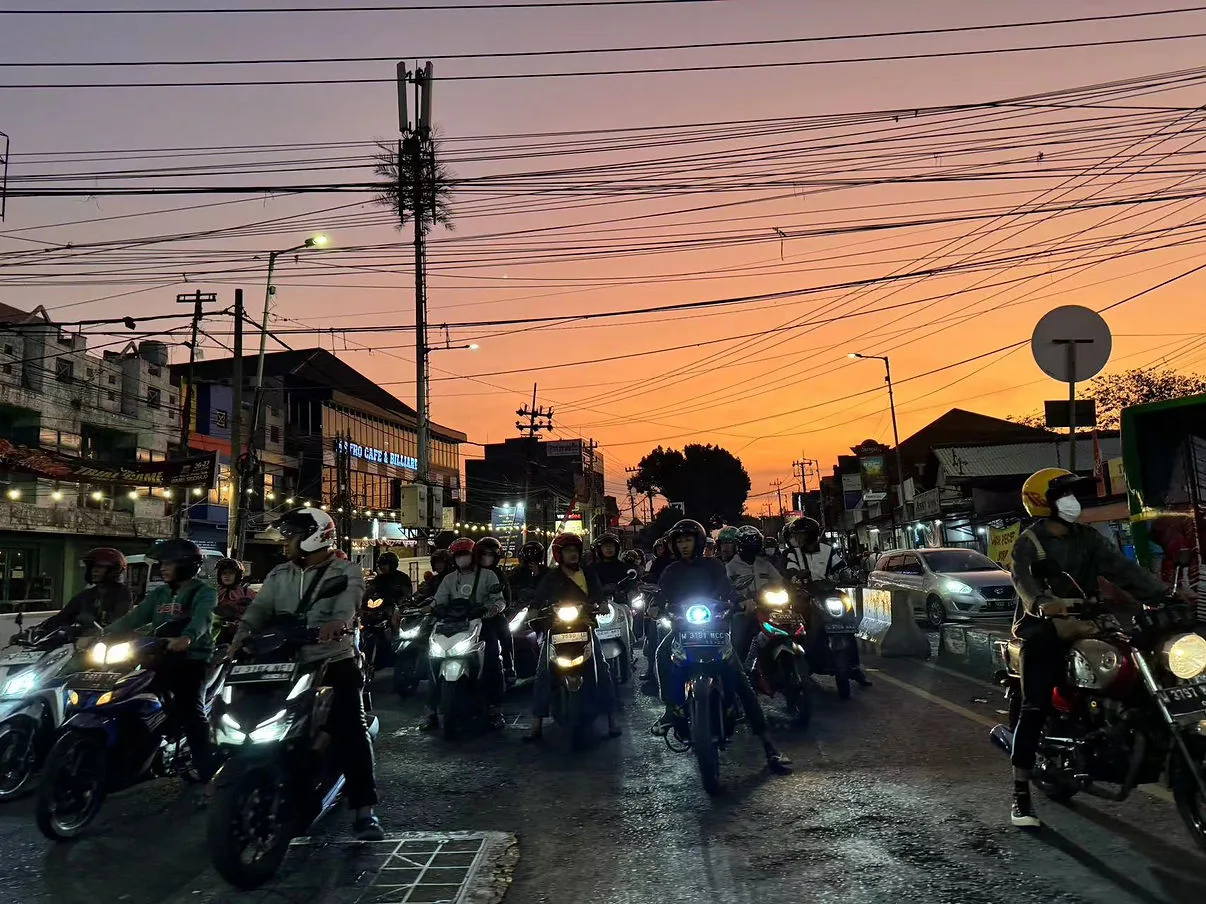
7月27日黄昏时分,从泗水机场到市区的路上,飞驰的摩托车流少见地一同停驻,蓄势待发。图片由聂小依提供。
刘菂与聂小依都与艺术批评有万千关联。刘菂除了在剑桥大学亚洲与中东学院进行关于民国时期物质文化鉴赏话语及实践的博士研究,长期以来持续进行当代艺术批评写作。而小依在英国皇家艺术学院读完博士之后,开始与更多艺术写作者一同工作——在《ArtReview中文版》、LEAP和《歧路批评》做编辑。对于小依来说,工作之后,“艺术写作”这件事不再只是一个业余爱好者的“爱”,系统、生态和公司的视角进来了,有许多问题冒出头来,例如“展评在艺术行业里承担什么功能?”“各家杂志的立场、语调和人设有什么区别,都是怎么建立起来的?”“小红书和视频号上的观点表达是不是更有效?”她有时也会觉得,简体中文环境里的艺术写作很容易会令人觉得无聊,英文世界里相对完善的写作支持和发表生态又离中文写作者和读者有些远。
在刘伟田和黄梓耘于2021年邀请小依加入《歧路》之后,《歧路》一直希望能在关心内地实践的同时,顺着实践者的“漂移”,接入更多语言、地域中的不同议题。不同背景的人群对同一件事情的不同理解常常会超出想象——这是最让人头痛、也最让人觉得“写得值了”的部分了。举例来说,2023年夏天《歧路批评》刊发了一篇文章《殖民历史与“全球化”的吊诡——评大英博物馆“晚清百态”特展》,引发了许多讨论:该展览叙事究竟是一种新型全球史的书写范例,还是为帝国主义招魂的“洗白”之作?而这篇批评文章,也受到了截然不同的解读:有人读出了对去殖民的深切呼唤,还有人读出了粉红战狼。在今天复杂的话语现场中,艺术写作怎么才能抛出掷地有声的观点,连结不同语系和文化背景下的思考?它还有哪些可能性?
2023年秋天,当看到第13届国际亚洲学者大会(International Convention of Asia Scholars,简称ICAS)的主题为“知识的交汇”(Crossways of Knowledge),并将在印尼泗水举办时,刘菂几乎没有犹豫就决定要参加,并且拉上了小依打辅助、组织座谈。她们从《殖民历史与“全球化”的吊诡》引发的争议聊起,希望能寻找机会,让艺术界与学术界的知识生产结合起来,突出艺术批评写作者的自发性,讨论一些平常显得太过微小的写作问题,在今天的艺术实践、社会现场、个人表达等不同层面上——尤其是跨语境的背景下——挖掘艺术写作的紧迫性。刘菂提出了从艺术评论与写作的角度继续思考知识生产,而座谈的标题最终定为“跨国语境下的艺术写作:有争议的知识生产场域”(Writings of/for Art in Transnational Contexts: Contested Sites of Knowledge Production)。
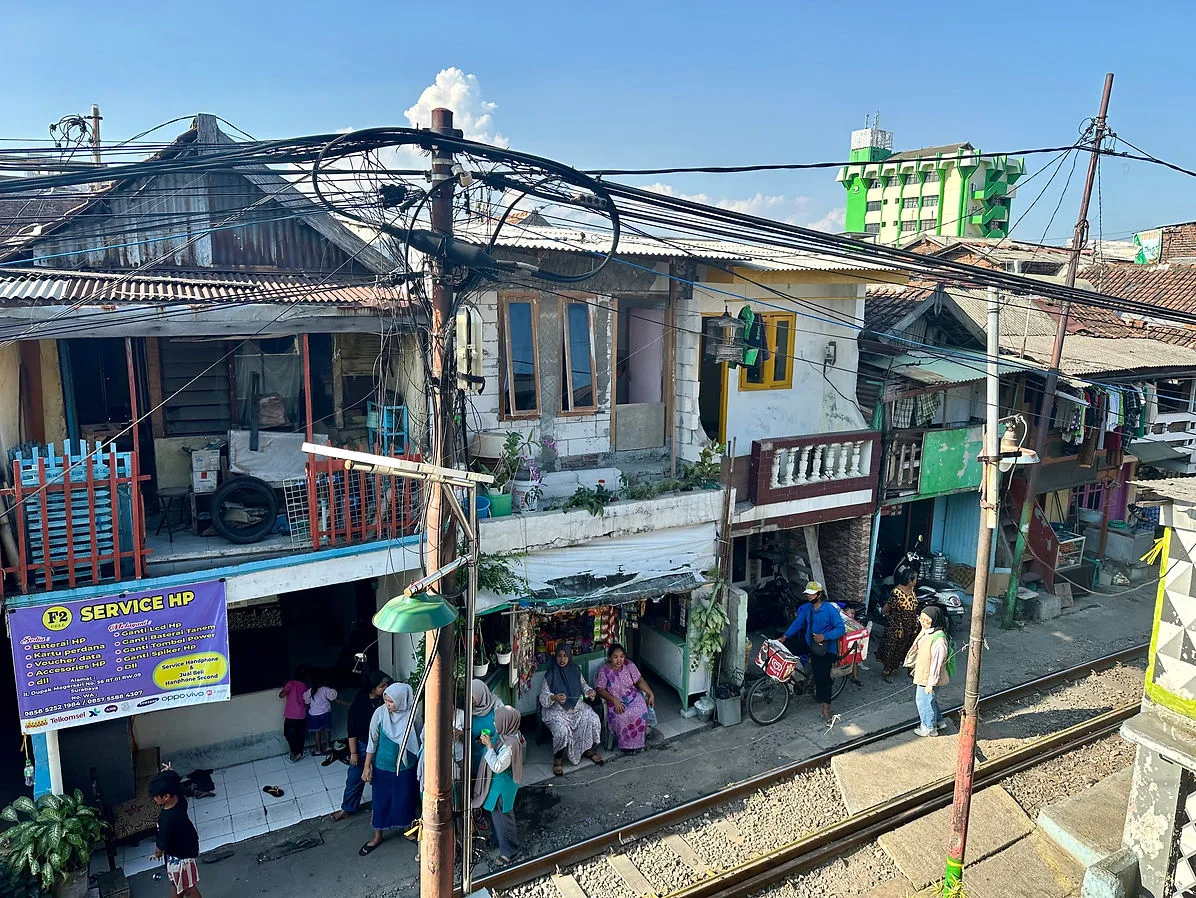
7月27日第13届国际亚洲学者大会组织的预热活动,拜访泗水老城区铁轨旁的Kampung Dupak Magersari(Kampung,又称“甘榜”,意为村落,通常用来称呼东南亚地区不同族群的聚集地)。图片由刘菂提供。
“跨国语境下的艺术写作:有争议的知识生产场域”
Writings of/for Art in Transnational Contexts: Contested Sites of Knowledge Production
我们的座谈讨论围绕后殖民状况、跨语言写作、亚际联结、延展的艺术批评与写作、学术与学科分野等主题。因此,我们邀请了艺术写作者、同时自身也是当代艺术从业者、以及具备亚际(inter-Asian)连接视角的几位友人一起参会,他们是学者和写作者陆思培、曾参加第十五届卡塞尔文献展的“storyteller”及策展人Putra Hidayatullah、写作者及雅加达Gudskul和RURUradio的制作人Berto Tukan。此外,我们也很荣幸邀请到多年来一直关心当代艺术前沿与国际文化政治的张颂仁先生作为这场座谈讨论的评议人。他除了一直参与亚际书院和亚际交流的建设之外,对于印尼亦有考察的兴趣。
参加一场国际会议需要花费不少时间和精力。虽然去往另外一个国度可以获得新的体验,其中的周折却也限制了可以参与交流的对象。我们想为未能到达现场参会的朋友,以及关心座谈主题、与之相关的其他朋友提供持续对话的可能。既然这场讨论与艺术写作有关,《歧路》联合“阅览室”(Reading Room)将会线上陆续发布一系列参会者的“心得”和“报告”,并收集更多新老朋友的写作一起集结出版。
最终,这场讨论会的发生不仅仅与刘菂和小依的个人关怀(和困惑)有关,还关乎热烈的土地、开放的世界、终于恢复的国际旅行,以及多元共生的愿景。我们希望通过艺术写作呈现这些关心,形成和促进更多对话的可能。
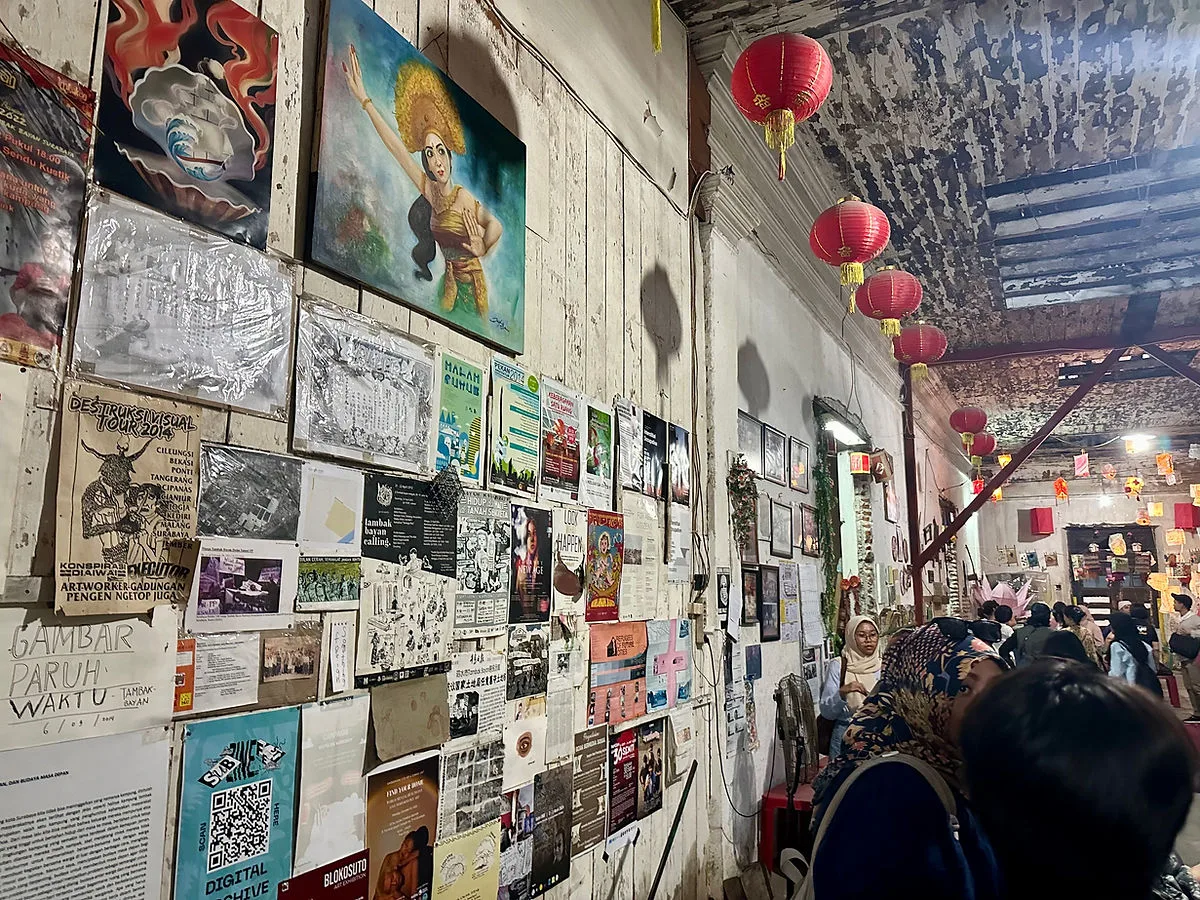
7月27日ICAS 13组织的预热活动,拜访泗水城区由前荷兰殖民者马厩所改造的华人聚集区Kampung Tambak Bayan。图片由刘菂提供。
座谈主题摘要
当代艺术及其全球基础设施一直是讨论和辩论的场所,通常以艺术批评和关于艺术的著作为形式——这些也与米歇尔·福柯所讨论的“帕雷西亚”(parrhesia,即说真话的实践)相关。在跨国和跨文化的背景下,艺术批评家、艺术家的创意写作以及从艺术作品和策展项目中衍生出的不拘一格的写作,跨越国界,为当代话语注入力量,但它们也面临着依赖于具体语境的巨大挑战。
艺术写作的独特性通常涉及追踪个人情感、具体现实和家庭历史。它是在学术框架之外的,另一种知识生产的过程。与传统的艺术史写作不同,艺术写作与不断演变的艺术实践同时发生,既具有历史偶然性又与当下世界相关。它面向更广泛的受众,并在很大程度上强调现实生活经验,不同于科学的分析或抽象的理论。
在这次讨论中,我们希望将艺术写作(writings of/for art)当作一个思考跨历史和当下的亚际联系和后殖民情形的场所。我们邀请了曾在中国或东南亚生活并有迁移经历的作家、艺术家,他们也曾经历或正在经历严格的学术训练,同时以个人或集体身份参与艺术实践。
每位小组成员将讨论其各自领域的具体问题,并探讨艺术写作作为一种干预形式,重点批评历史时刻、展览以及涉及离散人群在亚洲及其他地区的艺术实践。这些论文旨在构想捕捉跨国和跨亚洲想象的新方式,以及后殖民话语在华语和亚洲当代艺术界的流动性。
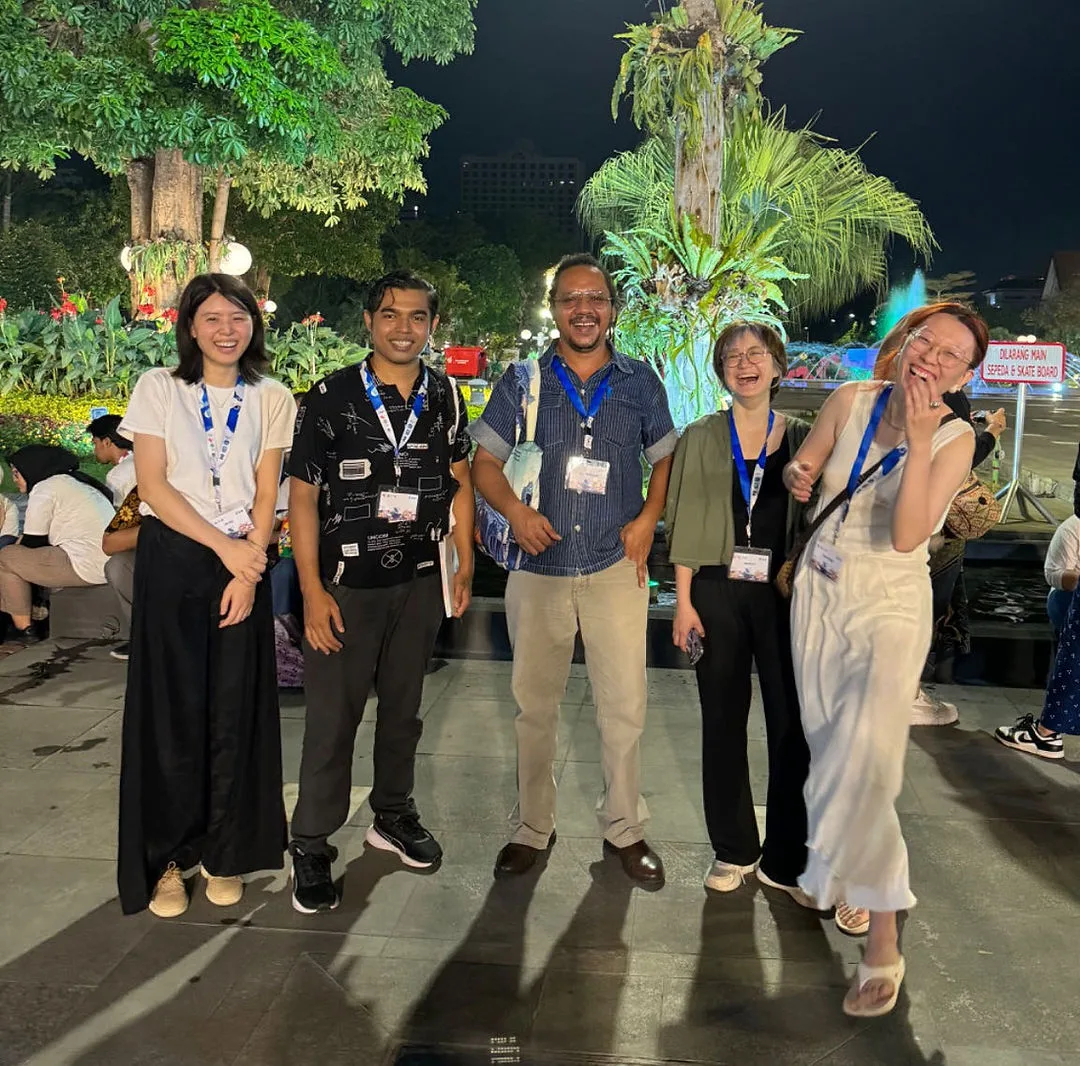
发言人快乐合影:刘菂、Putra Hidayatullah、Berto Tukan、陆思培、聂小依
报告摘要
Writings of/for Art in Transnational Contexts: Contested Sites of Knowledge Production
Panel Convenors: Di Liu and Xiaoyi Nie
Panel Chair: Di Liu
Panel Discussant: Johnson Tsong-zung Chang
more information here
1
How Art Writings and Discourses Can Instigate (Cedong) - From 'Farewell to Post-colonialism' to 'Qilu Criticism'
Thursday, August 1, 2024 11:15 – 13:00 (GMT+7)
Presenter(s): Xiaoyi Nie
The 2008 Guangzhou Triennial, 'Farewell to Post-colonialism,' represented a unique intersection of the Chinese art community with the addressed discourse. It highlighted the discrepancy between locally-rooted artists and the agenda of international contemporary art. The tension arising from the imposition of external intellectual frameworks, juxtaposed with the desire for more authentic and original expressions, underscored a prevailing dissatisfaction among practitioners. This sense of discontent was a shared sentiment, while this edition of the triennial attempted to instigate translocal discussions.
This presentation will share NIE Xiaoyi's research on 'Cedong,' a Chinese word referring to 'instigating and mobilising' in a political and social context, and appropriated by NIE into the curatorial discourse as an expansion of 'curating' or 'curation' burdened by the tradition of art histories and museums. Considering both curatorial practices and art criticism as approaches to facilitate connections and discussions, NIE will emphasise these approaches' effects in exposing discontents, dis-consensus and misunderstandings. The presentation will offer a reflexive account of co-editing Qilu Criticism, an independent art writing platform since 2021. Instead of only acting in mainland China, Qilu Criticism is an emerging, decentralised, and long-term endeavour focused on supporting Sinophone art writers. However, it not only faces the recurrent questions of usefulness and influence of art writings, but also often encounters the tension and fractures between different contexts. A clue flows from 'Farewell to Post-colonialism' to 'Qilu Criticism': How curatorial practices and art writings can provoke, instigate, heal, and facilitate?
2
Harvesting Collective Creativity: Redefining Art Writing in documenta fifteen
Thursday, August 1, 2024 11:15 – 13:00 (GMT+7)
Presenter(s): Putra Hidayatullah
The term harvesting describes creative recordings of talks and gatherings. Harvesters take notes, reflect, and use their own artistic techniques to represent this process. By reflecting on my personal experience as one of the harvesters for documenta fifteen, a prestigious international exhibition curated by the Indonesian artist collective ruangrupa, this presentation explores the innovative concept of harvesting in documenta fifteen as an alternative approach to art writing. It delves into the role of harvesting in collective learning, its connection to sensory experiences, and its impact on sharing and expanding artistic thinking and methodologies.
3
From Writing to 'Blabbing' or Why Jurnal Karbon Doesn't Publish Articles Anymore But Talks on the Radio: A Reflection
Thursday, August 1, 2024 11:15 – 13:00 (GMT+7)
Presenter(s): Berto Tukan
Jurnal Karbon is a media outlet devoted to discussing Indonesian contemporary art. This journal was published by ruangrupa almost at the same time as the art collective was born. In the beginning, it was a printed journal. It then changed to online media along with the presence of internet media in Indonesia. Currently, if you search for Jurnal Karbon's website page, you will not find it; he is on hiatus. However, you can find new products from this journal in podcasts and broadcast programs on rururadio. This journal tries to continue to discuss Indonesian contemporary art, even though its conventional platforms are not available. Apart from the specific technical conditions that caused this, there are several things that can be reflected on further. First, the uncertainty of a writing tradition grafted from outside, second, the desire to be 'read' and 'understood' from the artworld itself, third, the effectiveness of writing as a means of distributing knowledge, and fourth, other possibilities for distributing knowledge.
4
Working with Writing
Thursday, August 1, 2024 11:15 – 13:00 (GMT+7)
Presenter(s): Sipei Lu
In a context that limits public speech and writing, writing in the public domain can be both private and public. Those who are willing to explore and to decipher can gain access to the inner layer of texts' meaning. If there is trust, more daring writing will be shared within a small circle.
I'm interested in the field in-between, where the writing is beyond being private but still ambiguous, when the text welcomes intervention in different directions and has the momentum to have more public agency. That is to say, finishing a text is not the end of an artistic act.
This paper aims to shed light on artistic and curatorial concerns about working with writing to make things public by drawing on my observations of and participation in several projects where the acts of writing play differently. Artists and curators can play various roles in the process, such as storytellers, organisers, companions to unsolvable problems, mental detectives, and so on. They can also write off the authorship and speak with/for a wider public.
This is a contested and delicate ground. For some, writing is healing, out of the need to remember, to mourn, and to share. Perhaps more people, like my grandmother, choose not to write because recounting histories adds to their pain. We shall not attach too much importance to writing, while being patient and alert to the moment that is awakened and strengthened by writing.
感谢吴作人国际美术基金会对本文稿酬的支持。
感谢通过“赞助人计划”支持《歧路》的个人与机构。
Machine translation (AI) of the Chinese original, not yet reviewed by the author. Please cite the original.
Indonesia – the land of a thousand islands, the largest country in Southeast Asia, a nation of volcano-trekking posts on Xiaohongshu (China’s answer to Instagram), home of ruangrupa, the first curatorial team from the Global South in documenta’s history, a laboratory and base camp for community and collective practice, a holiday destination that is cooler than Shanghai in summer…
Art writing – more loosely defined than art criticism, its popularity inversely proportional to the art market’s. There are almost no full-time practitioners, and the readers are often writers themselves.
Why go to Indonesia? Why talk about art writing? Why go to Indonesia to talk about art writing?
Our connection with Indonesia goes back to 2017. Liu Di had just joined the research department of Asia Art Archive in Hong Kong, where she unexpectedly began researching contemporary art in Southeast Asia and became interested in the region’s self-organised spaces and collective practices. At the time, in Hong Kong and in the international art world more broadly, Southeast Asian art was not very well known; it was a relatively niche presence next to the dazzling Chinese contemporary art. Today, quite a few Southeast Asian artists and contemporary art professionals have become internationally renowned and joined the top tier. What social conditions and geopolitical forces lie behind this shift? It is a question she has kept thinking about in recent years. And Indonesia is the country in the region that Liu Di has visited most often. Through documenta fifteen she got to know a great many Indonesian artists and cultural workers. Every time she came to Indonesia, besides the warm welcome from friends, she could feel first-hand the bottom-up energy there – an enviable energy. So after the pandemic she had been wanting to go back for deeper exchange.
Dusk on 27 July, on the road from Surabaya airport into the city: the stream of speeding motorbikes, unusually, comes to a halt all at once, poised to go. Image courtesy Nie Xiaoyi.
Liu Di and Nie Xiaoyi both have countless ties to art criticism. Alongside her doctoral research at the Faculty of Asian and Middle Eastern Studies at the University of Cambridge, on the discourse and practice of connoisseurship of material culture in Republican China, Liu Di has long written contemporary art criticism. Xiaoyi, after finishing her PhD at the Royal College of Art, began working with many more art writers, as an editor at ArtReview China, LEAP and Qilu Criticism. For Xiaoyi, once it became her job, “art writing” was no longer just an amateur’s “love”. The perspectives of systems, ecologies and companies came in, and a lot of questions popped up: “What function does the exhibition review serve in the art industry?” “How do different magazines differ in their positions, tones and personas, and how were these built?” “Is expressing opinions on Xiaohongshu or WeChat Channels more effective?” She sometimes feels that art writing in the simplified-Chinese world can easily come across as boring, while the relatively well-developed support and publishing ecology for writing in the English-speaking world is rather remote from Chinese-language writers and readers.
After Weitian Liu and Cindy Ziyun Huang invited Xiaoyi to join Qilu in 2021, Qilu has always hoped, while caring about practice in mainland China, to follow the “drift” of practitioners and connect with different issues in more languages and places. How differently people from different backgrounds understand the same thing often goes beyond anything you could imagine – this is the part that gives us the biggest headaches, and also the part that makes us feel “the writing was worth it”. For example, in summer 2023 Qilu Criticism published an article, The Paradox of Colonial History and “Globalisation”: On the British Museum’s “China’s Hidden Century”, which set off a great deal of discussion: was the exhibition’s narrative a model for a new kind of global history, or a “whitewash” summoning back the ghost of imperialism? The review itself was read in completely opposite ways: some read in it an earnest call for decolonisation, while others read it as the flag-waving nationalism of China’s “little pinks” and “wolf warriors”. In today’s complicated discursive landscape, how can art writing put forward views that carry real weight, and connect thinking across different language families and cultural backgrounds? What other possibilities does it have?
In autumn 2023, when Liu Di saw that the theme of the 13th International Convention of Asia Scholars (ICAS) was “Crossways of Knowledge” and that it would be held in Surabaya, Indonesia, she decided almost without hesitation to go, and roped in Xiaoyi as her sidekick to organise a panel. They started by talking about the controversy stirred up by The Paradox of Colonial History and “Globalisation”, hoping to find a chance to bring together knowledge production in the art world and in academia, to highlight the self-initiative of art critics and writers, to discuss some questions of writing that usually seem too small, and to dig out the urgency of art writing on different levels – today’s art practice, social situations, personal expression – and especially across contexts. Liu Di proposed continuing to think about knowledge production from the angle of art criticism and writing, and the panel was finally titled “Writings of/for Art in Transnational Contexts: Contested Sites of Knowledge Production”.
27 July: a warm-up event organised by the 13th International Convention of Asia Scholars, visiting Kampung Dupak Magersari beside the railway in Surabaya’s old town (a kampung means a village, and is commonly used for the settlements of different ethnic communities across Southeast Asia). Image courtesy Liu Di.
Writings of/for Art in Transnational Contexts: Contested Sites of Knowledge Production
Our panel revolved around themes such as postcolonial conditions, writing across languages, inter-Asian connections, expanded art criticism and writing, and academic and disciplinary boundaries. So we invited several friends who are art writers, are themselves working in contemporary art, and bring an inter-Asian perspective: the scholar and writer Lu Sipei; Putra Hidayatullah, a curator who was a “storyteller” at documenta fifteen; and Berto Tukan, a writer and producer at Gudskul and RURUradio in Jakarta. We were also honoured to have Johnson Chang, who has for many years been engaged with the frontiers of contemporary art and with international cultural politics, as the panel’s discussant. Besides his long involvement in building the Inter-Asia School and inter-Asian exchange, he also has an interest in studying Indonesia.
Taking part in an international conference takes a lot of time and energy. Going to another country can bring new experiences, but the hassle also limits who can join the exchange. We wanted to keep the conversation going for friends who couldn’t make it in person, and for others who care about the panel’s themes or are connected to them. Since the discussion is about art writing, Qilu, together with Reading Room, will gradually publish online a series of “reflections” and “reports” by the participants, and gather more writing from friends old and new to publish together.
In the end, this panel is not only about Liu Di’s and Xiaoyi’s personal concerns (and confusions), but also about a passionate land, an open world, international travel finally restored, and a vision of plural coexistence. Through art writing we hope to present these concerns and to create and encourage more possibilities for dialogue.
27 July: a warm-up event organised by ICAS 13, visiting Kampung Tambak Bayan in Surabaya, a Chinese neighbourhood converted from stables built by the Dutch colonisers. Image courtesy Liu Di.
Panel abstract
Contemporary art and its global infrastructure have long been a site for discussion and debate, often in the form of art criticism and writings about art – which also relate to what Michel Foucault discussed as “parrhesia”, the practice of speaking the truth. In transnational and cross-cultural contexts, art criticism, artists’ creative writing and the eclectic writings that grow out of artworks and curatorial projects cross borders and give force to contemporary discourse, but they also face huge challenges that depend on specific contexts.
What is distinctive about art writing usually involves tracing personal emotions, concrete realities and family histories. It is a different process of knowledge production, outside academic frameworks. Unlike conventional art-historical writing, art writing happens alongside constantly evolving art practices; it is both historically contingent and relevant to the present world. It addresses a wider audience and places great emphasis on lived experience, unlike scientific analysis or abstract theory.
In this discussion, we hope to treat writings of/for art as a site for thinking about inter-Asian connections and postcolonial conditions across history and in the present. We have invited writers and artists who have lived in China or Southeast Asia and have experienced migration, who have been or are going through rigorous academic training, and who also take part in art practice as individuals or as members of collectives.
Each panellist will discuss specific issues in their own field and explore art writing as a form of intervention, focusing critically on historical moments, exhibitions and art practices involving diasporic people in Asia and beyond. These papers aim to envision new ways of capturing transnational and trans-Asian imaginaries, and the fluidity of postcolonial discourse in the Sinophone and Asian contemporary art worlds.
The speakers in a happy group photo: Liu Di, Putra Hidayatullah, Berto Tukan, Lu Sipei, Nie Xiaoyi
Paper abstracts
Writings of/for Art in Transnational Contexts: Contested Sites of Knowledge Production
Panel Convenors: Di Liu and Xiaoyi Nie
Panel Chair: Di Liu
Panel Discussant: Johnson Tsong-zung Chang
more information here
1
How Art Writings and Discourses Can Instigate (Cedong) - From 'Farewell to Post-colonialism' to 'Qilu Criticism'
Thursday, August 1, 2024 11:15 – 13:00 (GMT+7)
Presenter(s): Xiaoyi Nie
The 2008 Guangzhou Triennial, 'Farewell to Post-colonialism,' represented a unique intersection of the Chinese art community with the addressed discourse. It highlighted the discrepancy between locally-rooted artists and the agenda of international contemporary art. The tension arising from the imposition of external intellectual frameworks, juxtaposed with the desire for more authentic and original expressions, underscored a prevailing dissatisfaction among practitioners. This sense of discontent was a shared sentiment, while this edition of the triennial attempted to instigate translocal discussions.
This presentation will share NIE Xiaoyi's research on 'Cedong,' a Chinese word referring to 'instigating and mobilising' in a political and social context, and appropriated by NIE into the curatorial discourse as an expansion of 'curating' or 'curation' burdened by the tradition of art histories and museums. Considering both curatorial practices and art criticism as approaches to facilitate connections and discussions, NIE will emphasise these approaches' effects in exposing discontents, dis-consensus and misunderstandings. The presentation will offer a reflexive account of co-editing Qilu Criticism, an independent art writing platform since 2021. Instead of only acting in mainland China, Qilu Criticism is an emerging, decentralised, and long-term endeavour focused on supporting Sinophone art writers. However, it not only faces the recurrent questions of usefulness and influence of art writings, but also often encounters the tension and fractures between different contexts. A clue flows from 'Farewell to Post-colonialism' to 'Qilu Criticism': How curatorial practices and art writings can provoke, instigate, heal, and facilitate?
2
Harvesting Collective Creativity: Redefining Art Writing in documenta fifteen
Thursday, August 1, 2024 11:15 – 13:00 (GMT+7)
Presenter(s): Putra Hidayatullah
The term harvesting describes creative recordings of talks and gatherings. Harvesters take notes, reflect, and use their own artistic techniques to represent this process. By reflecting on my personal experience as one of the harvesters for documenta fifteen, a prestigious international exhibition curated by the Indonesian artist collective ruangrupa, this presentation explores the innovative concept of harvesting in documenta fifteen as an alternative approach to art writing. It delves into the role of harvesting in collective learning, its connection to sensory experiences, and its impact on sharing and expanding artistic thinking and methodologies.
3
From Writing to 'Blabbing' or Why Jurnal Karbon Doesn't Publish Articles Anymore But Talks on the Radio: A Reflection
Thursday, August 1, 2024 11:15 – 13:00 (GMT+7)
Presenter(s): Berto Tukan
Jurnal Karbon is a media outlet devoted to discussing Indonesian contemporary art. This journal was published by ruangrupa almost at the same time as the art collective was born. In the beginning, it was a printed journal. It then changed to online media along with the presence of internet media in Indonesia. Currently, if you search for Jurnal Karbon's website page, you will not find it; he is on hiatus. However, you can find new products from this journal in podcasts and broadcast programs on rururadio. This journal tries to continue to discuss Indonesian contemporary art, even though its conventional platforms are not available. Apart from the specific technical conditions that caused this, there are several things that can be reflected on further. First, the uncertainty of a writing tradition grafted from outside, second, the desire to be 'read' and 'understood' from the artworld itself, third, the effectiveness of writing as a means of distributing knowledge, and fourth, other possibilities for distributing knowledge.
4
Working with Writing
Thursday, August 1, 2024 11:15 – 13:00 (GMT+7)
Presenter(s): Sipei Lu
In a context that limits public speech and writing, writing in the public domain can be both private and public. Those who are willing to explore and to decipher can gain access to the inner layer of texts' meaning. If there is trust, more daring writing will be shared within a small circle.
I'm interested in the field in-between, where the writing is beyond being private but still ambiguous, when the text welcomes intervention in different directions and has the momentum to have more public agency. That is to say, finishing a text is not the end of an artistic act.
This paper aims to shed light on artistic and curatorial concerns about working with writing to make things public by drawing on my observations of and participation in several projects where the acts of writing play differently. Artists and curators can play various roles in the process, such as storytellers, organisers, companions to unsolvable problems, mental detectives, and so on. They can also write off the authorship and speak with/for a wider public.
This is a contested and delicate ground. For some, writing is healing, out of the need to remember, to mourn, and to share. Perhaps more people, like my grandmother, choose not to write because recounting histories adds to their pain. We shall not attach too much importance to writing, while being patient and alert to the moment that is awakened and strengthened by writing.
With thanks to the Wu Zuoren International Foundation of Fine Arts for supporting the fee for this article.
With thanks to the individuals and institutions who support Qilu through our “Patrons Programme”.