Writing / interview · 2023 · 中文
Taking Root, Travelling Light: From Chinese Arts Centre to esea contemporaryARC 访谈|落地生根、轻装上阵——从华人艺术中心到esea contemporary
回溯曼彻斯特esea contemporary从1986年「华人艺术节」、华人艺术中心到CFCCA的历程,讨论「华人」身份与移民自发艺术实践的机构化;并采访新任总监朱晓闻与「相遇练习」策展人张涵露。
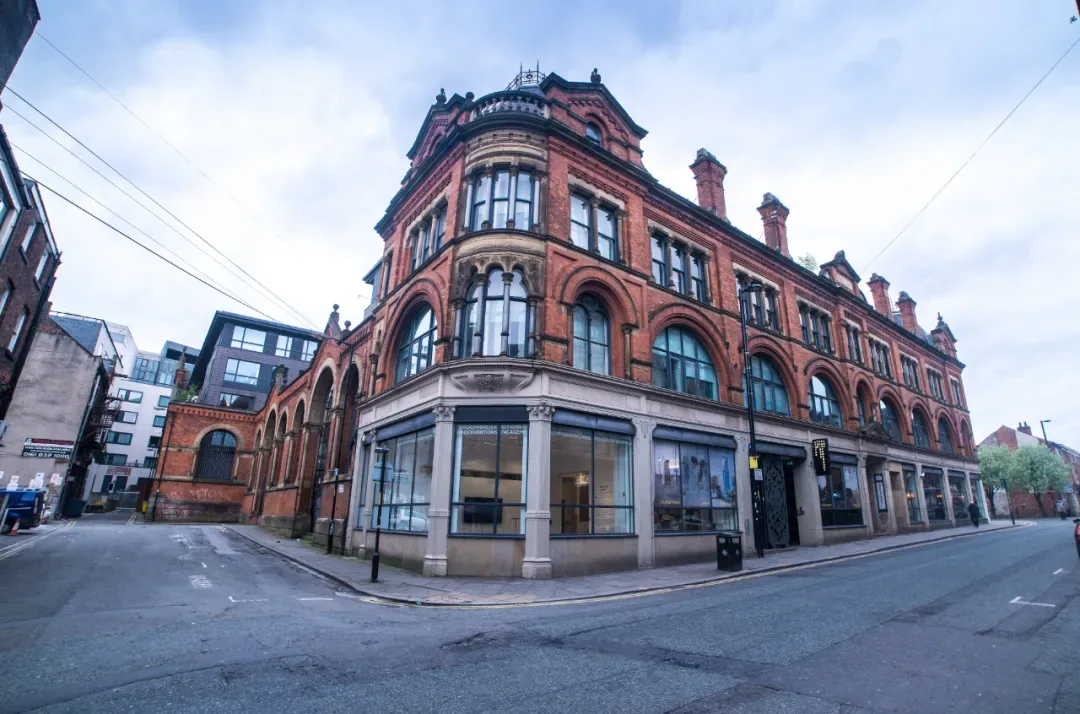
esea contemporary所在空间 2023年
摄影:Arthur Siukstra图片鸣谢esea contemporary
2023年1月11日,esea contemporary发出了它的第一封通讯简报。“esea”是“East and Southeast Asia”的缩写,东亚及东南亚地区在这里被一同称呼。esea contemporary坐落于英国曼彻斯特,是英国第一家致力于展示、支持来自或受东亚及东南亚文化背景启发的艺术家和艺术实践的非盈利机构。不过,esea contemporary并非横空出世。在过去的37年里,它与这些名字有关——“华人艺术节”(Chinese View Art Festival)、“华人艺术中心”(Chinese Arts Centre)、“华人当代艺术中心”(Centre for Chinese Contemporary Art,简称CFCCA)。从1986年华人艺术节在曼彻斯特筹办,到2023年机构更名为esea contemporary,这一历程反映了英国公立艺术系统、华裔移民和“中国当代艺术”的诸多变化。本文回溯esea contemporary的由来,并试图从此出发讨论“华人”在英国社会中这一变动中的身份文化认同,以及移民自发的艺术实践与自发组织与当地艺术系统结合并逐步机构化之间的微妙关系。对esea contemporary的新任总监朱晓闻以及本次机构新展览“相遇练习”(Practise Till We Meet)策展人张涵露的采访,则让我们看到新一代从大陆出发的艺术工作者在国际艺术系统里跨越语境和地域、在另一方“本土”(local)创造联结的勇气。
✦ “华人”
华人的移民史漫长而广阔。从晚清下南洋经商,到近代华工远赴欧美,从战乱中的移民潮,到改革开放后的留学热,华人的足迹遍及世界各地。而曼彻斯特是英国华人移民最多的城市之一。自1950年代起,这里涌入了大量来自香港和马来西亚的移民。当时这座老牌工业城市迅速开出了粤菜馆、南洋菜和炒饭外卖——当然,许多也是早就到来的华人开设的手工洗衣房转行而来。聚集的移民也继续操持着来自故土的习俗和被称之为艺术的事物——唱熟悉的曲调,教小孩子练书法、画水墨、下象棋、做风筝、剪窗纸。移民来自五湖四海,在这里却通过这些相似的练习寻到彼此。
“华人艺术节”宣传册 1986年 图片鸣谢esea ResearchLab
1987年,曼彻斯特市政府和当地的华人社群合力建成了当时欧洲最大的中国城(Chinatown)牌坊。1986年,香港移民、艺术家以及电台制作人黎美仪(Amy Lai)筹办了“华人艺术节”(Chinese View ‘86 Art Festival)。当时,盛大的舞狮、古筝和民歌表演,《黄土地》的电影放映,绘制风筝和京剧面具的工作坊,以及水墨画、刺绣和摄影展览溢出了中国城的牌坊,搅动起曼彻斯特的剧院、影院、图书馆和街道。艺术节引发了1987年华人艺术家协会的创建,以及1989年华人艺术中心(Chinese Arts Centre,简称CAC)在中国城开张。在其后十余年中,华人艺术中心逐渐成为一个让华人相聚的艺术和文化空间;而正因为华人的移民属性,这个空间就同时面向着岛屿内部和远方的亚洲,试图衔接起新地和故土。华人艺术中心不仅展出在英华人艺术家的作品,也举办如香港电影海报和中国大陆当代设计的展览,向当地观众引介中国和东南亚的艺术和文化现象。在1996年重组后,华人艺术中心将重心移向当代艺术,呈现了傅秋萍(Julie Fu)个展(1997)、“中国面孔”(Face of China)摄影展(1998)等等展览。
“中国面孔”摄影展展册 华人艺术中心 1997年3月至1998年5月活动目录 图片鸣谢esea ResearchLab
20世纪90年代也是冷战解冻、全球化加速的时段,中国当时也打开国门,来自大陆的艺术家若有机缘也能游历欧美。曼彻斯特那时少有大陆移民,但华人艺术中心名字里的“华人”却可以让大陆艺术家也觉得“与我相关”。中国美术学院雕塑系的李秀勤1988年因为英国文化参赞带来的一笔资助去了伦敦的斯莱德(Slade)美术学院学习;在1990年,她又申请到了曼彻斯特大学的雕塑系硕士并获得奖学金。在曼城的中国城,李秀勤碰到了华人艺术中心,并且向当时的总监黎美仪毛遂自荐成为中心的兼职老师。靠着周末在华人艺术中心教书法、画京剧脸谱、做中国文化相关的工作坊,李秀勤赚出了那时的日常开销。
英国艺术机制里,公立艺术资金的政策导向和支持十分重要。如果说华人艺术中心这一民间组织的创建正反映出英国本土1980年代黑人文化运动提出的提升英国非白人艺术家可见性的诉求,1990年代则见证了多元文化主义显著影响欧洲公共文化政策、公共资金倾向于为边缘族群提供更多支持。2003年,华人艺术中心用英国艺术委员会(Arts Council England)的资助建成了专业的的画廊空间;第一个来到这个新空间办展览的艺术家是来自中国大陆的徐冰,策展人则是如今享誉中国大陆当代艺术行业的凯伦·史密斯(Karen Smith)。同年,华人艺术中心也接待了来自曼彻斯特的友好城市武汉的艺术家何岸到英驻留。在随后的年岁中,也有更多人们熟悉的名字来到曼城:宋冬、黄汉明(Ming Wong)、陈丽可(Erika Tan)、张怡(Patty Chang)、曾建华(Tsang Kin-Wah)……与此同时,随着1990年代在欧美美术馆和双年展的“中国当代艺术”大展让大陆从业者认知了海外艺术系统,两千年后的大陆当代艺术系统渐渐有了基石;艺术家的简历上,大陆和海外的画廊和美术馆逐渐参差排布。在这过程里,华人艺术中心一方面保持公立机构的身份,同时也接入了国际当代艺术系统。
2013年,华人艺术中心经历了一次“品牌重新定位”(rebrand),更名为“华人当代艺术中心”(Centre for Chinese Contemporary Art,简称CFCCA)。公告称,“这一新的身份确认了华人当代艺术中心是一个面向未来的机构,回应中国日益增长的文化和经济影响。”并且,机构也希望自己成为“华人当代艺术的国际代理”(an international agency for Chinese contemporary art)。这里也涉及到一个问题——“Chinese contemporary art”要翻译为“中国当代艺术”还是“华人当代艺术”?随着中国日渐提升的影响力,这一问题似乎也变得焦灼。而此后,华人艺术中心在继续邀请英国和海外华人艺术家的同时,展出了更多年轻的、有大陆生活经历的艺术家,比如程然、林科、崔洁、嫣醒、马秋莎、厉槟源、沈莘、aaajiao、刘昕、叶甫娜、陆扬等等。从华人艺术中心到华人当代艺术中心的机构更名,不仅反映出90年代中期后“当代艺术”这一现象的崛起和经济运转逻辑的成熟,也见证了移民区域性的自我组织逐渐在资源和定位上逐渐与国际艺术现象结合。正如策展人凯伦·史密斯在华人当代艺术中心三十周年纪念画册中写到的,这个机构的“万里”(ten thousand miles)跋涉见证了巨大的改变,特别是“中国视觉艺术情形的改变,以及这一艺术现象在国际艺术舞台上受到的重视和认可。”
✦ 危机
不过,回到这个机构内部来说,这几十年来最大的变化在于其性质,即从个人、民间的艺术中心变为主要依靠公共资金的公立机构。而机构化带来的稳定经济来源和行政津贴,也让这里的工作人员逐渐从当时关心华人社群的艺术家变成了专业的艺术行业工作人员——比如策展人、PR和会计。专业人员虽然熟悉当代艺术系统,却可能缺失和相关社群、文化的情感联结。2020年3月,受邀为CFCCA的有关英国当代华人艺术家项目工作的艺术家JJ Chan发出了一封公开信,ta在信中根据自己的经历写到,“或许大多数人并不会吃惊于今天在英国有关‘华人’艺术的讨论中的主导声音是白人的声音。事实上,占据主流的理解框架显然仍是一种特别的凝视。比如,在CFCCA团队的13名成员中,只有一位不是白人。而即便白人策展人受过最好教育,也不会明白生活在一具非白人的身体中、无法言说的感受以及具身的知识。”
而让JJ Chan写出这封公开信的直接原因,则是JJ在CFCCA的朋友、当时机构里的一位华人工作者,在工作中受到一位管理人员的霸淩。这很容易被阐释为拥有华人文化背景的工作者被视为了艺术系统内职业工作者的威胁;而与艺术家的联系、策展机会等等已被视为艺术系统内的晋升资源。但实际过程存在着更复杂的因素:当机构运行严重依赖某个工作人员的行业人际网络,当领导层和董事无法即时回应申诉、保护申诉者,当整个机构如此固化、“脆弱”、无法应对任何危机…… 在这里,种族歧视其实是追究机构失职时最容易归纳的原因。在一定程度上,它会遮蔽机构内部复杂的日常政治;同时,它也的确能让机构的失败变得更显而易见,让一个局部的症状在更宏观的文化系统里获得反思。JJ Chan的公开信引发了轩然大波,许多艺术家站出来批评CFCCA,在社交媒体和私下交流中分享他们作为艺术家被机构霸凌的经验,反思与机构合作中被视为理所当然的身份政治表演。CFCCA在长期机构化之后,机构的诉求变为了在艺术系统内部维持存在,脱离了对真实的人的关心。通过不断展出华人艺术家,这一机构满足了公共艺术资金对支持英国华人移民文化的要求,却也给掌握了与中国艺术系统有联络的策展人以特权。
从2020年夏天开始,华人当代艺术中心开始了机构的重新修正(Revisioning)计划,邀请专业咨询机构及由七位英国华人艺术家组成艺术家工作小组(Artists Working Group)协助机构的转型。但是艺术家工作小组在工作几个月之后愤怒地意识到,机构内部希望变革的意愿太过欠缺,无法完成对过往工作方式的反思和改变。2021年5月,工作小组发布了他们的工作报告,呼吁英国艺术委员会撤销给华人当代艺术中心的资助。机构的总监和董事会主席也在2021年离职。
厉槟源个展“众重行事”宣传页 2015年4月9日至5月31日图片 鸣谢esea ResearchLab
在这场机构危机中,华人当代艺术中心名字里的“Chinese”成为了理解这个机构如何渐渐脱离当地社群的一条线索。“Chinese”在1980年代或许更多指向了如创始人黎美仪那样的“华人”老移民——他们拖家带口、离别故土、流散海外、扎根他乡。近些年,“Chinese”在英国语境中更多指向了在英国停留几年,却对当地的经济和教育系统有巨大影响力的大陆留学生和相对年轻的移民。在2019年CFCCA和北京中间美术馆组织的研讨会上,曼彻斯特大学的中国研究教授葛小伟(Peter Gries)在致辞时说,曼彻斯特大学已有八千名中国学生,这已是一个无法被忽略的事实。而在“中国”抢眼之时,来自其他地区的华人移民却逐渐在“Chinese”的框架下失声。如果追根溯源,当1980年代“Chinese”被启用为艺术节和机构的名称,以及亚洲族裔聚集的地方被称为“中国城”,这些行动一方面以“Chinese”的名义联合起跨越地域、基于文化的移民,另一方面却也会让客家、马来原住民等少数族裔缺乏可见性。“Chinese”,或者,“中”,到底是“中国”“中华”还是“中文”?是民族想象、经济实体、文化传统、国家政权还是知识体系?这其中的含混交错,也让CFCCA暧昧不明。当新到来的大陆留学生猜测华人当代艺术中心或许是为久居英国的华人服务,而英国本地的华人艺术家认为自己或许并不足够“Chinese”时,华人当代艺术中心究竟在团结着什么样的人群呢?
曾任华人当代艺术中心策展人的Yuen Fong Ling在 2014年时评论,“英国华裔艺术家和听众在CFCCA中已经变得‘隐形’”,CFCCA更像是一个 “理论上的中心“。当2020年CFCCA的系统性歧视被揭露时,曾经参展的大陆艺术家鲜少发声。这里暴露的恰恰是中国大陆艺术家对英国的华人、艺术工作者和展览系统的淡漠。对大陆艺术家来说,参加英国CFCCA的展览或许就像参加任何其他一个寻常的国际小型机构展览。然而,许多艺术家并未意识到这些年的展览机会,其实由当地的纳税人买单;其合法性也来自当地华人社群曾经的多年争取。值得警醒的是,当艺术家要求机构支付作品制作费和艺术家费时,也应该问自己是否认同机构的使命,确认机构是否在正直行事。否则,艺术家也有危险成为已腐败机构的同谋。
✦ 轻装上阵
“相遇练习”展览现场 Asian Feminist Studio for Art and Research, Proxy Conference: On Boat 亚洲女权艺术和研究工作室《代理会议:在船上》 双频影像,17分30秒,2023 摄影:Jules Lister 图片鸣谢esea contemporary
2021年,CFCCA处于一个艰难时刻。当时它已经失去了许多华人艺术家的信任。它是否该关门闭馆,但那样是否太辜负这里丰厚的历史遗产?如果继续往下走,它又该如何改变,如何处理和“Chinese”的关系?正是在这样的困窘之境中,2022年6月,朱晓闻被任命为CFCCA的新任总监。在她的领导之下,机构进行了一系列公共项目和广泛的意见征询。这一过程逐渐让机构逐渐回到英国和欧洲的艺术家社群,回到当地的观众社群。在征询意见中,来自多样化背景的数百位参与者搁置了“Chinese”这个背负着国籍、种族、语言和文化意味的词汇,选择了“esea”这个跨越国界、包括许多族群甚至有些“时髦”的单词。
或许正是因为近些年“Chinese”逐渐指向了“中国人”,一些有华人文化背景却并不来自大陆的人们不再以“Chinese”描述自身。根据学者Diana Yeh在2021年的研究,2000年之后,英国地区的亚裔和有华人背景的人群开始更多使用“ESEA”来描述自己;而2020年新冠爆发之后,对有东亚和东南亚面孔的人群的广泛歧视反而成为了亚裔跨越国界的团结动力。2022年3月,CFCCA正式更名为esea contemporary。对以地域范围为名的决定,有些人觉得太直接迎合了当下的风潮,有人在为“Chinese”从名字中消失而遗憾,也有人说名字没那么重要,最重要的是机构的使命到底有没有变清晰。不过,这个名字的确包括了那些此前可能会被文化和国族身份的“Chinese”排除在外的人们,也包括了不管是已经定居多年还是初来乍到的移民。
“相遇练习”展览现场 庄伟《两脚凳》 有机玻璃,2023 esea contemporary委任作品
机构重新开幕的第一个展览“相遇练习”(Practise Till We Meet)由张涵露策划,关注移民与政治之间的纠葛,并从移民境遇出发引入不同艺术家的社会实践。张涵露之前一直关注移民议题。她发起的社区实验室曾和在东莞打工生活的侗族人一起工作,邀请和谐侗戏班去了广东时代美术馆演出;她参与策划的“河流脉搏”展览关注穿越国境线的湄公河等河流,也关心那里背井离乡的劳工和民众。这一次在esea contemporary,张涵露用迁移这一共同的经历、困难或渴望串联起展览中的作品和项目。田中功起(Koki Tanaka)的录像记录了两位年轻人逐渐了解在日本朝鲜族历史和生存状态的过程,继续了艺术家对人与人之间如何协作的探索。庄伟(Isaac CHONG Wai)从邓小平与英国谈判香港回归时的著名警语“过去所谓三脚凳,没有三脚,只有两脚”入手制作装置,将观众的思绪引向当下香港新的移民潮。而刘伟伟呈现的则是他如何用艺术项目帮助在山东工厂上班、希望移民澳大利亚的弟弟刘超。此前刘超希望移民的诉求曾在网络公投(2018)和模拟陪审(2022)中被持不同意见者激烈争论。这次展览不仅展示了这些过程的录像,还展出了刘超的一幅仿马奈《枪决皇帝马克西米连》(1867)的油画以及他本人尝试以英文解说作品的录像——两者都显出他面对陌生媒介和语言时的蹩脚和执着,令观众回想起自己曾被远方的陌生事物深深吸引的时刻。展览中的作品从方法和题材上都和人的真实经历相关,是在社会中的实验。值得一提的是,展览还伴随着许多更为动态的工作坊。亚洲艺术行动派(Asia-Art-Activisim)和亚洲女权与艺术研究工作室(Asian Feminist Studio for Art and Research)邀请观众回溯英国华人移民史以及离散中的个体遭际,与观众一道创造临时现场。
“在充满危机的当代社会中激发连接,创造相遇”是涵露对展览的期待。而在她看来,一个不断调整、更新的机构,正像是每一位移民一样,在新环境中要去寻找新的自我描述方式、融入在地鲜活网络。而回过头来看“Chinese”从机构名字中的隐去,或许可以视作华人流动历程的另一显现。正如比较文学和文学史学者王德威所言,不管是“落叶归根”还是“落地生根”,“根”总有立场、位置甚至路径,但与“根”的政治相对,他提出可以借用“势”的诗学开辟出新的空间和过程。他引用法国汉学家余莲(Francois Jullien)对“间距”(écart)和“势”的讨论:“间距”与“差异”不同,不产生“非此即彼”,而是“往复来回”“不即不离”;而“势”这一历史悠远的词汇,则被解释为“事情发展的自然趋势才是决定现实的最佳方式”。从这样的角度去想,华人当代艺术中心变为esea contemporary,或许并不是一次对“Chinese”的告别,反而真正有了顺应自然、随机应变的情态。希望它将成为一个不断涌现的空间,让更多辗转、错置的故事在此徐徐展开。
**✦ ArtReview与总监朱晓闻的采访 **
朱晓闻 摄影:陈海舒
** ARC:**你在“Director’s Letter”写到自己曾在许多不同城市的生活和工作经历。可以讲讲你的经历吗,生活中碰到的问题和自己在海外的华人身份有关吗?
朱晓闻:我没有过多区分海外或者海内,因为就当下的生活而言,它只存在于一个地方。无论是海外或海内,困惑和问题都是生活本身带来的。或者说,如果从来没有生活轨迹的移动,也不代表困惑和问题就不存在——我在工作、生活中所碰到的问题都非常具体,也一般都有具体的应对、解决方法。
** ARC:**你出国前在同济大学读广播电视专业,是怎么开始对当代艺术感兴趣的?后来成为艺术家,拍摄了《乡绸》这部有关洛杉矶丝绸商店的纪录片,又进入当代艺术机构做策展和管理工作,会觉得这是很大的角色转变吗?
朱:我在同济念本科的时候,上海就有一些当代艺术的展览。对我来说,当代艺术是一个非常新鲜有趣的领域,涉猎了许多学院和课本中学不到的知识。当时我们学校有一位德国教授劳塔·施普瑞(Lothar Spree),他与乐大豆(Davide Quadrio)、徐杰和我一起拍摄采访了四十位当代艺术家,创作了名为《40+4艺术不够!远远不够!》的多媒体影像纪录片。我毕业时希望去体会艺术家创作,就申请了奖学金到雪城大学(Syracuse University)读录像艺术(Art Video)的硕士。后来,我在洛杉矶住了两年,先是参加艺术家驻地项目,又在马里蒙特大学当访问教授。之后我在伦敦还生活了三年,主要以个人创作为主,也做一些项目策划和写作。2016年英国脱欧后,我和伴侣去了柏林生活。柏林的艺术圈比较集中,来自中国的艺术从业者互相之间差不多都认识,很快我就认识了当时正在筹备中的时代艺术中心(柏林)的团队并且加入了。中间这个过程发生得很自然,我并没有一开始就想成为一个艺术机构的专业策展人。
** ARC:**时代艺术中心(柏林)应该算是第一个“出海”的中国当代艺术机构。“中国当代艺术”对你来说意味着什么呢?在柏林参与做这样一个机构的经验会不会很特别?
朱:就所谓的中国艺术圈而言,我一直觉得自己是一个旁观者、一个艺术观众。在国内时我上的不是美院,涉猎中国当代艺术圈也是后来从海外回国、参加一些展览的时候,才有不算深入的接触。2018年,广东时代美术馆在柏林创建时代艺术中心。柏林本身是一座很开放的城市,鼓励艺术家自由创作,每年都有很多艺术家和民间组织自发创建的新艺术空间——这种活跃的生态很重要,令年轻艺术家和年轻机构能不受拘束,按照自己的想法去探索。在经历一个阶段的发展之后,或许空间能持续做下去,又或许以另一种形式继续发芽。
** ARC:**这样去想的话,时代艺术中心去年实体空间的关闭也可以看作是一个自然的过程。我问的问题有很多身份政治、地缘政治方面的预设,但你的回答非常确切,涉及很多偶然、具体的因素。
朱:真正工作和生活的时候,想象就会被打破,因为你要面对的都是非常具体的情况。我一般不会被身份问题困扰太多,或许因为我自始至终都觉得自己就是一个旁观者、外来者。当我到一个新的地方时,我不是一定要被这里的群体接纳。当我融入了一些艺术或是其他社群时,我认为这种融入不是基于肤色或文化背景,而是因为我们有着相同的价值观、相似的理想或处事方式。
** ARC:**我在想这种态度会不会让你能有勇气去接手当时的CFCCA。我很佩服你敢在2022年去接手当时很棘手的的机构总监职位。你在接手之前了解CFCCA吗,对它有什么印象?
朱:2020年华人当代艺术中心(CFCCA)的危机爆发时,我正在柏林生活,通过媒体上了解到的信息能感到这家机构有长期系统性问题。它历任总监少数是华人,大部分是英国白人,而且许多对东亚、中国文化以及艺术领域缺乏深度了解。此外,上一任董事会里来自亚洲文化背景的成员只占少数。这些都透露出英国艺术系统对华人能力的不信任。这之后差不多有一年半的时间,机构在公开征集新总监。2021年董事会任命了一位总监,但是中途这位总监改变了想法,最终没有上任,董事会不得不继续寻找总监。当时负责招聘的临时总监Thanh Sinden是越南裔,她的主业是为政府项目和文化艺术机构做多元和包容性举措的咨询。在面试时我对她印象深刻,因为她对系统性的种族歧视特别感同身受。她当时已经重组了董事会,算是把机构重建的地基打好了。我当时就问她,“你为什么不留下来继续当总监?”她跟我说,因为她不是一个艺术方面的创造者,这个机构要继续做下去的话,未来的总监应该是个有艺术背景,懂得怎样和艺术家一起工作的人。Sinden觉得这可能是之前若干任总监所缺少的特质。CFCCA其实是一家小型机构,团队成员需要深刻理解机构产出的艺术内容,不能只是一味处理公务。
** ARC:**你也算是临危受命接任总监。有没有想过为什么会是其实没有太多机构任职经历的你,担任之后会有压力吗?
朱:我对很多人说过,我来这家机构,其实这是一个创业项目,而不是一份工作。或许正是因为我没有从其他各大机构带来的既定想法和模式,而我本身又是艺术家和写作者,我可以抛开很多包袱,因地制宜地去开展工作,重整资源,扬长避短。董事会最终任命我是因为他们相信可以和我一起把这家机构从泥潭里拔出来。当时有一位董事会成员向我推心置腹地说,晓闻你不用担心,因为你肯定只能做得更好,不会做得更差。我其实没有很大的压力,因为不只是我在做这个机构,我们靠的是团队协作。有一些元老级的董事会成员投入了非常多精力。董事会成员的工作全部都是志愿的,没有一分钱劳务费,有的董事会成员可能过去一年中把自己的正职都停下来,拼命想挽回这个机构。有很多我们在表面上看不到的人们在背后持续地、默默地付出着。英国文化部门、曼彻斯特市政府和各大文化机构的负责人,曾在CFCCA工作过的策展人、董事、总监等,以及CFCCA曾经合作过的一些艺术家和学者,他们没有在风口浪尖的时候公开站出来表态,但我上任之后他们会私下发邮件,向我提供各种帮助、建议和意见。他们的付出不是为了个人曝光或得到认可,仅仅是因为他们觉得这家机构有重要的历史和存在的价值。虽然它也有很深刻的问题,但是不能因为它有问题就直接放弃它——放弃似乎也并不是那么的公平,对吧?而是我们应该找到一个方法,给它一条更好的可持续发展的路径。这些在背后默默支持我的人让我觉得,能把这家机构做好。
** ARC:**可以跟我们讲讲你上任之后做的一系列调整吗?从CFCCA到esea contemporary,名字的转换是在你上你上任之后发生的吗?为什么会选择把“Chinese”去掉,换成了“Esea”?
朱:我2022年6月份上任后至今,主要是三方面的工作。首先是完成了团队的组建,其次开始和视觉形象设计公司联系。当时还不知道一定会改名,但我们肯定会重新设计机构的视觉形象;因为这个视觉形象也有十年历史了,从视觉传播的角度不一定能够代表我们将来的发展方向。接下来我们就开始进行一些公共项目的策划。开始的半年我们没有计划要马上开展览,因为首先要完成机构一个新发展方向的定位,所以在2022年的下半年,我们每个月会策划1到2个公共项目,做一些讲座、影像放映和工作坊。在这些活动当中也穿插了很多有关机构新定位的讨论。正式的讨论大致有三次,每一次参与者的组成也不一样。第一次主要是董事会成员、艺术顾问和艺术家参与讨论,大约有超过90%的参与者比较清晰表明了对机构更名的希望。他们觉得当时的名字CFCCA已经有一些负面的联想,如果不改名,这个机构无法有真正的改头换面。我们第二次的工作坊包含了更多的参与者,比如多元的观众群体、曾经的志愿者、来自伦敦和欧洲的艺术从业者,以及曼彻斯特其他非营利机构的工作人员等等。讨论的参与者包括了不同的年龄层、职业角色和文化背景等等。这次访谈里,大家都觉得机构名称不需要包括“Chinese”这个词,因为大家都希望有一个更加有包容性的名字,可以是抽象的、跟地缘政治无关的词汇,也可以是一个和地缘有关但是可以提供更多发展空间的词。这些讨论为我们提供了很多启发。在这个过程中,我们董事会的心态非常开放,也非常渴望通过和社群的交流,共同找到新的方向。这个过程持续了大概三四个月,到去年年底时,我们又通过线上问卷调查的方式询问了四五百名参与者的意见,问卷包括了三个备选的机构名称。我们根据大家的反馈进行分析,最后选择了esea contemporary。这个名字也不能说非常完美,但它提供了一种新的希望和挑战,同时相对中立,也符合当下在英国的亚裔少数族裔的自我身份认同。
** ARC:**以前的CFCCA会展出非常多来自中国大陆的当代艺术作品。esea contemporary会展出更多目前在东亚和东南亚地区的创作吗?
朱:所有的可能性都是存在的。我们新机构关心的艺术,包括在身份上认同东亚、东南亚文化背景的艺术家,也包括和当代东亚、东南亚相关的作品。其实这个范围非常广。我们并不想和地缘政治产生特别紧密、不可分割的关系,那样还是对艺术实践本身的限定,并不是我们希望看到的情况。
** ARC:**你的回答里有很多确实的事件和过程。在你的工作中,很多议题方面的挑战被转化为具体措施,比如阶段性的讨论。你很注重长期机制的建设。
朱:从我的角度来说,更加完善选择和发展机构项目的机制是很重要的。我们现在成立了艺术顾问委员会,每年都会更新成员,用来保持它的活力以及跟当下的相关性。这个委员会目前也在扩充,将来我们希望可以有更多的艺术家加入其中。我们现在也陆续收到很多非常好的项目提案。在未来选择与谁合作、如何发展新项目的过程中,我们希望它是更加公平透明、具备前瞻性的方式。我们机构肯定不会是某一个人去决定每一个项目,这和我们是一个受公共赞助的机构相关,公共资金的支持要求我们具备公正性和公平性。这是一件好事,可以让机构在长远发展中更加经得起考验。从机构发展来说,我们董事会目前有8位成员,将来会根据机构的新定位招募新成员,通过扩充董事会来吸纳机构需要的技能、人脉和才华。另外,我们也在筹建跟人力资源和财政(HR&Finance)相关的委员会。我们机构本身很小,机构发展面临的问题如果仅仅靠工作人员去处理和思考是不够的。通过筹建不同层面的董事会到委员会,机构可以获得一些自上而下的指导。
** ARC:**在带领这个机构完成转型之后,你觉得机构应该如何归档、反思这段经历,让机构在未来保持活力?
朱:我的想法非常具体,就是保持我们内部团队管理的先进性。我觉得不管我们有再高的理想,或者机构有再有趣的项目,最终都是靠人做出来的,而且对每一个人都有非常具体的工作要求。我们是一个比较小的团队,每个人需要做什么其实应该非常清晰;如果不清晰的话,很明显这件事情就做不出来,或者做得达不到标准。我觉得首先要保证正确的人在正确的位置,然后在这个位置上每个人可以得到个体和职业的发展。作为机构来说,我们要为每一个成员提供个人发展的支持,也包括持续培训的机遇。工作人员的个人发展是和机构发展相辅相成的。另外我认为要清晰地意识到,我们所有工作内容最终指向什么?对我们来说,最核心的就是服务于当代艺术的艺术家群体和艺术观众群体。或许商业画廊需要更多考虑藏家和媒体,但对我们来说,最重要的是保证我们呈现出来的艺术项目符合我们所对外宣扬的理念。我们希望这些艺术项目能够和艺术观众及社会之间产生积极有效的联系。我们这样一个公共艺术机构呈现的一些艺术项目可能不一定最容易理解,但是我们一定相信这些项目的价值才会去呈现。
** ARC**:以前CFCCA会准备许多对外沟通材料的中文版本。esea contemporary的机构内容会考虑提供更多语言选择吗?
朱:目前网站的确是英文。不过这次新的展览,因为我们的策展人张涵露来自国内,她的策展文章是有中文文本的,在网站和展厅里都提供了中文版本。我们也希望将来的内容可以有更加丰富的语言。比如2月21日国际母语节那天,我们在现场提供了三种不同语言的展览导览。我们也发现志愿者会说各种各样的语言,而曼彻斯特是英国语言多样性最丰富的城市之一,所以这方面我们将来可以去探索更多的可能性。
** ARC:**接下来esea contemporary会有什么项目?
朱:今年夏天英国最盛大的文化节日曼彻斯特国际节(Manchester International Festival)重启,作为曼彻斯特文化圈的一员,我们也和英国文化教育协会及曼城市政府合作,举办在大曼彻斯特地区为期一周的艺术交流项目“再续前缘:艺术创作和交流”,面向成都、杭州、深圳、长沙和武汉的当代视觉艺术家、策展人和创意作家进行公开征集,目前评选已经到了最后阶段,不久即将公布获胜者。整体来说,今年的夏季我们都会非常忙碌,一个接一个的公共项目不断,并且在7月底会呈现艺术家李典宇(Dinu Li)的个展,他是一位在曼彻斯特出生长大的非常出色的华裔艺术家。我们此后的展览项目也会在今夏公布。
“相遇练习”展览现场 2023 摄影:Jules Lister 图片鸣谢esea contemporary
田中功起《脆弱的历史(一部公路电影)》 2018摄影:Jules Lister 图片鸣谢esea contemporary
**✦ 与策展人张涵露的采访 ARC:**这次好像是你第一次在英国策展,而且是CFCCA改名为esea contemporary之后的第一个展览。可以说说这次展览的契机是什么吗?
张:2022年年中的时候,朱晓闻邀请我来做这次开幕展览的策划,当时esea contemporary还没改名。过了夏天,我们正式开始准备这次展览。“相遇练习”的展览像是机构对它的新身份的一次宣告,所以我的展览构思和机构的重新定位有很紧密的联系。一开始,我觉得很难找到策展切入点。对我来说,每一次策展其实都是在回应展览所在的地方和事件,回应当时的语境。但当时我在广州,既没有去过机构在曼彻斯特的实体空间,也不熟悉英国的当代艺术语境,很长一段时间都找不到自己和展览、机构、空间的联系。后来我开始远程做研究,阅读当时CFCCA网站上的历史,下载电子档案里以前的展览手册,也找到一些研究者的论文。我是从理解这个机构的变迁出发,形成了这次展览中关注移民经历的方案。
** ARC:**你之前其实也很关注移民群体,有什么特别的缘由吗?这次在英国的语境里处理移民的话题,会不会有什么不同?
张:我一直很关心移民的经历,可能和移民他们自己面对的缺乏周遭支持的境况和他们被边缘化的身份有关。最初晓闻邀请我,部分是因为“河流脉搏”展览也讨论流动人群,她提议我可以继续发展展览里的某个主题。但后来的确像你说的,在英国语境里处理这个话题有其特殊之处。有一个我展览中遭遇到的词语辨别可以反映这一点。生活在英国的人们听到“immigrant”,会更多联想到近年进入欧洲的难民。但我们这次展览不仅仅想讨论近年来在欧洲被热议的难民问题。我有时候用“immigrant”,机构工作人员会稍微提醒我一下可以用“migrant”,因为这个单词会指向更广泛的移民群体。展览涉及的关于流动和移民的讨论,的确比英国当下的社会语境要更广泛。比如田中功起的录像追溯了在日朝鲜裔的经历,他的作品讨论的是日本对朝鲜半岛的殖民历史如何转化为现在日本内部的种族主义问题。这和欧洲的难民危机是完全不同的语境。
刘伟伟《澳大利亚》计划 2017 摄影:Jules Lister 图片鸣谢esea contemporary
** ARC:**也是这种对英国语境的扩展让你纳入了刘伟伟的作品吗?作品里的主人公刘超甚至没有去过英国。
张:对,刘伟伟的作品是关于一个中国的工人阶级年轻人想出国,并且持续为之努力,但是他目前还没有出成功移民的故事。这个作品在追究某种离开(emigrate)的冲动,这又是关于流动和移民的完全不同的讨论。这个展览里面我故意去纳入不同的移民状态,去探讨人离开故国的不同原因。这些移民可能是主动,也可能是被动的,他们通过不同的方式甚至是不同的代际完成移民的旅程。比如徐丰(Mimian Hsu)的父母来自台湾,在70年代移民到中美洲的哥斯达黎加,她在那里出生和长大。她的移民经历和家庭史密不可分,她这次的作品展现出不断流动着的身份。
** ARC:**这算不算是华人的离散经验呢。你在展览中会用“离散”(diaspora)这个词吗?这个词也会涉及到中心和边缘的关系。
张:在当代艺术里这个词有点“潮”,所以我想尽量少用这个词。但我又觉得,这个词其实也有它特别的地方。它更加关于人的处境,而不是关于外部政治。比如说“immigrant”或“migrant”会一下就让人想到政治、治理、政策,但“diaspora”则突出某种因流动共有的经验。
** ARC:**那你有关注“ESEA”这个词的风潮吗?
张:春节的时候我在刷Instagram,突然看到我关注的一位有华人血统的英国时尚名人在白金汉宫出席一个国王和女王举办的活动,那个活动是皇室与英国的东亚和东南亚社群一起庆祝春节。白金汉宫的新闻稿用的也是“ESEA”这个词,我就意识到这个词成为了英国当下对于某个少数社群的流行用法。围绕这个词也有许多讨论,肯定它也有自己的问题,比如有时候人们用这个词代替Chinese,是为了更好地区分具有多元认同的东南亚华裔和中国国籍者,因为后者在主流媒体中时常有着民族主义倾向的形象,说明这个词背后仍然和华人的流动历史有着紧密的联系,那么这样的话,日本或者韩国人会不会欣然接受这个认同?
** ARC:**这次在选择合作者是不是也尽量引入有更多不同背景和地方的艺术家?
张:其实这对我来说是这次策展的一个挑战,因为我这几年没有出国,认识的国外艺术家越来越少,很容易进入仅限于中国的问题意识中,只邀请中国籍艺术家,尤其是在过去三年这么强烈的对抗状态下,但是我也是在过程当中希望自己不要进入这个趋势。我也渴望通过这次展览的机会重新和其他地方的同行建立联系。
** ARC:**我注意到你展览中强调的“练习”,可能不是移民一般说的特别实用的技术,比如说不是刘伟伟作品中刘超要考过雅思那种实用的语言技能,而是刘伟伟召集陌不相识的人们形成陪审团、通过争论形成共识的这样的实践。
张:是的,除了语言外,移民需要不断去寻找和调整自己的身份认同和表达自己的方式。另一方面就像展览标题“相遇练习”中的“相遇”,我希望强调形成集体(collective)和合作(collaborate)这些实践。这是人们在新的环境中找到彼此支持的方式。这也是我理解esea contemporary的方式。整个80年代到今天的历史里,最让我印象深刻的是这个机构经历了多次的更名(re-naming)或者重新定位(re-positioning)、更新使命(re-missioning)、更改方向。它作为一个面向少数和移民社群的机构,其实有一种不断自我调整的实践,它也在随着社会改变,在持续变化的社会里寻找新的位置、新的自我定义。整个过程很像一个移民的经历。所以,“练习”(Practise)的主语不仅仅是离散的个体,也是社群和社群组织。✦
Yarli Allison, Cigarette Cards – Ethnic-Chinese Seafarers in Britain 1900s 林雅莉《香烟盒—20世纪的华人水手》 棉纸上水彩、铅笔、墨、水粉,共8幅,2021 摄影:Jules Lister 鸣谢esea contemporary、FACT Liverpool及Arts Council England
感谢李秀勤、谭悦及广州时代美术馆“三个争议的场域”策展研究项目对本文提供的支持。
撰文&采访|聂小依
Machine translation (AI) of the Chinese original, not yet reviewed by the author. Please cite the original.
The space of esea contemporary 2023
Photo: Arthur Siukstra. Courtesy esea contemporary
On 11 January 2023, esea contemporary sent out its first newsletter. “esea” stands for “East and Southeast Asia” – here the two regions are named together. Based in Manchester, esea contemporary is the first non-profit organisation in the UK dedicated to showing and supporting artists and art practices that come from, or are inspired by, East and Southeast Asian cultural backgrounds. But esea contemporary did not appear out of nowhere. Over the past 37 years it has been tied to a string of names: the Chinese View Art Festival, the Chinese Arts Centre and the Centre for Chinese Contemporary Art (CFCCA). From the Chinese View festival organised in Manchester in 1986 to the institution’s renaming as esea contemporary in 2023, this journey reflects many changes – in Britain’s public arts system, in the Chinese diaspora and in “Chinese contemporary art”. This article traces where esea contemporary came from. Starting from there, it tries to discuss the shifting cultural identity of the huaren – ethnic Chinese people – in British society, and the delicate relationship between migrants’ self-initiated art practices and self-organisation on the one hand and, on the other, their gradual absorption into the local art system and institutionalisation. Interviews with esea contemporary’s new director, Xiaowen Zhu, and with Hanlu Zhang, curator of the institution’s new exhibition “Practise Till We Meet”, show us the courage of a new generation of art workers from mainland China who move across contexts and regions within the international art system and create connections in someone else’s “local”.
✦ “Huaren”
The history of Chinese migration is long and wide. From the traders who sailed to Southeast Asia in the late Qing dynasty to the Chinese labourers who travelled to Europe and America in modern times, from the waves of emigration during wartime to the rush to study abroad after China’s reform and opening up, Chinese people have left their footprints all over the world. Manchester is one of the British cities with the largest Chinese migrant populations. From the 1950s onwards, large numbers of migrants arrived from Hong Kong and Malaysia. The old industrial city quickly filled with Cantonese restaurants, Southeast Asian (Nanyang) cooking and fried-rice takeaways – many of them, of course, converted from hand laundries opened by Chinese migrants who had arrived even earlier. Gathered together, the migrants also kept up the customs of home and the things that get called art: they sang familiar tunes, and taught children calligraphy, ink painting, Chinese chess, kite-making and paper-cutting for windows. The migrants came from every corner, but here they found one another through these shared practices.
Brochure for the Chinese View festival 1986 Courtesy esea ResearchLab
In 1987, Manchester City Council and the local Chinese community together built what was then the largest Chinatown arch in Europe. In 1986, Amy Lai – a Hong Kong migrant, artist and radio producer – organised the Chinese View ’86 Art Festival. Its grand lion dances, guzheng and folk-song performances, a screening of the film Yellow Earth, workshops on painting kites and Peking opera masks, and exhibitions of ink painting, embroidery and photography spilled out beyond the Chinatown arch and stirred up Manchester’s theatres, cinemas, libraries and streets. The festival led to the founding of the Chinese View Arts Association in 1987, and in 1989 to the opening of the Chinese Arts Centre (CAC) in Chinatown. Over the following decade or so, the Chinese Arts Centre gradually became an art and cultural space where Chinese people could come together. And precisely because of the migratory nature of the Chinese community, the space faced both inwards to the island and outwards to distant Asia, trying to link the new land with the old home. The Chinese Arts Centre not only showed work by Chinese artists living in Britain, but also held exhibitions such as Hong Kong film posters and contemporary design from mainland China, introducing local audiences to art and cultural phenomena from China and Southeast Asia. After a restructuring in 1996, the centre shifted its focus to contemporary art, presenting exhibitions such as a solo show by Julie Fu (1997) and the photography exhibition “Face of China” (1998).
Catalogue of the photography exhibition “Face of China” Chinese Arts Centre programme, March 1997 – May 1998 Courtesy esea ResearchLab
The 1990s were also a time when the Cold War thawed and globalisation accelerated. China had opened its doors, and mainland artists could travel in Europe and America if the chance arose. There were few mainland migrants in Manchester then, but the word huaren (Chinese) in the Chinese Arts Centre’s name was broad enough that mainland artists could also feel it had something to do with them. Li Xiuqin, from the sculpture department of the China Academy of Art, went to study at the Slade School of Fine Art in London in 1988 thanks to a grant brought by the British cultural counsellor; in 1990 she won a place, with a scholarship, on the MA in sculpture at the University of Manchester. In Manchester’s Chinatown, Li Xiuqin came across the Chinese Arts Centre and put herself forward to Amy Lai, then its director, as a part-time teacher. Teaching calligraphy, painting Peking opera masks and running Chinese culture workshops there at weekends, she earned enough to cover her day-to-day costs.
In the British art system, the direction and support of public arts funding policy matter enormously. If the founding of the Chinese Arts Centre as a grassroots organisation reflected the demand, raised by the Black cultural movement in 1980s Britain, for greater visibility for Britain’s non-white artists, then the 1990s witnessed multiculturalism’s marked influence on European public cultural policy, with public money increasingly directed towards supporting marginalised communities. In 2003, the Chinese Arts Centre used funding from Arts Council England to build a professional gallery space. The first artist to show in the new space was Xu Bing from mainland China, and the curator was Karen Smith, now highly regarded in the contemporary art world of mainland China. In the same year, the centre also hosted a residency in Britain for the artist He An from Wuhan, Manchester’s sister city. In the years that followed, many more familiar names came to Manchester: Song Dong, Ming Wong, Erika Tan, Patty Chang, Tsang Kin-Wah… At the same time, as the big “Chinese contemporary art” exhibitions in Western museums and biennials of the 1990s introduced mainland practitioners to the overseas art system, the mainland’s own contemporary art system gradually found its foundations after 2000; on artists’ CVs, galleries and museums at home and abroad came to sit side by side. Throughout this process the Chinese Arts Centre kept its status as a publicly funded institution while also plugging into the international contemporary art system.
In 2013 the Chinese Arts Centre went through a “rebrand” and changed its name to the Centre for Chinese Contemporary Art (CFCCA). The announcement said: “This new identity confirms CFCCA as a future-facing organisation, responding to China’s growing cultural and economic influence.” The institution also hoped to become “an international agency for Chinese contemporary art”. This raises a question: should “Chinese contemporary art” be translated into Chinese as Zhongguo dangdai yishu – contemporary art of China – or as huaren dangdai yishu – contemporary art by ethnic Chinese people? As China’s influence grew, the question seemed to become more fraught. From then on, while still inviting British and overseas Chinese artists, CFCCA showed more young artists with experience of living in mainland China, such as Cheng Ran, Lin Ke, Cui Jie, Yan Xing, Ma Qiusha, Li Binyuan, Shen Xin, aaajiao, Liu Xin, Ye Funa and Lu Yang. The change of name from Chinese Arts Centre to Centre for Chinese Contemporary Art not only reflected the rise of “contemporary art” as a phenomenon after the mid-1990s and the maturing of its economic logic; it also marked how a regional self-organisation by migrants was gradually merging, in resources and positioning, with the international art phenomenon. As the curator Karen Smith wrote in the catalogue for CFCCA’s thirtieth anniversary, the institution’s journey of “ten thousand miles” has witnessed enormous change, especially “the change in the situation of the visual arts in China, and the attention and recognition this art has received on the international stage”.
✦ Crisis
Looking inside the institution, though, the biggest change over these decades was in its very nature: from a personal, grassroots arts centre to a publicly funded institution relying mainly on public money. The stable income and administrative budget that institutionalisation brought also meant that the people working there gradually changed from artists who cared about the Chinese community to professional art-sector staff – curators, PR people, accountants. Professionals know the contemporary art system well, but they may lack an emotional connection with the communities and cultures concerned. In March 2020, the artist JJ Chan, who had been invited to work on a CFCCA project about contemporary British Chinese artists, published an open letter. Drawing on their own experience, they wrote: “Perhaps it will surprise few that the dominant voices in discussions of ‘Chinese’ art in the UK today are white voices. Indeed, the prevailing framework of understanding is clearly still a particular kind of gaze. For example, of the 13 members of the CFCCA team, only one is not white. And even the best-educated white curator will not understand the unspoken feelings and embodied knowledge of living in a non-white body.”
The immediate trigger for JJ Chan’s open letter was that a friend of JJ’s at CFCCA – a Chinese member of staff at the time – had been bullied at work by a manager. This could easily be read as a case of workers from a Chinese cultural background being seen as a threat by the professionals inside the art system, where connections with artists and curatorial opportunities had come to count as resources for promotion. But the real story involved more complicated factors: when an institution depends heavily on one staff member’s professional network, when the leadership and trustees fail to respond promptly to complaints and protect the complainant, when the whole institution is so rigid, so “fragile”, that it cannot handle any crisis at all… Here, racial discrimination is in fact the easiest explanation to reach for when holding an institution to account for its failures. To some extent it can obscure the complicated everyday politics inside an institution; at the same time, it does make the institution’s failure more visible, allowing a local symptom to be reflected on within a larger cultural system. JJ Chan’s letter caused an uproar. Many artists spoke out against CFCCA, sharing on social media and in private their experiences of being bullied by the institution as artists, and reflecting on the performance of identity politics that had been taken for granted in working with it. After long years of institutionalisation, CFCCA’s aim had become to maintain its existence within the art system, cut off from any care for real people. By continually showing Chinese artists, the institution satisfied public arts funding’s requirement to support Britain’s Chinese migrant culture – but it also gave privilege to the curators who held connections to the Chinese art system.
From the summer of 2020, CFCCA began a “Revisioning” programme for the institution, inviting a professional consultancy and an Artists Working Group of seven British Chinese artists to help with its transformation. But after a few months the Artists Working Group realised, with anger, that there was far too little will for change inside the institution to reflect on and change its past ways of working. In May 2021 the group published its report, calling on Arts Council England to withdraw its funding from CFCCA. The director and the chair of the board both left in 2021.
Flyer for Li Binyuan’s solo exhibition “Social Behaviours” 9 April – 31 May 2015 Courtesy esea ResearchLab
In this institutional crisis, the “Chinese” in CFCCA’s name became a clue to understanding how the institution had gradually drifted away from its local community. In the 1980s, “Chinese” perhaps referred more to older huaren migrants like the founder Amy Lai – people who brought their families with them, left their homeland, scattered overseas and put down roots in a foreign place. In recent years, “Chinese” in the British context has come to refer more to mainland students and relatively young migrants who stay in Britain for a few years yet have a huge influence on the local economy and education system. At a symposium organised by CFCCA and Beijing’s Inside-Out Art Museum in 2019, Peter Gries, professor of Chinese studies at the University of Manchester, said in his address that the university already had 8,000 Chinese students – a fact that could no longer be ignored. But as “China” grabbed the spotlight, Chinese migrants from other places were gradually losing their voice within the framework of “Chinese”. Going back to the roots: when “Chinese” was adopted in the 1980s as the name for a festival and an institution, and places where Asian communities gathered were called “Chinatown”, these moves on the one hand united migrants across regions on the basis of culture under the name “Chinese”, but on the other hand could leave minorities such as the Hakka or Malay indigenous peoples without visibility. “Chinese” – or, in Chinese, zhong – does it mean China, the Chinese nation, or the Chinese language? A national imaginary, an economic entity, a cultural tradition, a state power, or a system of knowledge? These tangled ambiguities also left CFCCA unclear about itself. When newly arrived mainland students guessed that CFCCA was probably there to serve Chinese people long settled in Britain, and local British Chinese artists felt they might not be “Chinese” enough, who exactly was CFCCA bringing together?
Yuen Fong Ling, a former curator at CFCCA, commented in 2014 that “British Chinese artists and audiences have become ‘invisible’ at CFCCA”, and that CFCCA was more like a “theoretical centre”. When CFCCA’s systemic discrimination came to light in 2020, few of the mainland artists who had shown there spoke up. What this exposed was precisely mainland Chinese artists’ indifference towards Chinese people, art workers and the exhibition system in Britain. For mainland artists, showing at CFCCA may have felt like showing at any other small international institution. But many artists did not realise that the exhibition opportunities of those years had in fact been paid for by local taxpayers, and that their legitimacy came from years of campaigning by the local Chinese community. It is worth remembering that when artists ask an institution to pay production costs and artist fees, they should also ask themselves whether they share the institution’s mission, and make sure the institution is acting with integrity. Otherwise, artists risk becoming accomplices of a corrupted institution.
✦ Travelling Light
Installation view of “Practise Till We Meet” Asian Feminist Studio for Art and Research, Proxy Conference: On Boat Two-channel video, 17 min 30 sec, 2023 Photo: Jules Lister Courtesy esea contemporary
In 2021 CFCCA was at a difficult moment. It had already lost the trust of many Chinese artists. Should it close its doors – but wouldn’t that betray its rich history? And if it carried on, how should it change, and how should it deal with its relationship to “Chinese”? It was in this predicament that, in June 2022, Xiaowen Zhu was appointed as CFCCA’s new director. Under her leadership the institution ran a series of public programmes and a wide consultation. This process gradually brought the institution back to artists’ communities in Britain and Europe, and back to its local audiences. In the consultation, several hundred participants from diverse backgrounds set aside “Chinese” – a word loaded with nationality, race, language and culture – and chose “esea”, a word that crosses borders, includes many ethnic groups and is even a little “trendy”.
Perhaps precisely because “Chinese” has increasingly come to mean “people from China” in recent years, some people from a Chinese cultural background who do not come from the mainland no longer describe themselves as “Chinese”. According to the scholar Diana Yeh’s research in 2021, after 2000 Asian people and people of Chinese heritage in Britain began to use “ESEA” more often to describe themselves; and after the outbreak of Covid-19 in 2020, the widespread discrimination against people with East and Southeast Asian faces became, paradoxically, a driving force for cross-border solidarity among Asians. In March 2022, CFCCA was officially renamed esea contemporary. Some felt that naming itself after a region pandered too directly to the current fashion; some regretted that “Chinese” had disappeared from the name; others said the name didn’t matter much – what mattered was whether the institution’s mission had become clearer. Either way, the name does include people who might previously have been excluded by a “Chinese” defined by cultural and national identity, and it includes migrants whether they settled many years ago or have only just arrived.
Installation view of “Practise Till We Meet”: Isaac Chong Wai, Two-Legged Stool Acrylic glass, 2023 Commissioned by esea contemporary
The first exhibition after the institution reopened, “Practise Till We Meet”, curated by Hanlu Zhang, looks at the entanglements between migration and politics, and brings in the social practices of different artists by way of migrant experience. Hanlu Zhang has long been concerned with migration. The community lab she initiated worked with Dong people living and working in Dongguan, and invited the Harmony Dong Opera Troupe (和谐侗戏班) to perform at Times Museum in Guangzhou; the exhibition she co-curated, “River Pulses, Border Flows”, looked at rivers such as the Mekong that cross national borders, and at the workers and others there who have left their homes. This time at esea contemporary, Hanlu Zhang has used migration – as a shared experience, difficulty or longing – to string together the works and projects in the exhibition. Koki Tanaka’s video records two young people gradually coming to understand the history and living conditions of Koreans in Japan, continuing the artist’s exploration of how people collaborate with one another. Isaac Chong Wai starts from Deng Xiaoping’s famous remark during the negotiations with Britain over Hong Kong’s handover – “The so-called three-legged stool has no three legs, only two” – to make an installation that turns viewers’ thoughts to the new wave of emigration from Hong Kong today. Liu Weiwei presents how he used art projects to help his younger brother Liu Chao, who works in a factory in Shandong and hopes to emigrate to Australia. Liu Chao’s wish to emigrate had earlier been fiercely debated by people with differing opinions in an online referendum (2018) and a mock jury (2022). The exhibition shows not only videos of these processes but also Liu Chao’s oil painting after Manet’s The Execution of Emperor Maximilian (1867), and a video of him attempting to explain his work in English. Both show his clumsiness and his persistence in the face of an unfamiliar medium and language, and remind viewers of moments when they themselves were deeply drawn to something strange and far away. The works in the exhibition are connected to people’s real experiences in both method and subject: they are experiments within society. It is also worth mentioning that the exhibition comes with many more dynamic workshops. The collective Asia-Art-Activism and the Asian Feminist Studio for Art and Research invite visitors to look back at the history of Chinese migration to Britain and at individual experiences of diaspora, creating temporary situations together with the audience.
“To spark connections and create encounters in a contemporary society full of crises” is what Hanlu hopes the exhibition will do. In her view, an institution that keeps adjusting and renewing itself is just like every migrant: in a new environment it has to find new ways of describing itself and become part of a living local network. Looking back, the disappearance of “Chinese” from the institution’s name might be seen as another expression of the Chinese diaspora’s journey. As the scholar of comparative literature and literary history David Der-wei Wang has said, whether it is “fallen leaves returning to their roots” or “falling to the ground and taking root”, the “root” always has a standpoint, a position, even a route. In contrast to the politics of “roots”, he proposes borrowing a poetics of shi – “propensity” or momentum – to open up new spaces and processes. He cites the French sinologist François Jullien’s discussion of écart (“divergence” or “gap”) and shi: unlike “difference”, écart does not produce an “either/or” but a “back and forth”, a “neither attached nor detached”; while shi, a word with a long history, is explained as the idea that “the natural tendency of how things unfold is the best way of determining reality”. Seen this way, CFCCA becoming esea contemporary may not be a farewell to “Chinese” at all, but rather a way of truly going with the flow and adapting as things change. I hope it will become a space that keeps emerging, where more stories of wandering and displacement can slowly unfold.
**✦ ArtReview China in conversation with director Xiaowen Zhu **
Xiaowen Zhu Photo: Chen Haishu
Nie Xiaoyi: In your “Director’s Letter” you write about having lived and worked in many different cities. Could you tell us about that? Have the problems you’ve met in life had anything to do with your identity as a Chinese person overseas?
Xiaowen Zhu: I don’t really draw a line between overseas and at home, because as far as the life I’m living right now is concerned, it only exists in one place. Whether overseas or at home, confusion and problems come from life itself. Or to put it another way, never moving around doesn’t mean confusion and problems don’t exist. The problems I run into in work and life are very concrete, and there are usually concrete ways of dealing with them and solving them.
Nie Xiaoyi: Before going abroad you studied radio and television at Tongji University. How did you become interested in contemporary art? Later you became an artist and made Oriental Silk, a documentary about a silk shop in Los Angeles, and then went into contemporary art institutions to do curating and management. Does that feel like a big change of role?
Xiaowen Zhu: When I was an undergraduate at Tongji, there were already some contemporary art exhibitions in Shanghai. For me, contemporary art was a very fresh and interesting field that took in all sorts of knowledge you couldn’t get from the academy or from textbooks. At the time there was a German professor at our university, Lothar Spree, and together with Davide Quadrio, Xu Jie and me, he filmed interviews with forty contemporary artists and made a multimedia documentary called 40+4: Art Is Not Enough! Not Enough! When I graduated I wanted to experience making art as an artist, so I applied for a scholarship to do an MFA in Art Video at Syracuse University. After that I lived in Los Angeles for two years, first on an artist residency and then as a visiting professor at Marymount University. Then I lived in London for three years, mainly making my own work and also doing some project curating and writing. After Brexit in 2016, my partner and I moved to Berlin. The art scene in Berlin is fairly concentrated – the art workers from China pretty much all know one another – and very soon I met the team who were then setting up Times Art Center Berlin, and joined them. It all happened very naturally. I didn’t set out to become a professional curator at an art institution.
Nie Xiaoyi: Times Art Center Berlin was probably the first Chinese contemporary art institution to “go overseas”. What does “Chinese contemporary art” mean to you? Was it a special experience to help run an institution like that in Berlin?
Xiaowen Zhu: When it comes to the so-called Chinese art world, I’ve always felt like an onlooker, a member of the audience. In China I didn’t go to an art academy, and I only came into contact with the Chinese contemporary art world – and not very deeply – later on, when I came back from abroad for some exhibitions. In 2018 Times Museum in Guangzhou founded Times Art Center Berlin. Berlin itself is a very open city that encourages artists to make work freely, and every year many new art spaces are set up by artists and grassroots organisations on their own initiative. That kind of lively ecology is very important: it lets young artists and young institutions explore their own ideas without constraint. After a period of development, a space may be able to keep going, or it may sprout again in another form.
Nie Xiaoyi: Seen that way, the closure of Times Art Center’s physical space last year could also be seen as a natural process. My questions come loaded with assumptions about identity politics and geopolitics, but your answers are very precise and involve a lot of contingent, concrete factors.
Xiaowen Zhu: When you’re actually working and living somewhere, your imaginings get broken, because what you have to face are always very concrete situations. I don’t tend to be troubled much by questions of identity, maybe because from start to finish I’ve felt I’m an onlooker, an outsider. When I arrive in a new place, I don’t necessarily need to be accepted by the groups there. When I have become part of certain art or other communities, I think that belonging wasn’t based on skin colour or cultural background, but on our sharing the same values, similar ideals or similar ways of doing things.
Nie Xiaoyi: I wonder whether that attitude gave you the courage to take on CFCCA as it was then. I really admire you for daring, in 2022, to take up the director’s post at what was then a very tricky institution. Did you know CFCCA before you took it on? What was your impression of it?
Xiaowen Zhu: When the crisis at the Centre for Chinese Contemporary Art (CFCCA) broke in 2020, I was living in Berlin, and from what I read in the media I could sense that the institution had long-standing, systemic problems. Only a few of its successive directors had been Chinese; most were white British, and many lacked a deep understanding of East Asian and Chinese culture and of the art field. On top of that, members from Asian cultural backgrounds were only a minority on the previous board. All this revealed the British art system’s lack of trust in the abilities of Chinese people. After that, for about a year and a half, the institution was openly recruiting a new director. In 2021 the board appointed a director, but that person changed their mind partway through and never took up the post, so the board had to keep looking. The interim director in charge of recruitment at the time, Thanh Sinden, is of Vietnamese heritage; her main work is advising government programmes and arts and cultural organisations on diversity and inclusion. I was very impressed by her at the interview, because she felt systemic racism very personally. By then she had already restructured the board, which more or less laid the foundations for rebuilding the institution. I asked her straight out: “Why don’t you stay on as director?” She told me it was because she wasn’t an artistic creator. If the institution was going to carry on, the next director should be someone with an art background who understood how to work with artists. Sinden felt this was perhaps the quality that several previous directors had lacked. CFCCA is actually a small institution; the team needs to understand deeply the artistic content the institution produces, not just get on with the admin.
Nie Xiaoyi: You could say you took over as director at a moment of crisis. Did you ever wonder why it would be you, without much experience of working in institutions? Did you feel under pressure once you’d taken the job?
Xiaowen Zhu: I’ve said to many people that coming to this institution is really a start-up project, not a job. Maybe precisely because I didn’t bring fixed ideas and models from other big institutions, and because I’m an artist and a writer myself, I could shed a lot of baggage and get on with the work in a way that suited the situation – reorganising resources, playing to our strengths and avoiding our weaknesses. In the end the board appointed me because they believed that together we could pull the institution out of the mire. One board member said to me, very frankly: “Xiaowen, don’t worry, because you can only do better, not worse.” I actually haven’t felt a great deal of pressure, because I’m not running this institution alone – we rely on teamwork. Some long-serving board members have put in an enormous amount of energy. Board work is entirely voluntary, not a penny in payment, and some board members may have put their own day jobs on hold over the past year, desperate to save the institution. There are many people we can’t see on the surface who keep quietly giving their time behind the scenes: people at the head of the UK’s cultural departments, Manchester City Council and the major cultural institutions; curators, board members and directors who used to work at CFCCA; and some of the artists and scholars CFCCA has worked with. They didn’t come out publicly and take a position when the storm was at its height, but after I took up the post they emailed me privately and offered all kinds of help, advice and opinions. What they give isn’t for personal exposure or recognition; it’s simply because they feel this institution has an important history and a value in existing. It does have deep-rooted problems, but you can’t just give up on it because it has problems – giving up doesn’t seem all that fair either, does it? Rather, we should find a way to give it a better, sustainable path forward. The people quietly supporting me behind the scenes made me feel that we could make this institution work.
Nie Xiaoyi: Could you tell us about the series of changes you made after taking over? Did the change of name from CFCCA to esea contemporary happen after you arrived? Why did you choose to drop “Chinese” and replace it with “esea”?
Xiaowen Zhu: Since I started in June 2022, my work has mainly been in three areas. First, completing the team. Second, starting to talk to a visual identity design company. At that point we didn’t know we would definitely change the name, but we knew we would redesign the institution’s visual identity, because the old one was ten years old and, from a visual communication point of view, didn’t necessarily represent where we were heading. Then we started planning public programmes. For the first six months we had no plans to open an exhibition straight away, because we first needed to settle on a new direction for the institution. So in the second half of 2022 we organised one or two public events each month – talks, screenings and workshops – and wove many discussions about the institution’s new positioning into them. There were roughly three formal discussions, each with a different mix of participants. The first involved mainly board members, artistic advisers and artists, and more than 90 per cent of participants said fairly clearly that they wanted the institution to change its name. They felt the name CFCCA had picked up negative associations, and that without a new name the institution could never truly transform. Our second workshop involved many more participants: diverse audience groups, former volunteers, art workers from London and Europe, staff from other non-profit organisations in Manchester and so on. The participants spanned different age groups, professional roles and cultural backgrounds. In this round everyone felt the name didn’t need to include the word “Chinese”, because they all wanted a more inclusive name – it could be an abstract word with nothing to do with geopolitics, or a word related to geography that nonetheless left more room to grow. These discussions gave us a lot of inspiration. Throughout the process our board was very open-minded and very eager to find a new direction together through dialogue with the community. The process lasted about three or four months, and at the end of last year we also asked four or five hundred people for their views through an online survey that included three possible names. We analysed the feedback and in the end chose esea contemporary. You can’t say the name is perfect, but it offers a new kind of hope and challenge. It’s also relatively neutral, and it fits the way Asian minorities in Britain currently identify themselves.
Nie Xiaoyi: The old CFCCA showed a great deal of contemporary art from mainland China. Will esea contemporary show more work being made in East and Southeast Asia now?
Xiaowen Zhu: Every possibility is open. The art our new institution cares about includes artists who identify with East or Southeast Asian cultural backgrounds, and also work related to contemporary East and Southeast Asia. That’s actually a very wide scope. We don’t want to have an especially close, inseparable relationship with geopolitics – that would still be a limit on artistic practice itself, which isn’t what we want to see.
Nie Xiaoyi: Your answers are full of concrete events and processes. In your work, many challenges around issues are turned into specific measures, such as the discussions held in stages. You put a lot of emphasis on building long-term mechanisms.
Xiaowen Zhu: From my point of view, it’s very important to improve the mechanisms for choosing and developing the institution’s projects. We have now set up an artistic advisory committee whose members change every year, to keep it lively and relevant to the present. The committee is also expanding, and in future we hope more artists will join it. We’re also receiving a steady stream of very good project proposals. In deciding whom to work with and how to develop new projects, we want the process to be fairer, more transparent and more forward-looking. It will certainly never be one person deciding every project – that’s tied to our being a publicly funded institution: public money requires us to be impartial and fair. That’s a good thing; it helps the institution stand the test of time. In terms of organisational development, our board currently has eight members, and we will recruit new ones in line with the institution’s new positioning, bringing in the skills, networks and talent it needs by expanding the board. We’re also setting up committees for HR and finance. Our institution is very small, and it isn’t enough for the staff alone to handle and think through the problems of its development. By building up these different layers, from the board to the committees, the institution can get some top-down guidance.
Nie Xiaoyi: Having led the institution through this transformation, how do you think it should archive and reflect on this experience so that it stays lively in the future?
Xiaowen Zhu: My thinking is very concrete: keep our internal team management up to date and forward-looking. However lofty our ideals, however interesting our projects, in the end they are all made by people, and each person has very specific work to do. We’re a fairly small team, so what everyone needs to do should be very clear; if it isn’t, obviously the thing won’t get done, or won’t be done to standard. I think first you have to make sure the right people are in the right positions, and then that in those positions everyone can grow personally and professionally. As an institution, we need to support every member’s personal development, including opportunities for ongoing training. Staff development and institutional development go hand in hand. I also think we need to be clearly aware of what all our work is ultimately for. For us, the core is serving the community of contemporary artists and contemporary art audiences. Perhaps commercial galleries need to think more about collectors and the media, but for us the most important thing is making sure the art projects we present live up to the ideas we proclaim publicly. We want these projects to create positive, meaningful connections with art audiences and with society. Some of the projects presented by a public art institution like ours may not be the easiest to understand, but we will only present them because we genuinely believe in their value.
Nie Xiaoyi: CFCCA used to prepare Chinese versions of a lot of its public communications. Will esea contemporary think about offering its content in more languages?
Xiaowen Zhu: For now the website is indeed in English. But for this new exhibition, because our curator Hanlu Zhang comes from China, her curatorial texts exist in Chinese, and we provide Chinese versions both on the website and in the galleries. We also hope future content can come in a richer range of languages. For example, on International Mother Language Day on 21 February, we offered exhibition tours in three different languages on site. We’ve also found that our volunteers speak all sorts of languages, and Manchester is one of the most linguistically diverse cities in Britain, so there’s a lot more we can explore here in future.
Nie Xiaoyi: What does esea contemporary have coming up next?
Xiaowen Zhu: This summer sees the return of the Manchester International Festival, Britain’s biggest cultural festival. As part of Manchester’s cultural scene, we are working with the British Council and Manchester City Council on “Reconnecting: Artmaking and Mobility”, a week-long art exchange programme across Greater Manchester. It ran an open call for contemporary visual artists, curators and creative writers from Chengdu, Hangzhou, Shenzhen, Changsha and Wuhan; the selection is now at the final stage and the successful applicants will be announced soon. Overall, we’ll be very busy this summer, with one public programme after another, and at the end of July we’ll present a solo exhibition by Dinu Li, a brilliant Chinese British artist born and raised in Manchester. Our exhibition programme after that will also be announced this summer.
Installation view of “Practise Till We Meet” 2023 Photo: Jules Lister Courtesy esea contemporary
Koki Tanaka, Vulnerable Histories (A Road Movie) 2018 Photo: Jules Lister Courtesy esea contemporary
✦ In conversation with curator Hanlu Zhang
Nie Xiaoyi: This seems to be the first time you’ve curated in Britain, and it’s the first exhibition since CFCCA was renamed esea contemporary. Could you tell us how the exhibition came about?
Hanlu Zhang: In mid-2022 Xiaowen Zhu invited me to curate this opening exhibition; at that point esea contemporary hadn’t yet changed its name. After the summer we formally started preparing the show. “Practise Till We Meet” is something like the institution’s announcement of its new identity, so my concept for the exhibition was closely tied to the institution’s repositioning. At first I found it hard to find a way in. For me, every exhibition is really a response to the place and the events where it happens, a response to the context of the moment. But I was in Guangzhou then. I’d never been to the institution’s physical space in Manchester and I wasn’t familiar with the British contemporary art context, so for a long time I couldn’t find any connection between myself and the exhibition, the institution or the space. Then I started doing research remotely: reading the history on CFCCA’s website, downloading old exhibition booklets from the digital archive, and finding some researchers’ papers. It was by starting from an understanding of how the institution had changed over time that I arrived at this exhibition’s focus on the experience of migration.
Nie Xiaoyi: You’ve actually paid a lot of attention to migrant communities before. Is there a particular reason for that? Is it different dealing with migration in the British context?
Hanlu Zhang: I’ve always cared about the experience of migrants, probably because of the lack of support around them and their marginalised position. Part of the reason Xiaowen invited me in the first place was that the exhibition “River Pulses, Border Flows” also dealt with people on the move, and she suggested I could develop one of its themes further. But later, just as you say, dealing with this topic in the British context did turn out to have its particularities. One question of wording I ran into during the exhibition shows this. When people living in Britain hear “immigrant”, they tend to think of the refugees who have entered Europe in recent years. But with this exhibition we didn’t want to talk only about the refugee issue that has been so hotly debated in Europe. Sometimes when I used “immigrant”, the institution’s staff would gently remind me that I could use “migrant”, because that word points to a much broader range of people who move. The exhibition’s discussion of mobility and migration is indeed broader than Britain’s current social context. Koki Tanaka’s video, for example, traces the experience of Koreans in Japan: his work is about how Japan’s colonial history on the Korean peninsula has turned into racism within Japan today. That’s a completely different context from the refugee crisis in Europe.
Liu Weiwei, Australia project 2017 Photo: Jules Lister Courtesy esea contemporary
Nie Xiaoyi: Was it also this widening of the British context that led you to include Liu Weiwei’s work? Liu Chao, its protagonist, has never even been to Britain.
Hanlu Zhang: Yes. Liu Weiwei’s work is the story of a young working-class man in China who wants to go abroad and keeps working towards it, but who hasn’t yet managed to emigrate. The work pursues a certain urge to leave – to emigrate – which is yet another, completely different discussion of mobility and migration. In this exhibition I deliberately included different conditions of migration, to explore the different reasons people leave their home countries. These migrations may be voluntary or forced, and people complete the journey in different ways, sometimes even across different generations. Mimian Hsu, for instance: her parents came from Taiwan and emigrated to Costa Rica in Central America in the 1970s, and she was born and grew up there. Her experience of migration is inseparable from her family history, and her work here shows an identity that is constantly on the move.
Nie Xiaoyi: Would that count as a Chinese diasporic experience? Do you use the word “diaspora” in the exhibition? The word also involves a relationship between centre and margin.
Hanlu Zhang: The word is a bit “trendy” in contemporary art, so I try to use it as little as possible. But I also feel the word has something particular about it. It’s more about people’s situation than about external politics. Words like “immigrant” or “migrant” immediately make people think of politics, governance, policy, whereas “diaspora” brings out a kind of experience shared through being on the move.
Nie Xiaoyi: Have you followed the vogue for the term “ESEA”?
Hanlu Zhang: During Chinese New Year I was scrolling through Instagram and suddenly saw a British fashion celebrity of Chinese heritage whom I follow attending an event hosted by the King and Queen at Buckingham Palace – the royal household celebrating the Lunar New Year with Britain’s East and Southeast Asian communities. Buckingham Palace’s press release also used the term “ESEA”, and I realised it had become the current popular term in Britain for a particular minority community. There’s a lot of discussion around the term, and it certainly has its own problems. For example, people sometimes use it instead of “Chinese” to draw a clearer line between ethnic Chinese from Southeast Asia, who have multiple identities, and Chinese nationals, since the latter are often portrayed with nationalist leanings in the mainstream media. That shows the term is still closely bound up with the history of Chinese mobility – in which case, would Japanese or Korean people happily accept this identity?
Nie Xiaoyi: In choosing collaborators this time, did you also try to bring in artists from more varied backgrounds and places?
Hanlu Zhang: That was actually one of the challenges of this exhibition for me. I haven’t been abroad in the past few years and I know fewer and fewer artists outside China, so it’s very easy to slip into a set of concerns limited to China and invite only Chinese artists – especially after the past three years of such intense confrontation. But during the process I hoped not to fall into that tendency. I was also longing to use this exhibition as a chance to reconnect with peers in other places.
Nie Xiaoyi: I’ve noticed that the “practise” your exhibition emphasises may not be the very practical skills migrants usually talk about – not, say, the practical language skills Liu Chao needs to pass IELTS in Liu Weiwei’s work – but practices like Liu Weiwei gathering strangers into a jury and reaching consensus through debate.
Hanlu Zhang: Yes. Beyond language, migrants have to keep looking for and adjusting their sense of identity and their ways of expressing themselves. On the other hand, as with the “meet” in the title “Practise Till We Meet”, I wanted to emphasise the practices of forming a collective and collaborating. These are the ways people find mutual support in a new environment. This is also how I understand esea contemporary. Across its whole history from the 1980s to today, what struck me most was that this institution has been through several re-namings, re-positionings, re-missionings and changes of direction. As an institution serving minority and migrant communities, it has a practice of constantly readjusting itself; it changes along with society, looking for a new position and a new self-definition in a society that keeps changing. The whole process is very like a migrant’s experience. So the subject of “practise” is not only the individual in diaspora, but also communities and community organisations. ✦
Yarli Allison, Cigarette Cards – Ethnic-Chinese Seafarers in Britain 1900s Watercolour, pencil, ink and gouache on tissue paper, set of 8, 2021 Photo: Jules Lister Courtesy esea contemporary, FACT Liverpool and Arts Council England
With thanks to Li Xiuqin, Tan Yue and the curatorial research project “Three Contested Sites” at Times Museum, Guangzhou, for their support of this article.
Text & interviews | Nie Xiaoyi