Writing / essay · 2024 · 中文
Contemporary Art Survivor: The Day Humanity Remembered the Pain of Being Ruled by Contemporary Art当代艺术幸存者:那一天,人类终于回想起被当代艺术支配的痛苦
从光州双年展开幕周的派对写起的「当代艺术幸存者」系列散文。
“韩国光州双年展”开幕周的最后一夜,party有点好笑:那个门槛很高、提供酒水餐食的正牌聚会太过冷清;嘉宾端着酒杯下楼,混入了大门敞开、吵吵闹闹的clubbing区。高跟鞋和运动鞋在地板上混在一起。DJ正在放的音乐,恰好是《坠落的审判》中无限循环的那首《PIMP》。我和刚认识的首尔国立现代美术馆(MMCA)的驻地艺术家聊天,到了交换联系方式的环节,几位欧洲艺术家掏出了美术馆给他们印的纸质名片,而我抱歉地说:“只有Instagram了。”他们看到我的页面上写着“contemporary art survivor”便哈哈大笑。
显然,他们也受过当代艺术的苦。
如果我是业余的艺术爱好者,我应该不会用“幸存”。怪只怪,我十年前真的很想成为当代艺术世界的一分子。不,是其中的佼佼者。
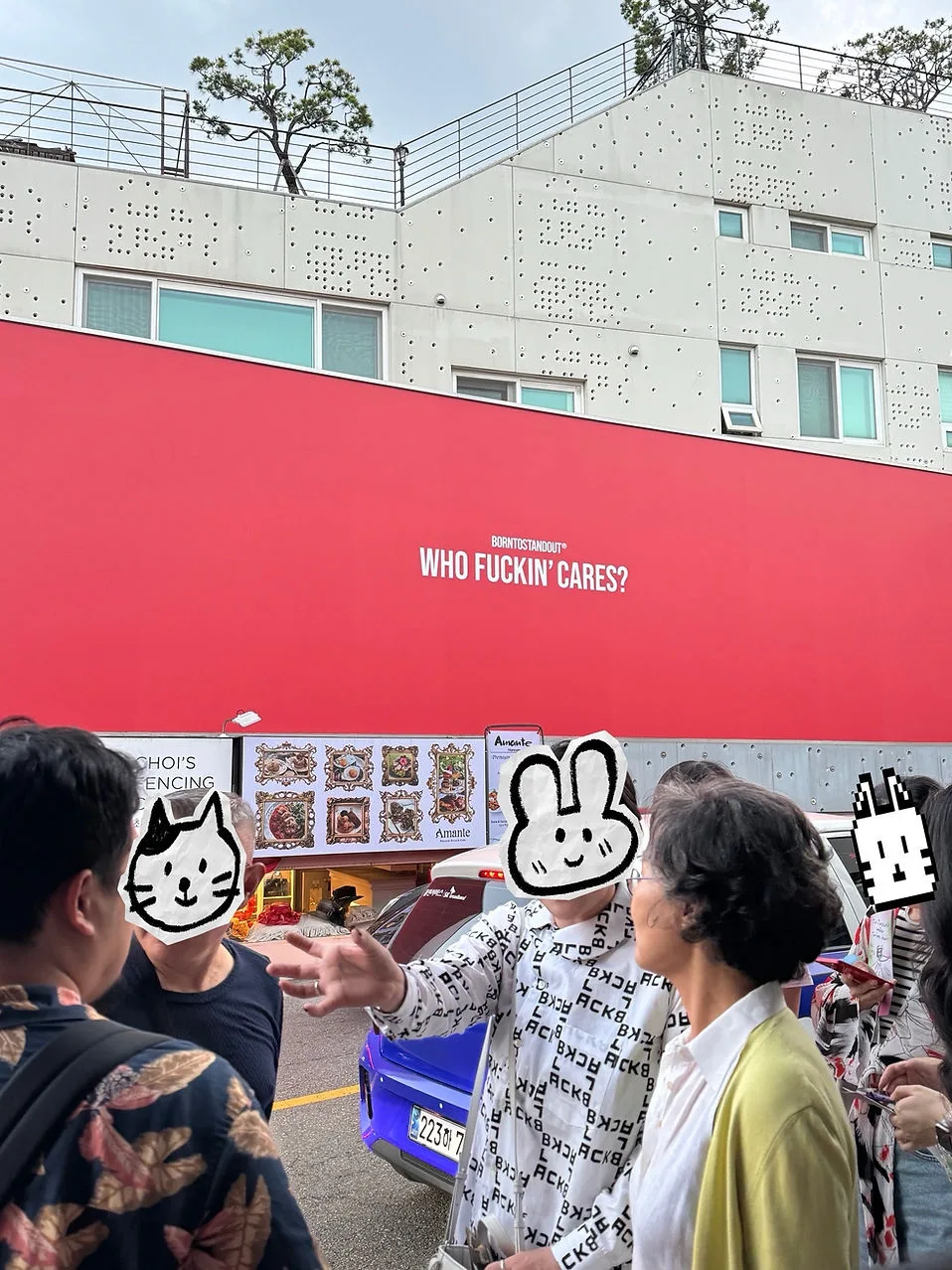
首尔三星美术馆开幕时,街上车水马龙,人声鼎沸,对面的广告牌有点意思。 全文图片由作者拍摄
大学时我的专业是几大“水院”中的“国际关系”。在对“单极格局还是多元格局能带来世界和平”感到虚无之后,那些只出现在大城市的当代艺术展览引发了小镇女孩的好奇。说来好笑,我的第一反应居然是想要去认识活的艺术家。凭着本能感觉到这些“当代艺术”似乎和画得好、和经典艺术史没有直接关系。当代艺术如蜂群一般,是由人组成的潮流,是不断涌动的现场——我必须混迹其中,必须了解这些人的名字,必须走出学校。而我不得不承认,在那个莽撞开始的时刻,我决心十足——绝未料到我十年后会暗想:“倒也不必。”
九月初的光州白天还很燥热,时不时能在街头看到,和我一样双手展开纸质地图、眼神困惑又有些着急的人。我们困惑左转还是右转,搜寻着带有这届“光州双年展”主题“Pansori”的海报——很显然,我们不是当地人,是外来者,是因为当代艺术才来到这里的游客。一整个下午,我都寻觅着安置在主展馆之外的地点限定作品。有时候碰到的作品会很精彩,比如Mira Mann在空无一物的独栋家宅里放置的物件。有时候,我会想吐槽。有些“作品”充其量只是毫无创意的数据可视化,或者是最乏味而无必要的观众互动。看展览有时候就像开盲盒,而双年展又可以一下子开许多盲盒,我的内心OS当然就没有停歇。然而,我一边评价,一边别扭——感觉自己只在乎当代艺术。我因为当代艺术来到这里,也意味着我势必会一叶障目,错过本地真正在发生的许多事情。
双年展的大部分作品在主展馆,另外一部分则散落在城区的不同地点。这也是将双年展融入城市的典型方式。这些地点有的是如光州档案馆、光州市立美术馆的公共机构,有的则只是空闲民宅。而恼人的是,并非所有地点都可以在导航软件上搜索到,你可能会在寻找时遭遇鬼打墙,在某个地方来回转悠,只为找到那个在你周围存在的艺术展览。双年展团队用阿拉伯数字和罗马字母将这些星罗棋布的地点标记在城市地图上,让人错以为它是藏宝图:集齐作品便能召唤神龙;而与这种诱惑对应的便是错失综合症(missing out panic)。当我在光州市立美术馆时,还在犹豫要不要打车去很远的某间私人美术馆。虽然时间上不太划算,但敬业的策展人朋友说起会有表演——哦对,现场表演!格罗伊斯说过,“当代艺术拥抱了转瞬即逝而互联网稳定”[1](这句话不适用于简中互联网。)在注意力争夺时代,当代艺术用现场活动来跟网络(短视频)竞争,吸引你的肉身前来。要看表演,你就得来现场,活动因而便有人气。虽然活动并未特别吸引我,但其时间、地点显然已写入大脑。我心中虽说不至于天人交战,但也小火慢煎,最后还是叫了车。虽然已经错过了开场,但我还乐观地想,“表演会进行很久”。驱车半小时、五点半到达,看样子就知道活动已经结束。奔入展厅,目光炯炯地绕场一周、看上下两层楼的群展之后(只恨小时候没练过速记),工作人员跑到我旁边说,“我们即刻要闭馆啦”。而我在说着“I totally understand”的同时,心里想的则是“其实我也得马上就走,6点还有另外一场表演”。
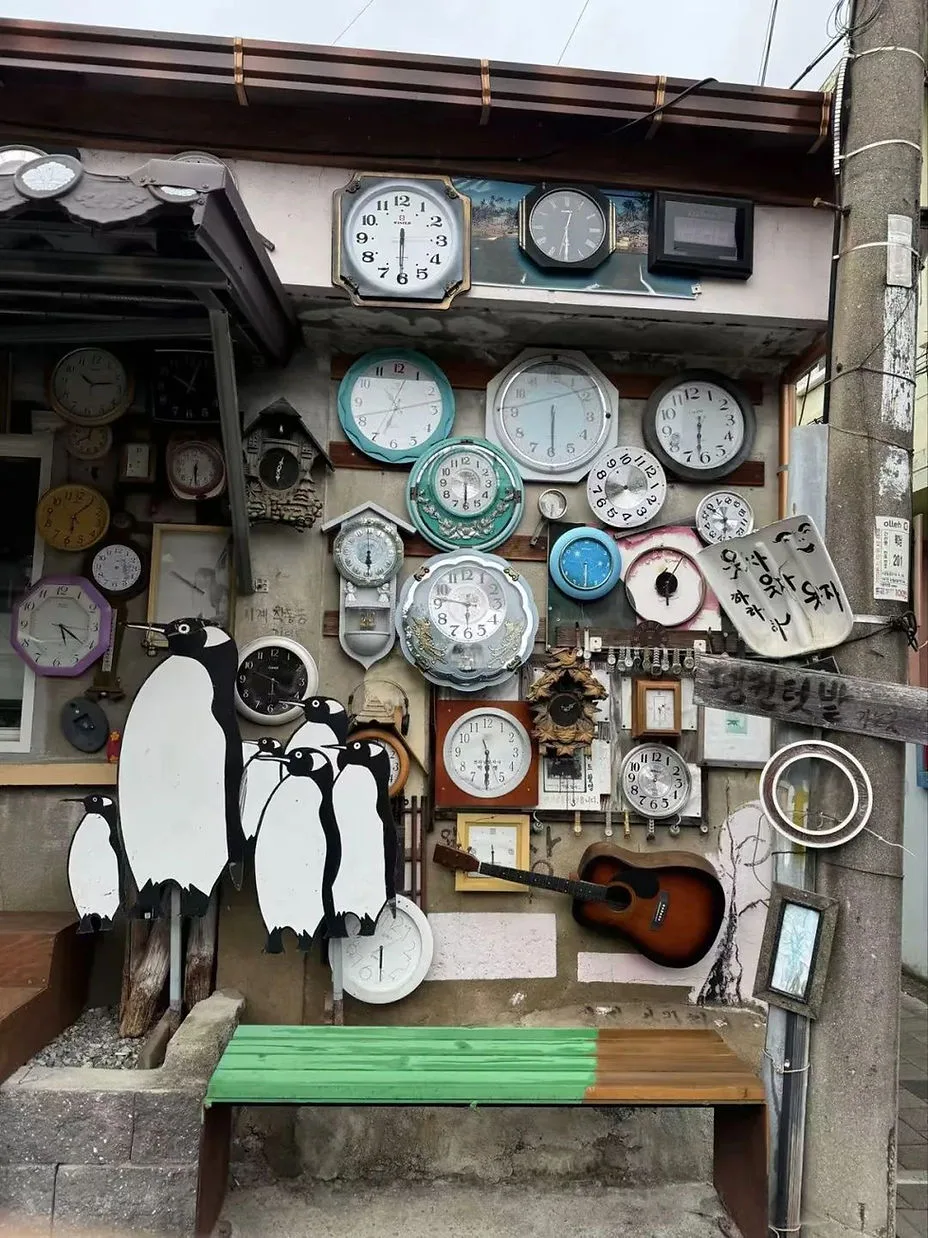
光州的街景。对赶路的艺术从业者来说,最珍贵的是时间。
人是很贱的,很难有人逃脱得了错失综合症。我总想起哪位同行提及说某件作品不错,而我没看到。而即便我脚下生风地去“打卡”了,也大有可能会失望。以双年展规模之大,大多数人无法看全所有作品。而即便看全了作品,大多数人也无法真正与作品完整相处(我怀疑策展人也没看全过所有细节),许多录像作品只能得到30秒钟的注视。对于一位双年展观众来说,看到作品的那个时刻便要判断还要在作品前逗留多久。他的灵魂是分裂成两半的,每个时刻都在拔腿就走还是稍作停留间徘徊。而荒谬之处在于,一天结束之后,这样神魂分裂的观众们还会聚在一起,讨论各自印象最深的作品。我便是一边感受着自己的分裂与虚伪,感受着自己“看尽双年展”的贪念、对好作品的馋心、对不达期望之事的嗔怒,一边懊恼着自己为何不能抱着同等的好奇心,留更多时间在街区散步呢?更何况,人们对作品给予不同时间与注意力,对人也会有。我妄图平衡内心生起的比较心,希望能停止“谁和谁的艺术圈友谊更亲密”这种自动生成的观察。在某些时刻,我甚至希望自己忘掉艺术。
乔治·佩雷克(Georges Perec)在《穷尽巴黎的某种尝试》(An Attempt at Exhausting a Place in Paris)里会详细描述眼前场景,将数学意义上平均的目光洒向并一一列举所有事物——鸽子、阳光、咖啡、面包屑,以及某个行人穿着的绿色雨衣。但我们这些“当代艺术人”,会让当代艺术在目光中占有极高权重——虽然这一权重或许会在开始从业、打工之后逐渐下降,趋向平稳。对我来说,艺术权重最高的时间点,恰恰是我还完完全全是个外行却想变成内行之时。我羡慕美院的学生,幻想美院全都是艺术而没有政治(没有学生会),希望我的生活也和他们一样被艺术充盈。我对任何美术馆和双年展都抱有朝圣一般的崇敬心情,力图用深刻的目光注视每件作品,认真阅读展签上的每一行文字。旅行中我总会略过午饭,用饼干充饥,只为把更多时间留在美术馆里,经常饥肠辘辘但目光亢奋——“这是艺术!”虽然我独自一人,但我的大脑在嚎叫中沉醉。我想认识艺术世界里的人,和每一位碰到的和艺术有关的人聊天;如果那人是艺术家,我会对其怀着更巨大的好奇心。现在想起来,其实有点像追星,只不过我追的是一团巨大的、名为“艺术”的迷雾。
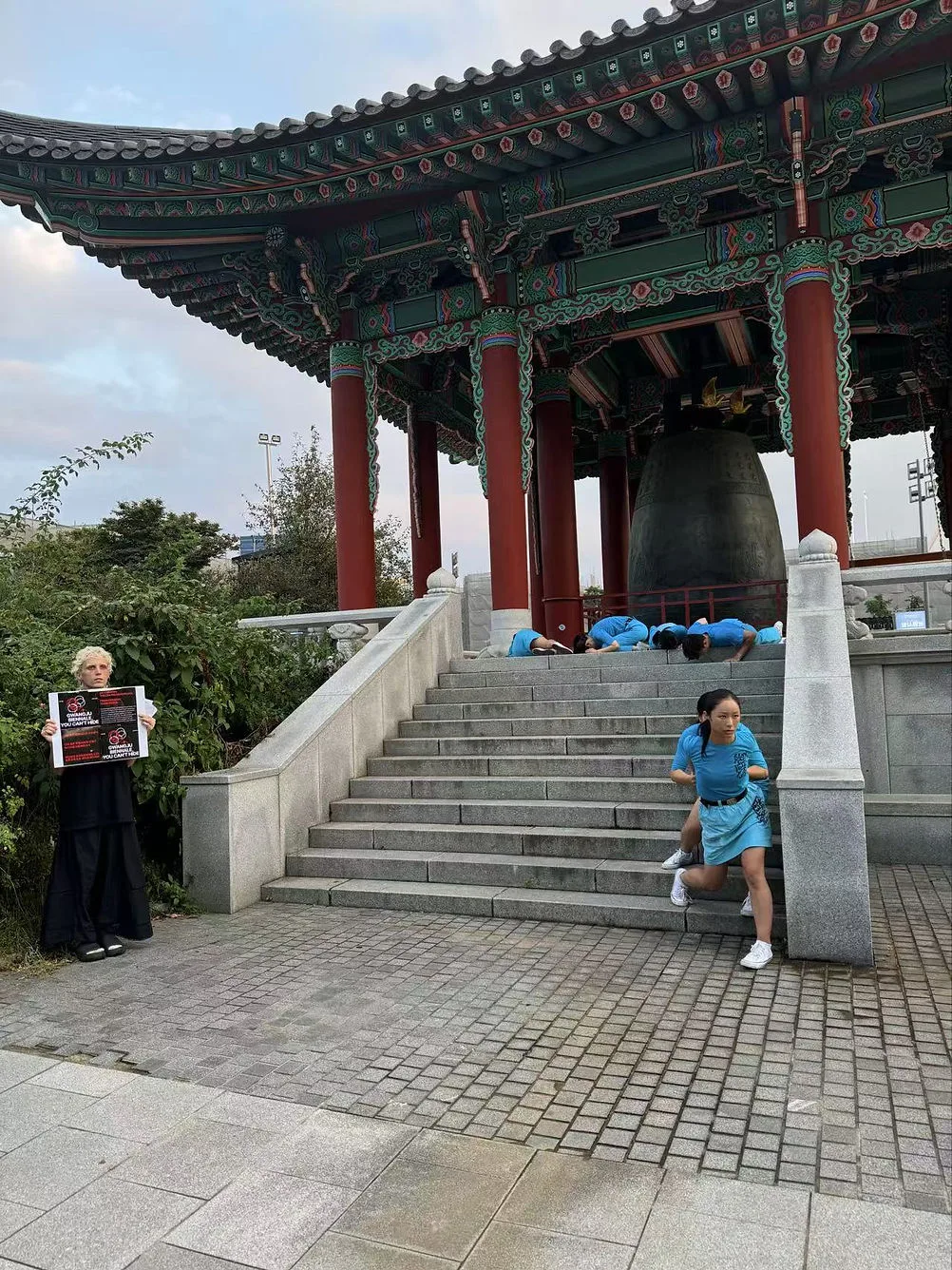
来自特拉维夫的表演艺术小组Public Movement和当地的学生舞者合作了作品《DEMO》。表演有关光州的学生革命与身体记忆,地点选在了5.18广场和民主钟阁。首演时,反对以色列侵略巴勒斯坦的示威者也出现了。
把生命交给被认定的“艺术”,围绕“艺术”去开展日常生活,与此同时我也察觉到隐秘的危险——艺术压倒生活。而微妙之处在于,这种压倒和占据竟是我自己的选择。当我靠近艺术世界,新鲜的体验令我兴奋,从而喂养巨大的幻觉,而我又隐约怀疑:“这一切是否毫无支点?”一百多年前,美国作家薇拉·凯瑟(Willa Cather)在小说《保罗的故事》(Paul’s Case, 1905)里写过一桩惨案:少年保罗生活在匹兹堡,举止乖张、性情不平。即便在和教师周旋时,他衣服的扣子里也要别上一枝红色康乃馨。实际上,他只是爱慕美丽,觉得学校太无聊了。只有在音乐厅里当引座员,看到艺术家在聚光灯下的衣香鬓影,他才会兴奋。后来他被退学,音乐厅也不再让他入内,父亲安排他在银行做职员。但他偷了银行的五千美元,按照内心幻想过的路线逃去了纽约。在纽约,他买下双排扣礼服、皮鞋和蒂凡尼丝巾扣,住进奢华酒店,去剧院看戏,终于实现了他梦想生活的每一个细节——直到在第八天醒来后,他发现自己已经上了报纸。父亲替他偿还了他的偷窃所得,但他宁死也不愿再回去无聊过活。小说开头有句话:“他有点纨绔。”(there was something of the dandy about him)这其中暗藏着保罗们殒命的缘由——纨绔主义(dandyism)究其本质,是相信生命本身就可以是艺术品。锦衣华服、姿态作派因为是“美”而值得追求。生命是艺术,但反推回来,当艺术塞满了生命、成了唯一追求,它也能让生命窒息。王尔德自己就是个纨绔子,而他在《道林·格雷的画像》里不是写了一个让画像替自己变老的美少年?
扯得有点远了——我并没有害怕自己变成纨绔之子。我想说的是,假如“艺术”以纵情声色的样子出现,还算容易识别;但假如“艺术”看似朴素地出现,让人觉得它意义非凡时,我还能看穿它吗?比如说,我一天可以跑五个展览,却需要牺牲掉和朋友吃午饭的时间,这危险吗?项目征集志愿者,我报名了之后要花许多时间整理库房的琐碎资料,而资深前辈却说“这是难得的学习机会”,这危险吗?我碰到了和我一样热爱当代艺术的陌生人,我觉得可以与其聊所有事情,甚至觉得成为了朋友,这危险吗?当然可以说,这些场景或经历其实有关其他命题,比如日常生活之重要、职场PUA之隐蔽和友谊之复杂。但很显然,这些危险必然与以“艺术”为名的欺骗有关——就像林奕含在《房思琪的初恋乐园》中所揭露的,“文学”的巧言令色制造了诸多“言不由衷”的欲望、快感和随之而来的痛苦。而在今天,艺术比文学更庞大、更危险。你可以因为当代艺术,而去世界各地的双年展游历,和来自全球的艺术家聊天,透过当代艺术关心地球和人类。《艺术世界中的七天》套用“创世纪”,以艺术学院、美术馆、拍卖行、博览会、艺术家工作室、双年展和颁奖礼,暴露艺术世界的七个切面——而这个世界更多的暗礁险浪,只有你用命经历过之后才能稍稍得见。
十年前,我幻想自己投身艺术世界,成为明星策展人;眼下我却只庆幸虽然我爱上了当代艺术,但我活了下来。我在读了当代艺术的博士、对它的历史如数家珍之后,两年前,当上了杂志编辑,投入了当下。我以为自己是在当代艺术行业做做田野,尚且抱着研究的心态面对一切。但当我三百六十五天都在艺术世界里度过之后,我意识到自己浅薄至极:我不过是在给当代艺术当牛做马,我便是田野之中的肥料本身。“我是打工人”的醒悟,让我意识到在“以当代艺术为志业”的十年间,我到底费了多少时间、精力和心气给艺术系统——爱人、食物、健康统统为其让道,生活全然被当代艺术支配。当年的执迷与上瘾,后来的幻想破灭与周身疲惫,或许不仅仅是我自己的轨迹。许多朋友都曾经历这一过程,甚至反反复复,而每个人的解法不尽相同。眼下在这个虚无蒸腾的档口,我打算在这里写一写、问一问——到底如何才能在当代艺术世界成为幸存者?
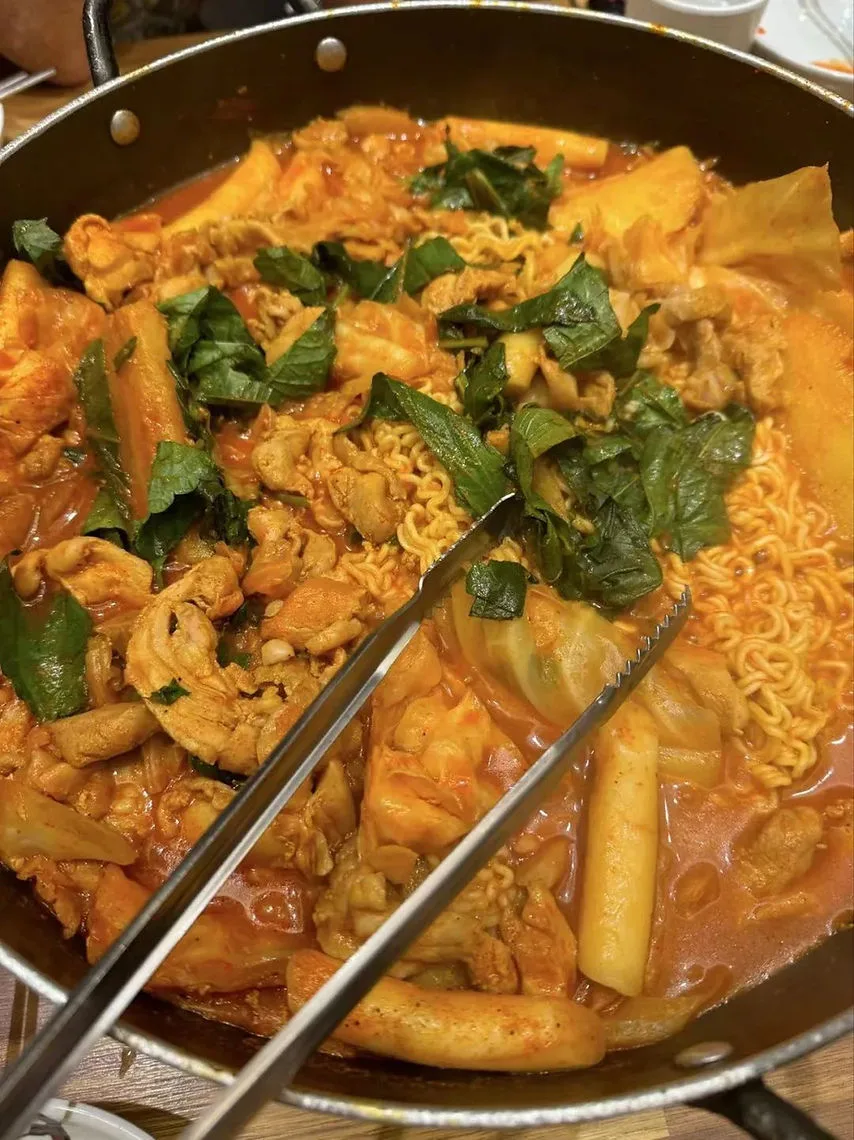
部队锅。目前我或许有些矫枉过正,但觉得好好吃饭在双年展旅行中最为重要。
注释
[1] Contemporary art embraces transience while the Internet stabilises.
Machine translation (AI) of the Chinese original, not yet reviewed by the author. Please cite the original.
On the last night of the Gwangju Biennale’s opening week, the parties were a bit of a joke. The official do – exclusive, with drinks and food laid on – was far too quiet, so guests carried their glasses downstairs and melted into the rowdy clubbing area, whose doors stood wide open. High heels and trainers mingled on the dance floor. The DJ happened to be playing P.I.M.P., the track that loops endlessly in Anatomy of a Fall. I was chatting with some artists I’d just met, residents at the National Museum of Modern and Contemporary Art, Korea (MMCA). When it came to swapping contacts, a few of the European artists pulled out paper business cards the museum had printed for them, and I said apologetically, ‘I’ve only got Instagram.’ They saw ‘contemporary art survivor’ written on my profile and burst out laughing.
Clearly, they too had suffered at the hands of contemporary art.
If I were an amateur art lover, I probably wouldn’t use the word ‘survive’. The only thing to blame is that ten years ago I really, really wanted to be part of the contemporary art world. No – I wanted to be one of its stars.
At the opening of Samsung’s Leeum Museum of Art in Seoul, the street was packed with traffic and noise; the billboard opposite was rather interesting. All images by the author
At university I studied International Relations – one of the notoriously ‘watery’, lightweight majors. After I grew nihilistic about whether a unipolar or a multipolar world order would bring world peace, the contemporary art exhibitions that only turned up in big cities sparked the curiosity of this small-town girl. Funnily enough, my first instinct was to go and meet living artists. Instinctively I sensed that this ‘contemporary art’ seemed to have no direct connection with being good at drawing or with the classical canon of art history. Contemporary art was like a swarm of bees: a current made of people, a scene constantly on the move. I had to throw myself into it, had to learn these people’s names, had to get out of school. And I have to admit that at that reckless beginning I was utterly determined – never imagining that ten years later I would think to myself, ‘Actually, no need.’
In early September Gwangju was still sweltering by day, and every so often on the street you’d spot people like me, a paper map spread open in both hands, looking confused and slightly anxious. We puzzled over whether to turn left or right, scanning for posters bearing “Pansori”, the theme of this edition of the Gwangju Biennale – clearly we were not locals but outsiders, tourists who had come here because of contemporary art. I spent a whole afternoon hunting down the site-specific works installed outside the main exhibition hall. Sometimes the works I came across were brilliant, like the objects Mira Mann placed in an empty detached house. Sometimes I just wanted to grumble. Some ‘works’ were at best unimaginative data visualisations, or the dullest and most unnecessary kind of audience interaction. Seeing exhibitions is sometimes like opening blind boxes, and a biennial lets you open a whole lot of blind boxes at once, so of course my inner monologue never stopped. And yet as I judged, I felt uneasy – as if I cared only about contemporary art. Coming here for contemporary art also meant I was bound to miss the wood for the trees, and to overlook much of what was really happening locally.
Most of the biennial’s works were in the main exhibition hall; the rest were scattered across various sites in the city. This is the typical way biennials weave themselves into a city. Some of these sites were public institutions such as the Gwangju archives and the Gwangju Museum of Art; others were simply empty houses. The annoying thing was that not every site could be found on a navigation app. While searching you might find yourself walking in circles as if bewitched, going round and round one spot just to locate the art exhibition that exists somewhere near you. The biennial team marked these far-flung sites on the city map with Arabic numerals and Roman letters, which made it look deceptively like a treasure map: collect all the works and you can summon the dragon, as in Dragon Ball. And the flip side of that temptation is the fear of missing out. When I was at the Gwangju Museum of Art, I was still dithering over whether to take a taxi to a private museum far away. Time-wise it wasn’t really worth it, but a dedicated curator friend had mentioned there would be a performance – oh yes, live performance! Boris Groys once said, ‘Contemporary art embraces transience while the Internet stabilises’[1] (a line that doesn’t apply to the Simplified-Chinese internet). In an age when everyone is fighting for attention, contemporary art uses live events to compete with the internet (and short videos), luring your physical body to show up. To see a performance you have to be there, so events draw a crowd. Although the event didn’t particularly appeal to me, its time and place had obviously been written into my brain. It wasn’t exactly an epic inner battle, but I was simmering on a low flame, and in the end I called a car. I’d already missed the start, but I told myself optimistically, ‘Performances go on for ages.’ After a half-hour drive I arrived at 5.30, and one glance told me the event was over. I dashed into the galleries, eyes blazing, and did a lap of the two-floor group show (if only I’d learned shorthand as a child), at which point a member of staff ran up to tell me, ‘We’re closing right now.’ And while I was saying ‘I totally understand’, what I was actually thinking was, ‘Actually, I have to leave right away too – there’s another performance at six.’
A street in Gwangju. For art workers rushing from one thing to the next, time is the most precious thing of all.
People are pathetic that way: hardly anyone escapes FOMO. I keep remembering some colleague saying a certain work was good, and I didn’t see it. And even if I race off to ‘check in’ at it, I may well be disappointed. Biennials are so huge that most people can’t see every work. And even if they do see everything, most people can’t really spend time with the works in full (I suspect even the curators haven’t seen every detail); many video works get no more than thirty seconds of attention. For a biennial visitor, the moment you see a work you have to decide how long to stay in front of it. Your soul is split in two, wavering every second between walking off and lingering a little. The absurd part is that at the end of the day these split-souled visitors gather to discuss the works that made the biggest impression on each of them. That was me: feeling my own splitting and hypocrisy, feeling my greed to ‘see the whole biennial’, my craving for good work, my irritation at things that fell short – while kicking myself for not bringing the same curiosity to the city, for not leaving more time to wander its streets. What’s more, people give different amounts of time and attention not only to works but also to other people. I tried in vain to quiet the urge to compare that rose up inside me, hoping to stop the automatic observations of the ‘who’s closer to whom in the art world’ kind. At certain moments I even wished I could forget art altogether.
In An Attempt at Exhausting a Place in Paris, Georges Perec describes the scene in front of him in minute detail, casting a mathematically even gaze across everything and listing it all one by one – pigeons, sunlight, coffee, breadcrumbs and some passer-by’s green raincoat. But we ‘contemporary art people’ give contemporary art an enormous weighting in our gaze – although that weighting may gradually drop and level off once you start working in the field and punching the clock. For me, art’s weighting peaked precisely when I was still a complete outsider who wanted to become an insider. I envied art-school students and fantasised that art academies were all art and no politics (no student union), and I wished my life could be as full of art as theirs. I approached every museum and biennial with the reverence of a pilgrim, trying to gaze deeply at each work and conscientiously reading every line of every wall label. When travelling I would always skip lunch and fill up on biscuits just to leave more time for the museum, often starving but with eyes shining – ‘This is art!’ Though I was on my own, my brain was howling in rapture. I wanted to get to know the people of the art world and chat to everyone I met who had anything to do with art; if they were an artist, my curiosity was even greater. Looking back, it was a bit like being a fan chasing a star – except that what I was chasing was a vast fog called ‘art’.
The Tel Aviv-based performance group Public Movement worked with local student dancers on DEMO. The performance deals with Gwangju’s student uprising and bodily memory, and was staged at the 5.18 Democracy Square and the Democracy Bell. At its premiere, protesters against Israel’s aggression in Palestine also appeared.
In handing my life over to what I had decided was ‘art’, and organising my everyday life around ‘art’, I also sensed a hidden danger: art crushing life. And the subtle part is that this crushing and occupation was my own choice. As I drew closer to the art world, fresh experiences thrilled me and fed a huge illusion, while I vaguely suspected: ‘Is there no footing under any of this?’ More than a hundred years ago, the American writer Willa Cather described a tragedy in her story Paul’s Case (1905). The teenage Paul lives in Pittsburgh; he is perverse in manner and uneven in temper. Even when being hauled up before his teachers, he has to wear a red carnation in his buttonhole. In truth he simply adores beauty and finds school deadly dull. Only when he works as an usher at the concert hall, watching the performers in the spotlight in all their finery, does he come alive. Later he is taken out of school, the concert hall bars him, and his father finds him a job as a clerk. But he steals five thousand dollars and flees to New York along the route he has long fantasised about. In New York he buys a dress suit, shoes and a Tiffany scarf pin, checks into a luxury hotel, goes to the theatre, and at last lives out every detail of the life he dreamed of – until he wakes on the eighth day and finds himself in the newspapers. His father has repaid the money, but Paul would rather die than go back to a life of boredom. Near the beginning of the story is the line: ‘there was something of the dandy about him’. Therein lies the cause of the Pauls’ undoing – dandyism, at its core, is the belief that life itself can be a work of art. Fine clothes, poses and manners are worth pursuing because they are ‘beautiful’. Life is art; but turn it around, and when art fills life to the brim and becomes its only pursuit, it can also suffocate life. Oscar Wilde was himself a dandy – and didn’t he write, in The Picture of Dorian Gray, about a beautiful young man who has his portrait grow old for him?
I’ve wandered a bit far afield – I’m not afraid of becoming a dandy. What I mean is this: if ‘art’ appears in the guise of sensual indulgence, it’s fairly easy to spot; but if ‘art’ appears in a seemingly modest form, making you feel it’s immensely meaningful, can I still see through it? Say I can rush round five exhibitions in a day but have to give up lunch with friends to do it – is that dangerous? A project calls for volunteers; I sign up and then spend ages sorting trivial material in a storeroom, while a senior figure tells me, ‘This is a rare learning opportunity’ – is that dangerous? I meet a stranger who loves contemporary art as much as I do, feel I can talk to them about anything, even feel we’ve become friends – is that dangerous? Of course, you could say these scenes and experiences are really about other questions: the importance of everyday life, the insidiousness of workplace manipulation, the complexity of friendship. But these dangers are clearly bound up with a deception carried out in the name of ‘art’ – just as Lin Yi-han exposed in Fang Si-Chi’s First Love Paradise, where the silver tongue of ‘literature’ manufactures all kinds of insincere desires and pleasures, and the pain that follows. And today art is bigger and more dangerous than literature. Because of contemporary art, you can travel to biennials around the world, chat with artists from across the globe, and care about the planet and humanity through contemporary art. Seven Days in the Art World borrows the structure of Genesis to expose seven facets of the art world – the art school, the museum, the auction house, the fair, the artist’s studio, the biennial and the prize ceremony – yet the world’s many more hidden reefs and treacherous waves can only be glimpsed, a little, after you’ve lived through them at the cost of your own life.
Ten years ago I dreamed of throwing myself into the art world and becoming a star curator; now I’m just grateful that although I fell in love with contemporary art, I survived. After doing a PhD on contemporary art and learning its history by heart, two years ago I became a magazine editor and threw myself into the present. I thought I was doing a bit of fieldwork in the contemporary art industry and still facing everything with a researcher’s mindset. But after spending 365 days a year in the art world, I realised how shallow I was: I was simply slaving away for contemporary art like a beast of burden – I was the very fertiliser in the field. The awakening that ‘I am a wage worker’ made me realise just how much time, energy and spirit I had given to the art system during my decade of ‘making contemporary art my vocation’ – my partner, food, health all gave way to it; my life was entirely ruled by contemporary art. The obsession and addiction of those years, the disillusionment and bone-deep exhaustion that followed – perhaps this is not just my own trajectory. Many friends have been through this process, some of them again and again, and each has found their own way out. Now, at this moment when nihilism is rising like steam, I plan to write and ask here: how on earth does one become a survivor of the contemporary art world?
Budae jjigae (army stew). I may be overcorrecting at the moment, but I’ve come to think that eating properly is the most important thing on a biennial trip.
Notes
[1] Contemporary art embraces transience while the Internet stabilises.