Podcast · 2025 · 中文
Broadcast Station Ep01: On Day & Night in Xundian「投石」播音站 Ep01:关于云南寻甸的“日游夜谈”
Four of the travellers look back on the first Day & Night trip to Xundian, Yunnan – why it was a “small tour group” rather than a residency, eating well, and meeting each other outside art production.
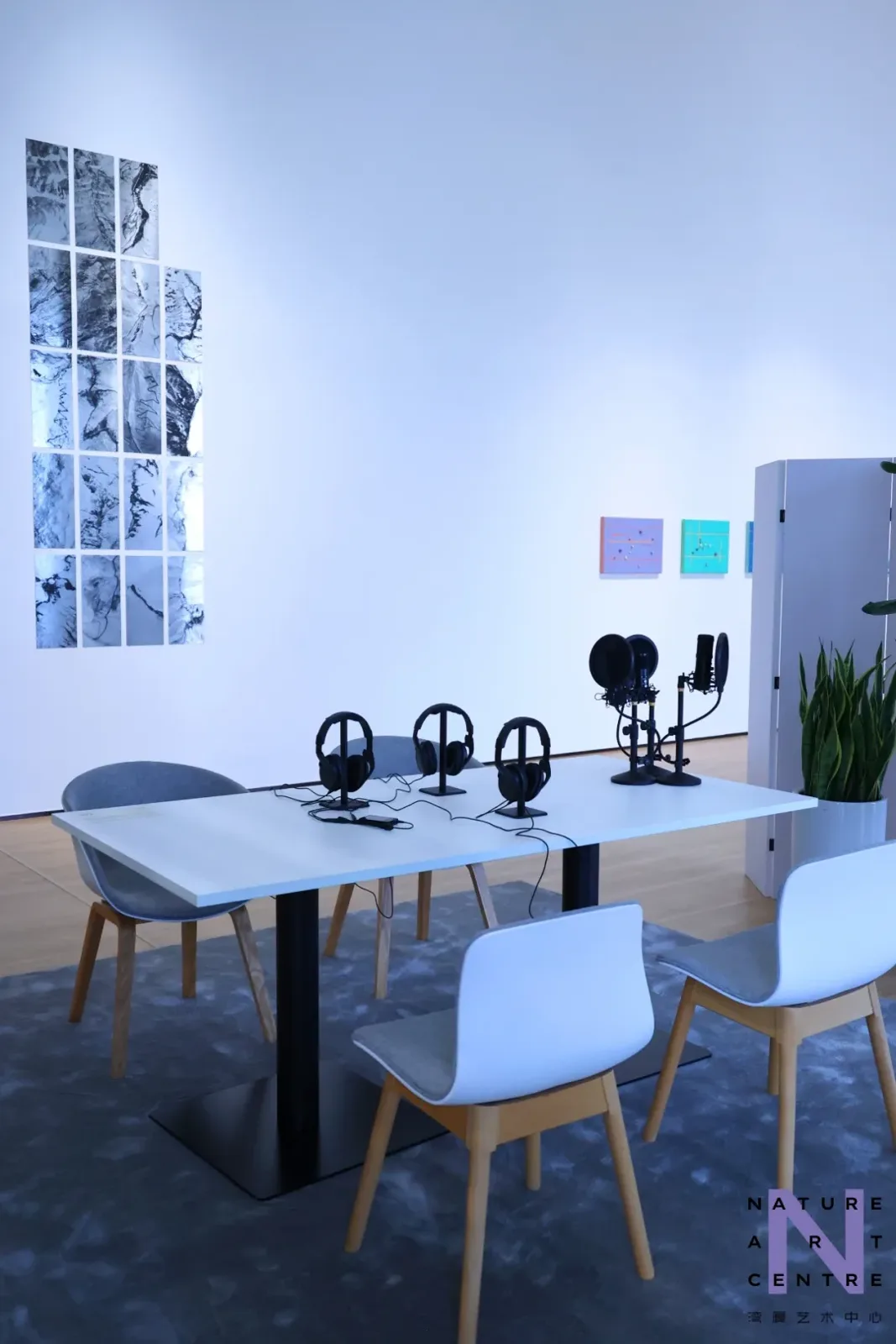
The first episode of the Broadcast Station, the podcast made for the exhibition Tossing Stones 投石 at Nature Art Centre, Shenzhen (6 July – 31 August 2025). Damien Zhang, You Yiyi, Chris Wan and I looked back on the first season of Day & Night 日游夜谈 – the week in Xundian, Yunnan, in winter 2024 that the exhibition grew out of. 64 minutes, in Chinese; the audio is on Nature Art Centre’s WeChat post.
“播音站”是为「投石」特别设立的讨论空间。这一期是张震中、聂小依、游伊一与万丰关于云南寻甸之行的回顾对谈。
对谈文字:
万丰: 我们在深圳的这个展览,肯定跟去年我们在云南的那一次活动有很直接的关系,包括我自己的那个研究也是因为那次的旅行才得以推进,这个研究变成了驻地,后来又变成了这个展览。有机会因为这个展览我们开始这个讨论。震中你现在回头看云南的那次旅行,你自己的感觉怎么样?
张震中: 可能主要有几个原因,第一个是组织这次云南的旅行之前我和萧伊正好一起准备了那个写生的群展。在那个群展里面,我们一直想讨论艺术家如果不去到一个非常壮丽、基础设施非常丰富、少数民族非常丰富的地方去创作,而是去到一个相对平凡的地方去创作会是什么样的?很巧的是浩然他有这样一个地方,在曲靖和昆明之间,这里确实是一般人旅游或者艺术行业去做研究都不会去的地方,所以就顺着这个思路选定了这个地方,我、萧伊和浩然三个人共同发起做一个驻地,但是最开始我们想的是比较传统的驻地,但同时我们三个人都特别想和我们邀请的人一起度过这个时光。传统的驻地的话好像不是很现实,因为驻地艺术家在那边一个月、三个月,我们不大可能一起在那边住那么久,因为我们非常看重我们和我们邀请的人之间的这个对话和沟通,所以最后就调整这个活动的形式,变成了像一个小旅行团一样,只有5-7天这样的一个状态。
另外就是我觉得在行业里面有很多认识的朋友,大家都常常在开幕或者一些社交场合见面,你可能隐约知道对方在做什么,但是你很难在这样的场合去坐下来聊一聊你最近在做什么?所以我觉得需要创造一个环境,这个环境既轻松又严肃,可以让大家在一个感到安全的状态里面去跟其他人分享自己最近做了一些什么。就拿芮兰馨举例,我跟她从2018年认识,一直知道她大概在做什么,但是在这次旅行中她跟我们分享之后,我更清楚地知道她在做什么了。我觉得对于纯粹的友情来讲这也是一个非常重要的事情。
当然我自己从个人的层面上也会感到自己陷入了一个艺术生产的一个怪圈,就是我在选择我的旅行目的地,或者看似没有工作目的的旅行中,我总会带着一种我要去做在地调研,我会去思考这个旅行中的看到的东西有没有可能和我的艺术生产产生关系,这样一个怪圈,所以我觉得可能我们需要一个纯粹的旅行。像我们这次夜晚的分享,我们要求跟白天的活动不要有直接的关系,它不是一个我去调研了,然后我去做分享的一个东西,它其实是分开的。他不是带着一个去生产的目的去进行旅行。我觉得可能最核心的是这几个原因吧。
万丰: 你说的这种非目的性的生产跟长远的影响,显然在现在又产生了一些新的结果,这个结果可能确实是一个展览,但它好像也不是,但是跟当初那个活动有一种很直接的关系。
聂小依: 我印象最深的是,对于被邀请的人来说,这个邀请很很私人,同时又基于对你的了解,当我收到邀请的时候觉得好开心被选中了,因为感觉它不像传统那种驻地。我记得跟震中在韩国,我们还聊到我之前去的另外那个驻地,相比之下,寻甸的旅行可能因为一开始没有生产的目的,对我来说没有对外表演的压力。
游伊一: 我是被邀请的时候就决定要参加,而且我完全没有问谁会去。哈哈哈,我好像特别相信他们的安排,而且我知道这是比较开放性的一个设定,又没有什么KPI 产出。那我也特别开放,无论邀请谁,我都非常的欢迎。直到有一天我坐在办公室,小依跑过来说:“诶,伊一你是不是也要去云南?”我说是的。我想说你怎么跟我剧透了?我本来期待的是我啥都不知道,然后我去了云南发现,哇你也在这里啊!
聂小依: 有那种是拍真人秀的感觉。
张震中: 顺着这个补充一下,其实我跟小依、万丰之前都没有那么熟。我们之前在行业里面认识,对彼此的那个工作是感兴趣的,是好奇的。所以我觉得其实不只是一群好朋友聚到一起,更多的是我们好奇大家彼此的工作是什么,然后可以通过这个机会去更加深入地去了解一下。
聂小依: 我们要不要介绍一下浩然的家?我们去的浩然的家是一个什么样的地方,还有曲靖是一个什么样的地方?因为我觉得它还是有蛮特点的。这个项目叫Day and Night(日游夜谈),就是名字的由来。
张震中: 最早的时候是我跟浩然聊天,我知道了他家里有这样一个地方,这个地方原来应该是云南农业大学的一个基地,旁边有云南一个很重要的种羊场,后来这个校址就荒废了,再后来被地产开发,他们家就买了这么一排平房,自己用来休假的,但是他们家用的频率也很低,所以我们就想,这个地方说不定可以去做一些跟当代艺术有关的事情。
那么寻甸是在曲靖和昆明之间,确实是一个大家旅行去得比较少的地方,我们一开始也没有很了解这个地方,正是因为没有听说和了解过,才比较符合我们这次这个项目的初衷。最后我们定项目名称“日游夜谈”,是希望把白天和晚上的活动彻底区分开。白天大家就是非常轻松的,一群人出去旅游,想看什么看什么;然后晚上一起吃完饭之后,每个人做自己近期工作或者想分享的事情。所以最终我们是这样去协调的,在晚上的一个非常安全的氛围里面,可以让大家更加无保留地、放心地把自己正在做的事情真诚地分享出来。
我们的想法是每年一次,希望参与进来的人在他觉得合适的时间或者地方,可以来变成那个组织者,让这个项目不断地去演变,我们三个以后也可以作为参与者,让一个所谓的组织者的意志越弱越好。
万丰: 我感觉所有参与了那次活动的朋友都觉得这是一次非常特别的旅行。
游伊一: 对,我觉得所有的设置都在后面真的达到了你刚才提到的那些期待。
万丰: 对我来说那次的活动是我第一次在一个公开场合去谈论我后来推进的宋王台项目。在那次的分享之前,我从来没有真正地面对更多的人去聊这个研究。因为那一次的分享之后,观察大家对于在地研究的兴趣跟方向,或者听到大家分享当中他们自己推进工作的一些方向,跟我对宋王台研究的兴趣之间有一种很强的共鸣,所以那次活动其实是帮助我下定决心想要去推动宋王台的策展研究。当然它也有一些机缘巧合,最后变成了现在这样一个展览项目。
我自己觉得它的价值是在于大家去谈论的,或者分享的,不只是一个结果,而是一种投入工作、进入研究或者说推动自己的工作实践的思路跟方法,我对那个东西是特别有共鸣的。然后我另外一个感受是白天的活动跟晚上的讨论之间其实是有很紧密的联系,就是当我们去讨论白天要去哪里,去看什么东西的时候,实际上那种兴趣、那种观察点已经跟工作当中的很多东西是有关系的。对我个人来说它已经融入了我自己的研究或者工作的方法,所以我自己感觉到它是一个很整体的东西。
游伊一: 我昨天在整理我想说什么的时候,就写下了几个字“好吃、好玩和好学一样重要”。我觉得如果你旅程中都不开心,吃得也不好,玩得也不好,那你怎么可能开开心心地去学习新的知识呢?就像万丰说的,我觉得其实是一体的,无论是兴趣点上的一体化,还是说在情绪的流动,就是让那种快乐和信任的情绪可以充满整个流程。因为虽然是Day and Night,但是Day 和 Night 也是连在一起的。就是这种情绪的一个贯穿,是非常实用的,它让我们整个行程变得更好。
万丰: 对,我觉得它好像保持了某一部分的模糊性跟不确定性,它容纳了更多的整体去理解和吸收的一个过程。
聂小依: 我觉得有一个蛮有意思的是,我们的日常和艺术世界的运转的距离和区别。我们在寻甸没有看任何一个当代艺术的展览对吧?这个距离感对我来说还蛮有意思的,仿佛那个当代艺术世界在我们当时在云南的这个环境中,有一种不真实感、不确切性。我们似乎要在某种程度上暂停那些身份,在寻甸作为很具体的个人去跟另外一些个体相遇。
我印象很深的是我们当时在寻甸吃烧烤的时候,当时震中在问万丰到底多大年纪,然后怎么生活的?那个时刻我很感动,我好像能感受到他不是那种,大家抱着一种窥探的欲望来问的,而是建立了信任之后,问问题的人感受到安全,回答问题的人也感受到安全。然后我就在想,在我们日常的艺术生产当中到底哪里出了一些什么问题?
游伊一: 可能对于小依这种当代艺术幸存者(见聂小依2024年11月9日发表于“歧路批评”微信公众号上的文章)来说,这个东西更明显吧。对于我来说,我大部分的旅行都是跟艺术生产毫无关系的。
聂小依: 我比较喜欢观察大家的状态,如果比喻成一盘菜的话,人是非常重要的,我最近在想一个事情,假设我们没有了,地球毁灭了,我们在一个新的星球上,艺术要被重新建立起来的时候,那个时候的艺术生态和艺术世界肯定还是从人和人之间的化学反应——这些共同的兴趣开始建立起来的。
我印象最深的是去种羊场,在高山上巨大的云雾当中,感觉被拽到另外一个环境里面了,那几天旅行或多或少都有一种在日常艺术生产之外的感觉。我当时分享的是自己一直想写的“当代艺术幸存者”。我最近一直觉得我需要一个编辑,或者需要一些契机去推动我真的去往下去做。
游伊一: 我回想起来小依的这个视角,是整个项目里面最外部的视角,但是对于当代艺术行业又是个最内部的视角。回应到刚才小依说她去到寻甸,感觉自己来到了一个完全跟当代艺术行业无关的,另外一个很理想很放松的地方。我觉得小依的话题又把当时我们的分享,和我们今天在录的这个展览里面的播音站串联起来了,也是挺有缘分的。经由云南这次的机会更深地去认识了芮兰馨和陈萧伊的工作,芮兰馨的确需要很长时间倾听、了解,才能知道她工作的一小部分。也是借这个机会,正好今年上半年在约《艺术界LEAP》稿子的时候,我们的专题是“上山行”,跟山野民族志、人类学相关的,那我就非常自然地想到了芮兰馨和陈萧伊。我这次约稿的时候又跟芮兰馨聊,聊到她写稿的一个方向,她从文字的角度来转述和记录她在进入凉山最初这几年,认识的一些朋友的经历和一些回忆。
游伊一: 相当于他们是芮兰馨进入这个山的一个信息和知识的提供者,她大概是写到了5到6个人,每个人的经历都非常不一样。所以我觉得芮兰馨在凉山的工作是有非常丰富的层次的。看完她那篇12, 000字的稿子,我觉得非常感动,我就说,天呐,好幸运可以遇到这样的稿子。然后因为去年年底去到云南,有了机会认识了这样的她。虽然说即便不去云南,我可能也会接触到芮兰馨,但我可能就不会是在一个刚才我们说的有安全感、有信任感的前提下,让一个比较特殊的内容在对话中被决定要写出来。我不知道小依和万丰有没有类似的体会?你跟一个人约稿的时候,你跟这个人的关系也决定了稿子出来的形态和方向。
万丰: 对我来说约稿跟约一个展览蛮像的,参加展览的艺术家也需要对策展人有一种足够的信任和了解,才有可能非常自信地去做这个事情。刚才小依在说她的那个分享,我跟小依也比较了解相互的工作。对于艺术生态或者艺术系统和人在这个系统当中的这种状态,**一直是我们两个人都很感兴趣的。当时我在思考,这个展览我们到底要达成什么样一个目的?石头作为一个线索,好像是从主题或者是符号上去串联的,我会把艺术生产跟艺术家本人的状态放在一个很平行的位置上去理解。艺术很重要,但是艺术家或者说人在这个当中的状态更重要,所以才会产生这样的策展的方向,这个展览可能60%的重心是放在去讨论艺术生产的过程性。 不论是艺术家还是策展人,还是研究者,还是写作者,**他怎么切入到这个系统当中?他跟其他人的关系,对话题的敏锐性是受到很多人的影响的。小依的工作肯定对我这方面有产生很大的影响,我觉得这种相互影响是非常有趣的。我其实有时候也会思考,我为什么会在当代艺术的这种工作当中对某一些话题特别感兴趣?其实有一部分很像我们的日游夜谈,那种白天的状态就是我们的生活、我们的经验、我们的经历,或者说我们进入到一个新的田野,对我们的冲击都会产生一种很直接的兴趣点,我们在当代艺术当中的工作永远都不是一个单独的工作,它不是一个单向输出的工作。
我们每天都会看到很多不同的艺术家、策展人、写作者的工作,那我们都在判断哪些东西是真正有价值的,哪些东西是值得去连接、去相互呼应的,所以周围会慢慢形成一个小的网络,这个网络当中每个人都有自己的工作方法和方向,可是大家都会相互看到对方工作的价值,然后会形成一种合力,或者说借鉴很多其他的朋友在某一个问题上的思考,把它纳入到我们自己的工作里面来,这至少对我来说是一个这样状态了。
所以我想说,云南的那个经验其实是一个蛮特殊又具体的例子。我们从那样的一种旅行的状态进入到我们的工作状态,对于我来说它变成了我后来在宋王台的研究,当中就不断地在寻找合适的、有相同兴趣的艺术家跟研究者一起来参与。所以**在宋王台的研究项目当中,会有艺术家参与进来整理资料,跟利用那些资料和材料来创作,它既是作品,也是一个过程性的资料。
这个展览对我来说也是一个非常类似的状态,就是我也真的不把它当做一个报告或者结果去呈现,而是我感觉到我们上一次的云南的活动有这样的一种很特殊的魅力,它在不停地、持续地影响大家的工作,如果我们有机会像现在这样坐下来开始思考跟回忆这种影响的原因、结果,或者说过程,这种讨论本身我觉得它其实应该被打开给更多的人看到和参与,特别是我觉得在小的范围当中,我们会说这是艺术生产内部的一种交流。但它同时又好像有一点公共性,我觉得它至少起到一点作用,就是更直接、更开放地去向大家介绍我们现在所说的这种艺术生产,或者说艺术家的工作,它的那种过程性到底是什么?我觉得,把过程打开,是我觉得这个展览跟大众之间的有一些关系。**
聂小依: 有感受到伊一和万丰的关心和对我的鼓励。万丰在说这种艺术的过程性的时候,我感受到的,或者通过刚才伊一用跟芮兰馨约稿这个例子说的,通过一起旅行对另外一个人要去做什么事情,在和他聊天的环境里面会更了解这件事情的生命动力。我会觉得这个过程是在创作,或者说过程是这个人的生命中的一部分,然后我看到这个创作所处的位置,你就更能了解创作扎根的那个东西是什么,你也会一起期待它未来是什么样子。
游伊一: 有一种你走进了它的旋律的感觉,你刚才的比喻让我觉得特别有音乐感。
聂小依: 我能看到万丰在做宋王台的过程和背后,你的思考很多,这几年的一些问题都聚焦一个石头上,但它后面有很多无形的东西,仿佛这块石头也从宋代穿越到现在,在这里面有很多不断被翻搅起的问题以及人的遭遇。我之前还想说你在这个展览里做宋王台和日游夜谈,除了我们在去大石头镇,那个地方有很表象上的视觉联系之外,更深层的联系是什么呢?
万丰: 我在准备这个展览的时候,我感觉到把大家的创作跟研究作为一种讨论材料或对象呈现,这个事情很有价值,这在当时参与云南的活动的时候就已经感受到了,好像展览是用另一种方法把它呈现出来。石头本身可能也是一个挺有物质性、感受性的东西,我记得震中在分享他去看那些古建筑的经验的时候,我就想说其实跟我对宋王台的研究或者兴趣有很强的关联性。本来宋王台就是一个历史事件,一个地方、一个消失的东西,好像去研究它跟历史考古也有很大的关系。那种对历史或者对时间特别感兴趣的出发点,实际上我觉得常常都还是回到对当下世界的思考了,在这一点上跟很多其他的创作者的思考其实是都关联在一起的。
可能我会看到石头这样一种线索,它其实只是要把大家所有的关于当下思考的那个点,用小依的话说就是那种生命力的点能够连接起来。你能看到大家的工作方法是很不同的,也许是历史的,也许是用身体去行走的,面对那种巨大的时间跟历史,用一种身体的、感性的方法去介入。你可以通过很具体的故事性或者说叙事性的东西去理解它,你也可以用一种很抽象的方法去理解它,我觉得又回到了艺术,它本身的非语言的这种多样性的东西在里面。对我来说这个展览也是想要把这些不同的艺术工作方法串联在一起,它背后的状态肯定是生命经验的那种共鸣了。
张震中: 刚才大家在聊的时候我想到另外一个问题,就是当我们要做一个事情的时候,我们想象它的公共性是什么样的?它到底是面向很广的大众的,还是面向一个相对比较小的群体?无论我们做展览还是我们写文字,它是有一个理性局限的。因为当你做展览或写文字的时候,情感的浮动和表达势必有一个收的过程。
就好比刚才伊一说的,如果和芮兰馨不是在这样一个有信任感的环境下去聊她的工作,你完全感受不到这个创作者的这一切的情感劳动,似乎没有办法在一个完全公共性的场合中表现出来,而这样的情感劳动在今天艺术生产里面,从所谓的艺术批评角度来讲,它是不被拥抱的。所以才需要一个并不是那么具有公共性的活动,让大家把情感性的过程给分享出来。
万丰: 我其实一直都觉得一篇文章也是一个作品,一个展览也是个作品的话,这些最终的生成物跟这个生产者本人的这种人的整体的状态之间是某种归纳,然后抽象,然后总结,然后向外去传达跟表达,它总是不得已的要抹去很多很丰富的细节,当然它还是能够做到很强的传达的。但是那些丰富细节里面有很多东西,以我的经验来说,其实是非常有价值的。可能至少在艺术生产的内部,当我们一群人一起来做一件事情的时候,自然人跟艺术家、写作者跟艺术家之间,大家更期待有一种更深程度的交流,当它最后进入到展览或进入到作品,不得不把某些丰富度降低,以抽象或总结成一个东西。但是那个过程真的是非常棒。
可能这个也是我觉得这种过程性的东西值得被讨论的原因。比如作为展览的制作者来说,我会尽量地希望我们有办法把那种过程性的部分放入到最后的展览当中,让大家看到。但是我自己在制作的时候也会感觉到它的限制,就是比如说展览的空间,展出的模式,它因为这些很物质性的东西一直在限制我们的表达,当然我们做得越多就越能理解那种限制是很客观存在了,这种对表达的丰富性的这种追求对我来说,好像在刺激我不停地在想。我如果要做展览,我应该怎么做?可能在模式上、在方法上会寻求一种突破,可是这个突破本身要追求的就是想要去捕捉和表达那种更丰富的东西,可能艺术家所面对的问题也是很类似的啦。
聂小依: 感觉这个跟震中和萧伊做写生的时候,怀着的问题有一些交叉。
张震中: 可能我们都是很在意创作者和被创造物之间统一性的问题,好像这次参与云南项目的大家都很看重这样的点。我们现在能够看到的有两种情况,一种是作为策展人,他更把作品当做一个工具,也就是说作品背后的人,这个创作者的状态并不在他优先考量的范围,而只要这个作品反映了策展的目的和主题,那么就可以进入这个展览。这个时候作品本身就是物,它一旦被创作者创作出来之后,它不一定完完全全反映了这个创作者,作品也有它自己由物构成之后一个能动性。另外一种情况是我们会看到一些以友谊为基础出现的抱团现象,可能那个作品又不被那么关注了。我觉得在我们刚才聊的过程中,我们都特别在意的是这两种情况之外的另外一种,我特别喜欢刚才小依说的那句话,就是能够感受到创作是这个人生命中的一部分。
张震中: 我们很在意这两者之间真正的统一,就像我最近看的一个展览,他的作品是带有某种抵抗性的姿态的,但是当你看到他所选择的机构和策展人,你会觉得他的这个选择和他作品中想要表演出的抵抗性的姿态是完全无关的,我觉得可能在我们的工作里面,我们会努力去分辨这两者的关系吧。
聂小依: 艺术系统的吸纳能力太强了,机构批评成为了机构表演的一部分,你这么说的话,我就反思我自己。在整个旅行当中给我印象最深的是林羽龙做分享,因为他不是一个会去生产话语和去占有某种叙述的人。如果我只看他的作品集,我可能会迅速地去按照视觉经验把他归类到某一组艺术家,他们可能有视觉上互相影响的东西等等,但是我真的只有通过生活以及感受到他的坚持,就是我才终于看到他创作和他这个人的关系。像做采访一样,他有时候不会说很多,你要通过很多次的旁敲侧击,然后我拼凑出来他的一些经历。
我觉得林羽龙就是那种投入了非常多的心血在创作当中,但不会去很用力地阐释它,我感觉他对语言本身有一些不信任感,或者说一点点不屑。不是说其他人用语言就不好,一般我去做工作室访问,可能大看完作品问一问上学的经历、喜欢的艺术家等等就结束了,但是在看到他的人之后,会帮助我有一些其他的通道去理解他的创作,感觉中间有一些转译的过程。因为平常大多数时刻作为创作者自我阐述作品的时候,你能感受到语言是通向那个作品的,但是跟林羽龙的相处目前为止对我来说,是比较独一无二的状态。
游伊一: 而且他还喜欢植物。
万丰: 对,准备这个展览的时候我跟羽龙聊,我说我想用石头作为一个符号去做一个展览。他给我的第一个反馈是他说我觉得我的作品完全不是石头,如果可以说的话,它可能是石头的反面。然后他自己又想了几秒钟他又说,可能从反面最后到达的那个东西是同一个东西,这种感受可能需要真的需要看到作品才能够理解,我们要通过去相处去理解他工作的一些逻辑跟方法,也有很多类似他这样的艺术家蛮抗拒用一个语言,用一个所谓的艺术家的说法去表述自己为什么要创作,要解决什么问题,他可能确实是选择用作品本身去讲。
聂小依: 我会觉得他这个人本身,日游夜谈我们一共八个人,他是非常重要的一部分,因为他有一股很实的、很支撑性的力量,有点像他只有健身,才能很规律性地去生活,非常清楚自己想要什么才会生产出来。是那种看起来轻盈,但实际上有很多控制的作品。我最近在学中医,然后就会觉得他有那种很温的、平的、甘的力量,能很温和地去做支撑。
游伊一: 我怎么觉得它湿湿的不干?
张震中: 哈哈哈,我觉得你说得很对,我最近又经历过一个很短的旅程,当你在一个旅程里面,如果突然有一天你起来了,或者你到了一个地方,你不知道其他人在干嘛,然后也没有人跟你说这个人是醒了还是没醒,当你在这种不知道的时候,那个状态是很不好的。
但是像小依说的,林羽龙是一个定心丸,因为任何一个人早上起来都知道林羽龙已经把馒头蒸好了,你懂吗?就算你早上再不确定其他人醒没醒,起没起,你会确定知道有一个人他已经起来了,他已经把馒头蒸好了,他已经在做饵块了。我觉得这个定心丸肯定是很重要的。
游伊一: 刚才小依不是提到了就是语言嘛?然后我回想这个旅程的时候,就想到体感和语言之间的一个关系,其实还是对比不同的经验对比出来的。我最近读完了赫塔·米勒的《每一句话语都坐着别的眼睛》,去年小依不是约顾灵写一篇那个书评嘛,当时就买了这本书,有一句话当时非常打动我,说语言还有身体和劳作之间的关系的,那句话是说“词语会妨碍动作,横亘在身体之路上”。当然这句话在这本书里面有它自己的语境,但是有时候结合这种艺术驻地、艺术旅行,我就会觉得这句话可能可以在我的经验里面被改编成知识会增强,但是也会妨碍直观的经历。
“横亘在身体之路上”,感觉无论对于艺术创作这个产出的过程,还是创作它那个吸纳的过程,输出太多语言,好像的确是会对那种感性的经验做一种限制,有时候是一个好的引导,但有时候也会削弱。虽然我不是艺术家,但我也会有一个感性的吸纳和一个感性的产出的过程。我就觉得有时候去进入一个现场或打引号的“田野”,如果我是带着非常多的知识储备,特别是带着对这个地方的知识和历史进去的时候,它肯定会让我对这个地方的风景产生一种很不一样的情感,但同时它可能也会削弱我对于这个现场非常身体性的感受,就是有好也有不好。然后在其他的旅程里面会有那种类似导游的领路人在不停地向参与者输出关于当地的知识的时候,我作为一个完全的外来者,有点我追不上这个知识的脚步,最后我既追不上知识的脚步,我又追不上我眼前的风景,就完全被语言给妨碍了。
所以我刚才为什么说我觉得震中、浩然还有萧伊他们最开始设置的这种愿景真的实现了,因为在他们的设置里面,他们也不想作为一个干预性非常强的策划人或者类似导游的存在。的确在寻甸这种,不是任何人的老家,大家就带着很大的无知就过去了,也没有任何一个人是对当地有更多知识储备,来向大家倾倒你的知识,我觉得这种平等的感觉还挺妙的。但是我们同时,我们又都作为游客去到浩然的高中,然后听到真正导览员介绍,我觉得那种体验又还不错,他不是一个持续性一直在你面前给你输出知识的感觉。我觉得我们在日游夜谈里面,语言和直观感受的平衡都还蛮妙。
万丰: 我想说的可能跟这个也有关系,我其实也在想,我作为一个独立的策展人,我在做“岛聚”的时候,这种独立工作既跟艺术系统有关系又好像游离在这个系统之外,这种状态让我也不停地在想,像这种我们称之为非典型的一种驻地经验,或者更广义地说非典型的艺术创作方法、写作的方法、评论的模式这些东西有没有可能,或者说是不是需要重新引入到系统当中去才能发挥它下一阶段的作用?我记得我之前也跟震中有聊过,比如震中你们发起组织的这种驻地的模式或经验,会不会或有没有可能回到机构当中去产生一些工作?因为你也在艺术机构工作嘛,可能我们可以思考或讨论一下,像这种模式放入到现有的系统当中,变成了一个机构化的一个动作,有没有可能?
张震中: 我觉得会很难,因为像我刚才说到的这个很情感性的东西,它一旦被放在一个框架里面,一旦进入了这个白盒子,一旦有一个象征着某种威权的组织机构的时候,它势必不会在一个非常放松和信任的环境里面。我觉得出发点肯定是好的,但是当一群自组织的比较灵活和松散的小群体,当它被放到一个机构里面,以每10分钟为时限去做一个表达的时候,它的那种活力确实被这个空间无形地被吸收掉,所以这就像我刚才提的,所谓的公共性和非公共性的问题,我们似乎在这个行业里面总会觉得,任何东西当它具有了公共性,就具有了某种政治正确性。但是很多事情确实无法在一种纯粹公共性的状态里面发生,保留这样一种私密的可能性,我觉得还是很珍贵的,所以像这样的活动,我不会考虑在一个机构里面发生。那如果在机构里面发生,它一定是另外一种逻辑和另外一种组织方式。
游伊一: 我在想有些东西是不是就是没有办法被另外一种语言,或在另外一种时空里面被转译出来?因为机构它是预先的一个存在,无论是艺术机构,还是说展会这种全球商品的展示方法,它都是预先的存在。大家就总是希望把自己做的事情以某一种方式转化,然后再把它塞回那个地方去做一遍展示。
我觉得这好像成了一种做事惯性和一个流程吧,但是我真的觉得很多东西它就是没有办法被转译,不仅是说这种项目和机构展示之间的关系,包括现在很多研究型艺术、创作型研究,感觉大家都试图把一个不属于一种媒介表达的东西,硬要把它给转译出来。当然也有转译得好的,但是如果很多时候,只是为了做这个事情而做这个事情,它就会显得很尴尬。比如说我们这次尝试在深圳的这个展览里面,让它以一个过程性的方式被片段性地呈现,但是不是能更好地就是保留它自己的一个独特存在,而不是在某一天被运用到机构里?我觉得这可能也是可以的,因为我们总是想说我要从哪里借鉴某一种方法,但是我觉得有时候这个借鉴真的很难,一旦它换了一个体系,换了一个规模,它就完全不一样。
万丰: 对,我的理解是它还是需要以自己的独特方式存在,但是它可能会在某些时候被系统吸收一部分它的特质进去,这个也是跟我自己的工作有关系,因为我常常跟商业画廊、美术馆、艺博会合作一些项目,当然在这种项目的生产当中,大家会彼此了解这种工作的方法跟特性。
但是作为独立策展人,我又想说,每一次我都希望能够引入一点新的东西,可能它不像是一种革命性的彻底打破,我自己也不对它抱有这种幻想,但我总是在想,一些有价值的东西在可以吸收的范围之内被吸收进去,被使用进去,推动一些东西,可能是很小的,每一次的这个脚步都很细微,但是好像每一个项目之后它都能够产生一点点影响。
当然这种在系统当中去生产东西,好像又跟我们完全自组织的这种旅行之间又不能完全画上等号,这个是我自己从这个旅行当中获得的很强的一个灵感。我在想象这当中最有价值的东西,然后把其中一部分转换成现在这个艺术系统可以接受的东西去出现。我的想法是系统其实还是由人组成的,它每次都有一些或一两个关键的人在推动一些事情发生,它再发生改变。
张震中: 对,所以我觉得万丰最后的这个方向,也不是想把这个旅程给展示出来,如果是这个逻辑的话,可能真的得把旅程里面各种照片各种分享,像文献、像档案一样地去呈现出来。我觉得更多的是我们这群人经过这个旅程认识了之后,大家在一起做一件事这种感觉,而不是我们要去把我们的旅程作为一个展览给呈现出来,所以我觉得最终这个状态还挺好的。
万丰: 对,我们今天的讨论会成为展览内容的一部分,观众进来是可以听到所有的对话的过程或者其中的片段,这个内容我们也会在之后的一两个月当中会不断地更新,因为整个展览项目参与者是 10 个人,这种讨论可能会在不同的方向发生。我的想象是展览作为一个过程性的生产、讨论的平台或机会,其实也挺好的,它不是一个关于最终结果的东西。
Machine translation (AI) of the Chinese original, not yet reviewed by the author. Please cite the original.
The first episode of the Broadcast Station, the podcast made for the exhibition Tossing Stones 投石 at Nature Art Centre, Shenzhen (6 July – 31 August 2025). Damien Zhang, You Yiyi, Chris Wan and I looked back on the first season of Day & Night 日游夜谈 – the week in Xundian, Yunnan, in winter 2024 that the exhibition grew out of. 64 minutes, in Chinese; the audio is on Nature Art Centre’s WeChat post.
The Broadcast Station is a space for discussion set up especially for Tossing Stones. This episode is a conversation between Damien Zhang, Nie Xiaoyi, You Yiyi and Chris Wan looking back on their trip to Xundian, Yunnan.
Transcript:
Chris Wan: This exhibition of ours in Shenzhen is certainly very directly connected to the trip we made to Yunnan last year. My own research, too, only moved forward because of that trip: the research became a residency, and later it became this exhibition. The exhibition gives us the chance to start this discussion. Damien, looking back on the Yunnan trip now, how do you feel about it?
Damien Zhang: There were probably a few main reasons behind it. The first is that, before we organised the Yunnan trip, Xiaoyi – Chen Xiaoyi – and I had just been preparing that group show about painting from life. In that show we kept wanting to ask: what happens if artists don’t go somewhere spectacular, rich in infrastructure and rich in ethnic minorities to make work, but go somewhere relatively ordinary instead? As luck would have it, Fan Haoran had just such a place, between Qujing and Kunming. It really is somewhere that ordinary tourists, or people in the art world doing research, would never go. So, following that line of thought, we settled on it, and Chen Xiaoyi, Haoran and I – the three of us – set out together to make a residency. At first we were thinking of a fairly traditional residency, but at the same time all three of us really wanted to spend that time together with the people we invited. A traditional residency didn’t seem very realistic: the artists stay a month or three months, and there was no way we could all live there together for that long. Because we cared so much about the conversation and exchange between ourselves and the people we invited, in the end we changed the format, and it became something like a small tour group – just five to seven days.
The other thing is that there are lots of people in the art world I know as friends. We often see each other at openings or other social occasions, and you have a vague idea of what the other person is doing, but it’s very hard, in those settings, to sit down and talk about what you’ve been working on lately. So I felt we needed to create an environment that was both relaxed and serious, where everyone could feel safe sharing with others what they’d been doing recently. Take Rui Lanxin as an example. I’ve known her since 2018 and always roughly knew what she was doing, but after she shared her work with us on this trip I understood it much more clearly. I think that matters a lot for friendship pure and simple, too.
Of course, on a personal level I also felt I’d fallen into a strange loop of art production. Whenever I choose where to travel, or go on a trip that seemingly has nothing to do with work, I always carry this idea that I have to do some on-site research. I keep wondering whether the things I see on the trip might connect to my art production. That’s the loop. So I thought maybe we needed a pure trip. For the evening presentations on this trip, we asked that they have no direct link to what we did in the daytime. It isn’t a case of ‘I went and did some research and now I’m presenting it’ – the two were actually kept apart. You weren’t travelling with the aim of producing something. I think those were probably the core reasons.
Chris Wan: This non-purposive production and the long-term effects you’re describing have obviously now produced some new results. The result may indeed be an exhibition – and yet it doesn’t quite seem to be one – but it has a very direct connection to that original trip.
Nie Xiaoyi: What struck me most is that, for those invited, the invitation felt very personal, and at the same time it was based on how well they knew you. When I got the invitation I was so happy to have been chosen, because it didn’t feel like a traditional residency. I remember that when Damien and I were in Korea we talked about another residency I’d been on before. By comparison, maybe because the Xundian trip had no production goal from the start, I didn’t feel any pressure to perform for the outside world.
You Yiyi: I decided to go the moment I was invited, and I didn’t even ask who else was going. Hahaha. I just seemed to trust their arrangements completely, and I knew it was a fairly open-ended set-up, with no KPIs or outputs. So I was very open too – whoever they invited, they’d be welcome as far as I was concerned. Until one day I was sitting in the office and Xiaoyi came running over and said, ‘Hey, Yiyi, are you going to Yunnan too?’ I said yes. And I wanted to say: why did you spoil it for me? I was hoping to know nothing at all, and then get to Yunnan and discover – wow, you’re here too!
Nie Xiaoyi: Like being on a reality show.
Damien Zhang: Let me add something to that. Actually, Xiaoyi, Chris and I weren’t that close before. We knew each other through the art world, and we were interested in, curious about, each other’s work. So I think it wasn’t just a group of good friends getting together. It was much more that we were curious about each other’s work and could use this chance to get to know it more deeply.
Nie Xiaoyi: Shall we describe Haoran’s home? What sort of place Haoran’s home was, where we went, and what sort of place Qujing is? Because I think it has quite a character. The project is called Day & Night (日游夜谈, literally ‘roaming by day, talking by night’) – that’s where the name comes from.
Damien Zhang: It started when I was chatting with Haoran and found out his family had this place. It was originally, I think, a base belonging to Yunnan Agricultural University, next to one of Yunnan’s most important sheep-breeding farms. Later the campus was abandoned, and later still it was bought up by developers. His family bought a row of single-storey houses there to use for holidays, but they don’t use them very often. So we thought: maybe we could do something connected to contemporary art in this place.
Xundian lies between Qujing and Kunming, and it really is somewhere few people travel to. At first we didn’t know much about it either. And precisely because we’d never heard of it or known about it, it fitted the original intention of this project. In the end we settled on the name ‘Day & Night’ because we wanted to separate the daytime and evening activities completely. In the daytime everyone would be totally relaxed – a group of people going out sightseeing, looking at whatever they liked. Then in the evening, after dinner together, each person would present their recent work or something they wanted to share. That’s how we arranged it in the end: in the evenings, in a very safe atmosphere, everyone could share what they were working on sincerely, without holding back and without worrying.
Our idea is to do it once a year, and we hope those who take part can, at a time or place that feels right to them, become the organisers themselves, so that the project keeps evolving. The three of us can become participants in future too. The weaker the will of any so-called organiser, the better.
Chris Wan: I get the feeling that all the friends who took part felt it was a very special trip.
You Yiyi: Yes, I think all the arrangements really did end up meeting the expectations you just described.
Chris Wan: For me, that trip was the first time I talked in a public setting about the Sung Wong Toi project I went on to develop. Before that presentation I had never really talked about this research in front of a larger group. After the presentation – seeing everyone’s interests and directions in site-based research, and hearing, in their presentations, the directions in which they were taking their own work – I felt a strong resonance with my interest in researching Sung Wong Toi. So that trip actually helped me make up my mind to push ahead with curatorial research on Sung Wong Toi. Of course there was also some chance and good fortune involved, and in the end it became the exhibition project it is now.
Personally, I think its value lay in the fact that what people talked about or shared wasn’t just a result. It was a way of thinking and a method – for throwing yourself into work, entering a piece of research, or driving your own practice forward. That really resonated with me. My other feeling is that the daytime activities and the evening discussions were actually closely linked. When we discussed where to go in the day and what to look at, those interests, those points of observation, were already bound up with a lot of things in our work. For me personally it had already become part of my own way of researching and working, so I felt it was a very integrated whole.
You Yiyi: Yesterday, when I was sorting out what I wanted to say, I wrote down a few words: ‘Eating well and having fun matter as much as learning well.’ If you’re not happy on a trip, not eating well, not having a good time, how could you possibly enjoy learning new things? Like Chris said, I think it’s all one thing – whether in terms of our interests coming together, or in the flow of feelings, letting joy and trust fill the whole process. Because although it was Day & Night, day and night were also joined together. That emotional continuity was very practical: it made the whole trip better.
Chris Wan: Yes. I think it kept a certain amount of ambiguity and uncertainty, which allowed for a more holistic process of understanding and absorbing.
Nie Xiaoyi: One thing I find quite interesting is the distance and difference between our everyday lives and the way the art world runs. In Xundian we didn’t see a single contemporary art exhibition, did we? That sense of distance was really interesting to me. It was as if, in the setting we were in there in Yunnan, the contemporary art world had a certain unreality, an uncertainty about it. It was as though, to some extent, we had to suspend those identities and meet other individuals in Xundian as very specific people.
What stayed with me was when we were having barbecue in Xundian and Damien asked Chris how old he actually was, and how he made a living. I was really moved in that moment. I could sense that it wasn’t someone asking out of a desire to pry. Trust had been built, so the person asking felt safe and the person answering felt safe. And it made me wonder: in our everyday art production, what exactly has gone wrong?
You Yiyi: Maybe that’s more obvious for a ‘contemporary art survivor’ like Xiaoyi (see Nie Xiaoyi’s article published on the Qilu Criticism WeChat account on 9 November 2024). For me, most of my travelling has nothing whatsoever to do with art production.
Nie Xiaoyi: I rather like watching how everyone is. If you compare it to a dish, the people are the crucial ingredient. I’ve been thinking about something lately: suppose we were gone, the Earth destroyed, and we were on a new planet where art had to be built again from scratch. The art ecosystem and art world back then would surely still be built from the chemistry between people – from these shared interests.
What I remember most is going to the sheep-breeding farm, high in the mountains, in thick cloud and mist – it felt like being dragged into another environment altogether. Those few days of travelling all had, more or less, a feeling of being outside everyday art production. What I presented then was ‘contemporary art survivors’, something I’d long been wanting to write about. Lately I keep feeling I need an editor, or some kind of occasion, to push me to actually carry on with it.
You Yiyi: Thinking back, Xiaoyi’s perspective was the most external one in the whole project, and yet, in relation to the contemporary art world, it was also the most internal. Coming back to what Xiaoyi just said about going to Xundian and feeling she had arrived somewhere completely unconnected to the contemporary art world, somewhere else, very idyllic and relaxed: I think Xiaoyi’s topic links the presentations we gave back then with the Broadcast Station in the exhibition we’re recording for today. That feels like quite a happy coincidence. Through the Yunnan trip I got to know the work of Rui Lanxin and Chen Xiaoyi more deeply. With Rui Lanxin, it really does take a long time of listening and getting to know her before you understand even a small part of her work. That opportunity also meant that in the first half of this year, when I was commissioning pieces for LEAP, and our special feature was ‘Going Up the Mountains’ (上山行), related to upland ethnography and anthropology, I thought of Rui Lanxin and Chen Xiaoyi quite naturally. When I commissioned her this time I talked with Rui Lanxin again about the direction for her piece. She decided to recount and record in writing the experiences and memories of some of the friends she met in her first few years going into Liangshan.
You Yiyi: They were, in effect, the people who gave Rui Lanxin information and knowledge as she went into those mountains. She wrote about five or six people, each with a very different life story. So I think Rui Lanxin’s work in Liangshan has very rich layers. Reading her 12,000-word piece, I was really moved. I said: my goodness, how lucky I am to come across a piece like this. And it was because we went to Yunnan at the end of last year that I had the chance to get to know her like this. Even if I hadn’t gone to Yunnan, I might still have come into contact with Rui Lanxin, but it probably wouldn’t have been on the basis we just talked about, of safety and trust, where a rather special piece of content could be decided on, in conversation, and then written. I wonder whether Xiaoyi and Chris have had similar experiences? When you commission someone to write, your relationship with that person also shapes the form and direction of the piece that comes out.
Chris Wan: For me, commissioning a text is a lot like inviting someone into an exhibition. The artists in a show also need to trust and know the curator well enough before they can take it on with real confidence. Xiaoyi was just talking about her presentation – she and I know each other’s work quite well. The art ecosystem, or art system, and the condition people are in within that system have always been of great interest to both of us. At the time I was thinking: what exactly do we want to achieve with this exhibition? Stone as a thread seems to link things thematically or symbolically, but I tend to understand art production and the condition of the artist as running in parallel. Art is important, but the condition of the artist – or of people – within it is even more important. That’s why the curatorial direction came out the way it did: maybe 60 per cent of the exhibition’s weight is on discussing the processual nature of art production. Whether it’s an artist, a curator, a researcher or a writer – how do they find their way into this system? Their relationships with other people, and their sensitivity to topics, are shaped by many others. Xiaoyi’s work has certainly had a big influence on me in this respect, and I find that kind of mutual influence very interesting. Sometimes I actually wonder why, in my contemporary art work, I’m particularly interested in certain topics. Part of it is very like our Day & Night: the daytime state is our life, our experience, what we’ve been through – or our entering a new field site – and the impact of all that produces very direct points of interest. Our work in contemporary art is never a solitary piece of work. It’s never a one-way output.
Every day we see the work of lots of different artists, curators and writers, and we’re all judging which things are truly valuable, which are worth connecting with and setting in dialogue. So a small network slowly forms around us. Everyone in that network has their own methods and directions, but we can all see the value of each other’s work, and it builds into a combined force – or we borrow from many other friends’ thinking on a particular question and bring it into our own work. At least, that’s how it is for me.
So what I want to say is that the Yunnan experience is actually a rather special and concrete example. We moved from that travelling state into our working state. For me it became my later research on Sung Wong Toi, in which I’ve kept looking for suitable artists and researchers with shared interests to take part. So in the Sung Wong Toi research project, artists are involved in organising the materials and in using those materials and documents to make work, which is both an artwork and a record of the process.
This exhibition is in a very similar state for me. I really don’t treat it as a report or a result to be presented. Rather, I feel our Yunnan trip had a very special magic that keeps on influencing everyone’s work. If we get the chance, as now, to sit down and start thinking about and remembering the causes, effects or process of that influence, then I think the discussion itself should be opened up for more people to see and take part in. Especially since, in a small circle, we’d call this an exchange internal to art production. But at the same time it seems to have something public about it. I think it at least does something: it introduces, more directly and more openly, what this art production we’re talking about – the work of artists – actually is in its processual nature. Opening up the process is, I think, where this exhibition connects with the wider public.
Nie Xiaoyi: I can feel Yiyi’s and Chris’s care and encouragement for me. When Chris talks about the processual nature of art, what I feel – or what Yiyi just described with the example of commissioning Rui Lanxin – is that by travelling together, in the setting of chatting with someone, you understand much better the life force behind what that person is going to do. I feel this process is creation, or that the process is part of the person’s life. And when I see where the work sits, you understand better what the work is rooted in, and you look forward together to what it will become.
You Yiyi: There’s a feeling of stepping into its melody. Your metaphor just now felt really musical to me.
Nie Xiaoyi: I can see how much thinking lies behind Chris’s process of working on Sung Wong Toi. So many of the questions of these past few years have come to focus on a single stone, but behind it are a lot of invisible things. It’s as if the stone has travelled from the Song dynasty to the present, and within it lots of questions and human predicaments keep getting churned up. I was going to ask: you’re doing Sung Wong Toi and Day & Night in this exhibition – apart from the very surface-level visual link from our visit to Dashitou (literally ‘Big Stone’), what’s the deeper connection?
Chris Wan: While preparing this exhibition, I felt it was very valuable to present everyone’s work and research as material or objects for discussion. I already felt that when I was taking part in the Yunnan trip, and the exhibition seems to present it in a different way. Stone itself is perhaps something with a strong materiality and sensory quality. I remember when Damien was sharing his experience of going to look at old buildings, I thought it was actually closely related to my research on, or interest in, Sung Wong Toi. Sung Wong Toi is, after all, a historical event, a place, something that has disappeared, and researching it seems to have a lot to do with history and archaeology. But that starting point – a particular interest in history or in time – actually, I think, often comes back to thinking about the present world. On that point it connects with the thinking of many other makers.
Perhaps I see stone as a kind of thread that simply connects everyone’s points of thinking about the present – or, in Xiaoyi’s words, those points of life force. You can see that people’s working methods are very different. They may be historical; they may involve walking with the body, facing vast time and history and engaging with it in a bodily, sensory way. You can understand it through very concrete stories or narratives, or you can understand it in a very abstract way. I think this brings us back to art itself, and the non-verbal diversity within it. For me this exhibition also wants to link these different artistic ways of working, and behind them there must be a resonance of lived experience.
Damien Zhang: While everyone was talking just now, another question occurred to me. When we set out to do something, how do we imagine its public dimension? Is it aimed at a very broad public, or at a relatively small group? Whether we’re making an exhibition or writing, there’s a limit imposed by rationality. Because when you make an exhibition or write, the rise and fall of feeling and its expression inevitably has to be reined in.
Just as Yiyi said: if you hadn’t talked with Rui Lanxin about her work in an environment of trust like that, you would never feel all the emotional labour of this maker. It seems impossible for it to come across in a fully public setting. And that kind of emotional labour, in today’s art production – from the point of view of so-called art criticism – isn’t embraced. That’s exactly why we need an activity that isn’t so public, where people can share the emotional side of the process.
Chris Wan: I’ve always felt that if an essay is a work, and an exhibition is a work, then these end products stand in relation to the whole human state of the person who produced them through a process of induction, abstraction and summary, which is then communicated and expressed outwards. It always has to erase a lot of very rich detail, though of course it can still communicate very powerfully. But a lot of what’s in those rich details is, in my experience, extremely valuable. Perhaps at least within art production, when a group of us do something together – between people as people, between artists, between writers and artists – we hope for a deeper kind of exchange. When it finally goes into an exhibition or into a work, some of that richness has to be reduced, abstracted or summed up into one thing. But that process is really wonderful.
Maybe that’s also why I think this processual stuff deserves to be discussed. As someone who makes exhibitions, for example, I try as hard as I can to find ways to put the processual part into the final exhibition, so people can see it. But when I’m making it I also feel its limits – the exhibition space, the mode of display. These very material things keep limiting our expression. Of course, the more we do, the more we understand that those limits really do objectively exist. This pursuit of richness of expression seems to keep pushing me to think: if I’m going to make an exhibition, how should I do it? Perhaps I’ll look for a breakthrough in format or in method, but what that breakthrough is really after is capturing and expressing that richer something. The problems artists face are probably very similar.
Nie Xiaoyi: It feels like this overlaps with the questions Damien and Chen Xiaoyi had in mind when they did the painting-from-life show.
Damien Zhang: Perhaps we all care a lot about the unity between the maker and what is made. Everyone who took part in the Yunnan project seems to value that. At the moment we can see two situations. In one, the curator treats the work more as a tool. That is, the person behind the work – the maker’s condition – isn’t among his priorities; as long as the work reflects the curatorial aim and theme, it can go into the exhibition. In that case the work itself is just an object. Once it has been made, it doesn’t necessarily fully reflect its maker; the work also has its own agency once it has taken shape as a thing. In the other situation, we see cliques forming on the basis of friendship, and then perhaps the work isn’t paid so much attention. I think what we all particularly cared about in our conversation just now was something outside these two situations. I really liked what Xiaoyi said just now – being able to feel that making work is part of that person’s life.
Damien Zhang: We care about a genuine unity between the two. Take an exhibition I saw recently: the artist’s work struck a kind of resistant pose, but when you look at the institutions and curators he chose to work with, you feel his choices had nothing at all to do with the resistant pose his work was trying to perform. I think in our own work we try to work out the relationship between the two.
Nie Xiaoyi: The art system’s capacity to absorb things is enormous – institutional critique has become part of the institution’s performance. When you put it like that, it makes me reflect on myself. What left the deepest impression on me on the whole trip was Lin Yulong’s presentation, because he isn’t someone who goes about producing discourse or laying claim to some narrative. If I had only looked at his portfolio, I might quickly have filed him, on the basis of visual experience, with a certain group of artists who perhaps influence each other visually, and so on. But it was really only through living alongside him, and sensing his persistence, that I finally saw the relationship between his work and him as a person. It was like doing an interview: sometimes he doesn’t say much, and you have to come at things sideways many times over before I could piece together some of his experiences.
I think Lin Yulong is the kind of person who pours an enormous amount of himself into his work but doesn’t strain to explain it. I sense he has a certain distrust of language itself, or a slight disdain for it. That’s not to say it’s bad when other people use language. Usually when I do a studio visit, maybe I look at the work, ask about their schooling, the artists they like and so on, and that’s it. But seeing him as a person gave me other routes into understanding his work – it felt as though there was a process of translation in between. Most of the time, when makers explain their own work, you can feel the language leading to the work. But being around Lin Yulong has, so far, been a pretty unique situation for me.
You Yiyi: And he likes plants, too.
Chris Wan: Yes. When I was preparing this exhibition I talked with Yulong and said I wanted to use stone as a symbol for a show. His first response was: ‘I think my work isn’t stone at all. If anything, it might be the opposite of stone.’ Then he thought for a few seconds and said: ‘Maybe what you finally arrive at from the opposite side is the same thing.’ That feeling probably really needs you to see the work to understand it. We have to spend time with him to understand some of the logic and methods of his work. And there are lots of artists like him who are quite resistant to using a language, a so-called artist’s statement, to explain why they make work or what problem they’re solving. He really does choose to let the work speak for itself.
Nie Xiaoyi: I feel that he himself – there were eight of us on Day & Night – was a very important part of it, because he has a very solid, very supportive strength. It’s a bit like his working out – you can only keep that up if you live a very regular life – and it’s only because he knows very clearly what he wants that the work gets made. It’s the kind of work that looks light but actually involves a lot of control. I’ve been studying traditional Chinese medicine lately, and it makes me think he has that warm, even, sweet kind of strength – the kind that can give support very gently.
You Yiyi: Why do I feel it’s a bit damp, not dry?
Damien Zhang: Hahaha, I think you’re quite right. I went on another very short trip recently. When you’re on a trip and one day you get up, or you arrive somewhere, and you don’t know what the others are doing, and nobody tells you whether this person is awake or not – being in that state of not knowing feels really bad.
But as Xiaoyi said, Lin Yulong is a reassurance, because anyone getting up in the morning knows that Lin Yulong will already have steamed the buns, you know? However unsure you are in the morning whether the others are awake or up, you know for certain that there’s one person who’s already up, who’s already steamed the buns, who’s already making erkuai (Yunnan rice cakes). I think that kind of reassurance is definitely important.
You Yiyi: Xiaoyi mentioned language just now, didn’t she? When I think back on the trip, I think of the relationship between bodily sensation and language, which really comes out of comparing different experiences. I recently finished reading Herta Müller’s essay collection Other Eyes Sit in Every Sentence (《每一句话语都坐着别的眼睛》). Last year Xiaoyi commissioned Gu Ling to write a review of it, didn’t she? I bought the book then. There’s a line in it that moved me a lot at the time, about the relationship between language, the body and labour: ‘Words get in the way of movement, lying across the body’s path.’ Of course, the line has its own context in the book. But sometimes, thinking about art residencies and art trips, I feel that in my own experience the line could be adapted to say: knowledge enhances, but it can also get in the way of direct experience.
‘Lying across the body’s path’ – I feel that, whether in the process of producing art or in the process of taking things in, putting out too much language really does seem to limit sensory experience. Sometimes it’s a good guide, but sometimes it weakens things too. I’m not an artist, but I too have a process of taking things in through the senses and putting things out. I feel that sometimes, going into a site or a so-called ‘field’ in inverted commas, if I carry in a huge store of knowledge – especially knowledge about the place and its history – it will certainly give me a very different feeling about the landscape, but at the same time it may weaken my very bodily sense of the place. There’s good and bad in it. And on other trips, when there’s a guide-like leader constantly feeding participants information about the locality, I, as a complete outsider, can’t quite keep up with the knowledge. In the end I can’t keep up with the knowledge and I can’t keep up with the landscape in front of me either. I’m completely obstructed by language.
That’s why I said just now that I think the vision Damien, Haoran and Xiaoyi – Chen Xiaoyi – first set out really was realised. In their set-up, they didn’t want to be heavy-handed organisers or anything like tour guides. And Xundian really wasn’t anyone’s home town. Everyone went there carrying a great deal of ignorance, and nobody had a greater store of knowledge about the place to pour out on everyone else. I think that sense of equality was quite wonderful. But at the same time, we all went as tourists to Haoran’s high school and heard a real guide give a tour, and I thought that experience was pretty good too – it didn’t feel like someone constantly feeding you knowledge. I think the balance between language and direct perception in Day & Night was rather wonderful.
Chris Wan: What I want to say may be related to this too. I’ve been thinking about it as well: as an independent curator, when I was doing daoju, this kind of independent work is both connected to the art system and seems to drift outside it. That state keeps me thinking: things like what we’re calling an atypical residency experience – or, more broadly, atypical ways of making art, of writing, modes of criticism – could they, or do they perhaps need to, be brought back into the system in order to play their part in the next stage? I remember talking with Damien about this before: could the kind of residency model or experience that you initiated and organised go back into institutions and produce some work there? Since you work at an art institution too. Maybe we can think about or discuss this: putting a model like this into the existing system, making it an institutionalised move – is that possible?
Damien Zhang: I think it would be very hard. Because, as I said just now, once these very emotional things are placed inside a framework – once they go into the white cube, once there’s an organisation symbolising some kind of authority – they inevitably won’t be in a very relaxed and trusting environment. I’m sure the intention would be good. But when a flexible, loose, self-organised little group is put into an institution and given ten minutes each to say something, its energy really does get quietly soaked up by the space. So this is like the question I raised just now of what’s public and what isn’t. In this field we always seem to feel that once something is public, it has some kind of political correctness. But many things really can’t happen in a purely public state. I think keeping open the possibility of something private like this is precious. So I wouldn’t consider having an activity like this happen in an institution. And if it did happen in an institution, it would have to follow a different logic and a different way of organising.
You Yiyi: I wonder whether some things just can’t be translated into another language, or into another time and space. Because the institution is a pre-existing structure – whether it’s an art institution or the art fair, that way of displaying global commodities – it’s there in advance. And people always want to convert what they’ve done into some form and then stuff it back into that place to be displayed all over again.
I think this has become a kind of habit and a procedure. But I really do feel that a lot of things simply can’t be translated. It’s not only about the relationship between this kind of project and institutional display. With a lot of research-based art and practice-based research now, too, it feels as if people are trying to force the translation of something that doesn’t belong to a given medium. Of course some translations work well. But very often, if you’re only doing it for the sake of doing it, it just looks awkward. For example, in this Shenzhen exhibition we’re trying to present it in fragments, as a process. But couldn’t it be better to preserve its own unique existence, rather than having it applied in an institution one day? I think that’s possible too. Because we always want to borrow some method from somewhere, but sometimes borrowing is really hard: once it changes system, changes scale, it becomes something completely different.
Chris Wan: Yes. My understanding is that it still needs to exist in its own unique way, but at certain moments the system might absorb some of its qualities. This relates to my own work too, because I often collaborate with commercial galleries, museums and art fairs on projects, and of course in producing those projects everyone comes to understand each other’s ways of working and their particularities.
But as an independent curator, I also want to say that each time I hope to bring in something a little bit new. It may not be a revolutionary, total rupture – I don’t have any illusions of that kind myself. But I keep thinking that some valuable things, within the range of what can be absorbed, get absorbed and put to use, and push something forward. It may be very small, each step very slight, but it seems that after every project it has a little bit of influence.
Of course, producing things within the system can’t be completely equated with our wholly self-organised trip. That was a strong inspiration I got from the trip. I try to imagine what was most valuable in it, and then turn part of that into something the current art system can accept. My view is that the system is still made up of people. Each time there are a few – one or two – key people pushing something to happen, and then it changes.
Damien Zhang: Right. So I think where Chris ended up wasn’t about putting the trip on display. If that were the logic, you would really have to present all the photos and presentations from the trip as documentation, as an archive. I think it’s more about the feeling of us – this group of people who got to know each other through the trip – doing something together, rather than presenting our trip as an exhibition. So I think the way it’s ended up is pretty good.
Chris Wan: Yes. Today’s discussion will become part of the content of the exhibition. When visitors come in, they can hear the whole process of the conversations, or excerpts from them. We’ll keep adding to this content over the next month or two, because there are ten participants in the whole exhibition project, and these discussions may go off in different directions. My idea is that it’s actually quite good for the exhibition to be a platform or an opportunity for processual production and discussion – it isn’t about a final result.