Writing / interview · 2024 · 中文
Muntadas: Life is Editing蒙塔达斯:生活即编辑
在上海纽约大学采访安东尼·蒙塔达斯:做一个局外人,在凑近与拉远之间理解世界。

自信造词 Confidence in Vocabulary
❝我坚持做一个局外人,努力保持距离。我的工作是去凑近(zoom in)又拉远(zoom out),拉远又凑近。这种视觉训练能帮助我们理解这个世界。❞
5月的早上,安东尼·蒙塔达斯(Antoni Muntadas)出现在上海纽约大学的校园里,给这里的学生做英文讲座。他开场的第一句自我介绍是,“我是一位艺术家,也是一位教师,但首先是一位艺术家”。
蒙塔达斯1942年出生在西班牙,1971年移居纽约。这位80多岁的艺术家以录像、摄影、装置等作品闻名,参加过许多录像艺术的编年史展览,也举办国大型个人回顾展。或许会让人嫉妒的是,上世纪的观念艺术风潮和正当下的研究型艺术“风口”,他的作品都赶上了。蒙塔达斯也在美国高校中教书多年。我在采访过程中印象最深的是,你无法推测他究竟有多少固定术语。他为自己的创作选定了特定的词汇——”项目“而非“作品”,“行动”而非“表演”。回答问题时,他激情澎湃地拽过几页纸,画出思维导图和图表,示意着他的创作和思考系统,让我恍惚中以为看到了黑板上的板书。2011年,蒙塔达斯发起了《关于学院》(About Academia, 2011/2017)。他和高校中的学生、教师做了大量访谈,反思生产知识的美国大学系统,探讨教职人员和行政体制之间的冲突。在上海纽约大学的讲座结束之后,蒙塔达斯问,”你觉得在这里听讲座的人会觉得舒服吗?”
或许大多数学生只是把这场讲座当成了某场大师课——英文授课,美国教授,谈论跨文化,已经是这里的日常。蒙塔达斯感兴趣某个地点在更庞大系统中的位置,某个个体在系统中的角色。面对迅速流转的的信息和图像,充满黑箱的艺术界,以及不断膨胀的学术系统,蒙塔达斯从始至终尝试构建自己的系统与话语——这让他的作品带有强烈的观念主义气息,和当下出于紧迫感、从个人经验而生的创作大相径庭。在采访中,我也就此提问,但显然他对此仍然无比乐观。
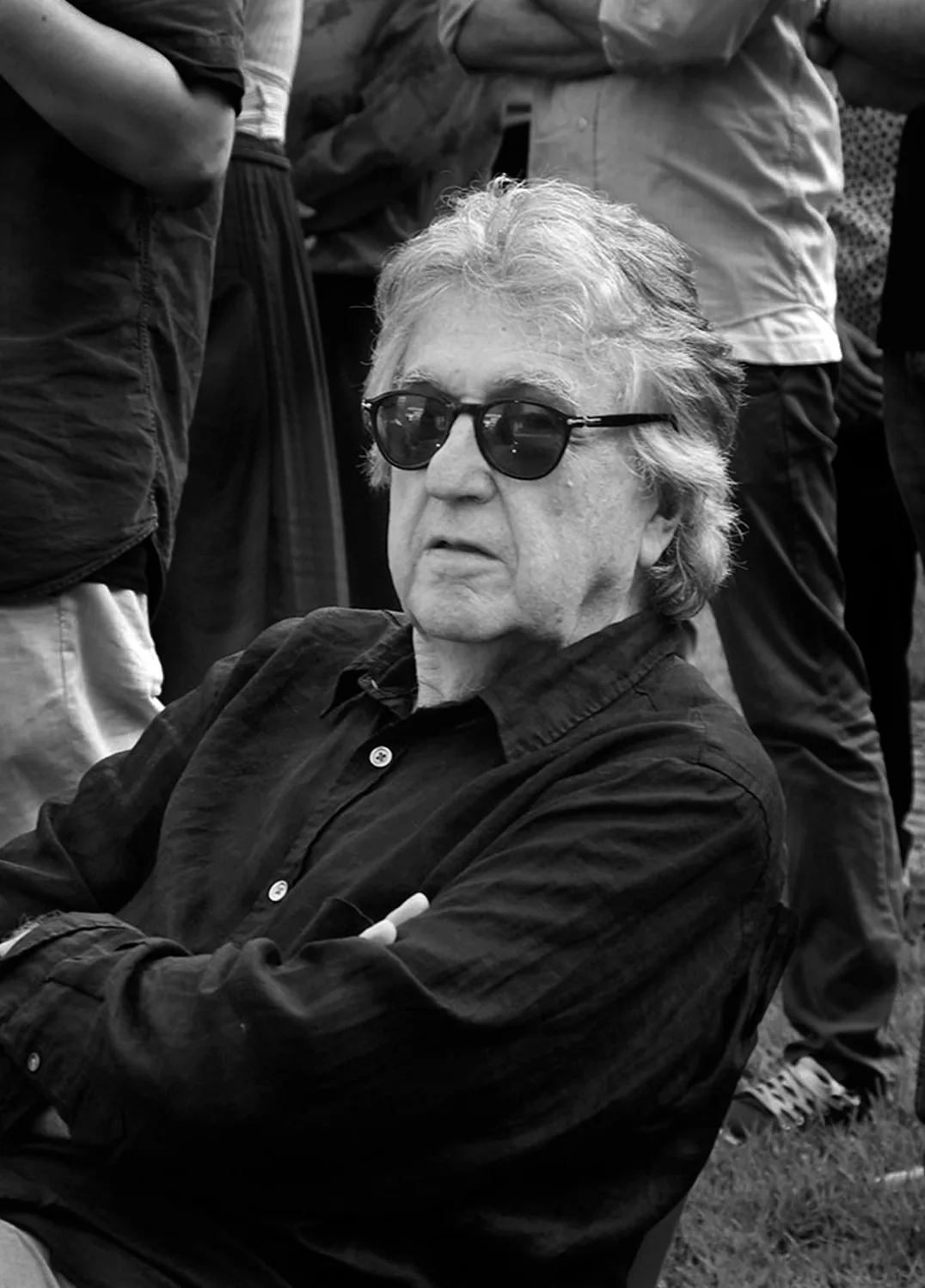
蒙塔达斯肖像
全文图片鸣谢艺术家
聂小依:你在讲座里提及你在艺术、社会科学和媒介分析这三个系统的交叉处工作。对一些出生在20世纪末期的艺术家来说,因为兴趣开始一场跨学科的探索很常见,但是你从1970年代就开始了。你最早为什么会对艺术感兴趣,后来什么契机带你进入了艺术之外的知识系统?
蒙塔达斯:我在20世纪60年代在巴塞罗那学习工科和建筑的课程,还自学过绘画,那是我寻找未来方向的时期。我在1969年办了自己的最后一个画展——虽然我早就不提这茬了。这之后,在20世纪70年代,我做了一个激进的决定,去做观念艺术。我所受的影响来自于那一整个时期:1968年的“五月风暴”、反文化(counter-culture)状况、麦克卢汉(Herbert Marshall McLuhan)的媒介理论普及,当然还有巴克敏斯特·富勒(Richard Buckminster Fuller)的学说。那个时期推动了我去做出艺术上的转向,去到了在刚才你所说的不同系统的交叉处。
聂:可以说是社会现场让你放下了画笔,拿起了相机和摄影机。
蒙:我最开始用超8毫米胶片(Super 8),但是后来胶片太贵了,后来就用起了录像带。我关注观众与电视、大众传媒的关系,决定把镜头对准观众本身,记录行动、事件、情境。注意,我用的词汇是“行动”(action),而不是“表演”(performance)。
聂:这个词汇是不是源于你在1971年的录像《行动》(Actions)?你对“表演”的警惕似乎也和你对大众媒体的警惕是一致的。不过智能手机出现之后现在有了无数的图片和录像,语境和20世纪70年代也变化得特别多。
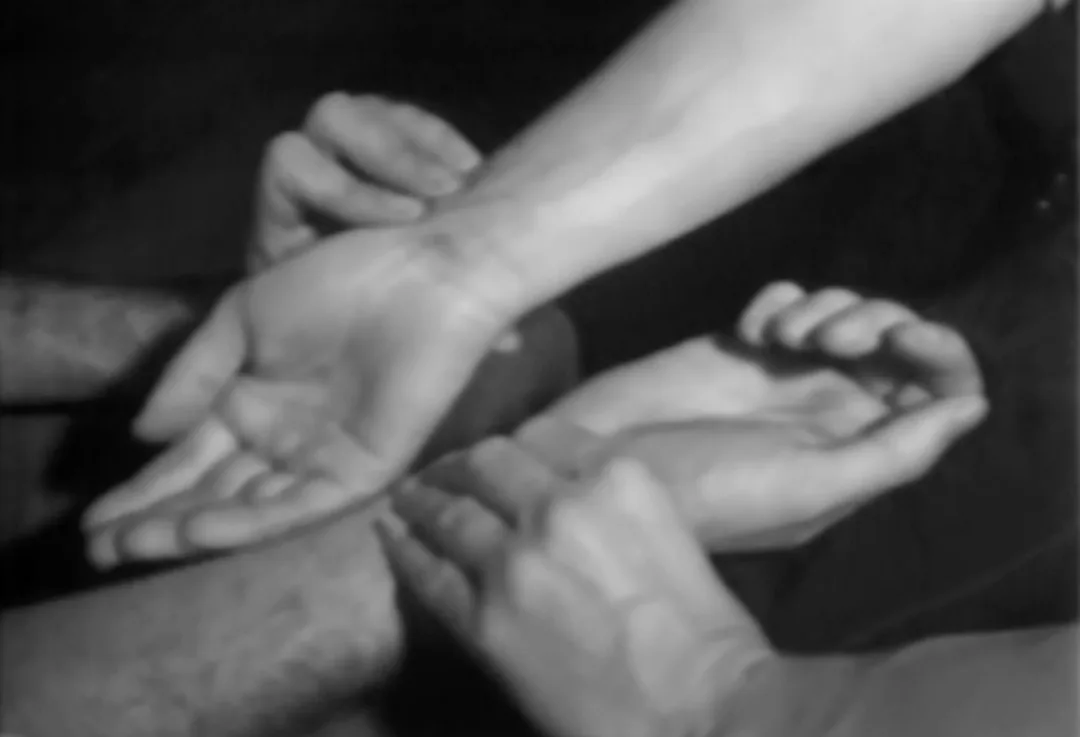
Antoni Muntadas, Actions
蒙塔达斯《动作》
1971年,黑白有声录像
蒙:对我来说,图像需要发挥功能。技术的进步其实是给图像带来了更多层次,让它变得更加复杂。我喜欢“复杂”(complexities),而非“困惑”(confusion)。
聂:作为一位参加过很多次录像艺术回顾展的艺术家,你看到现在被大量生产和分享的图片、录像,会觉得自己以往的创作过时了吗?
蒙:当你决定做一位艺术家时,你要承担起一些责任。艺术家需要考量所有涉及因素的伦理问题,而大多数被制造出来的图像只是持续堆积,没有经过这些考量。你可以为了某种理由而生产图像,也可以毫无理由地生产图像。
聂:你一般会先找到具体的创作理由,再去生产图像和录像吗?
蒙:我不想让我的项目因为某种风格而具有辨识度,我也很反对风格这件事。形式当然重要——有时创作会发展成一本书,有时会发展成视频,有时会发展成装置。但我不想创造出某种风格,我希望人们能因为我的话语而认出我。
聂:《框架之间:论坛》(Between the Frames: Forum, 1983–1991)对我来说就是这样一种“话语”。在这个项目里,你采访了一百多位艺术界的人们,包括艺术家、评论人、藏家等等,描摹出当代艺术的复杂系统。标题里的这个“之间”似乎也对应了你试图为每一种元素寻找到位置的努力?
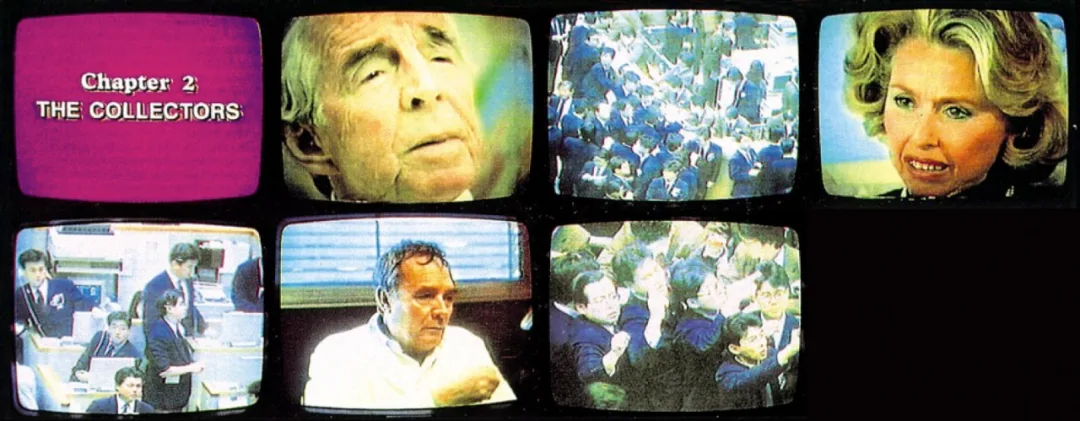
Antoni Muntadas, Between The Frames:The Forum
蒙塔达斯《框架之间:论坛》
1983—1991年,八集,录像装置
蒙:有时候比起事情本身是怎么回事,我更感兴趣的是事情“之间”(between),因为人们经常看不到“之间”这个区域——而它正是在二元结构里的模糊地带。
聂:你还在纽约做过《豪车项目》(The Limousine Project, 1991)。当时你在加长款的豪华轿车里放了多个投影仪,轿车两侧的车窗上会透出“神秘场景”(mysterious scene)、“权力象征”(Power Symbol)等等词组或者一些图像。这辆车在纽约城里行驶、停留在不同地方,比如华尔街、百老汇和联合国。我觉得这是个情境主义的行动,也有关事物之间的互文。
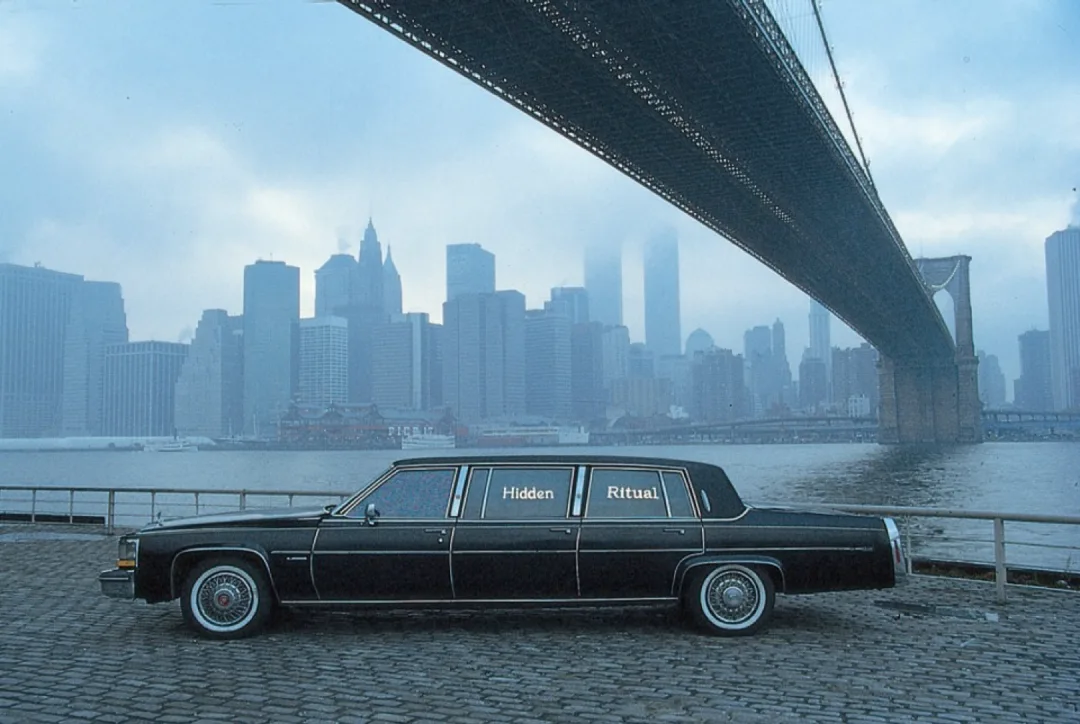
Antoni Muntadas, The Limousine Project, 1991
蒙塔达斯《豪华轿车计划》
1990年,纽约
蒙:的确可以这么说。这是一个发生在大街上的公共项目,也是为纽约这座城市而特别设计的。我觉得街道和网络、电视一样,都打开了一种空间,也都是一种特殊的语境。在纽约的这个项目是一种介入(intervention)。轿车要和这些纪念碑、雕像形成反差,才会有效果。
聂:这其实也可以视为一种在移动的展览,或者突破白盒子的尝试?话说回来,《框架之间:论坛》这一组录像里没有现在变得非常重要的策展人。
蒙:策展人是之后才变重要的。对白盒子的挑战、进入城市街道这些尝试其实都来自艺术家,而不是策展人先发明的。策展人追随艺术家。如果艺术家不存在,策展人当然也不会存在。而我最佩服的策展人都会告诉我,艺术家最重要:艺术家第一,策展人第二。我欣赏那些缓慢工作的策展人(slow curators),而不是那些快速转场的策展人(fast curators)。快速策展就像快餐一样!
聂:不过我觉得你的创作也可以从策展的角度去理解,你的作品涉及大量采访,以及合作、调动、协商。
蒙:这些是田野,是过程中的一部分。我的确经常与别人一起工作,不过情况各有不同。有时我与他们合作(collaboration),有时是他们来参与、作出贡献(contribution)。我的创作像一首合唱,我让不同的人在这里发表他们的见解和想法。
聂:但他们不是作品的创造者?
蒙:我不把自己所做的称为“作品”,而是称之为“项目”。当一个项目结束时,结果有时可能是一件作品,有时候不是。不同于那些直接塑造物品的创作,我的创作是通过一系列的过程。“项目”是一种很复杂的结构,因为在这里,艺术家并不是在触碰具体的材料,而是跟具体的人和合作者打交道。**有时候,我把我的作品称为“缓慢的现成品”(slow ready-made)。
聂:“缓慢”是因为你的项目往往很庞大吗?
蒙:因为如果我需要决定要让某件事情成为项目,我可能需要花费很长时间,比如11年。
聂:但你最后不会展示这些思考或者试验的过程?
蒙:我不想展示这些过程,会把它们留给我自己,把结果展示给观众。这就像中世纪的炼金术士一样,他们不会把实验室里原材料复杂的、一道道的转化展现出来,而是会把最后的合成物(synthesis)拿出来。我的确借用了很多社会学的工具、方法,但是并不觉得这个过程值得公开。或许某个社会学家可以来做这个工作,但我不会。
聂:我还想聊一聊《亚洲礼仪》(Asian Protocols, 2014–2018)这个大项目,它跨越了不同地域和文化,和韩国、日本、中国的美术馆合作。你把它称之为“视觉研究”,收集了三个国家的现成品,也召集了圆桌讨论,目前产生了11件作品。你并没有在这三个国家生活的经验,为什么会想做这样一个项目?
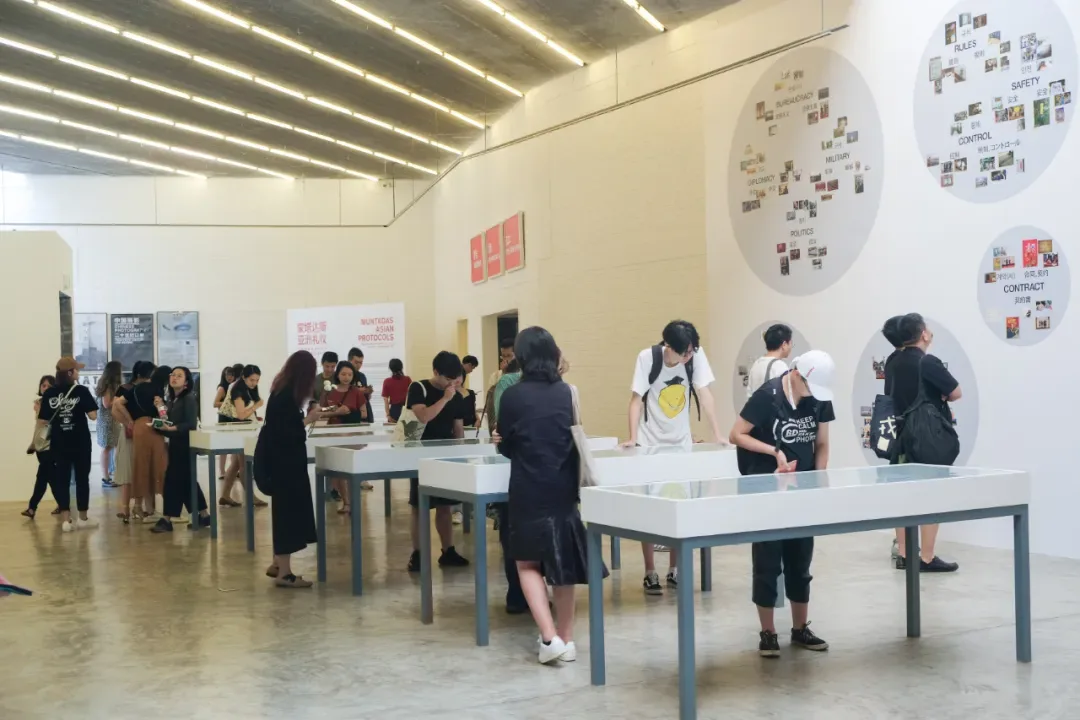
蒙塔达斯“亚洲礼仪“展览现场
2018年,三影堂摄影中心,北京 摄影:Chen Xinyi
蒙:我不把自己看作那种来亚洲旅游观光的“外国人”,而是作为一个“局外人”(outsider)来做这个项目的。我对“礼仪”的理解是一系列条约、规则、共识,每个社会依据这些构建起了自己的文化。《亚洲礼仪》有关这三个国家之间的相似、区别与冲突。不过我在组织圆桌讨论时发现,让参与者讨论他们的“恐惧”“个人/公共”“审查”都非常困难。
聂:那你在项目里的角色是什么呢?
蒙:我激活这个项目,激活项目里收集的现成品,并且把它们组织成展览。我们组织的圆桌本来预计进行一个小时,但是最后人们留下来了,待了六七个小时。
聂:是因为你是一个局外人,这样的讨论可以更顺畅地发生吗?
蒙:我在这个项目里聆听、看和观察。我和外滩美术馆里现在展出的来这里定居的外国人或者传教士不一样,他们可能最终想获得内部视角,而我坚持做一个局外人,努力保持距离。我的工作是去凑近又拉远,拉远又凑近。这种视觉训练能帮助我们理解这个世界。我觉得有一些元素可以帮助我们理解他人和这个世界,比如好奇心、尊重、观察,以及当然要形成我们自己的观点。不过,我还是会尽量让自己在项目里做到越透明越好。
聂:我不确定这种距离的调整是否来自特权。你会在作品里投入你自己的情感、故事或者判断吗?
蒙:每个项目都是我的情绪、我的观点、我的概念、我的决定、我的目的、我的愿望的结晶。每件作品都含有这些。我的所有创作也会联系到我曾做过的那件作品《警告:感知需要参与》(Warning: Perception Requires Involvement, 2013)。我要求观众要在看到一个项目之后,不能只是站在旁边,他需要参与其中。对我来说,生活即编辑(Life is editing),而观众对作品的编辑才最终完成了作品。
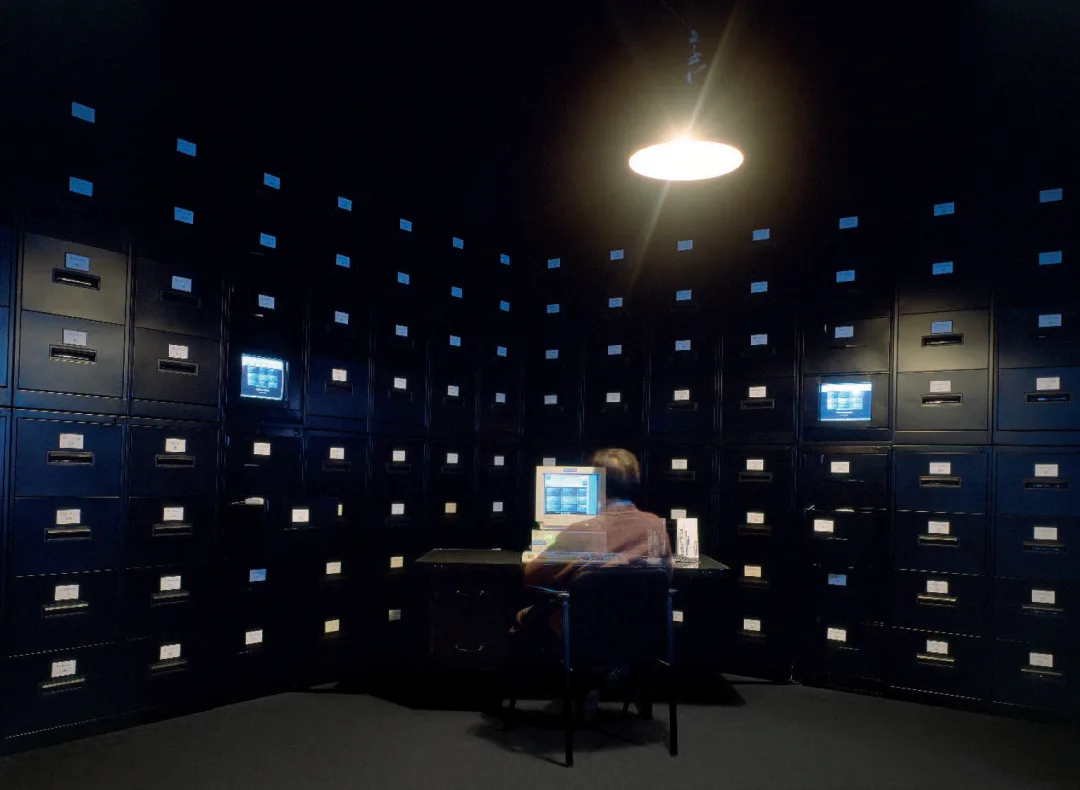
Antoni Muntadas, The File Room
蒙塔达斯《档案室》展览现场
1994年,芝加哥文化中心
聂:作为编辑真的很喜欢这个标语。好了,我们到了最后一个问题……
蒙:它已经消失在转译里了(lost in translation)。
聂:还没有!我好奇的是你怎么看去年克莱尔·毕晓普(Claire Bishop)有关研究型艺术的文章《信息过载》?你的名字作为研究型艺术的先驱被提及了。人们讨论研究型艺术时也会提起你在1994年所做的《档案室》(The File Room)。
蒙:去年在巴塞罗那有一个会议,题目是“作品与文件”(Artwork and Document)。对我来说,是否是作品的划定并不直接和文件有关。我想区分的是最后的作品与过程。过程会涉及和产生许多文件、材料,但我不会想展示这些文件。人类创造了许多档案,档案里充满了文件。我并不认为展示这些文件很了不起,重要的是我们如何处理这些文件。我们要做的是转化、生成过程中的材料,激活档案。《档案室》是一个档案,而我等待着观众来激活它。
Machine translation (AI) of the Chinese original, not yet reviewed by the author. Please cite the original.
Confidence in Vocabulary
“I insist on being an outsider and try hard to keep my distance. My work is to zoom in and zoom out, zoom out and zoom in. This kind of visual training can help us understand the world.”
One morning in May, Antoni Muntadas appeared on the campus of NYU Shanghai to give a lecture in English to the students there. The first line of his self-introduction was: “I am an artist and also a teacher, but first of all an artist.”
Muntadas was born in Spain in 1942 and moved to New York in 1971. Now in his eighties, he is known for works in video, photography and installation; he has taken part in many historical surveys of video art and held major retrospectives. What some may envy is that his work has caught both the conceptual art wave of the last century and the current boom in research-based art. Muntadas has also taught for many years at American universities. What struck me most during the interview was that there was no guessing how many fixed terms he had. He has chosen a specific vocabulary for his practice – “projects” rather than “works”, “actions” rather than “performances”. When answering questions he would passionately pull over a few sheets of paper and draw mind maps and diagrams to show his system of making and thinking, so that for a moment I thought I was looking at notes on a blackboard. In 2011 Muntadas initiated About Academia (2011/2017). He conducted a large number of interviews with students and teachers in universities, reflecting on the knowledge-producing system of the American university and examining the conflicts between academic staff and the administrative apparatus. After the lecture at NYU Shanghai, Muntadas asked: “Do you think the people listening to the lecture here felt comfortable?”
Perhaps most of the students simply took the lecture as a kind of masterclass – taught in English, an American professor, talking about cross-cultural issues: this is already everyday life here. Muntadas is interested in a place’s position within a larger system, and an individual’s role within a system. Faced with rapidly circulating information and images, an art world full of black boxes and an ever-expanding academic system, Muntadas has, from beginning to end, tried to construct his own systems and discourse – which gives his work a strongly conceptualist air, quite different from today’s practices born of urgency and personal experience. I asked him about this in the interview, but he evidently remains extremely optimistic.
Portrait of Muntadas
All images courtesy the artist
Nie Xiaoyi: In your lecture you mentioned that you work at the intersection of three systems: art, the social sciences and media analysis. For some artists born in the late twentieth century, setting off on an interdisciplinary exploration out of interest is common, but you started in the 1970s. Why were you first interested in art, and what later led you into systems of knowledge beyond art?
Muntadas: In the 1960s I studied engineering and architecture in Barcelona, and I also taught myself painting. That was a period when I was looking for a direction. I had my last painting exhibition in 1969 – though I stopped mentioning it long ago. After that, in the 1970s, I made a radical decision to do conceptual art. The influences came from that whole period: May ’68, the counter-culture, the spread of Marshall McLuhan’s media theory and, of course, the ideas of Buckminster Fuller. That period pushed me to make an artistic turn, towards the intersection of the different systems you just mentioned.
Nie: You could say the social situation made you put down the paintbrush and pick up the camera.
Muntadas: I started with Super 8, but film became too expensive, so later I used videotape. I was concerned with the relationship between the audience and television and mass media, and I decided to point the lens at the audience itself, recording actions, events, situations. Note that the word I use is “action”, not “performance”.
Nie: Does that word come from your 1971 video Actions? Your wariness of “performance” seems consistent with your wariness of mass media. But since the smartphone there are countless images and videos, and the context has changed enormously since the 1970s.
Antoni Muntadas, Actions, 1971, black-and-white video with sound
Muntadas: For me, images need to have a function. Technological progress has actually given images more layers and made them more complex. I like “complexities”, not “confusion”.
Nie: As an artist who has been in many video art retrospectives, when you see the images and videos now produced and shared in such quantities, do you feel your earlier work has become outdated?
Muntadas: When you decide to be an artist, you take on certain responsibilities. An artist needs to consider the ethics of all the factors involved, whereas most of the images being made simply keep piling up without that consideration. You can produce images for a reason, or you can produce images for no reason at all.
Nie: Do you usually find a specific reason first, and then produce images and videos?
Muntadas: I don’t want my projects to be recognisable because of a style; I am very much against style. Form is of course important – sometimes a project develops into a book, sometimes into a video, sometimes into an installation. But I don’t want to create a style. I hope people will recognise me by my discourse.
Nie: For me, Between the Frames: The Forum (1983–1991) is exactly such a “discourse”. In that project you interviewed more than a hundred people in the art world – artists, critics, collectors and so on – mapping the complex system of contemporary art. Does the “between” in the title also correspond to your effort to find a place for every element?
Antoni Muntadas, Between the Frames: The Forum, 1983–1991, eight chapters, video installation
Muntadas: Sometimes I’m more interested in what lies “between” things than in what the things themselves are, because people often don’t see the zone of the “between” – and that is precisely the grey area within binary structures.
Nie: You also made The Limousine Project (1991) in New York. You put several projectors inside a stretch limousine, and phrases such as “mysterious scene” and “power symbol”, or images, would show through the windows on both sides. The car drove around New York and stopped at different places, such as Wall Street, Broadway and the United Nations. I see it as a situationist action, and also as being about the intertextuality between things.
Antoni Muntadas, The Limousine Project, New York, 1991
Muntadas: You could indeed say that. It was a public project that took place on the street, and it was designed specifically for the city of New York. I think the street, like the internet and television, opens up a kind of space; each is a particular context. The project in New York was an intervention. The car had to contrast with the monuments and statues for it to work.
Nie: Could it also be seen as a moving exhibition, or an attempt to break out of the white cube? Speaking of which, the videos in Between the Frames: The Forum don’t include curators, who have since become so important.
Muntadas: Curators only became important later. Challenging the white cube, going into the streets of the city – these attempts actually came from artists; curators didn’t invent them. Curators follow artists. If artists didn’t exist, curators of course wouldn’t exist either. And the curators I admire most all tell me that the artist is what matters most: artist first, curator second. I appreciate slow curators, not fast curators who move quickly from one thing to the next. Fast curating is like fast food!
Nie: Still, I think your practice can also be understood from a curatorial point of view. Your work involves a great deal of interviewing, as well as collaboration, mobilisation and negotiation.
Muntadas: Those are the fieldwork, part of the process. I do often work with other people, but the situations vary. Sometimes I collaborate with them; sometimes they participate and make a contribution. My work is like a chorus: I let different people express their views and ideas here.
Nie: But they aren’t the creators of the work?
Muntadas: I don’t call what I do “works”; I call them “projects”. When a project ends, the result may sometimes be a work, and sometimes not. Unlike practices that directly shape objects, mine goes through a series of processes. A “project” is a very complex structure, because the artist is not touching specific materials but dealing with specific people and collaborators. Sometimes I call my works “slow ready-mades”.
Nie: “Slow” because your projects tend to be so big?
Muntadas: Because if I have to decide to make something into a project, it may take me a very long time – eleven years, for example.
Nie: But in the end you don’t show this process of thinking or experimenting?
Muntadas: I don’t want to show the process. I keep it for myself and show the result to the audience. It’s like the alchemists of the Middle Ages: they didn’t show the complicated, step-by-step transformations of raw materials in the laboratory, but brought out the final synthesis. I do borrow many tools and methods from sociology, but I don’t think the process is worth making public. Maybe a sociologist could do that work, but I won’t.
Nie: I’d also like to talk about the large project Asian Protocols (2014–2018), which spans different regions and cultures and was made in collaboration with museums in South Korea, Japan and China. You call it “visual research”; you collected ready-mades from the three countries and also convened round-table discussions, and so far it has produced eleven works. You have no experience of living in these three countries – why did you want to make such a project?
Installation view of Muntadas’s “Asian Protocols”, Three Shadows Photography Art Centre, Beijing, 2018. Photo: Chen Xinyi
Muntadas: I don’t see myself as the kind of “foreigner” who comes to Asia as a tourist; I did this project as an “outsider”. I understand “protocol” as a set of treaties, rules and consensus on which each society builds its own culture. Asian Protocols is about the similarities, differences and conflicts between these three countries. But when organising the round tables, I found it very difficult to get participants to discuss their “fears”, “private/public” and “censorship”.
Nie: So what was your role in the project?
Muntadas: I activate the project, activate the ready-mades collected in it, and organise them into an exhibition. The round tables we organised were supposed to last an hour, but in the end people stayed on for six or seven hours.
Nie: Was it because you were an outsider that such discussions could happen more smoothly?
Muntadas: In this project I listen, look and observe. I’m different from the foreigners and missionaries who came to settle here, now shown at the Rockbund Art Museum – they may ultimately have wanted to gain an insider’s view – whereas I insist on being an outsider and try hard to keep my distance. My work is to zoom in and zoom out, zoom out and zoom in. This kind of visual training can help us understand the world. I think there are some elements that can help us understand others and the world, such as curiosity, respect, observation and, of course, forming our own points of view. Still, I try to make myself as transparent as possible in my projects.
Nie: I’m not sure whether this adjustment of distance comes from privilege. Do you put your own emotions, stories or judgements into your work?
Muntadas: Every project is a crystallisation of my emotions, my views, my concepts, my decisions, my purposes, my wishes. Every work contains these. All my work is also connected to a piece I once made, Warning: Perception Requires Involvement (2013). I ask viewers, after seeing a project, not just to stand to one side; they need to get involved. For me, life is editing – and it is the audience’s editing of the work that finally completes it.
Antoni Muntadas, The File Room, installation view, Chicago Cultural Center, 1994
Nie: As an editor, I really love that motto. Right, we’ve come to the last question…
Muntadas: It’s already been lost in translation.
Nie: Not yet! I’m curious what you think of Claire Bishop’s essay on research-based art from last year, “Information Overload”. Your name was mentioned as a pioneer of research-based art. When people discuss research-based art, they also bring up your The File Room (1994).
Muntadas: Last year there was a conference in Barcelona titled “Artwork and Document”. For me, whether something is a work isn’t directly related to documents. What I want to distinguish is the final work and the process. The process involves and produces many documents and materials, but I wouldn’t want to show those documents. Humans have created many archives, and archives are full of documents. I don’t think displaying these documents is anything remarkable; what matters is how we deal with them. What we need to do is to transform and generate the materials of the process – to activate the archive. The File Room is an archive, and I’m waiting for the audience to activate it.