Writing / interview · 2026 · 中文
The Paintings of Lin Yulong: A Conversation访谈|林羽龙的绘画
A conversation with the painter Lin Yulong around his solo exhibition “Form, ‘Form’, F-o-r-m” at KeYi Gallery, Hefei – on painting as a set of instructions for looking, hidden control, and making room for time, space and material.
可以画廊合肥空间呈现了林羽龙的个展「形体,“形体”,形-体」。此篇为聂小依与林羽龙就此次展览而延伸的对谈。以下对谈中,二位简称为:
◆ 聂小依 - N
◆ 林羽龙 - L
我先认识羽龙,再认识了他的画。印象里,羽龙是个自律得很轻松的人——他每天去工作室,每日健身,每日照顾许多脾性各异的植物。听起来,这需要事事计算、时时注意。但没有,跟他旅行的时候,他总是已经早早端了一杯茶安神,跟我们讲一句,馒头在厨房,已经蒸好了。后来看了他的画,他的画看起来很安宁——不炫技,无隐喻,没故事,你只能慢悠悠地看,反复琢磨。
羽龙的绘画里没有很具体的形象,色彩并不冲撞,但也并不混沌。笔触、色彩、画布种种,透出自在、平衡,以及缓缓生出的乐趣。朋友曾经打趣,羽龙是不是因为工作室里的植物需要照料,所以他不能离开工作室太久。但这次聊天之后,我感觉到他是把自己和绘画嵌入了同一种节奏,在看似平淡的工作室里,他在与许多材料一同试验。
───聂小依
N:看你的画,再读你的文字,我有两种截然不同的感受。你的画让我觉得具体、实在,但你写的文字会让我好奇你对词语的理解。我们要不先说说看“未能成为图像的事物”这个系列。“Image”在拉丁文里有“模仿”“复制”的意味。当我们说某件事“未能……”时,似乎是抱着遗憾的心情。但在我看你的画时,我猜,“未能成为图像的事物”非但没有遗憾,反而因为“未”而意味着许多可能。因为“未能成为图像”,所以才有许多空间和可能性留给被画的事物。
L:我的作品好像一直在讲一件事,就是如何去看一个画面,怎样用视觉的方式去阅读它。我们可以只从最基础的点、线、面出发,去看待一张画,然后去分析,我们怎么样去进入到一张所谓“抽象”的绘画。但我并不是完全在讨论抽象绘画,只是想传达我观察所有画面的方式。观众也可以带着从“未能成为图像的事物”中获得的观看方式,去观看、理解一张写实、具象的绘画。
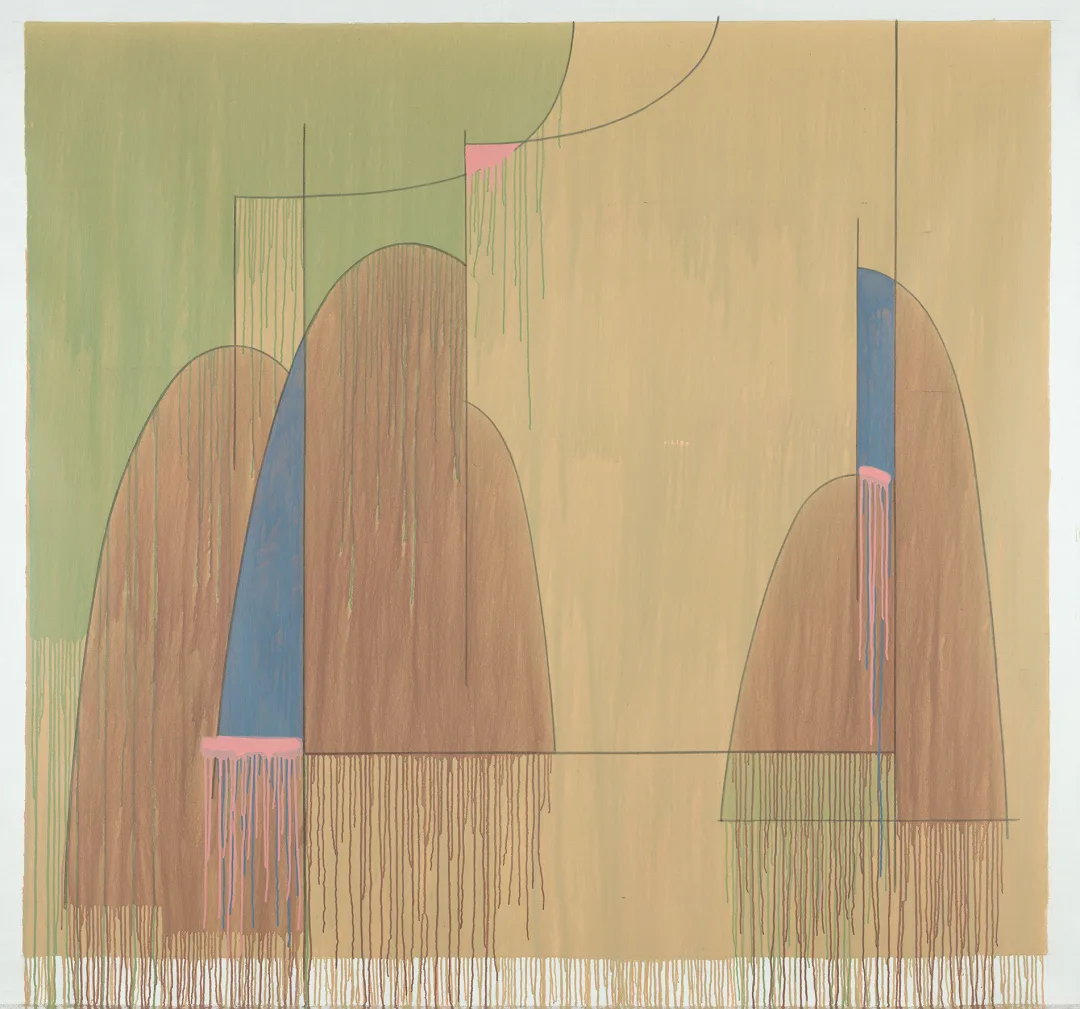
未能成为图像的事物(20.03.25)
Things That Resist Becoming Images (20.03.25)
2025
布面丙烯 / Acrylic on canvas
227 x 238 cm
N:这会让我想起蒙德里安对基本元素的实验。
L:对,比如他的《纽约市1号》(1941)。但目前更常见的抽象绘画是由情感驱动的“热抽象”,可能带有宗教性或者浓烈的情感色彩。似乎大多数观众能接受用情感去理解、共鸣的方式。但我的绘画,你要说它是抽象绘画——或许也可以,但其实更像份“说明书”。它在为理解绘画提供一种新的思路。虽然这个思路可能之前已经有人提出过,但我想要把它说得更具体,或者是讲得更单纯。
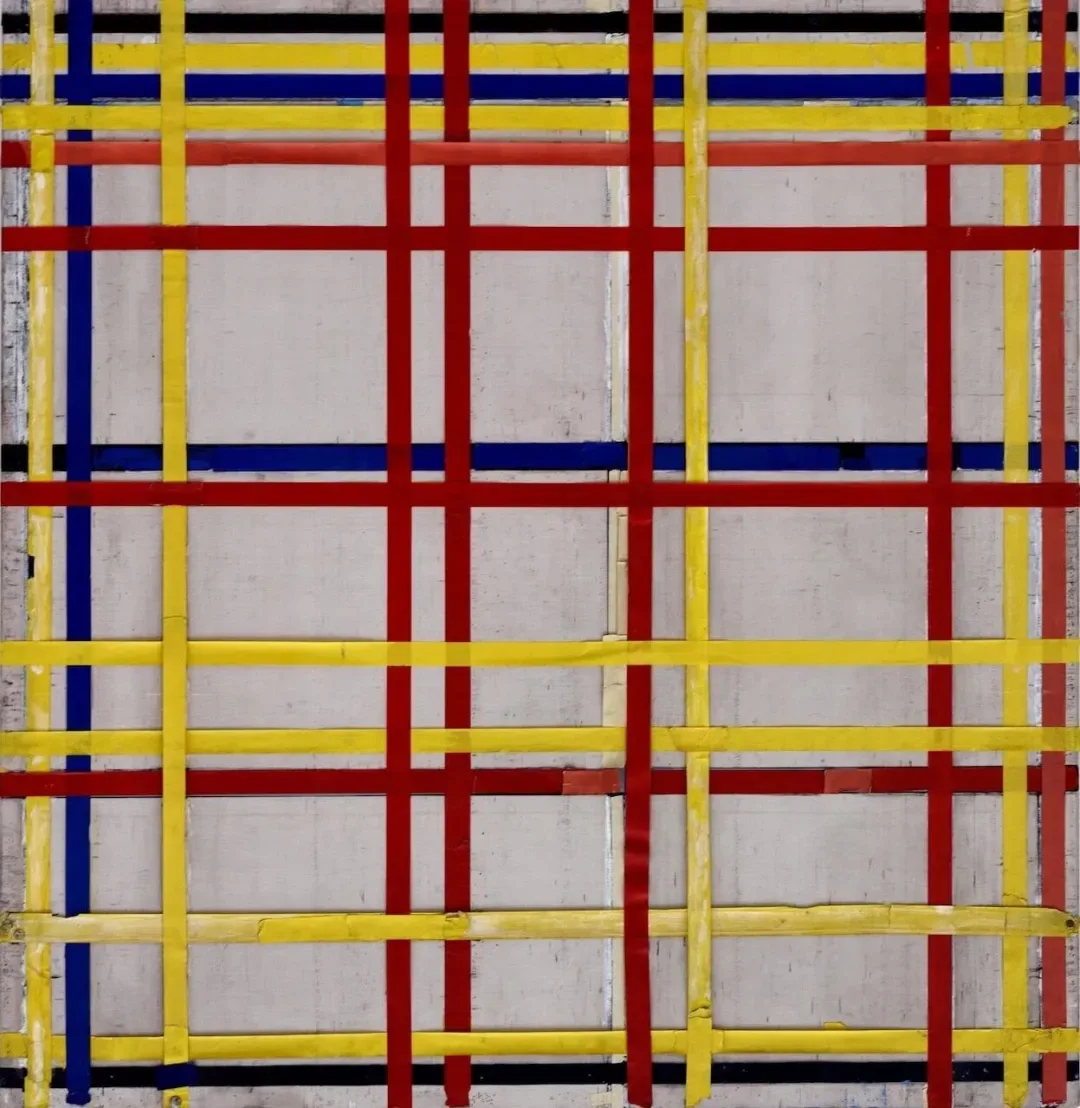
©Piet Mondrian
纽约市一号 / New York City I
1941
帆布油画、彩色胶带
Oil painting on canvas,colored tape
120 x 115.2 cm
N:我也感受到了你绘画里的一种“单纯”,和你本人给我的感觉一致。你创造出的单纯的环境,能让微妙之处被感受到,像是这些事物正从背景中生成出来。菲利普·加斯顿曾经说,绘画是一种过程而非图像(to paint is a possessing rather than a picturing)。他也提到绘画是“想象中的一个界面”(The painting is not on a surface, but on a plane which is imagined)。你在之前作品中反复描绘的实际存在的“帷幕”,后来慢慢变成一种形式。后来在“形体之幕”中,你把背景、形体和线条称为三重幕,形体在“画布内部隆起”。这和加斯顿所谈的界面有异曲同工之妙。
L:我曾经画过写实,但后来觉得这其中不免有些炫技。我不想让别人看到我的画的第一反应是“技术真好!”这可能就像你写了一篇文章,别人夸你“词藻华丽”一样,是舍本逐末了。我曾经习惯用小刷子、露出许多笔触,后来就换成了用大刷子横刷,让颜料顺着画布自然流淌下去,单纯地去呈现最简单的笔触。后来,我又逐渐加入了一些层次和线条,但仍然想尽量隐藏能很明显看到的技术。不过,会画画的人能够一眼看出,我的创作并不是完全没有控制的,也并不是纯自然的状态。比如,我在某个地方控制了水量,有的地方控制了画画的层数。但我使用的技术都很简单——我更希望人们关注作品整体的表达。
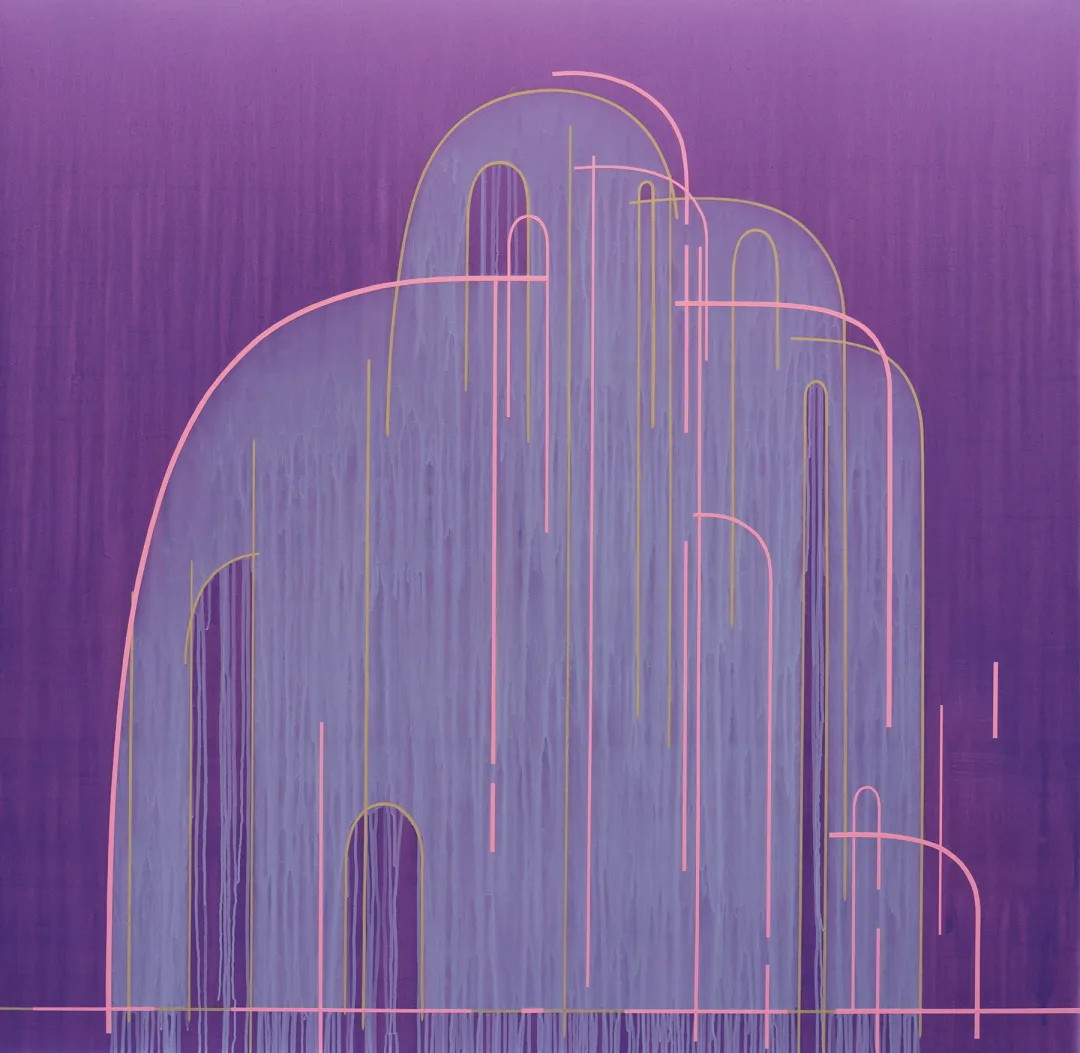
形体之幕(10.11.25) / The Veil of Form (10.11.25)
2025
布面丙烯 / Acrylic on canvas
150 x 150 cm
N:这其实是一种有控制的裸露,需要很敏锐的把握。
L:我希望自己的绘画无限趋近于材料本身,但又用最单纯的方式表现绘画本身。这个过程里,我希望控制是隐形的。
N:你的新系列“逻辑松动”、“非唯一解”、“形体之幕”、“可见与未可见之间”,似乎也是在做不同的试验:明确一些固定条件后,你再去测试一些材料或者表达方式。这些试验之间是彼此关联的吗?
L:它们之间有联系,但的确是并行的几条线。做完“未能成为图像的事物”之后,我发现每一张作品里想讲的东西有很多,比如有讲空间的元素,讲时间的元素,讲绘画本身的元素……揉进去的东西非常多。我想把这些自己想探讨的题目拆出来,单独做些讨论。“逻辑松动”用到了纸上水彩、超轻粘土和磁铁,因为我想试试看不同的材料。“非唯一解”里面的小球和方块可以移动,因为我想加入一些互动。而在“形体之幕”里,你能看到一个很明显变化:我把在“未成为图像的事物”系列中去掉的画框拿回来了。“未能成为图像事物”这个系列是让形体外放、开散,一直向外延伸;当时我觉得画框只是起到了物理上支撑画布的作用,并没有对我的表达有实质帮助,所以我拿掉了画框、只留下画布。后来到了“形体之幕”,我反思自己坚持不用画框,是不是把自己框在了这个思维里?“形体之幕”是把描绘对象集中在画面空间中的。
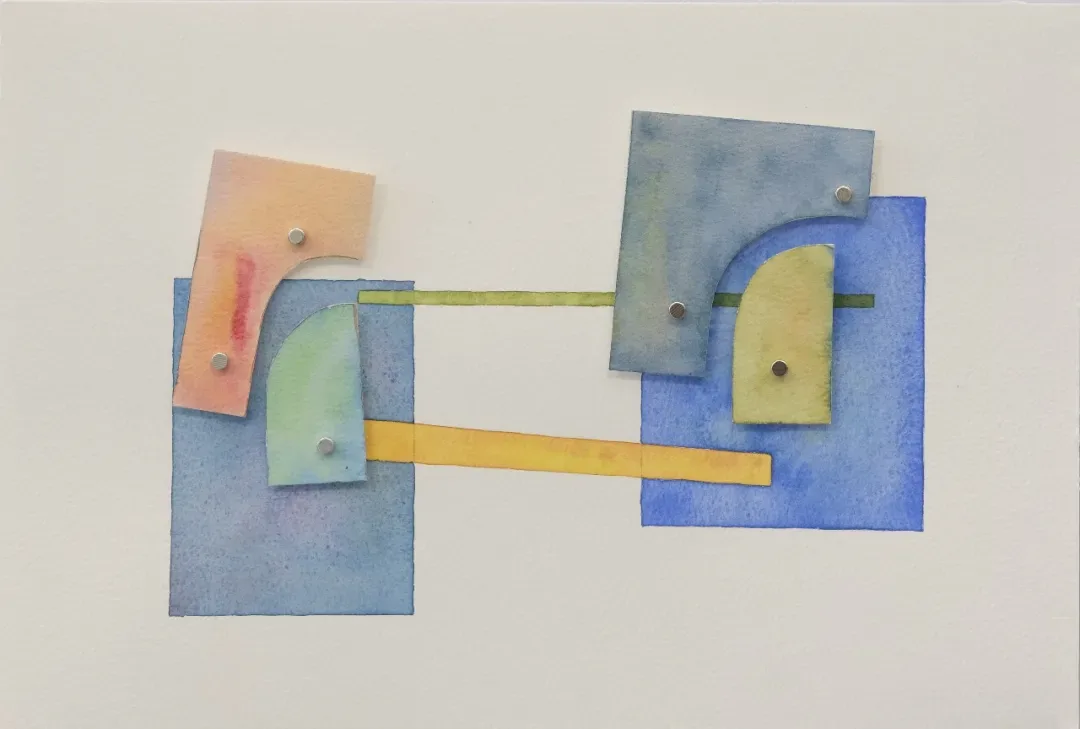
逻辑松动 4 / Loosening Logic 4
2025
纸上水彩,超轻粘土,磁铁
Watercolor on Paper, Ultra-Light Clay, Magnet
21 x 31 cm
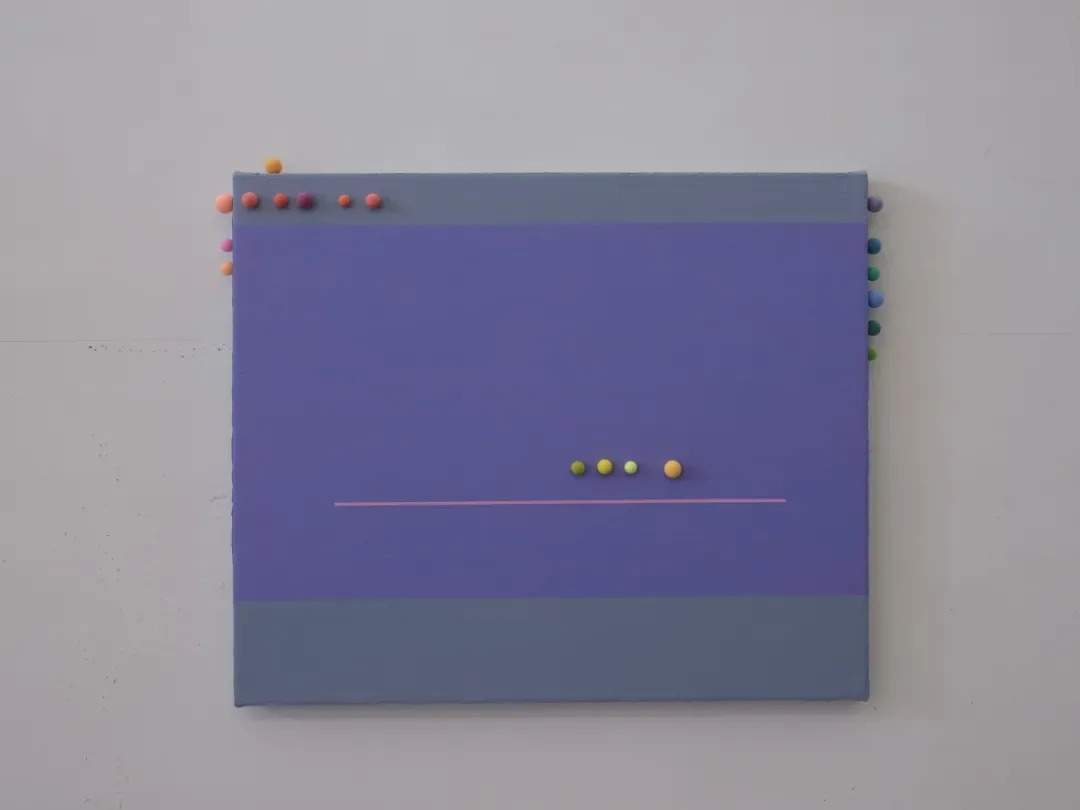
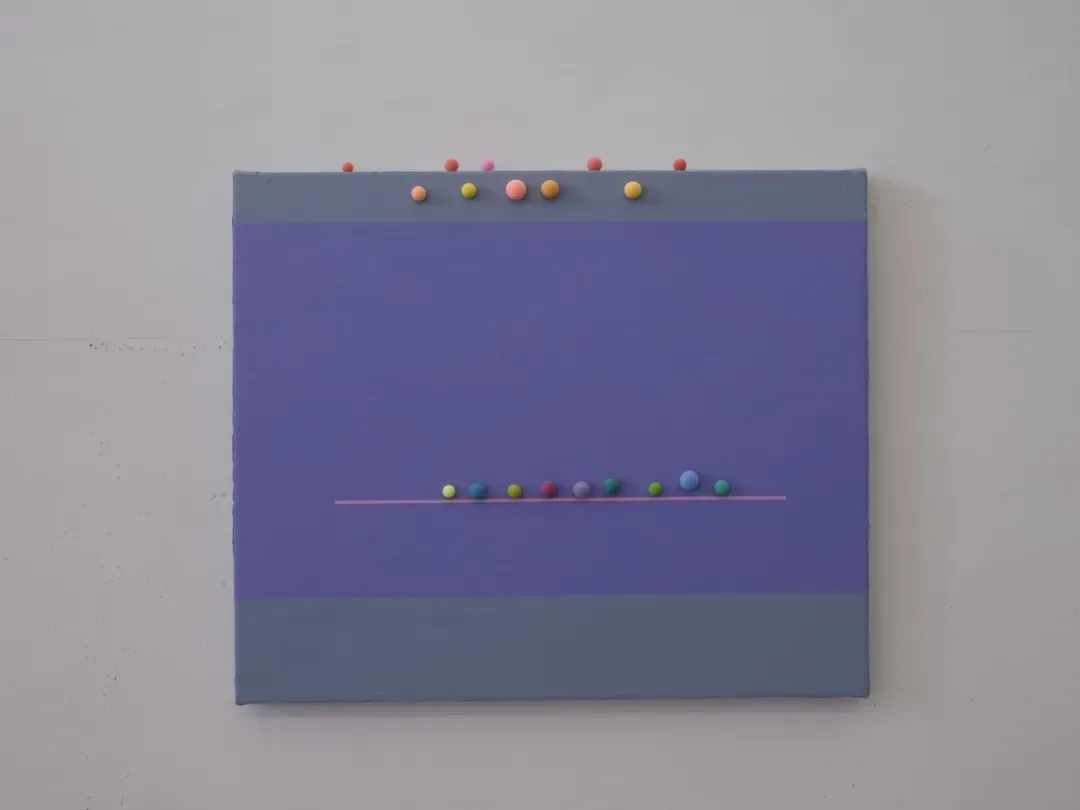
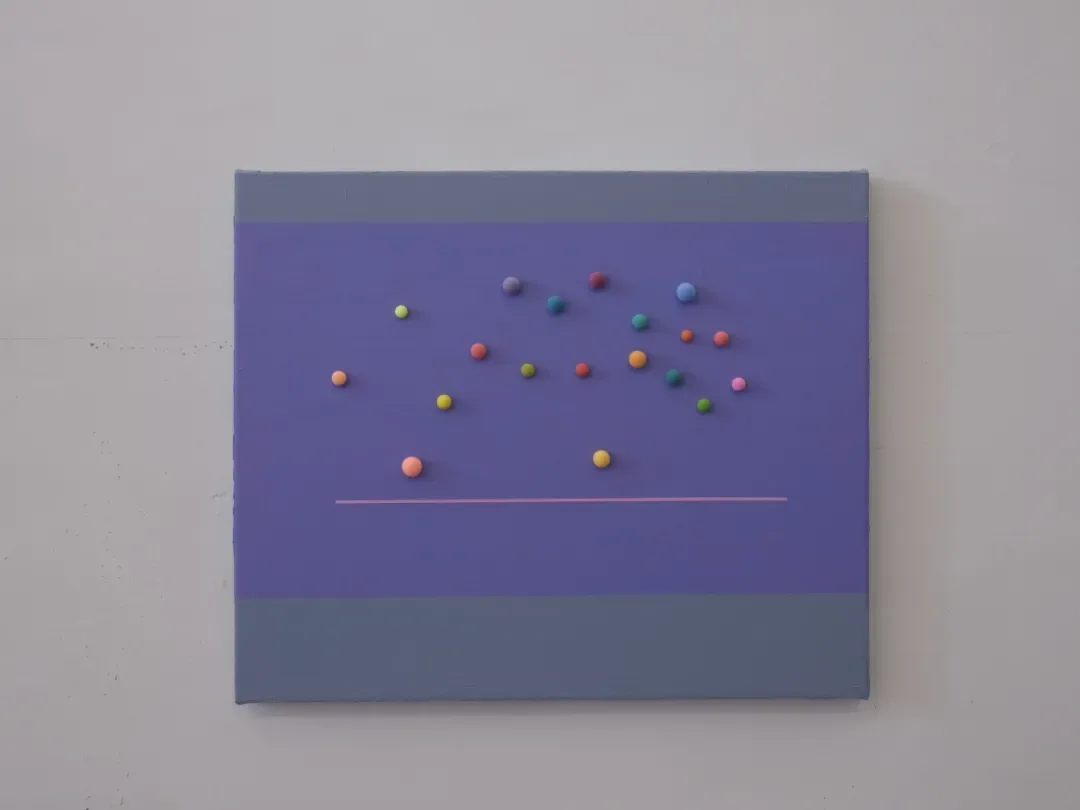
非唯一解 6(小球位置可变)
non-unique forms 6(the position of the ball is adjustable)
2025
布面丙烯, 超轻粘土, 磁铁
Acrylic on Canvas, Ultra-Light Clay, Magnet
60 x 53 cm
N:“可见与未可见之间”这一组是多张绘画拼合在一起,也是错落的,绘画与空间的关系又再次变形了。
L:这个系列有关空间的分割,所以不仅画框之间是分割的,画面也是分割的,绘画的对象也借用了屏风这个意象。
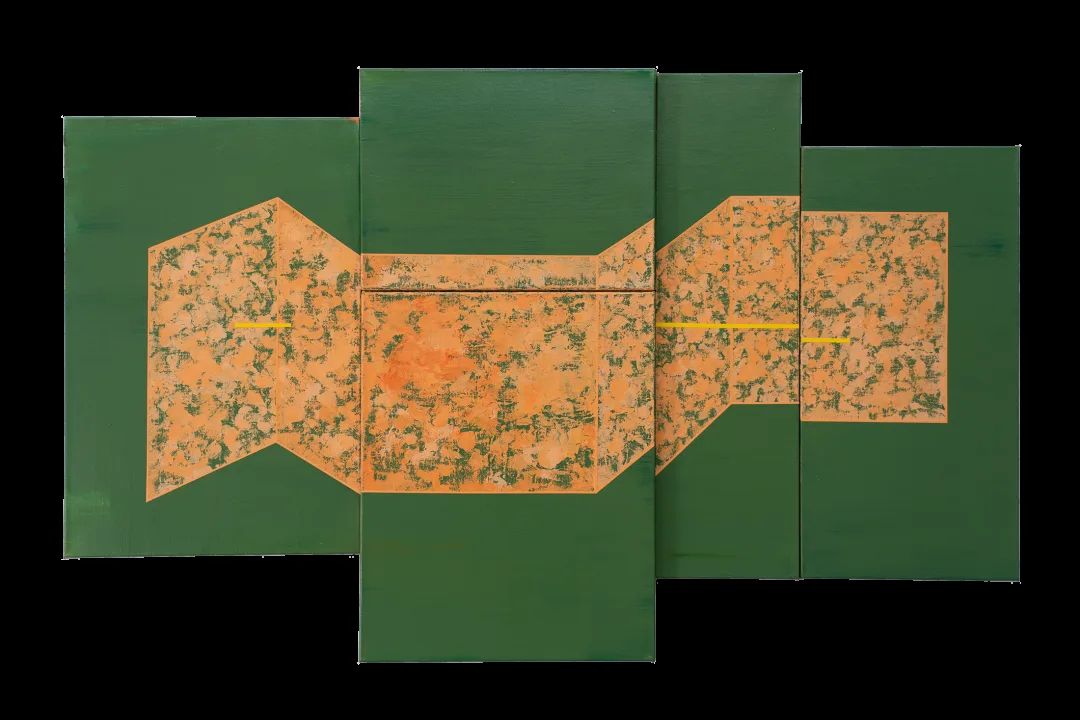
可⻅与未可⻅之间(10.11.25)
Between the Visible and the Invisible (10.11.25)
2025
布面丙烯 / Acrylic on canvas
80 x 130 cm
N:聊到这,我真的觉得你绘画中的“单纯”并不是单一、单调,而是很自然、适度的控制。你不会做过多激烈的试验,或是依靠重复去进入某种“心流”状态。你一直在探索着绘画本身的语言,从一个到另一个系列并不是在找一种图式,而是每一张都在探索,其中蕴含着许多趣味和思考。这似乎和你健身和养植物类似,不仅是自律,更多是理解。不管是对自己的身体也好,还是对植物,需要敏锐的观察和理解。
L:是的,我没有想做纯粹理性的控制,去一板一眼地施加行动。我在绘画里还是放了许多自然而然的状态。绘画和自然的关系也很有意思。有的艺术家是去野外、森林里写生,进入更加不可控、随时会变化的环境,我是在工作室里养许多植物,从人工干预开始,让植物自然生长、围绕我。但这也不是像传统盆景一样,用铁丝来精确造型、极致演绎。我可能是在找人工和自然的平衡吧。
N:我之前没有问,但我想,你应该蛮享受画画这件事本身的?
L:对,我真的还挺喜欢画画的。其实有时候做不下去,或者不知道干什么的时候,我就画些其他的,比如画点小水彩。画完就觉得很开心。
N:我还会好奇的是,你在创作中讨论的绘画语言问题是非常本质的,是不是不同文化背景的观众都会能跟你有对话?
L:有朋友说,他们在画里看到了东方的线条、勾线,能看到水墨画的影响。这些我没有想到过,也没有刻意融合过。
N:的确,这种线条、留白,本身可能更像是一种性格。在我的理解里,你在自己的绘画里,其实“让”了很多,让给时间,让给空间,让给材料,不去做创作里的上帝。这其实很难。或许你在画画的时候会常常等待?等待材料、画面对你发出的信息……这或许是太过浪漫的想象了,但我的确会想——是不是你画画和养植物一样,你们共处了许多时刻,没用言语但一直在交流,在“商量”中共同创造出新的表达。这种关系很谦逊,也在你的绘画中传递了出来。这其实是一种非常酷儿的关系状态,需要一直去协商,接受不确定性,愿意去爱,不去故弄玄虚,不去为外部表演。虽然你在工作室里独自一人,但也在探索着一种富于伦理的实践。
Machine translation (AI) of the Chinese original, not yet reviewed by the author. Please cite the original.
KeYi Gallery’s Hefei space is presenting Lin Yulong’s solo exhibition “Form, ‘Form’, F-o-r-m”. What follows is a conversation between Nie Xiaoyi and Lin Yulong that grew out of the show. In the conversation the two are referred to as:
◆ Nie Xiaoyi – N
◆ Lin Yulong – L
I got to know Yulong before I got to know his paintings. My impression of him is of someone who is disciplined in a very relaxed way – he goes to the studio every day, works out every day, and every day looks after a crowd of plants, each with its own temperament. It sounds as if this would take constant calculation and attention. But no: when we travelled together, he would always already be sitting with a cup of tea to settle himself, and would tell us, in a single sentence, that the steamed buns were in the kitchen and already done. When I later saw his paintings, they looked very calm – no showing off, no metaphors, no stories. You can only look at them slowly, turning them over again and again.
There are no very specific images in Yulong’s paintings. The colours don’t clash, but they aren’t murky either. The brushwork, the colour, the canvas all give off a sense of ease and balance, and a pleasure that emerges slowly. A friend once joked that Yulong can’t leave his studio for long because his plants need looking after. But after this conversation, I felt that he has set himself and his painting to the same rhythm: in a studio that seems uneventful, he is experimenting alongside many materials.
─── Nie Xiaoyi
N: Looking at your paintings and then reading your writing, I get two completely different feelings. Your paintings strike me as concrete and solid, but your writing makes me curious about how you understand words. Shall we start with the series Things That Resist Becoming Images? In Latin, imago carries the sense of ‘imitation’ or ‘copy’. When we say something ‘failed to…’ or ‘did not become…’, it seems to come with a sense of regret. But looking at your paintings, my guess is that Things That Resist Becoming Images has no regret in it at all. On the contrary, the ‘not yet’ opens up a lot of possibilities. Because they haven’t become images, a great deal of room and possibility is left for the things being painted.
L: My work seems to keep talking about one thing: how to look at a picture, how to read it visually. We can start from nothing more than the most basic elements – point, line, plane – and look at a painting that way, then analyse how we get into a so-called ‘abstract’ painting. But I’m not only talking about abstract painting. I just want to convey the way I look at every kind of picture. Viewers can also take the way of looking they’ve picked up from Things That Resist Becoming Images and use it to look at and understand a realistic, figurative painting.
Things That Resist Becoming Images (20.03.25)
2025
Acrylic on canvas
227 x 238 cm
N: That reminds me of Mondrian’s experiments with basic elements.
L: Yes – his New York City I (1941), for example. But the more common kind of abstract painting today is emotionally driven ‘hot abstraction’, which may have a religious quality or a strong emotional colouring. Most viewers seem comfortable with understanding and responding to a painting through emotion. My paintings – you could call them abstract paintings, perhaps, but really they’re more like a set of ‘instructions’. They offer a new way of thinking about how to understand painting. Someone may well have put this way of thinking forward before, but I want to say it more concretely, or more simply.
©Piet Mondrian
New York City I
1941
Oil painting on canvas, colored tape
120 x 115.2 cm
N: I feel a kind of ‘simplicity’ in your painting too, which matches the impression you give me in person. The simple setting you create lets subtleties be felt, as if these things were emerging out of the background. Philip Guston once said that to paint is a possessing rather than a picturing. He also said that ‘the painting is not on a surface, but on a plane which is imagined’. The real ‘curtains’ you painted again and again in earlier works gradually turned into a form. Then in The Veil of Form you call the background, the forms and the lines a triple veil, and the forms ‘swell up inside the canvas’. That has a lot in common with the plane Guston talks about.
L: I used to paint realistically, but later I felt there was inevitably some showing off in it. I don’t want people’s first reaction to my paintings to be ‘What great technique!’ That would be like writing an essay and being praised for your ‘ornate vocabulary’ – it’s putting the cart before the horse. I used to use small brushes and leave a lot of visible brushstrokes. Later I switched to big brushes, sweeping across horizontally and letting the paint run naturally down the canvas, simply presenting the plainest possible brushstroke. After that I gradually added some layers and lines, but I still try to hide any obviously visible technique. Still, anyone who paints can tell at a glance that my work isn’t entirely uncontrolled, or purely natural. For instance, in one place I control the amount of water, in another I control the number of layers. But the techniques I use are all very simple – I’d rather people paid attention to what the work expresses as a whole.
The Veil of Form (10.11.25)
2025
Acrylic on canvas
150 x 150 cm
N: So it’s actually a controlled exposure, which takes a very sensitive touch.
L: I want my painting to come as close as possible to the material itself, while presenting painting itself in the simplest way. In this process, I want the control to be invisible.
N: Your new series – Loosening Logic, non-unique forms, The Veil of Form, Between the Visible and the Invisible – also seem to be different experiments: you set some fixed conditions and then test certain materials or ways of expressing things. Are these experiments connected to each other?
L: They are connected, but they really are several parallel lines. After finishing Things That Resist Becoming Images, I realised that each painting was trying to say a lot of things – elements to do with space, elements to do with time, elements to do with painting itself… There was a great deal kneaded into each one. I wanted to pull out the questions I wanted to explore and discuss them separately. Loosening Logic uses watercolour on paper, ultra-light clay and magnets, because I wanted to try different materials. In non-unique forms the little balls and squares can be moved, because I wanted to bring in some interaction. And in The Veil of Form you can see a very obvious change: I brought back the stretcher frame that I had taken away in the Things That Resist Becoming Images series. Things That Resist Becoming Images lets the forms spread outwards, opening out and extending beyond the edges. At the time I felt that the frame only served to hold the canvas up physically and didn’t really help what I wanted to express, so I got rid of the frame and kept only the canvas. Then, with The Veil of Form, I asked myself whether my insistence on not using a frame had boxed me into that way of thinking. The Veil of Form concentrates what’s being depicted within the pictorial space.
Loosening Logic 4
2025
Watercolor on Paper, Ultra-Light Clay, Magnet
21 x 31 cm
non-unique forms 6(the position of the ball is adjustable)
2025
Acrylic on Canvas, Ultra-Light Clay, Magnet
60 x 53 cm
N: Between the Visible and the Invisible is made of several paintings put together, staggered, so the relationship between painting and space has shifted shape once again.
L: This series is about dividing space, so not only are the frames separated from one another, the picture itself is divided too, and what’s being painted borrows the image of a folding screen.
Between the Visible and the Invisible (10.11.25)
2025
Acrylic on canvas
80 x 130 cm
N: Having talked this far, I really feel that the ‘simplicity’ in your painting isn’t singleness or monotony but a very natural, measured kind of control. You don’t do a lot of drastic experiments, or rely on repetition to get into some kind of ‘flow’ state. You keep exploring the language of painting itself, and moving from one series to the next isn’t a search for a formula – every single painting is an exploration, full of pleasure and thought. That seems similar to your working out and your plant-keeping: it isn’t only discipline, it’s more about understanding. Whether it’s your own body or the plants, it takes keen observation and understanding.
L: Yes. I don’t want purely rational control, carrying out actions by the book. I still leave a lot of things in my paintings to happen naturally. The relationship between painting and nature is interesting too. Some artists go out into the wild or into forests to paint from life, entering environments that are less controllable and can change at any moment. What I do is keep a lot of plants in the studio: it starts with human intervention, and then I let the plants grow naturally and surround me. But it isn’t like traditional penjing either, where you use wire to shape the plant precisely and take it to extremes. I suppose I’m looking for a balance between the artificial and the natural.
N: I hadn’t asked before, but I imagine you really enjoy the act of painting itself?
L: Yes, I genuinely like painting. Actually, sometimes when I get stuck, or don’t know what to do, I paint something else – a little watercolour, say. When I’ve finished I feel really happy.
N: Something else I’m curious about: the questions of painterly language you deal with in your work are very fundamental. Do you think viewers from different cultural backgrounds can all enter into a dialogue with you?
L: Some friends have said they see Eastern lines and outlining in the paintings, that they can see the influence of ink painting. I’d never thought of that, and I’ve never deliberately tried to blend it in.
N: Indeed – that kind of line, that kind of empty space, may be more like a matter of temperament. The way I understand it, in your painting you actually ‘yield’ a great deal: you yield to time, to space, to materials, and you don’t play God in your work. That’s actually very hard. Perhaps when you paint you often wait? Wait for the messages the materials and the picture send you… This may be too romantic an idea, but I do wonder whether painting for you is like keeping plants: you spend a lot of moments together, without words but always communicating, creating new expressions together through ‘negotiation’. It’s a very humble relationship, and it comes through in your painting. It’s actually a very queer way of relating – it needs constant negotiation, accepting uncertainty, being willing to love, not making a mystery of things, not performing for the outside world. Although you’re alone in the studio, you’re also exploring a deeply ethical practice.