Writing / criticism · 2023 · 中文
Review of The [Im]possibility of Art Archives: Theory and Experience in/from Asia在档案中寻找亚洲——评《艺术档案(库)的可能与不可能》
书评:潘律主编的《艺术档案(库)的可能与不可能——亚洲的理论和经验》,讨论研究型艺术热潮中「档案」的位置,以及书中各地档案实践之间未被言明的共鸣。

反档案Counter-Archive
✦
❝这本书倒转了将原始档案材料视为研究型艺术组成部分的思维逻辑,把档案(库)作为首要关切——更准确地说,这本书关心的是与艺术有关的建档、存档行为。
❞
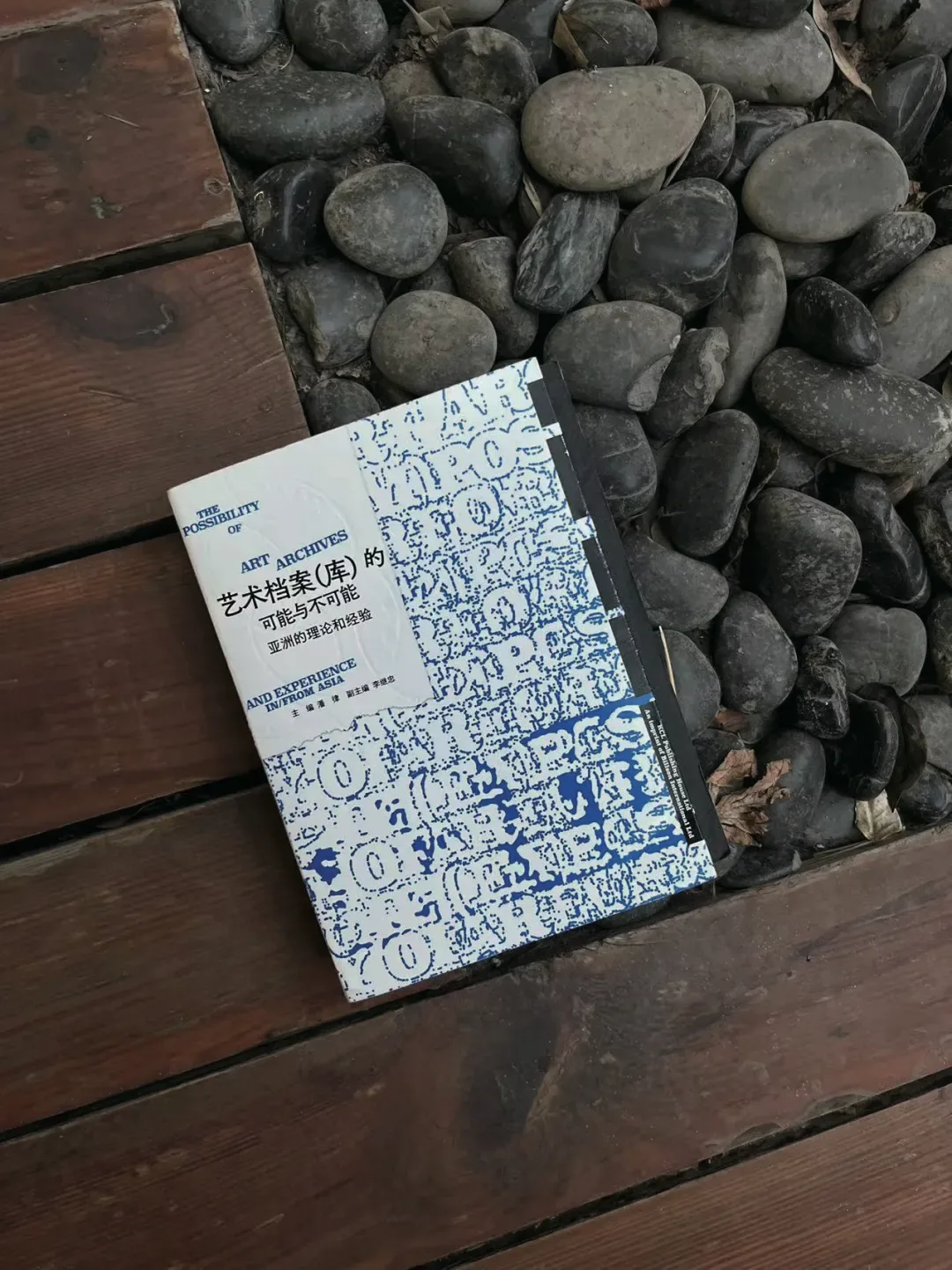
《艺术档案(库)的可能与不可能——亚洲的理论和经验》
《艺术档案(库)的可能与不可能——亚洲的理论和经验》
潘律主编,李继忠副主编迦梨图书与虚无乡档案出品2023年8月出版,平装
研究型艺术的讨论已经火了好几年,克莱尔·毕晓普(Claire Bishop)即将出版的专著更添了一把新柴。而正像她描述的,研究型艺术的一大特点,便是在展览现场铺上汗牛充栋的档案材料。在毕晓普发表在《艺术论坛》的文章中,“档案”一词出现了十遍——显然,档案是研究型艺术不可分割的一部分。半年后,我拿到了刚刚出版的《艺术档案(库)的可能与不可能——亚洲的理论和经验》。这本书倒转了将原始档案材料视为研究型艺术组成部分的思维逻辑,把档案(库)作为首要关切——更准确地说,这本书关心的是与艺术有关的建档、存档行为,尤其是非官方、非体制化的资料保存,也就是由业余爱好者、民间团体等进行的非规范化、非中立、有主体性的档案实践;其中一些,甚至旗帜鲜明地“反档案”。在此,一些艺术作品、策展项目被理解为档案实践,策展人和艺术家也与研究者、公民运动者一道,成了档案管理员,或档案共创者。
这本厚厚的大口袋书由学者潘律主编,辑录了22篇文章。文章有的是个案介绍(档案作为“个案”这说法有些奇怪,毕竟档案库本来就是具体、单独资料的集合之地)。比如,加治屋健司介绍了在欠缺现当代艺术档案的日本创建日本口述艺术馆的历程及其运作方法和贡献,潘律就“录像局”采访了其发起人之一陈侗。有些篇目则是从档案角度诠释艺术作品。艺术家陈界仁在影像中引述了台湾地区近现代视听档案,学者孙松荣将这一行动解读为对地方历史的“占为己用”;而阮纯诗对越南近现代档案的影像创作的引用,则被学者马然理解为艺术家在保持批判性距离的同时令非欧美的电影传统“重生”;艺术家区秀诒撰写的文章则更为跳脱,近乎一个剧本,展演“档案作为聚合的梦(魇)之痕迹”。还有的文章更接近我翻开书之前的预期,即对区域性档案实践的综述。凯瑟琳·阿扎利(Kathleen Azali)在扼要介绍了印度尼西亚的语境后,精到描绘了当地公民和地方社群档案实践中令人耳目一新的面向——比如一些档案利用Instagram收录街头艺术,还有专门关注“老”流行音乐的网络平台。而阅读对中国大陆的当代艺术档案回顾时,我不免疲惫——这种疲惫更多与“中国当代艺术”从一开始就自我历史化而焦点集中有关。相比之下,我更想听作者董冰峰聊一聊他如何将沈阳地下音乐收档。
书中的文章虽然都与档案、艺术、亚洲——本书题目里的三个关键词——有关,但在文体、写法、角度上跨越极大。书籍也并未按照亚洲地理来组合文章,而是按照档案(库)分为三部分:“积累与创造:档案库的诞生”,“瓦解与重塑:艺术家、策展人和学者论档案库”和“公共与想象:作为社群自画像的档案库”。然而,同一部分的文章并不紧密关联,读者能在不同文章之间找到自己的线索。譬如,几篇文章都明确表达了对官方档案的不满,质问公共档案的所有权和管理方式。香港艺术家李继忠的项目“复还、缮修与进退维谷”追踪了日占期被掠夺的中环广场英铸铜像变迁,而香港欠缺明晰的档案法律和制度、英政府在香港回归前运走大批重要机密档案,都是他这一艺术、研究和档案项目的前提。发起台湾民间影像保存运动的井迎瑞,则大声疾呼,“保存家庭电影,将会是后殖民阶级的文化公民权,是我们民间应得的,不需要官方的施舍……”这一鲜明立场回应了潘律在前言中提及的问题,即档案库是否可以成为一个“公共空间”。但遗憾的是,这些跨越不同个案和地域的情绪、问题、经验,以及正要浮现出的核心问题,并未在整体上被明确言说或强调出来,也未得到更多深入探索;“亚洲”因此大体上只出现在书籍标题、前言和结构里,不同实践和书写者的共鸣游荡在不同篇目之间,需要读者自己仔细聆听。
档案与展览的区别,在书中也常被谈论。在这一点上,本书中的展览和档案都绝非清晰明确之物,为人的复杂感受和模糊记忆保留了存在的空间。日本几家档案库(仙台媒体中心、AHA!)实践者不约而同关注到了大地震——“我们如何把我们的经历分享给我们亲近却没有共同经历的人们?非灾民如何才会觉得他们也能感同深受?”如此的有关人与人之间理解的焦虑,是一些公民档案实践的根源。
Machine translation (AI) of the Chinese original, not yet reviewed by the author. Please cite the original.
Counter-Archive
✦
❝This book reverses the logic that treats raw archival material as a component of research-based art, and makes the archive its primary concern – or, more precisely, what it cares about is the act of creating and keeping archives in relation to art.
❞
The [Im]possibility of Art Archives: Theory and Experience in/from Asia
The [Im]possibility of Art Archives: Theory and Experience in/from Asia
Edited by Lu Pan, assistant editor Lee Kai Chung. Produced by Kali Books and The Phantom Archives. Published August 2023, paperback
Research-based art has been a hot topic for several years now, and Claire Bishop’s forthcoming book has thrown fresh fuel on the fire. As she describes it, one of the defining features of research-based art is exhibitions piled high with archival material. In the essay Bishop published in Artforum, the word “archive” appears ten times – clearly, the archive is an inseparable part of research-based art. Six months later, I got hold of the newly published The [Im]possibility of Art Archives: Theory and Experience in/from Asia. This book reverses the logic that treats raw archival material as a component of research-based art, and makes the archive its primary concern – or, more precisely, what it cares about is the act of creating and keeping archives in relation to art, especially the unofficial, non-institutional preservation of material: that is, non-standardised, non-neutral archival practices with a subjectivity of their own, carried out by amateurs, grassroots groups and the like. Some of them are even openly “counter-archival”. Here, certain artworks and curatorial projects are understood as archival practices, and curators and artists, alongside researchers and civic activists, become archivists, or co-creators of archives.
This thick, oversized pocket book is edited by the scholar Lu Pan and brings together twenty-two texts. Some are introductions to individual cases (calling an archive a “case” is a little odd, since an archive is by definition a place where specific, individual materials are gathered). For example, Kenji Kajiya describes how the Oral History Archives of Japanese Art was set up in a Japan short of archives of modern and contemporary art, how it works and what it has contributed; Lu Pan interviews Chen Tong, one of the founders of Video Bureau. Other pieces interpret artworks from the perspective of the archive. The artist Chen Chieh-jen draws on modern audiovisual archives from Taiwan in his films, and the scholar Sing Song-yong reads this as an “appropriation” of local history; Nguyen Trinh Thi’s use of modern Vietnamese archives in her moving-image work is understood by the scholar Ma Ran as the artist keeping a critical distance while bringing non-Euro-American film traditions “back to life”. The essay by the artist Au Sow-Yee is more free-wheeling – almost a script, performing “the archive as traces of gathered dreams (and nightmares)”. Still other texts are closer to what I had expected before I opened the book: overviews of archival practice in a particular region. After a concise introduction to the Indonesian context, Kathleen Azali gives a sharp picture of the refreshing aspects of citizen and local-community archiving there – some archives, for example, use Instagram to collect street art, and there are online platforms devoted to “old” pop music. When I read the review of contemporary art archives in mainland China, however, I couldn’t help feeling weary – a weariness that has more to do with the fact that “Chinese contemporary art” historicised itself from the very start, so the spotlight has always fallen in the same places. By comparison, I would rather have heard the author, Dong Bingfeng, talk about how he archived Shenyang’s underground music.
Although all the essays in the book have to do with archives, art and Asia – the three keywords in its title – they range enormously in genre, writing and approach. Nor does the book group its texts by Asian geography; instead it is organised around the archive, in three parts: “Accumulation and Creation: The Birth of Archives”, “Deconstruction and Recreation: Artists, Curators and Scholars on Archives” and “The Public and Imagination: Archives as Community Self-Portraits”. Even so, the essays within each part are not closely connected, and readers can find their own threads between different texts. Several essays, for instance, openly express dissatisfaction with official archives, questioning who owns public archives and how they are managed. The Hong Kong artist Lee Kai Chung’s project The Retrieval, Restoration and Predicament traces what happened to the British-cast bronze statues looted from Statue Square during the Japanese occupation; Hong Kong’s lack of clear archival law and systems, and the British government’s removal of large quantities of important classified files before the handover, are both premises of this art, research and archive project. Jiing Yng-ruey, who launched a grassroots movement in Taiwan to preserve moving images, declares forcefully: “Preserving home movies will be the cultural citizenship of the post-colonial class. It is what we, the people, are owed – we don’t need handouts from officialdom…” This clear stance answers a question Lu Pan raises in her introduction: can the archive become a “public space”? Unfortunately, though, these feelings, questions and experiences that cut across different cases and regions – and the central question that is just beginning to surface – are not clearly articulated or emphasised as a whole, nor explored in any more depth. As a result, “Asia” appears largely only in the book’s title, introduction and structure; the resonances between different practices and writers wander between the chapters, and readers have to listen closely for them themselves.
The difference between the archive and the exhibition also comes up often in the book. Here, neither exhibitions nor archives are ever clear-cut, well-defined things; they leave room for people’s complicated feelings and hazy memories. Practitioners from several Japanese archives (Sendai Mediatheque, AHA!) have all, independently, turned their attention to the great earthquake – “How can we share our experiences with people close to us who did not go through them? How can those who were not affected come to feel that they, too, can relate?” Anxiety of this kind, about understanding between people, lies at the root of some civic archival practices.