Writing / essay · 2017 · 中文
The Tower in Jimei集美的塔
2017年集美·阿尔勒摄影节布展期间,和沈宸、邓云在市民广场尽头凉亭里的一个夜晚。
集美像块飞地,在厦门郊区,但并没有旧骑楼和夜市。行政服务中心坐北朝南地落在一片横架而起的空中广场上,华灯盏盏,列作两队,白天放眼望去,目尽处横卧青山,夜里灯光幽幽,照不到两米之外。我们这一队人,大多彼此陌不相识,一起住在政府大楼东边的人才培训中心,每天在市民广场下面防空洞般的展场里呆着,往假墙上挂照片、投幻灯、放电影。这种状况大约持续了一周,直到领导在舞台上宣布开始,摄影爱好者们从祖国的四面八方涌来。
开幕前一天,布展到很晚,沈宸把我和邓云拖出展场。沈宸比我大,一个学校都是学政治毕业的,算时间的话,也一起在校园里待过,但是几年前到了这行才认识。广场的尽头有一对凉亭,我们走到西座那儿。三人停下来,两个人抽烟,我看着。“地上好粘”,沈宸说,地面上有些已经干掉的液体,一块深一块浅。亭子顶铺着明黄色琉璃瓦,夜里当然没什么夜色,四周悄然无声。包围着广场的玻璃大楼漆黑一片,它们是为未来准备的,不是今夜。
幽火明灭,两位男士不时一声深咳,吐出浓烟。我枯坐着。“怎么着,将来打算回国吗”,沈宸问我。“回吧,还是国内机会多啊。” 其实我也不知道,总觉得这很遥远。“不想留英国吗?感觉还是国外系统完善点啊。”“实习都挺难找的…而且还是有点无聊…” 我在伦敦其实没真得找过实习,觉得自己不在那个圈子里。或者说,在开始之前,疲惫已先来了。“嗯,有机会就多做做,认识人多点回国了也有用。” 沈宸的烟抽完了,他站在那,看我和邓云,“别坐了,走吧,回去叫外卖”。“再坐一下,太累了”, 邓云坐在大理石栏杆上,背靠着刷了朱漆的水泥柱子,仰头吞烟。“我脸上肯定全是油腻”,他自嘲地笑,但笑得很慢并且疲惫,好像嘴角是借着烟才浮上来的。
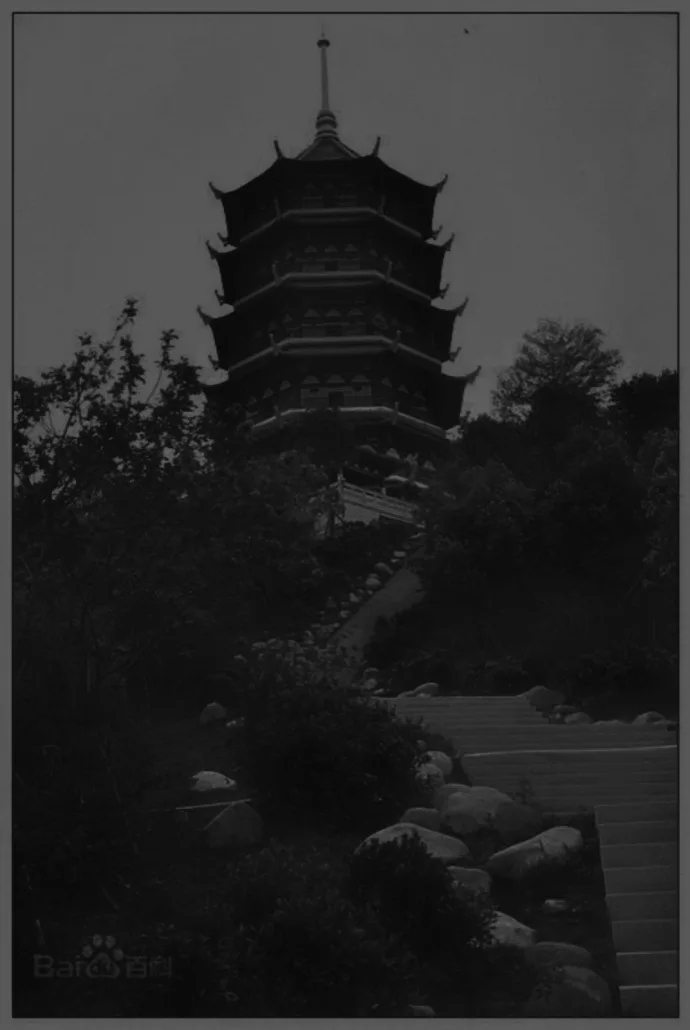
更深夜的时候,我和邓云决定出门散步。集美的白昼太无聊了。午夜时我们出现在广场中央,邓云向空中扔出一个飞盘,一个我以为是狗玩具的扁平、轻盈的圆形物体。半小时之后我终于接到了一次。邓云如释重负,我欣喜万分,我们都决定不玩了。没风,椰子树也像假的,静止不动。我提议去看看那座塔。塔在我房间窗外,第一天醒来的时候就看到了。郁郁葱葱,嫩的熟的各种绿,铺在眼前,缓坡之巅,耸立一塔。塔很周正,又很平常,像任何新建的水泥仿古塔。仿佛是在街边店摆出来的巴黎铁塔钥匙串,拎出来一个,难得敦实不显廉价,心里有点认可,却也不会掏钱买下来。
邓云穿着短裤和旅馆的塑料拖鞋,拖拉在空荡的马路上,我裹着毛衣,到山脚下时,路面还存着白天的雨水。我想起刚才和沈宸的聊天,有关未来的问题对我来说稀松平常,只是个话题。但邓云在这些问题和对话之外,他在日本生活和工作,很久了。
上山的石阶稍微有些陡峭,我们一步步迈着,聊起认识的人。我打趣邓云认识人多,他不置可否。过了会,他说,“我和Y和X都深聊过的”。我算了算,那应该是四五年前。我有时想不清,说话该说些什么。人们是不是总一茬茬换人聊天,了解彼此的无聊。
“真不想回伦敦啊” ,我说起来。
“我也不想回去。”
“为什么,因为生活很难吗?”
“也比较无聊。”
“上班累吗?”
“嗯,累。”
我们爬上坡顶,看到塔,基座是一个矮矮的办公楼,空着,好像从没被用过。整个建筑就像个饮水机。索然无味在意料之中,我们坐在花坛上,石头泛出些凉气。“我也不知道。旅行要结束了,就很郁闷吧” ,他的声音也很低。
前两天布展推不动的时候,我和邓云在展厅里也走不了,用电脑断断续续地看了个法国电影。里面一个学艺术史的温婉女人毕业后嫁给了等候多年的男友,她读书时男友已经工作并且置家置业了。婚后隔年,他们生了一个男孩,女人找了份艺术基金会里研究员的职位,生活美好平静。阖家到热带沙滩旅行时,女人在安宁的海浪声里对男友说,嫁给你,好像每时每刻都很圆满,一生也会这样一刻刻圆满下去。女人后来在工作时出了轨,对象是个并不浪漫也算不得好看的男人,她的生活从这里开始破碎。并没有人发现她的出轨,但她后来酗酒、弃子,毁了自己,也毁掉了家。我又讲起这片子时,邓云在不远处刷着手机,屏幕漏出的荧光洒在他的圆领T恤上,他无所事事的样子,像在等待一个会从灌木丛里突然钻出来的人。邓云说,感觉女人最后到这样,没大有理由。出个轨不至于后果这么严重吧。
我回过神,说,“动机吗?像我们这种如履薄冰活着的人,一偏离了轨道就会觉得,挺爽的吧。”
Machine translation (AI) of the Chinese original, not yet reviewed by the author. Please cite the original.
Jimei is like an enclave. It’s on the outskirts of Xiamen, but it has none of the old arcaded shophouses or night markets. The Administrative Services Centre sits facing south on a vast plaza raised up in the air, with ornate lamps lined up in two rows. By day, looking out, you see green hills lying along the far horizon; at night the lamps glow faintly and can’t light anything two metres away. Our crew – most of us strangers to one another – were all staying at the Talent Training Centre east of the government building, and every day we stayed down in the bunker-like exhibition space beneath the Civic Plaza, hanging photographs on temporary walls, setting up slide projections, screening films. This went on for about a week, until an official announced the opening on stage and photography enthusiasts poured in from every corner of the motherland.
The day before the opening, we were installing until late, and Shen Chen dragged Deng Yun and me out of the exhibition hall. Shen Chen is older than me. We both graduated in politics from the same university, and by the dates we must have overlapped on campus, but we only met a few years ago, after we’d both ended up in this line of work. At the far end of the plaza there is a pair of pavilions, and we walked over to the western one. The three of us stopped; two of them smoked, and I watched. “The floor’s so sticky,” Shen Chen said. There were patches of dried liquid on the ground, some dark, some light. The pavilion roof was covered in bright yellow glazed tiles. At night, of course, there wasn’t much to see, and all around was silent. The glass towers surrounding the plaza were pitch black. They were built for the future, not for tonight.
The embers glowed and faded; now and then the two men gave a deep cough and blew out thick smoke. I sat there with nothing to do. “So, are you planning to go back to China?” Shen Chen asked me. “Probably. There are more opportunities back home.” Actually, I didn’t really know. It all felt very far off. “You don’t want to stay in Britain? The system’s more developed abroad, isn’t it?” “Internships are really hard to find… and it’s a bit boring…” In fact I had never seriously looked for an internship in London; I felt I wasn’t part of that circle. Or rather, the tiredness had arrived before anything had even begun. “Hm. Do as much as you can while you’ve got the chance. Knowing more people will be useful when you come back.” Shen Chen had finished his cigarette. He stood there looking at Deng Yun and me. “Come on, stop sitting, let’s go back and order a takeaway.” “Just a bit longer, I’m too tired,” said Deng Yun, sitting on the marble balustrade, his back against a cement pillar painted vermilion, head tilted back, swallowing smoke. “My face must be all greasy,” he laughed at himself, but the laugh was slow and tired, as if the corners of his mouth had only floated up on the smoke.
Deeper into the night, Deng Yun and I decided to go out for a walk. Jimei by day was too boring. At midnight we turned up in the middle of the plaza, and Deng Yun threw a frisbee into the air – a flat, light, round thing I’d taken for a dog toy. Half an hour later I finally caught it once. Deng Yun was relieved, I was overjoyed, and we both decided to stop. There was no wind; even the coconut palms looked fake, perfectly still. I suggested we go and look at the tower. The tower was outside my bedroom window; I’d seen it the moment I woke up on the first day. A lush spread of every kind of green, young and mature, lay before me, and at the top of a gentle slope stood a tower. It was well proportioned and yet utterly ordinary, like any newly built concrete imitation of an old pagoda. It was as if you’d picked one Eiffel Tower keyring off a street stall and found it, unusually, solid rather than cheap-looking – you’d feel a certain approval, but you still wouldn’t pay for it.
Deng Yun, in shorts and the hotel’s plastic slippers, shuffled along the empty road; I was wrapped in a jumper. At the foot of the hill, the road still held the day’s rainwater. I thought about my conversation with Shen Chen. Questions about the future were nothing special to me, just something to talk about. But Deng Yun stood outside those questions and conversations. He had been living and working in Japan for a long time.
The stone steps up the hill were a little steep, and we climbed them one by one, talking about people we knew. I teased Deng Yun for knowing so many people; he neither agreed nor denied it. After a while he said, “I’ve had deep conversations with Y and with X.” I worked it out: that must have been four or five years ago. Sometimes I can’t figure out what one ought to talk about. Do people always swap one batch of conversation partners for the next, getting to know each other’s boredom?
“I really don’t want to go back to London,” I said.
“I don’t want to go back either.”
“Why, because life is hard?”
“It’s pretty boring too.”
“Is work tiring?”
“Yeah, tiring.”
We reached the top of the slope and saw the tower. Its base was a squat office block, empty, as if it had never been used. The whole building looked like a water cooler. The anticlimax was only to be expected. We sat on the edge of a flower bed; the stone gave off a little chill. “I don’t know either. The trip’s about to end, so I guess I’m just down,” he said, his voice low too.
A couple of days earlier, when the installation had stalled, Deng Yun and I couldn’t leave the exhibition hall either, so we watched a French film on a laptop in fits and starts. In it, a gentle woman who had studied art history marries, after graduating, the boyfriend who has waited for her for years; while she was still studying, he was already working and had a home and a career. The year after the wedding they have a son, and the woman finds a job as a researcher at an art foundation. Life is lovely and calm. On a family holiday to a tropical beach, amid the peaceful sound of the waves, she tells her husband: being married to you, every moment feels complete, and my whole life will go on being complete like this, moment by moment. Later, at work, she has an affair with a man who is neither romantic nor particularly good-looking, and from there her life begins to fall apart. No one ever finds out about the affair, but she starts drinking, abandons her child, and destroys herself and the family along with her. When I brought the film up again, Deng Yun was a short way off, scrolling on his phone. The glow leaking from the screen spilled onto his round-necked T-shirt, and he looked idle, as if waiting for someone who might suddenly burst out of the bushes. Deng Yun said the way the woman ends up didn’t feel very justified. Surely one affair doesn’t lead to consequences that serious.
I came back to myself and said, “You mean the motive? For people like us, who live as if walking on thin ice, the moment you go off the rails, it must feel pretty great.”